Tribute to the Soul of Annie Brigman

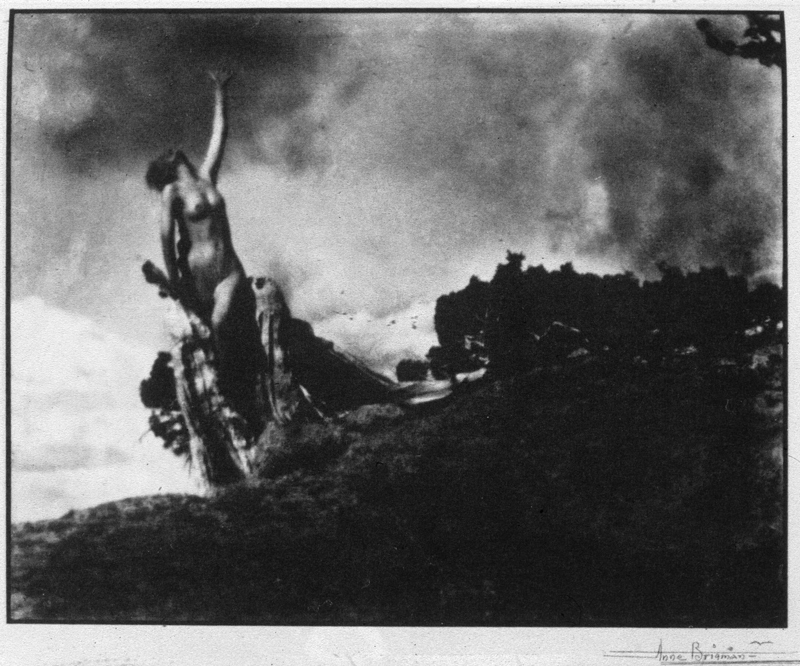
Figure 1 - Annie Brigman, "Soul of the Blasted Pine, 1908," from the Wikimedia Commons and in the public domain.

Figure 1 – Annie Brigman, “Soul of the Blasted Pine, 1908,” from the Wikimedia Commons and in the public domain.

As I was walking along the main path in the Arnold Arboretum, I was struck my a tree that looked very white in the intense light and seemed to be reaching up with two arms beseeching heaven.  My head is always cluttered with mythology, both photographic and spiritual, and what immediately came to my mind was photosecessioniust Annie Brigman’s 1908 image “The Soul of the Blasted Pine.”  Figure 1 is a copy of this and shows the soul of the tree departing its blasted stump as it reaches to the sky.  I was very moved by this picture when I first saw it at the RISD Museum.

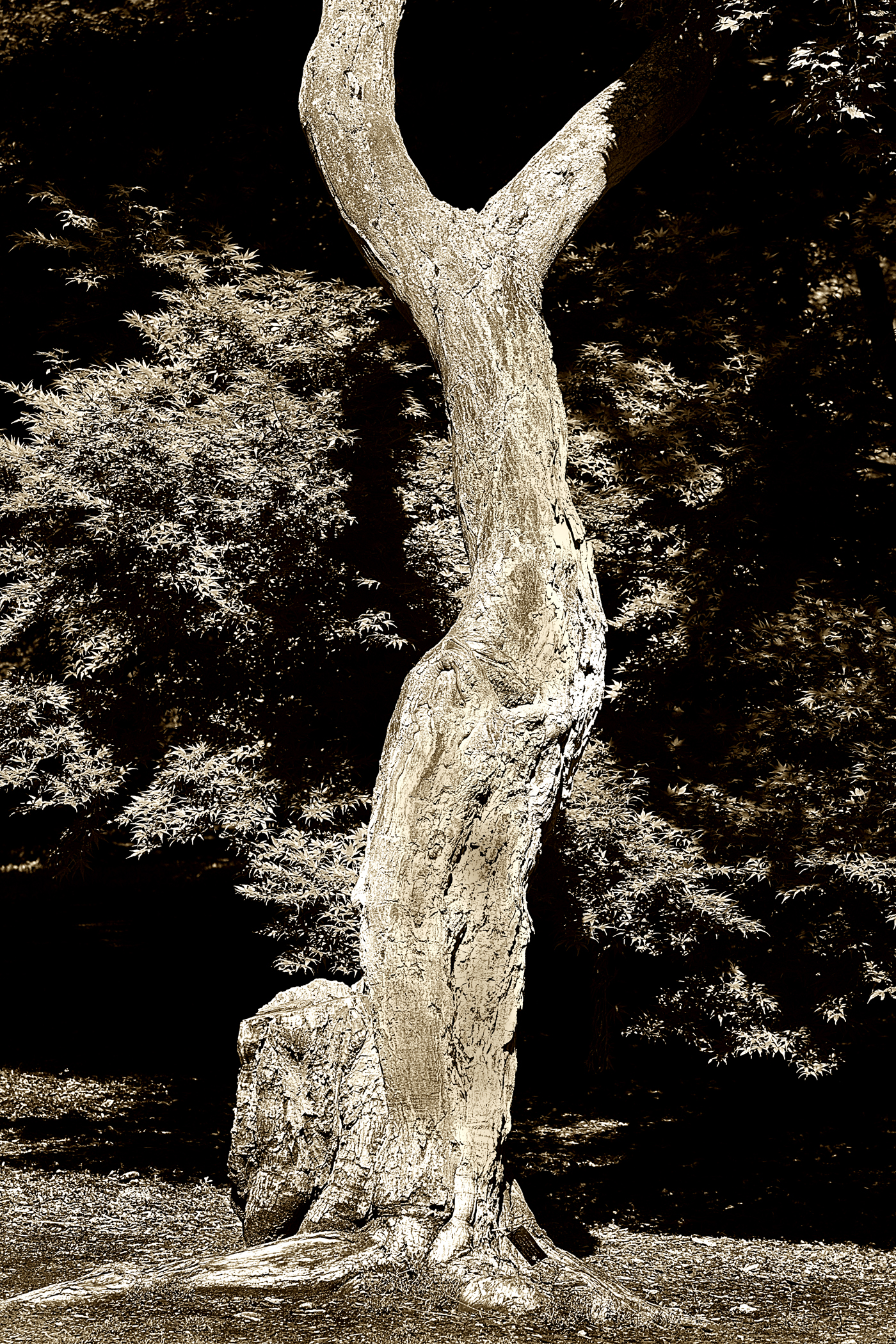
I experimented with the scene and the lighting to see if I could in some way capture my sense of Annie Brigman’s image in the tree at the Arboretum. I moved around the tree looking for the best angle to capture a sense of feminine curves and arms reaching upward.  My best efforts are shown in Figure 2.  I am not quite sure that I have succeeded and leave it to the reader to decide.  In that regard showing my oicture here is a kind of self indulgence.  I consider it to be a first attempt and will store away what worked and what didn’t work so that the next attempt can be more successful.

Figure 2 - Tribute to the Soul of Annie Brigman, (c) DE Wolf 2013.

Figure 2 – Tribute to the Soul of Annie Brigman, (c) DE Wolf 2013.

The Arnold Arboretum

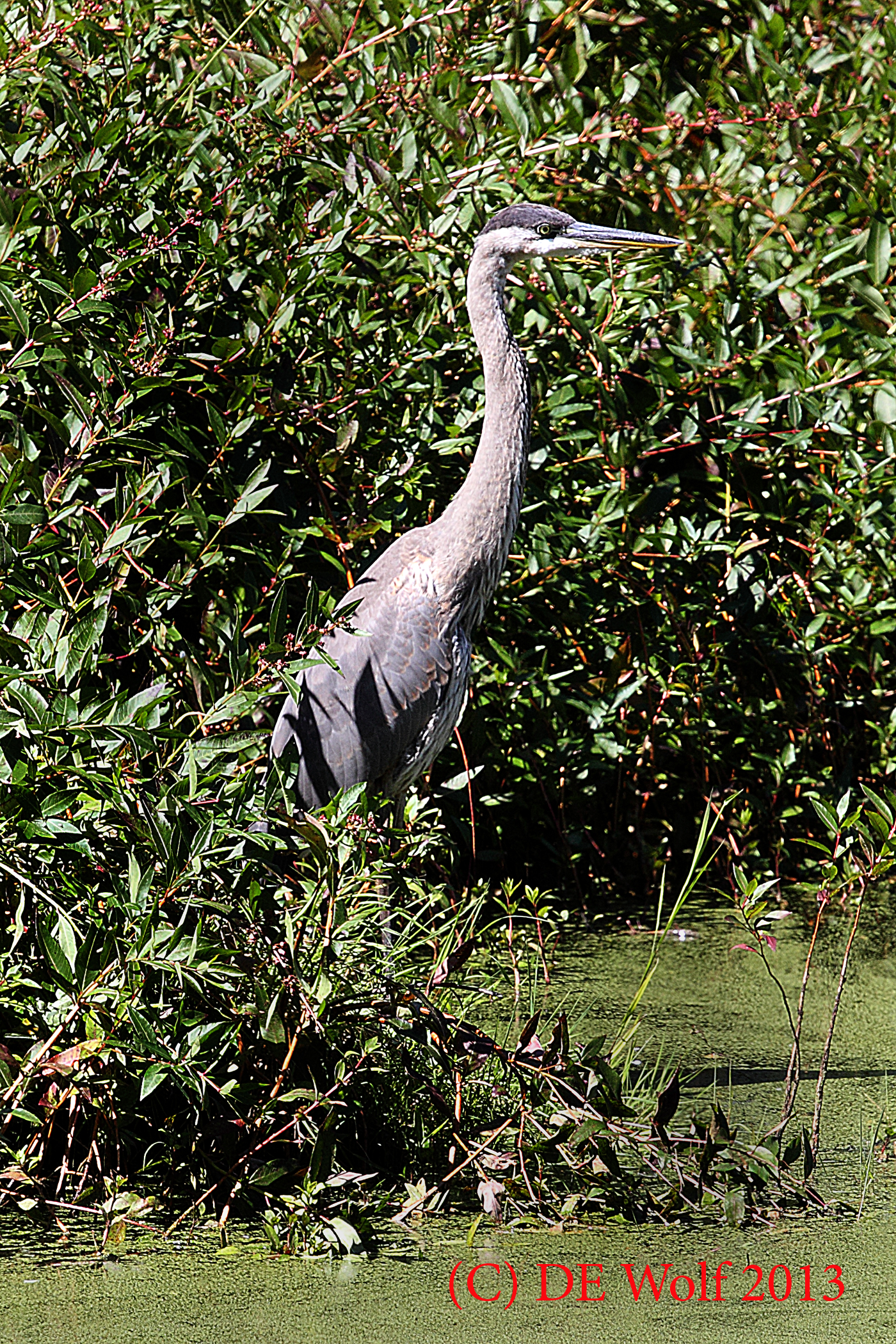
Figure 1 - Great Blue Heron, Jamaica Plain, MA, (c) DE Wolf 2013

Figure 1 – Great Blue Heron, Jamaica Plain, MA, (c) DE Wolf 2013

Our vacation wanderings last week took us to the Arnold Arboretum managed by Harvard University in Jamaica Plain, MA.  Established in 1872 by Frederick Law Olmstead, it is the oldest public arboretum in North America and one of the great jewels in Olmstead’s emerald necklace of green space parks surrounding the city of Boston. As you wander around, and wandering purposelessly is the best way to achieve serenity in the park, all the trees seem to fit in together.  But then on reading the labels you realize the great geographical and species diversity that you are observing.

Several years ago, I came to realize how disappointing the Tamron zoom lens that I had was in terms of sharpness, when I went to photograph a great blue heron (Ardea herodias) in the Plum Island bird sanctuary.  Yesterday, I spotted a huge heron by the side of the pond and I realized that it was a great test for my EF 70-100 f/4L USM.  The first trick is not to scare the bird.  So you take pictures as you slowly move forward.  Fortunately, I had my camera mounted on my monopod.  As a result I think the bird found me more amusing than threatening.  I used center spot auto focus.  Hold breath and exhale.  The result is Figure 1.  Despite the monopod, I made sure that the exposure time was faster than 1 over the focal length.  So the image was taken at ISO 400 using 1/500 s at f/7.1.  I am reasonably happy with the sharpness.  I might have preferred a 500 mm lens and I am not totally thrilled with the composition.  The heron probably likes the camouflage of the bushes, for me they conceal him a bit too much in a sea of contrast.  Still…

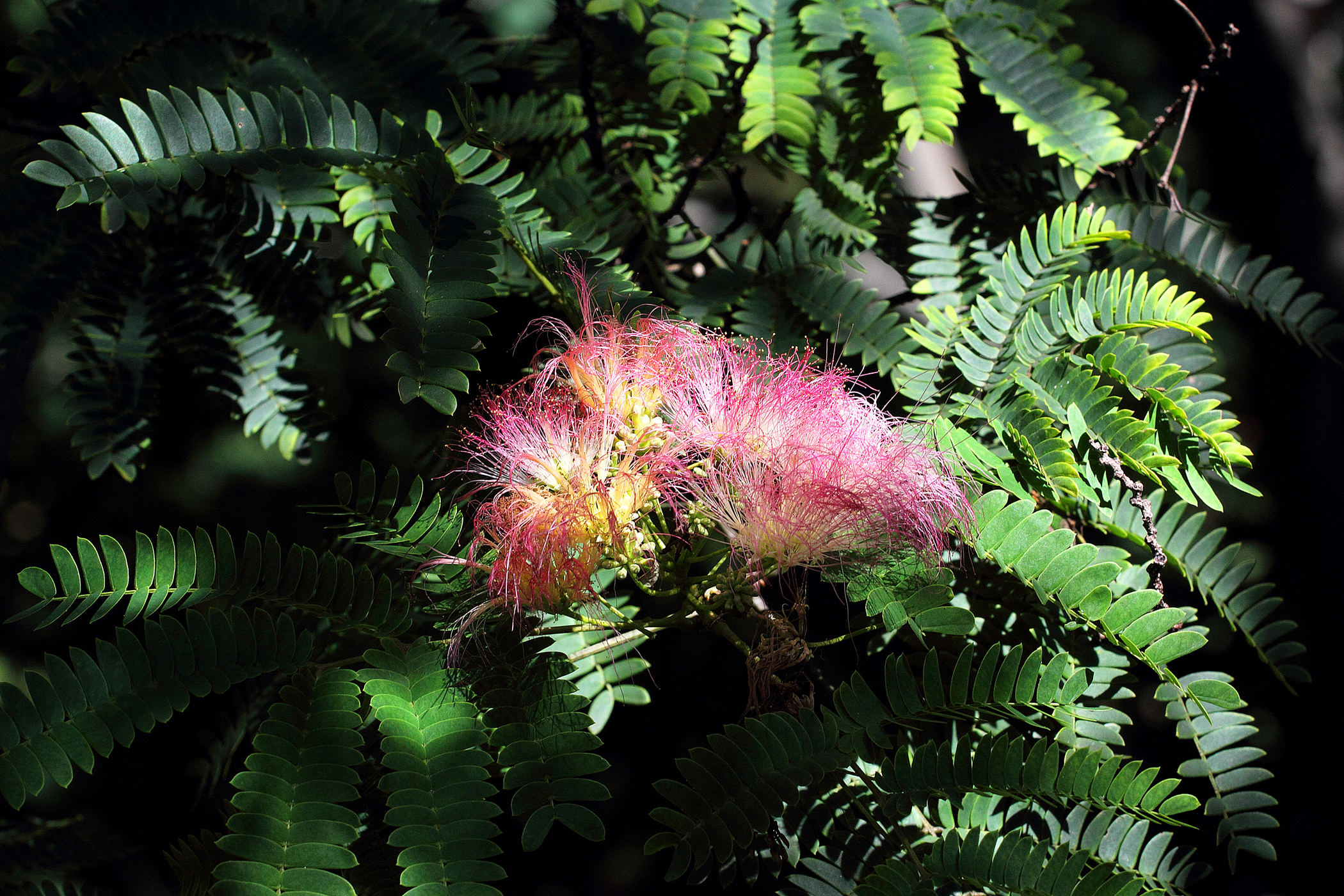
I am still working on a number of photographs from the day.  But another that I would like to share is a close-up of the flower of a silk tree (Albizia julibrissin) (see Figure 2).  I took this again with the EF 70-100 f/4L USM at 70 mm with ISO 400 using aperture priority, -1 exposure compensation, and center spot auto focus.  Exposure was f/9.0 at 1/500 s. Again, I am reasonably happy with the result.

Figure 2 - Silk Flower, Jamaica Plain, MA, (c) DE Wolf 2013.

Figure 2 – Silk Flower, Jamaica Plain, MA, (c) DE Wolf 2013.

Down to the sea

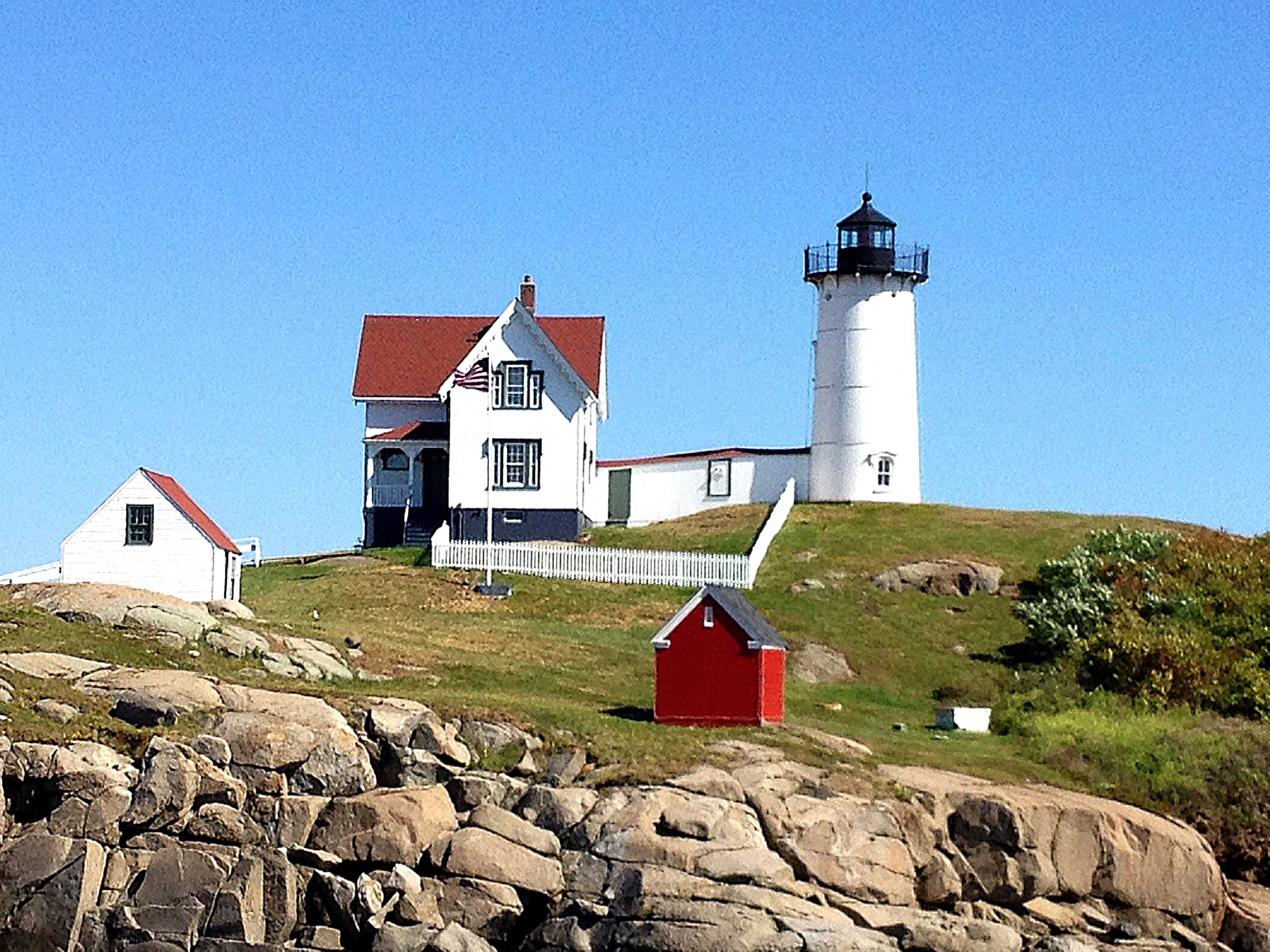
Figure 1 - Nubble Light, York, ME photographed with my IPhone 4S. (c) DE Wolf 2013.

Figure 1 – Nubble Light, York, ME photographed with my IPhone 4S. (c) DE Wolf 2013.

For New Englanders the sea is paramount and there is no balm to the soul more curative then a pilgrimage to the ocean.  Some sail upon it, while others merely gaze.  It is as Herman Melville said in his great magnum opus “Moby Dick“:

“Whenever I find myself growing grim about the mouth; whenever it is a damp, drizzly November in my soul; whenever I find myself involuntarily pausing before coffin warehouses, and bringing up the rear of every funeral I meet; and especially whenever my hypos get such an upper hand of me, that it requires a strong moral principle to prevent me from deliberately stepping into the street, and methodically knocking people’s hats off – then, I account it high time to get to sea as soon as I can.”
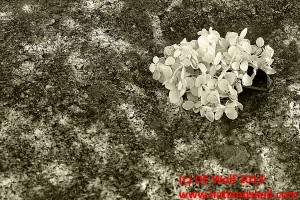
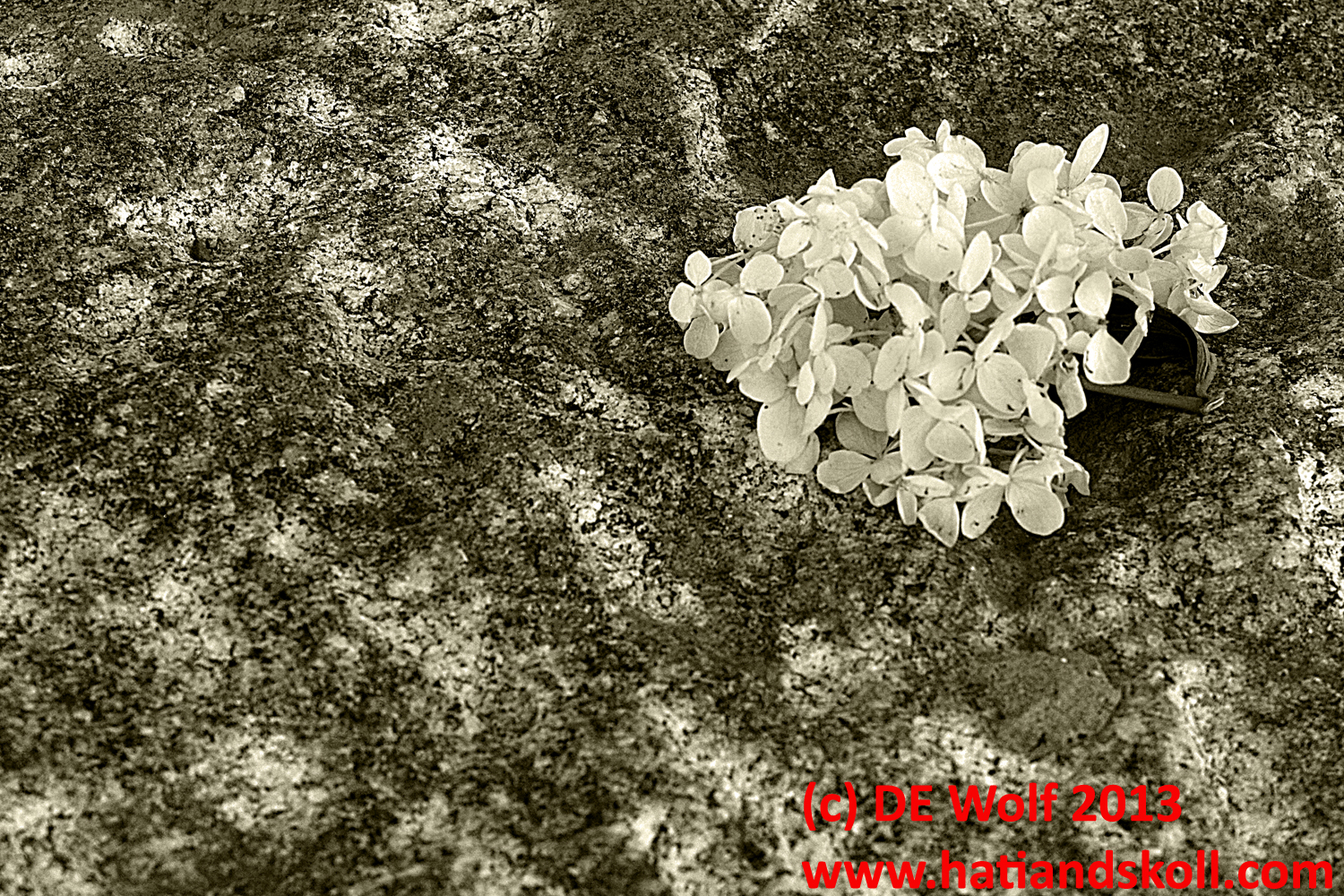
Figure 2 - Antique granite block with white flower, (c) DE Wolf 2013.

Figure 2 – Antique granite block with white flower, Kittery, ME, (c) DE Wolf 2013.

This past week I took a stay-cation and a day’s trip to the Maine coast, in search of both water and lobster, of course, was a necessity.  Needless-to-say camera was in hand.  Atlantic Ocean achieved! I am still working on my photographs from that trip.  But, I thought that I would share a few of them here.

The first Figure 1 is the quintessential Maine coast postcard.  It is of Nubble Light House in York, ME.  I paused for a while there, setting up my camera on its monopod and carefully framing pictures, before climbing along the rocks for the next location.  After loading my gear back in the car, I decided that I would take a shot with my IPhone; so that I could text it to my desk-bound friends.  The only problem with the IPhone is that it is very wide angle, necessitating more than a bit of zoom in, which is digital, meaning considerable loss of resolution.  When I got home I played with the image that compositionally was most like the IPhone picture and to my surprise the heads of two tourists adorned the lower right and could not be cropped out without a serious loss of balance – so much for careful framing.  Figure 1 is the IPhone image, and you can just make out the pixelation as noise in the sky.
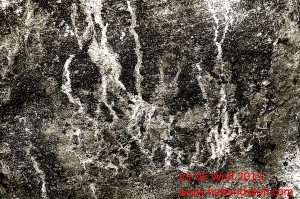
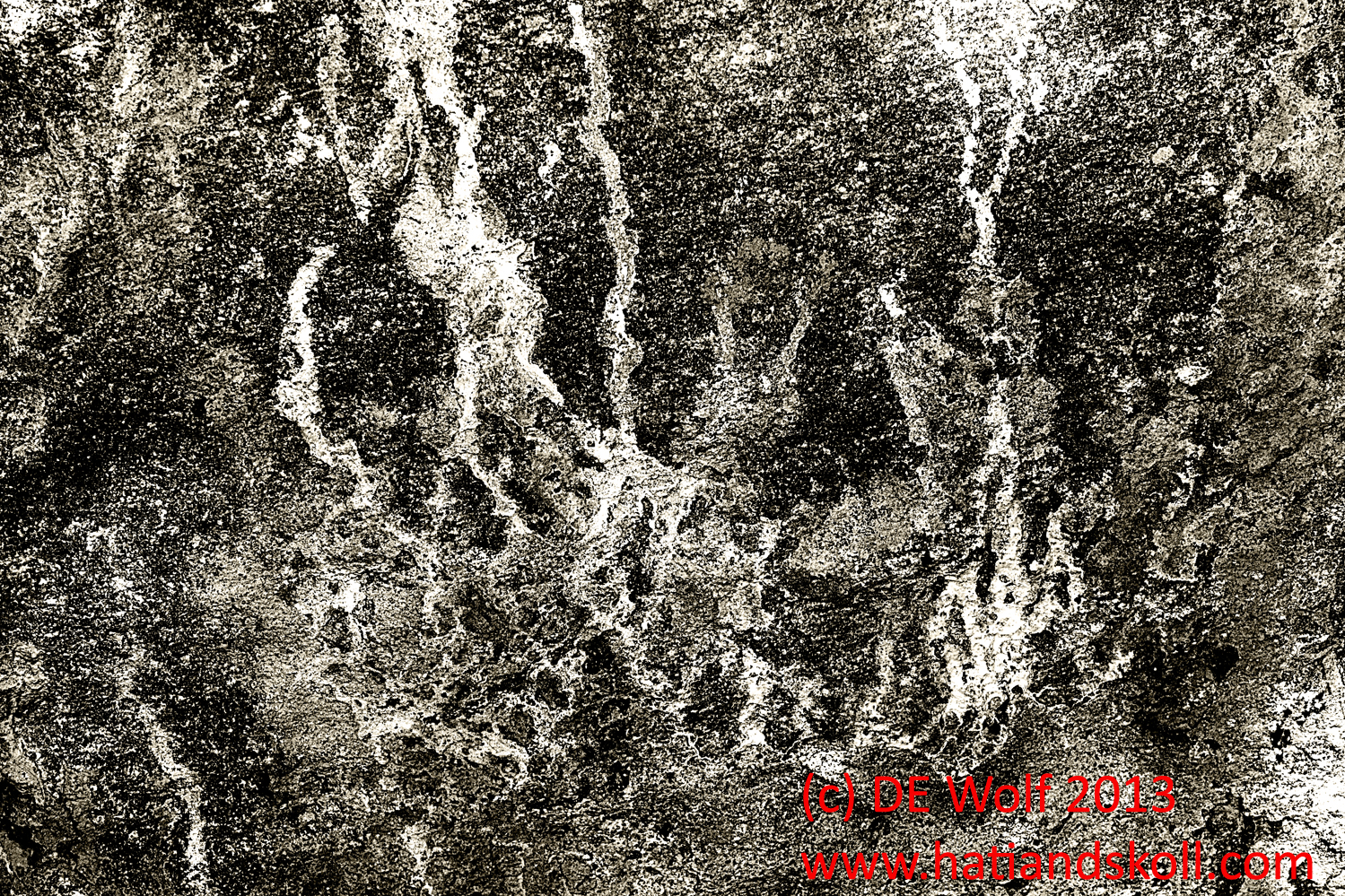
Figure 3 - Mineral Veins in Antique Granite Block, Kittery, ME, (c) DE Wolf 2013.

Figure 3 – Mineral Veins in Antique Granite Block, Kittery, ME, (c) DE Wolf 2013.

We had stopped for lunch at the new “When Pigs Fly Pizzeria” off Route 1 in Kittery, ME.  This is a wonderful place to have great food and become separated from your money.  Had the nicest waitress, named Nell. In walking around their gardens after lunch, I found some interesting antique granite blocks there and took several pictures, two of which are are Figures 2 and 3.  Figure 2 is a study of a white flower that I placed on top of one of the blocks and which I hoped would bring out the white highlights of the granite and would create an ambiguity as to what story was being told.  Figure 3 is a study of the patterns of mineral veins along the side of one of the blocks.

These stone pictures were taken under a tree, which provided a lot of shade and softened the contrast.  In raw format it also created a strong blue tone.  As I always find with black and white images of stone, there is an ambiguity as to what toning works best.  Unlike the marble images that I took last May in Dorset Quarry, VT, where I chose cold toning, here I felt that a subtle warm sepia tone worked best for me.

As for the technicalities, both of these images were taken using a monopod with my EF-70-200 f/4L USM Canon lens at ISO 400 with -1 compensation in aperture priority mode.  Figure 2 is 1/500 s at f/7.1 at 70 mm. Figure 3 is 1/320 s at f/10.0 at 91 mm.
Adding sky to a photograph and feathering edges

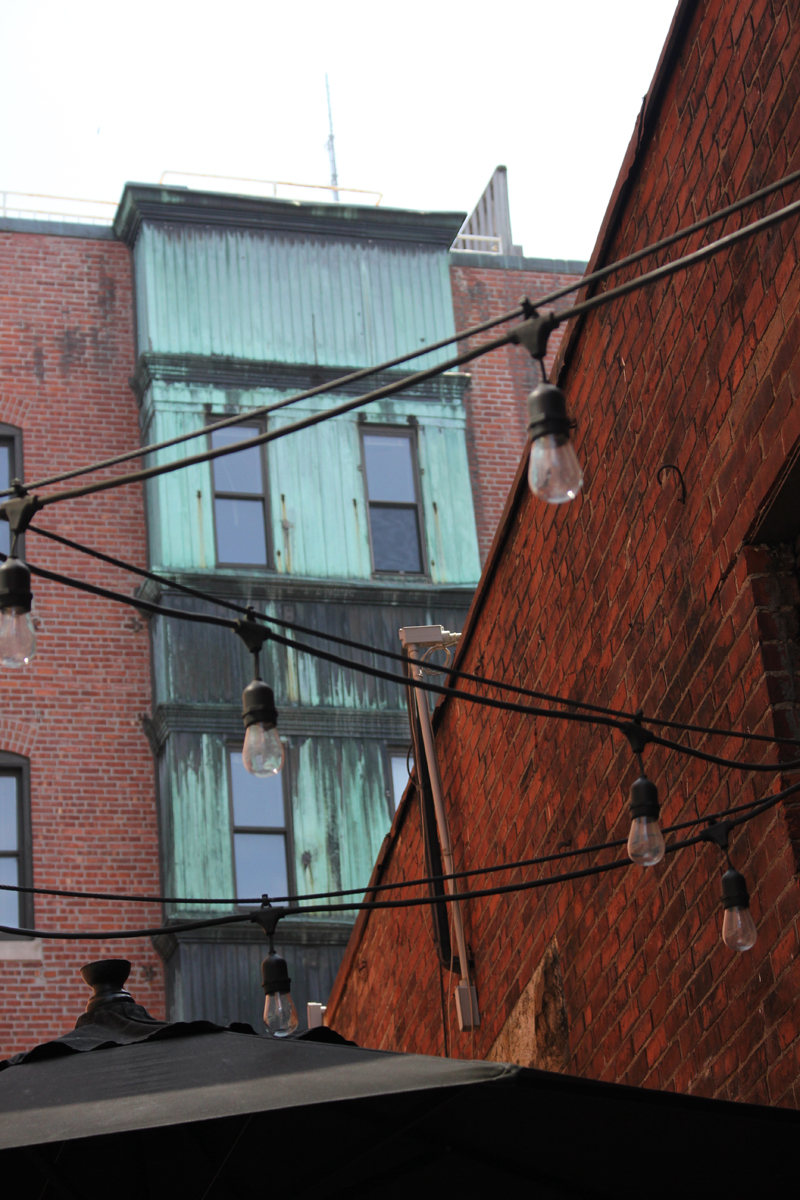
Figure 1 - Starting raw image.

Figure 1 – Starting raw image. (c) DE Wolf 2013.

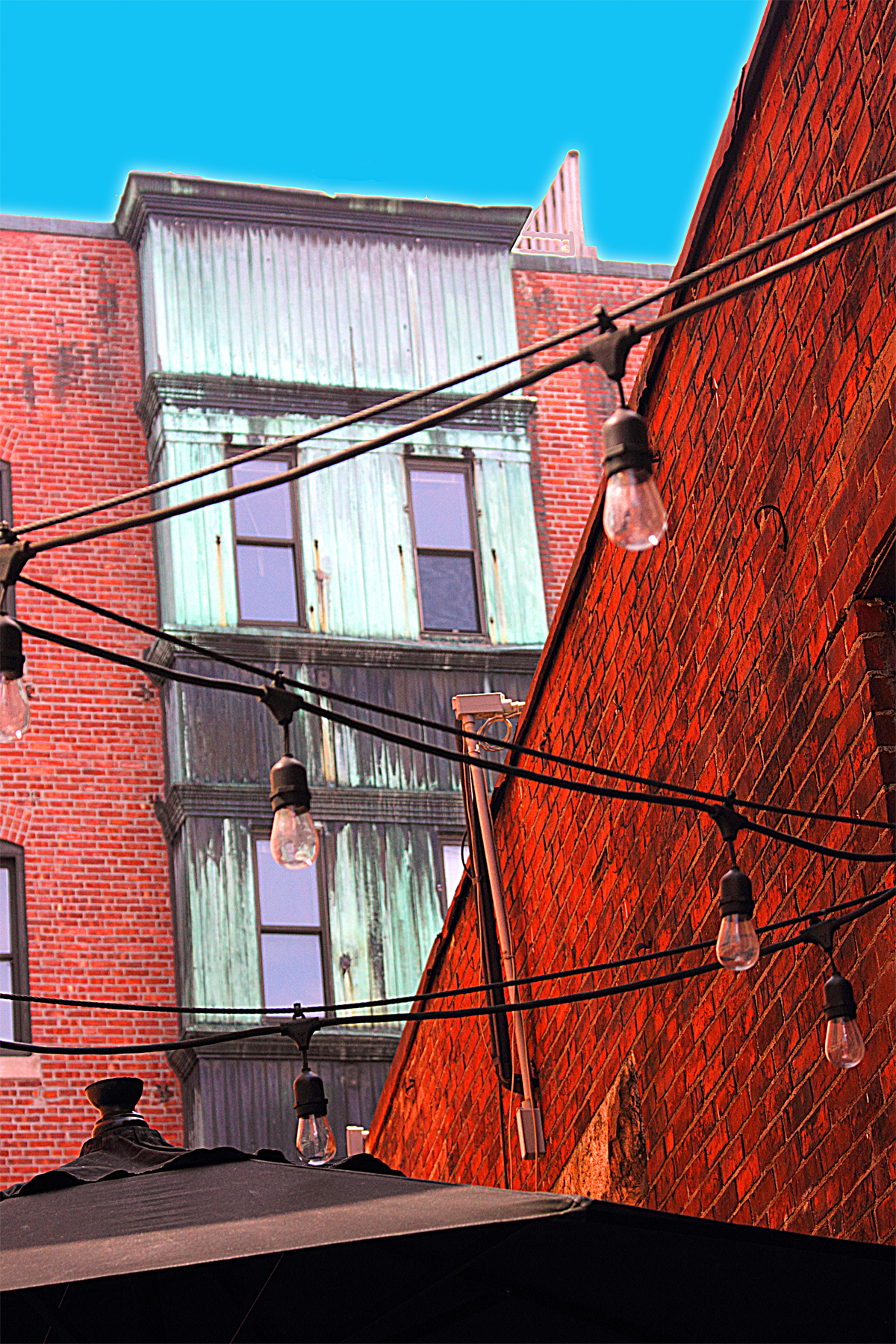
My wife and I went to Russell House Tavern on Harvard Square in Cambridge, MA for Sunday brunch recently.  The day was gorgeous, and we were seated outside in the courtyard.  Sometimes photographs are right in front of you, and such was the case on that Sunday.  I happened to look up at the courtyard, the shade umbrellas, the electrical lines and lamps, and most dramatically the verdigris facade on the building across the street.  I pulled out my camera, composed, and took a few images.  The raw result is shown as Figure 1.

This has the usual dullness of the raw camera image.  But there are bigger problems.  Most problematic is the sky.  It needs to be blue not white.  And then there’s the troublesome backwards tilt to the picture.  While I’m hardly the world genius expert on this, I thought that it might be interesting to describe how you can fix these problems.  I

IMG_1064working copy

Figure 2 – The effect of using magic wand and paint bucket to make the sky blue. (c) DE Wolf 2013.

use Adobe PhotoShop, but other software can be similarly applied.  The first thing that I tried was to click on the sky with the magic wand tool, to then pick the desired sky color, and then to apply it with the paint bucket.  Then I brushed out the annoying fencing on the buildings roof, and did the usual set of sharpening and color adjustment.

Figure 2 shows the result. Yikes! You will note the very annoying white edge, where roof line meets sky.  I tried variously to paint brush this away and kept winding up with an even uglier mess.

The solution to this problem, or the best that I have found, is to feather the edges of the sky. This is a lot like the old days in the darkroom when you wanted to dodge an area. You would create, a mask hold it over the the region to be dodged, and wiggle it furiously during exposure.  Alternatively you can think of blurring the ink with a feather.  In PhotoShop you will find that when you apply the magic wand tool there is an option in the tool bar to “refine” the edge, that gives you further options of “roundness” and “feather”.  You’ve got to play with these to get the “best” effect for a particular image, which is easily done using the tool history.

With the present image, I also found that it was best to make all the color and sharpness adjustments before adding the sky.  As for the tilt of the building, this tool is found under “filter,” choose “distort,” and then choose “rotate vertically.”  With this image I couldn’t fix the perspective perfectly because I didn’t want to lose some of the compositional elements from the rectangular image frame.

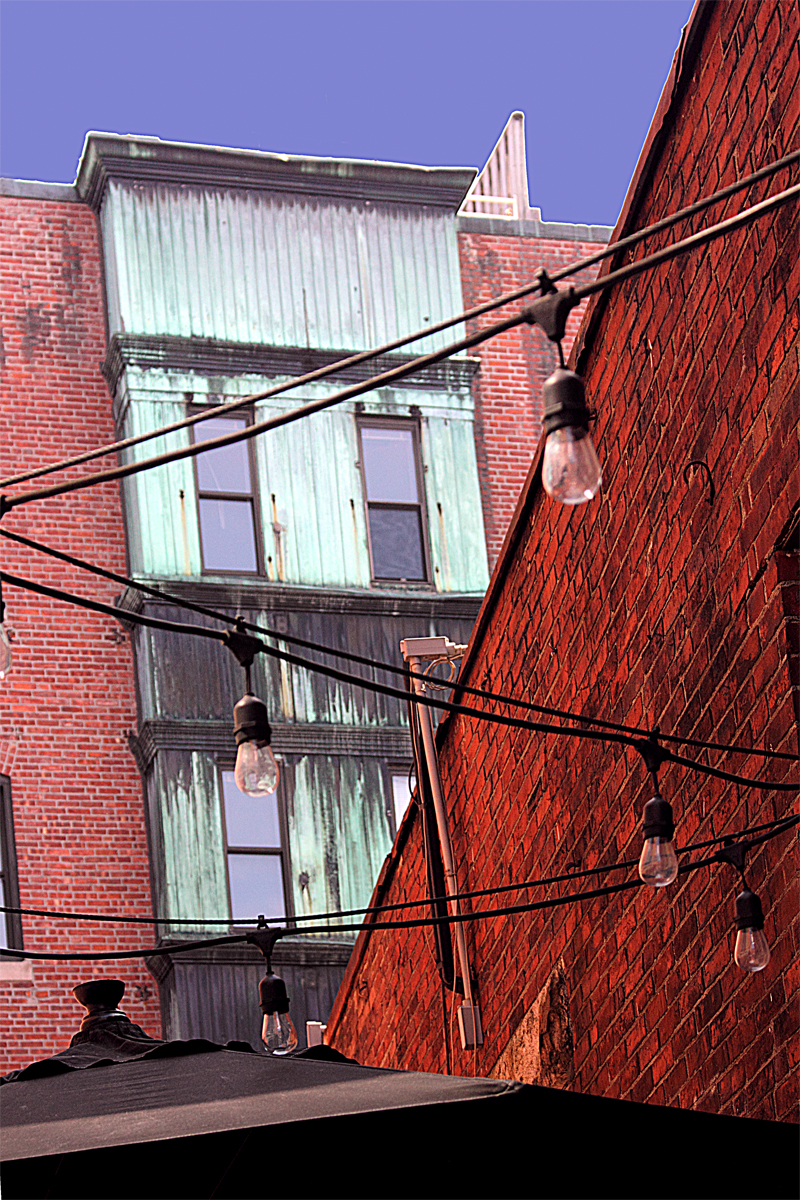
The final result is shown in Figure 3.  It’s not perfect.  But the white edge is significantly reduced and I’m pleased with the results.

Figure 3 - Courtyard of the Russell House Tavern, Cambridge, MA (c) DE Wolf 2013

Figure 3 – Courtyard of the Russell House Tavern, Cambridge, MA (c) DE Wolf 2013

In search of Turkish pastries and coffee

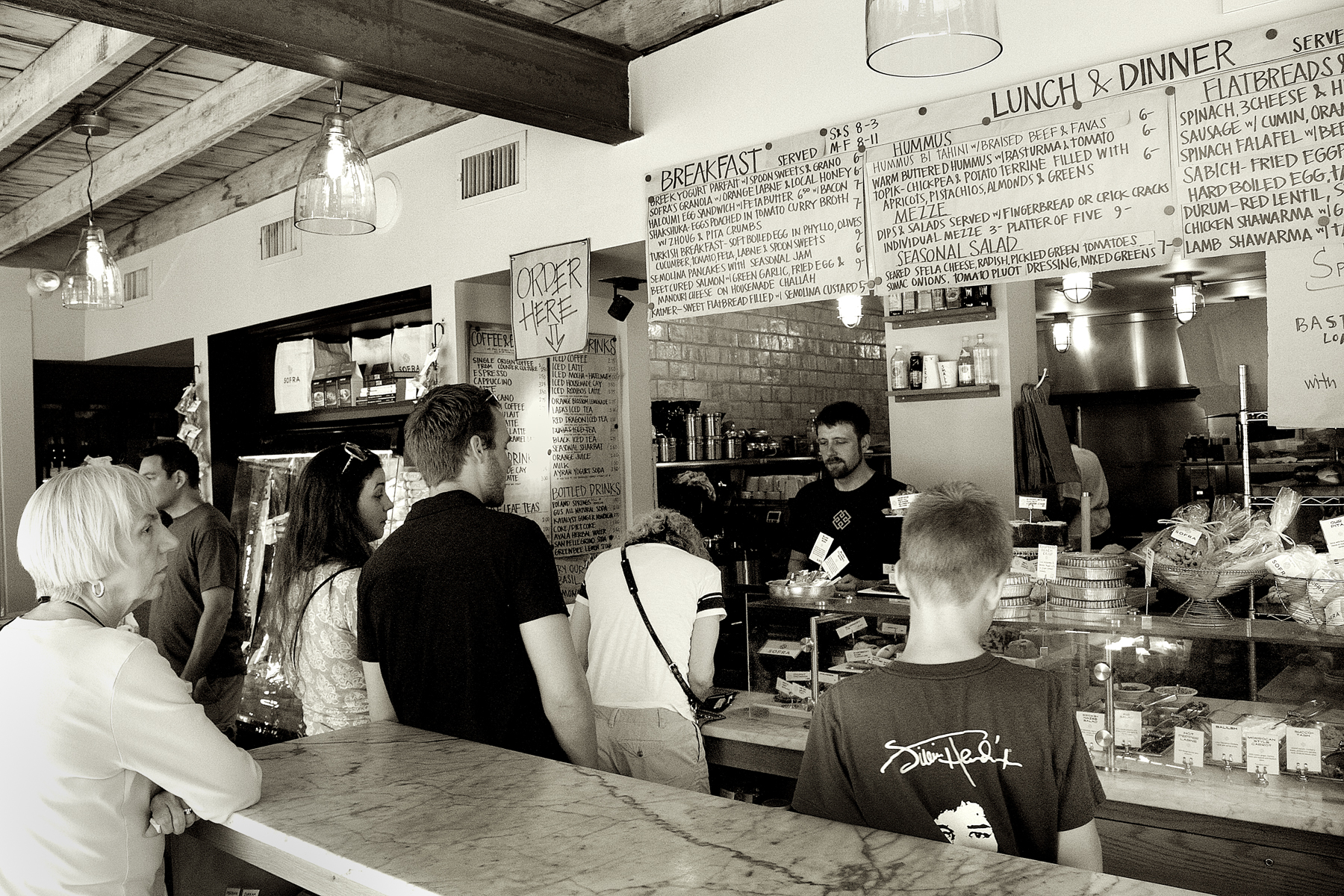
Figure 1 - Interior of the Sofra Bakery, Watertown, MA. (c) DE Wolf 2013.

Figure 1 – Interior of the Sofra Bakery, Watertown, MA. (c) DE Wolf 2013.

Cartier Bresson aside, I am like many photographers shy about pointing my camera in the faces of strangers.  So I have to force myself, if just for the practice, to find nonthreatening situations and snap a few street photographs.  On a recent Sunday my wife and I ventured into Cambridge, really for the glory of the sunshine.  On driving home we found ourselves in search of the perfect Turkish coffee served up with Turkish pastries and if you want other middle eastern specialties such as the most wonderful lamb swarma ever.  The choice here is an obvious one for people in The Hub – Sofra Bakery in Watertown.  This bakery is the creation of two master Boston chefs: Maura Kilpatrick and Ana Sortun.  Honestly, I’m getting kind of hungry just thinking about it.

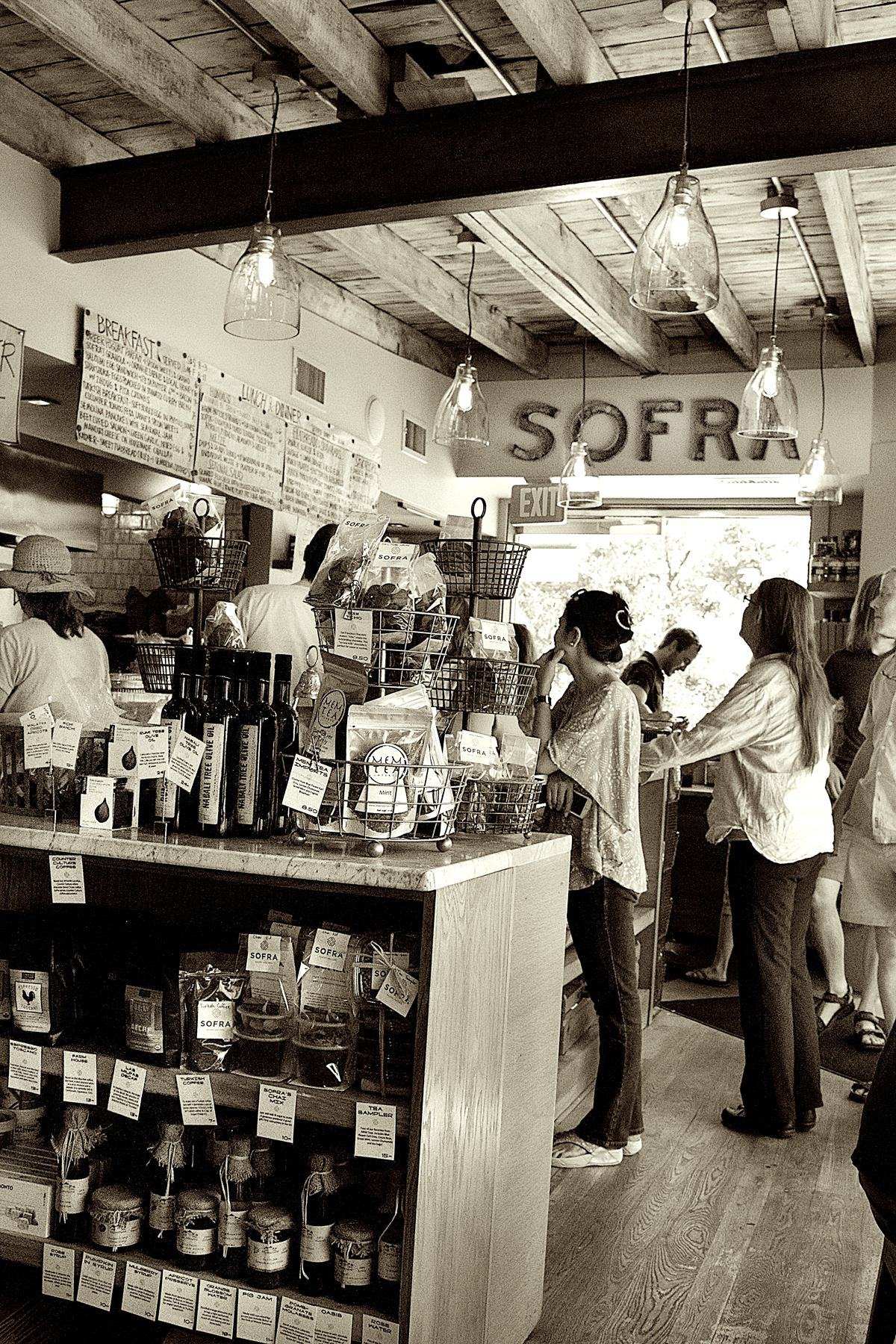
One of the elements, besides the food, that I love about Sofra’s is the subdued backlit atmosphere on a summer’s afternoon, the unassuming way the menu is listed on free-handed paper signs, and the cozy seating around round metal drum tables.  I have in the two figures here attempted to catch the coffee house atmosphere.  There’s nothing Starbucksian about this – just great food and wonderful deep rich coffee.  It offers a perfect opportunity at a bit of street, or at least coffee house photography.  Everyone is so fixated on all the goodies that they are oblivious to the occasional unobtrusive photograph – no flash of course.

Let’s see – taken with my Canon EF-S 18-55mm f3.5-5.6 IS STM lens in aperture priority at f 7.1 with an ISO of 3200.  Figure 1 is 18 mm at 1/125 s.  Figure 2 is 24 mm at 1/250 s.

Figure 2 - Interior of the Sofra Bakery, Watertown, MA. (c) DE Wolf 2013.

Figure 2 – Interior of the Sofra Bakery, Watertown, MA. (c) DE Wolf 2013.


Old and new

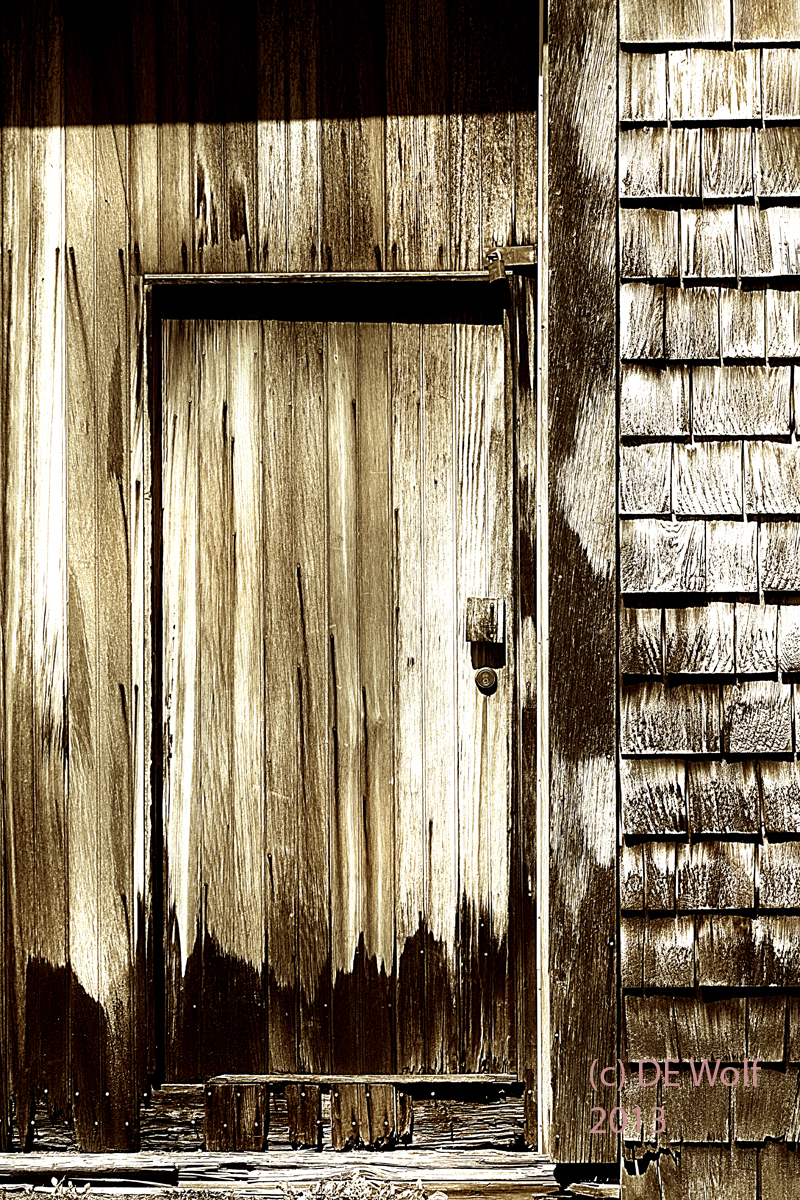
Figure 1 - Barn Door at the James Whittemore House, Lexington, MA, Minueman National Historical Park, (c) DE Wolf, 2013.

Figure 1 – Barn Door at the James Whittemore House, Lexington, MA, Minueman National Historical Park, (c) DE Wolf, 2013.

This past Saturday (August 24) I went up to the Minuteman National Historical Park in Lexington, Massachusetts in search of photographs.  The weather was just spectacular and the light strong with nice beams filtering through the forest.  In my book all was perfect.  So I wanted to share an image that I took of the barn at the Jacob Whittemore house.  I used for this my EF70-200 F/4 L USM lens set at aperture priority at f 7.1  with an exposure of 1/1600 and and ISO of 400.  I hand-held it at 81 mm.  Weathered wood seems to be a speciality of New England and I have to say that I love the tonal depth that it gives the image and the fine detail.  Despite my adjusting the black level into the histogram there is still subtle tones retained in the upper black region of the image.

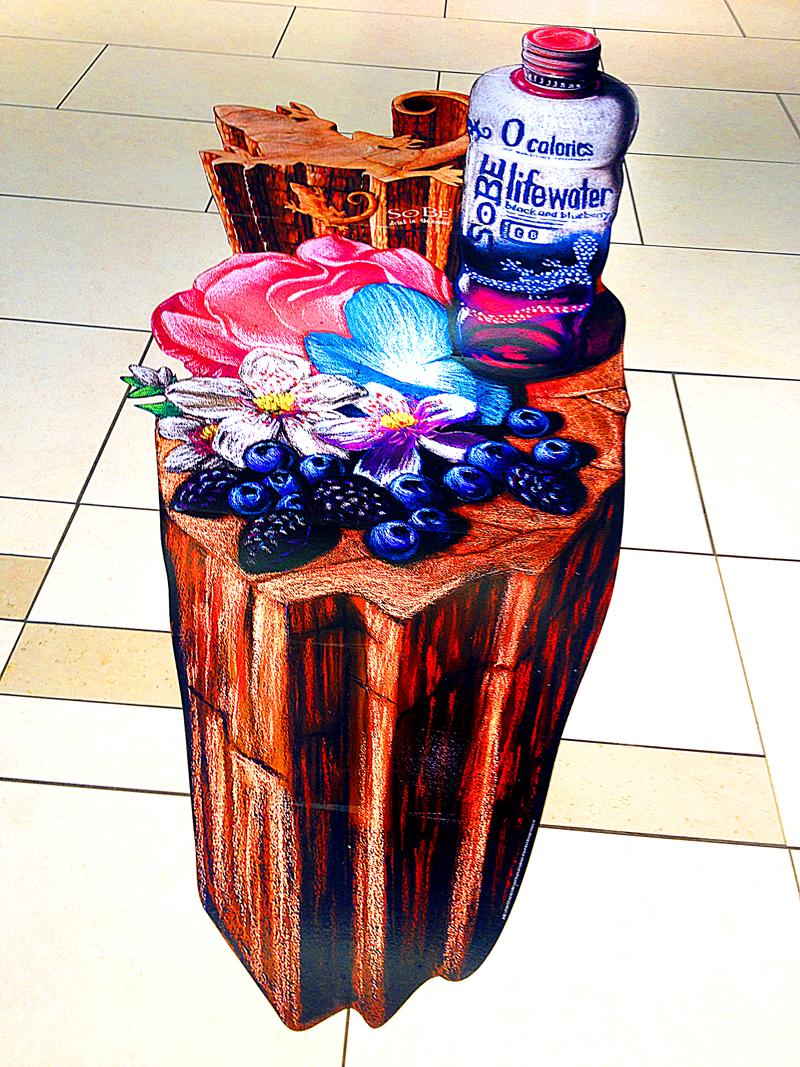
On a totally different note, I was struck earlier in the day while waiting for my wife at lunch of an advertisement for Sobe Water on a tile floor.  The designed was created to give a deep sense of 3D perspective, and I was intrigued as to whether my IPhone could deal with the extreme angle of shooting and keep everything in sharp focul.  The answer is an unequivocal yes.  Marvelous little cameras, those IPhones are!

Figure 2 - Sobe Water advertisement on tile. (c) DE Wolf 2013.

Figure 2 – Sobe Water advertisement on tile. (c) DE Wolf 2013.


Escape from the Tower of Orthanc

Figure 1 - The Tower of Orthanc, (c) DE Wolf 2013

Figure 1 – The Tower of Orthanc, (c) DE Wolf 2013

OK, so we are officially in the “Dog Days of Summer.”  Let’s be quite clear about this.  While the term is generally applied to the sultry days of summer, when the temperatures are the hottest, it’s original meaning, and therefore physicist’s meaning, goes back to Roman times when the dog star Sirius rose just before or coincident with the rising of the sun.  It is, in fact, the case that due to what is referred to as precession of the equinox, this coincidental rising is not longer true.  What’s that you say?  The Earth spins on it’s axis like a top.  The top tilts slightly and the axis rotates slowly about the vertical, see Figure 2.  The top was a subject of endless amusement in Dr. Victor Franco’s classes on advanced mechanics.  This precession is also why we declare it to be the “Age of Aquarius,” the sun no longer rising on the day of the vernal equinox in the constellation of Ares, as it did in ancient times but rather in the constellation of Aquarius.

Figure 2 - Precession of a top or gyroscope.  From the Wikimedia Commons and in the public domain under creative commons license.

Figure 2 – Precession of a top or gyroscope. From the Wikimedia Commons and in the public domain under creative commons license.

This is a time of wonderful late summer light in New England.  We have effectively seven seasons here, each beautiful in its own right: winter, early spring, late spring, summer, late summer, fall, and winter.  I spotted a wonderful old apple tree in a forgotten orchard meadow.  It was surrounded by gloriously golden lazy Susans.  The light was not what I wanted.  So I have returned four times in early morning, but have yet to find exactly what I am looking for, and now the lazy Susan’s are beginning to give up the ghost.

So, after another disappointing failure with the apple tree, I decided to visit my winter haunt – our local mall – to see what was about.  It is a quiet time in the mall.  Still it is fun to people watch and to search for photographic opportunities.  Mall security can get a bit testy if you snap away with a long telephoto.  But the IPhone provides a degree of anonymity.  It is already fall in the mall, and I observed the various indigenous peoples: beautiful and fashionable women who, since we are in the safety of the ‘burbs, will share a smile with you, long-legged teenage girls who, one can only hope, will find the rest of their clothes before school starts, and babies brought there to be entertained but really delightfully entertaining themselves.  They too are ever ready to share a smile or wave with you.  There are also the sulking teenage boys trying unsuccessfully to look as threatening as possible.  This included one young NY Yankees fan, who wore and A-Rod tee shirt and seemed oblivious to the possibility of abuse by hoards of Boston Red Sox fans.

I wandered past the new Microsoft store.  I was tempted to go in an find out what all the fuss about the “Surface RT” was.  I am a loyal advocate of PC products.  Perhaps it was old geezer prejudice, but there was something not so reassuring about the clerk with aqua blue hair.  I have no problem with dyed hair – but really, aqua!  It seemed a bad fashion decision and did not instil confidence that this woman would know what she was talking about.  Or maybe it had nothing to do with the young woman with blue hair and more to do with years of experience with products that Microsoft assured you that you had to have and then abandoned.

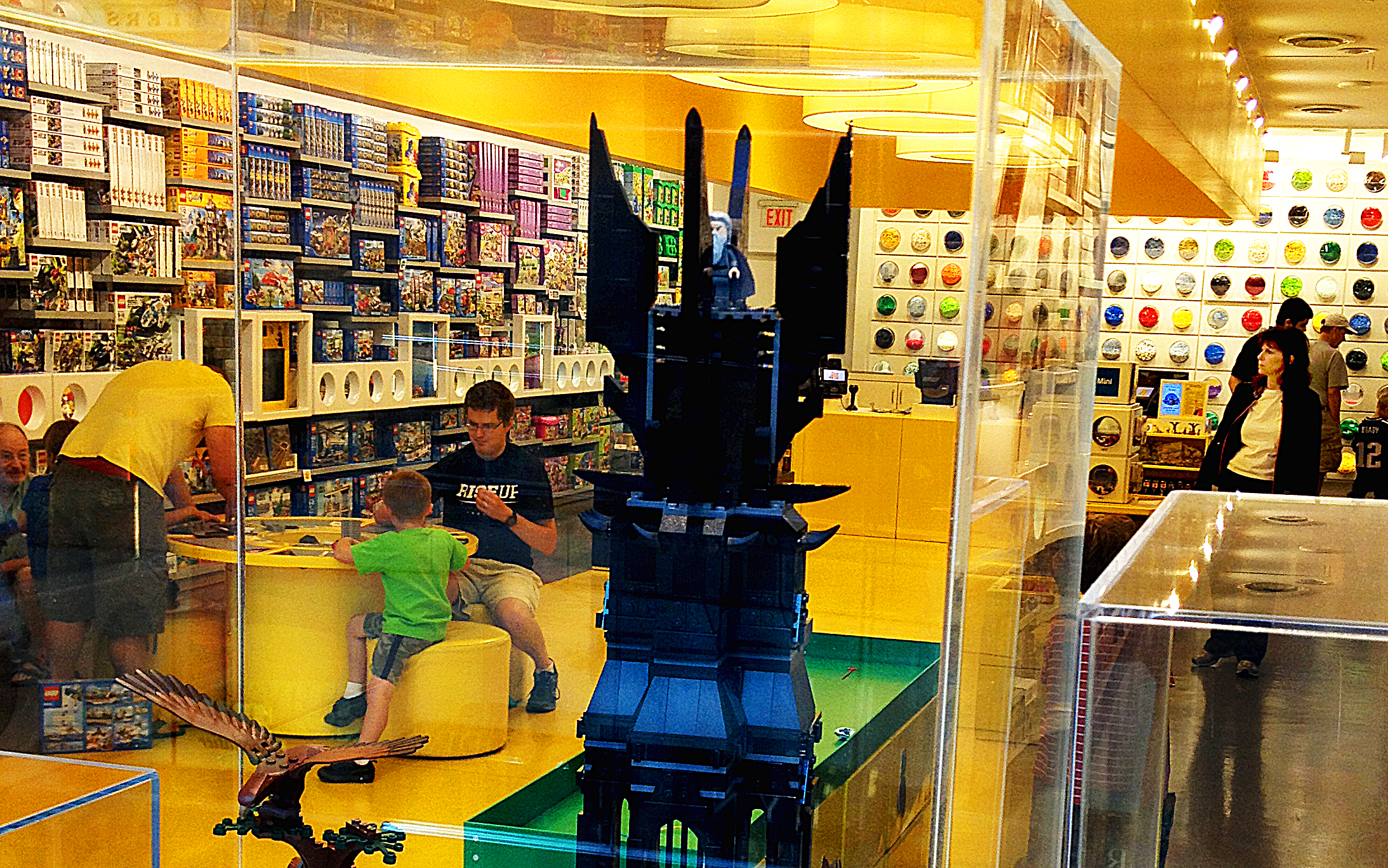
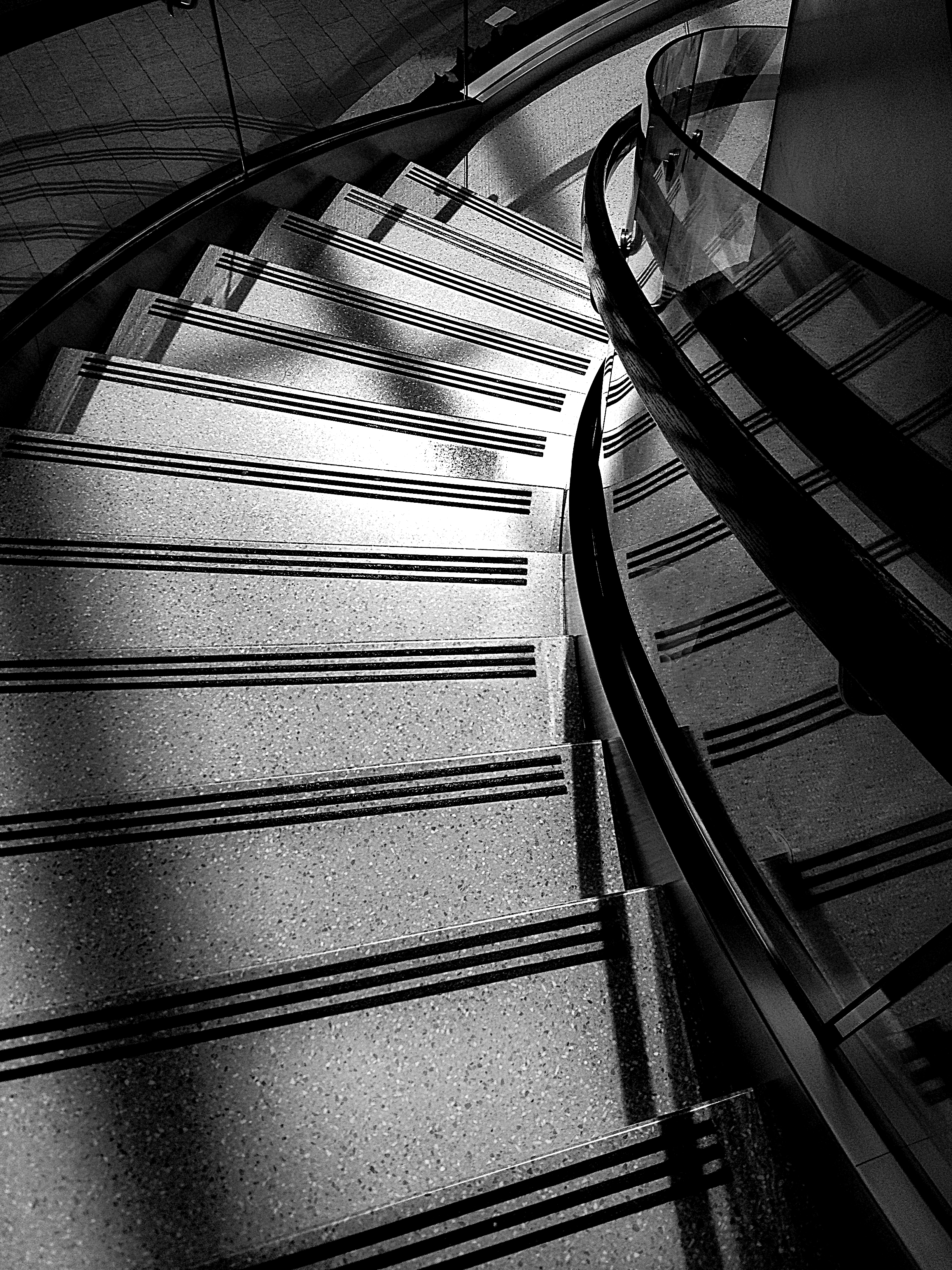
So I moved on.  And then I found it at the altar of the Lego Store, “The Tower of Orthanc!” And there was Gandalf the Grey about to be rescued by eagles.  When you have young children you make the excuse that the magic of such places is to see them again through a child’s eyes.  It is nonsense.  The reality is that you yourself still have a child’s passion, still believe in magic, but are too proud and self-conscious to venture in.  And good thing.  The glorious “Tower of Orthanc” cost $195.  The magic ended there and I bid a hasty retreat town the steps that spelled “Escape from the Tower of Orthanc.”

Figure 3 - Escape from the Tower of Orthanc, (c) DE Wolf 2013

Figure 3 – Escape from the Tower of Orthanc, (c) DE Wolf 2013


A note from Hati and Skoll

(c) DE Wolf 2013

(c) DE Wolf 2013

I wanted to pause and take note of the fact that today is the one year anniversary of Hati and Skoll.  It was launched on August 19, 2012 and we have now built up quite an extensive readership.  I’m talking about real people who visit the site and read the blog each month – not robots, worms, search engines, or webcrawlers.

I have tried to bring my unique physicist/photographer perspective to the site and blog.  The best part of all of this is the opportunity to see in other photographers’ work, both historical and contemporary, the incredibly varied uniqueness of vision.  On day one of Hati and Skoll, I spoke about the magic of photography.  Nowhere is that more apparent than when you marvel at the uniqueness of vision and at how many people are truly gifted.

I believe that digital photography has made it easier to master the technique of photography.  Surprisingly it has not raised the ante.  Rather it has enabled so many to express their souls and inner vision photographically.

So I just wanted to say that I am very grateful to everyone for their interest, support, and perceptive comments.  I have learned from all of you and from all of the pictures that we have discussed.


Aquarium photography

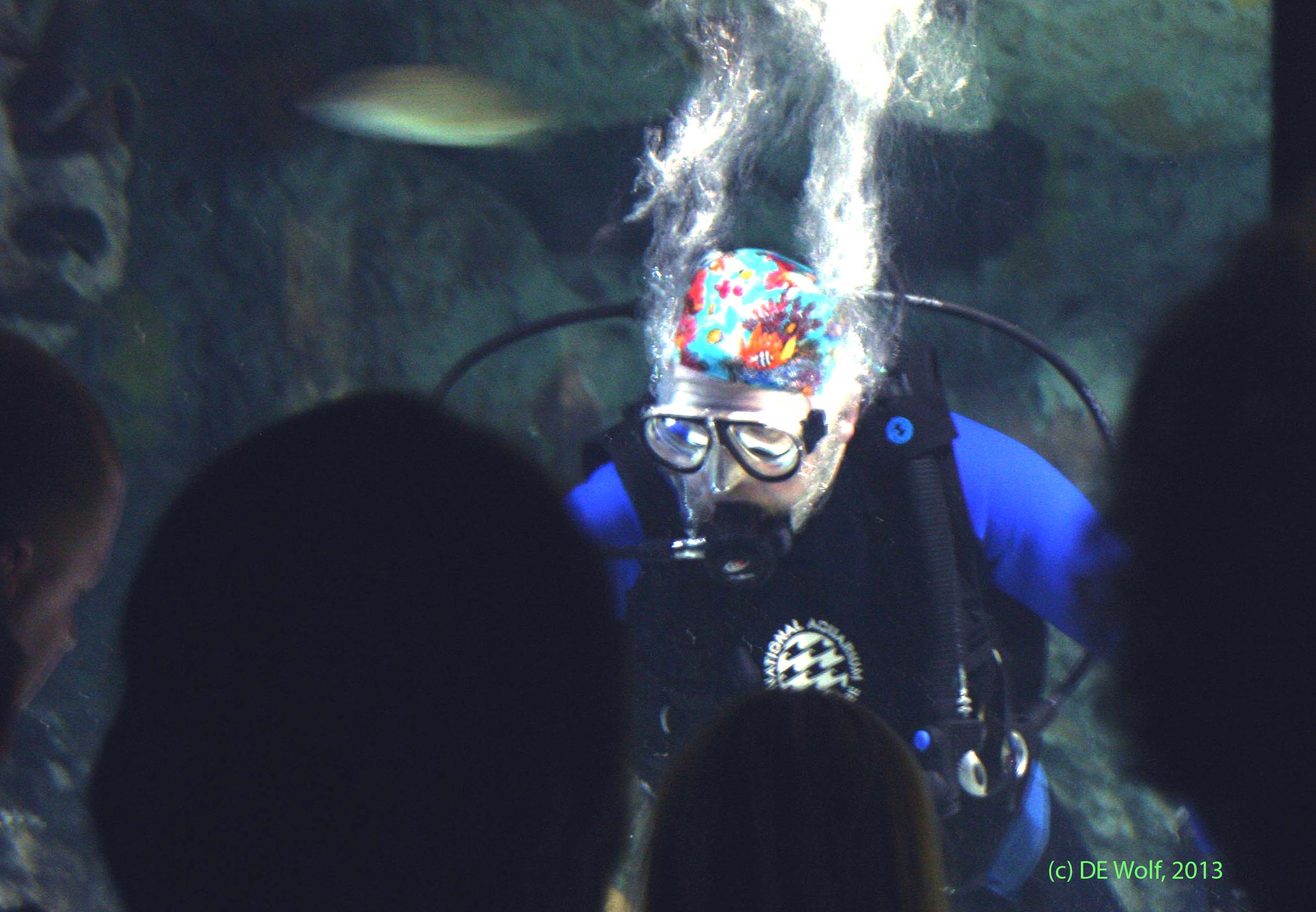
Figure 1 - Scuba diver at the National Aquarium, 2005, (c) DE Wolf, 2013

Figure 1 – Scuba diver at the National Aquarium, 2005, (c) DE Wolf, 2013

The day before yesterday I posted an image from the Wikimedia Commons showing a whale shark at the Georgia Aquarium.  I love this image and the way both the creature’s size and the enthusiasm of the crowd is portrayed by people against the glass in silhouette.  It reminded me of one of my first digital images that was taken on a family trip to the National Aquarium in Baltimore, MD.  I thought that I would share it here with you as Figure 1.

In the picture one of the divers sent in to feed the fish, presumably to stop them from feeding on each other, comes face to face with a crowd of onlookers.  A fish darts by and becomes an incoherent blur in the upper left. The picture is made by the really cool bathing cap that the diver is wearing and the stream of brightly lit air bubbles.