Abstract bubbles and hidden light at the mall

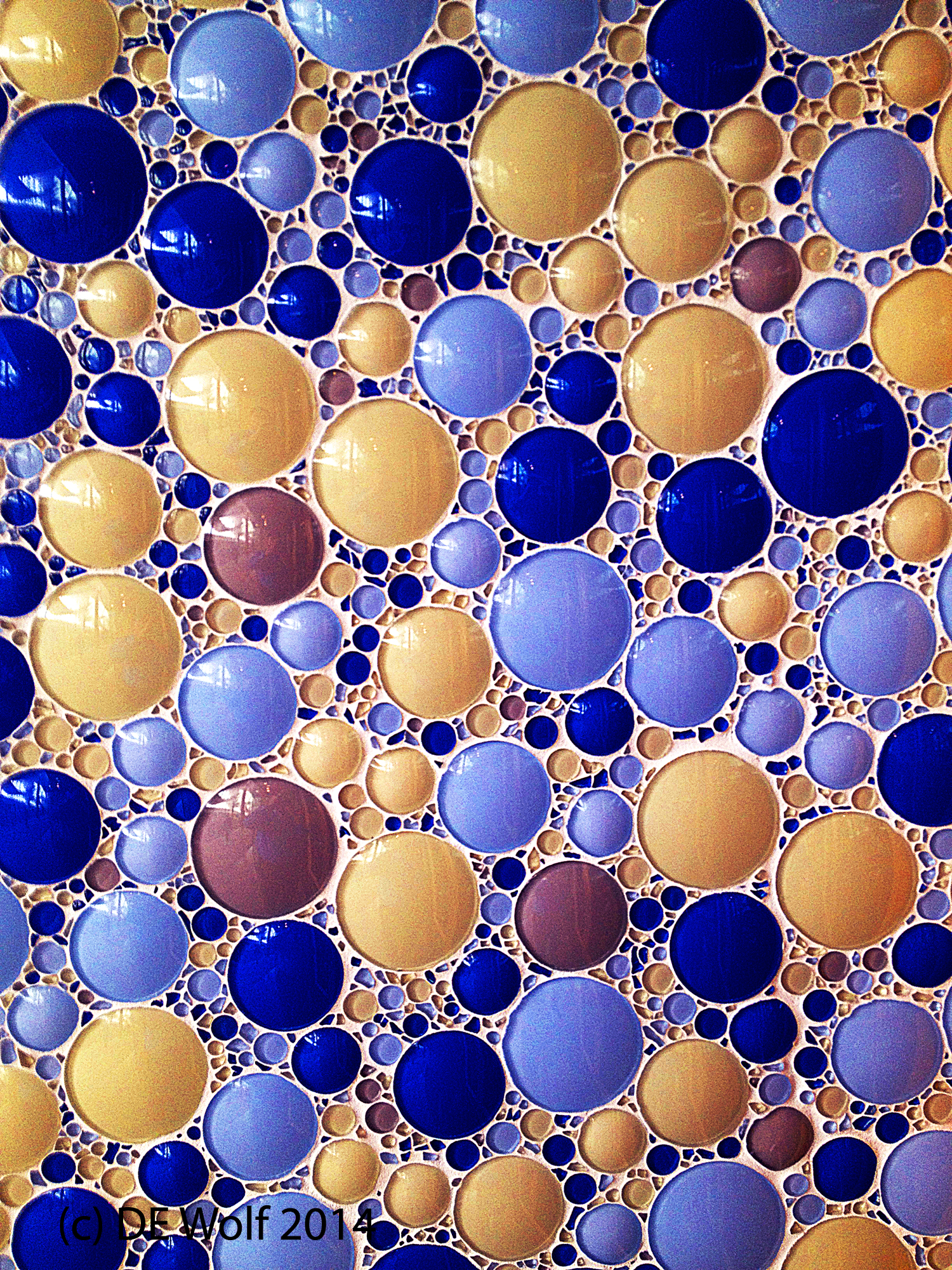
Figure 1 - Bubbles, (c) DE Wolf 2014

Figure 1 – Bubbles, (c) DE Wolf 2014

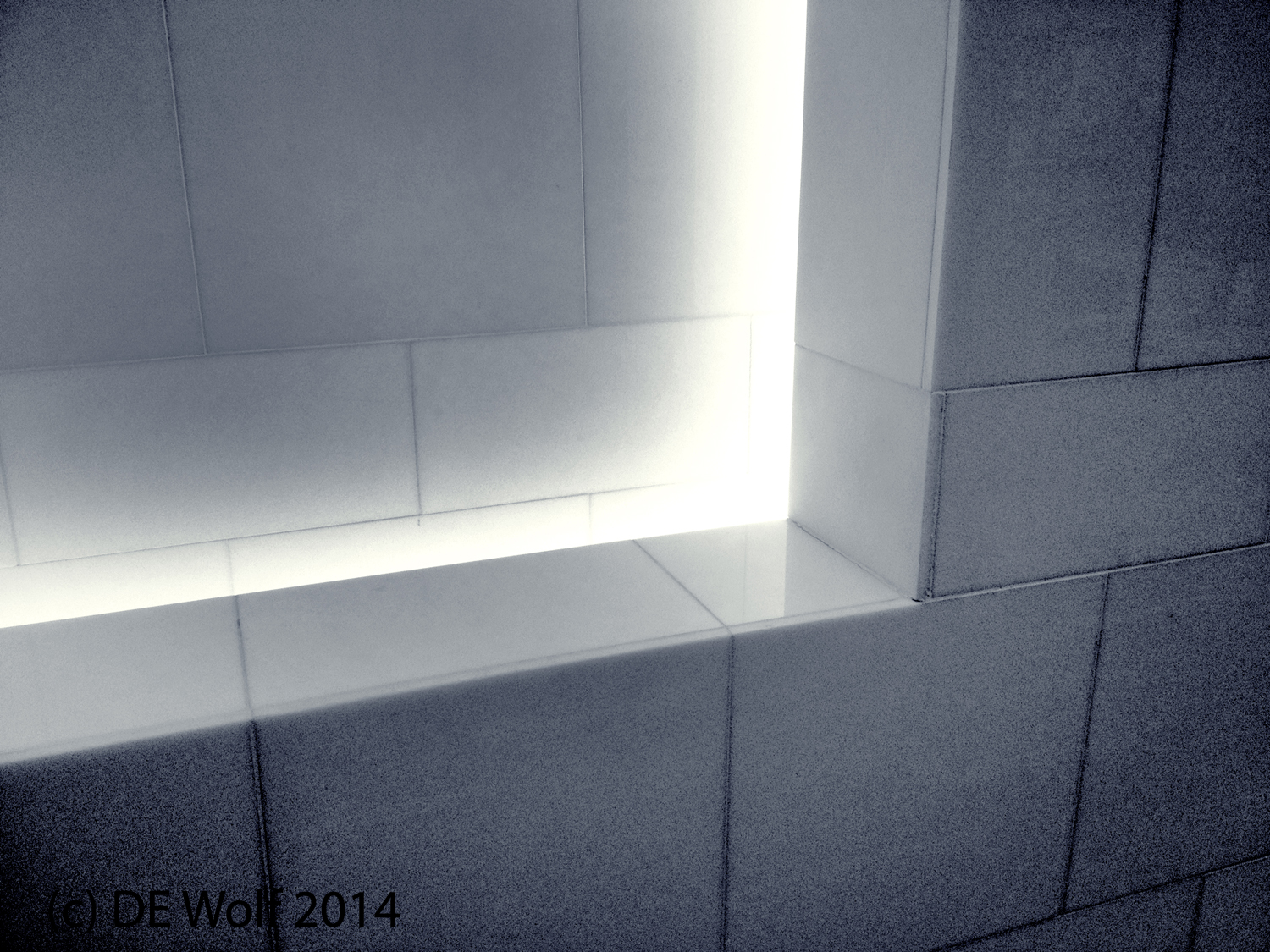
Well as I have bemoaned repeatedly, it has been a bad winter here in Massachusetts.  So I have often been driven back to the mall to walk.  That’s not so bad and I always have my cell phone with me to serve as a pseudo large format IPhone camera for photographing abstractions.  So today I have two offerings from a visit last Sunday.  The first is a wall beside  “Marbles, The Brain Store” tiled with bubbles.  I love it.  The second is of two overlapping white tiled walls, and there is a glow of light from behind.  For some reason this picture reminds me of one of those 1950’s low-budget B science fiction movies.  “Don’t go near the nuclear glow behind the wall!  Alright winter has taken my wits from me.

The glow image is an example of where the IPhone fails.  It is eight bit and cannot really handle the high dynamic range of the image.  There is just too much graininess when you get rid of the useless bits.  I retried it with the HDR setting, but that wasn’t much better.

Figure 2 - Hidden light, (c) DE Wolf 2014

Figure 2 – Hidden light, (c) DE Wolf 2014

Icicle

Figure 1 - Icicle, (c) DE Wolf 2014.

Figure 1 – Icicle, (c) DE Wolf 2014.

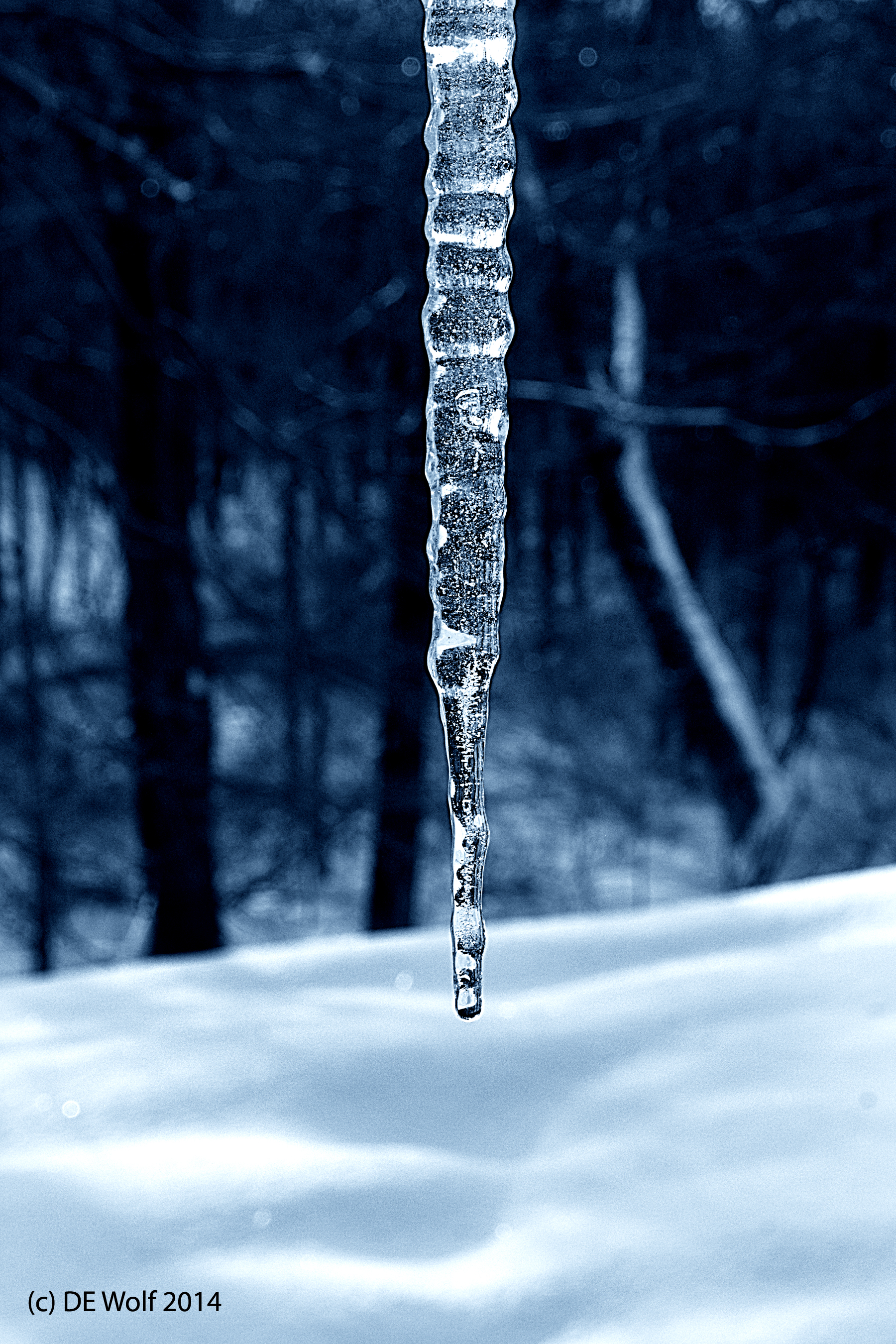
Winter here in the Northeast is snow and ice.  I have been focusing a lot on photographing the snow.  But ice can also offer some magical possibilities.  And the most magical ice of all are icicles.  They grow on your house and are really beautiful until you realize that they are harbingers of ice dams and roof leaks – not so good.  When I was in graduate school in Ithaca, NY we had icicles behind the physics building that were feet around and five to ten feet long.  They hung from the eaves of the third floor and if you parked beneath them – well let’s just say “Excalibur!” Really not good at all.

In a sense icicles are a record of winter. Successive bulges spell out, like tree rings, the diurnal melting and refreezing. And they are truly magical house ornaments.  I love the way they catch light, refracting it like imperfect lenses, and scattering it off encased air bubbles.

This afternoon I was particularly intrigued by the shining icicles hanging outside our bedroom windows. And since my wife was downstairs, she could not protest as I flung open the window and removed the screen to take some pictures.  The lone icicle of Figure 1 I particularly liked.  It has that specimen quality of something at the same time scientific and beautiful.  After removing the cold blue natural colors and converting to black and white, I found myself toning blue.  Go figure!

Impressionism

Figure 1 - Impressionism, (c) DE Wolf 2014.

Figure 1 – Impressionism, (c) DE Wolf 2014.

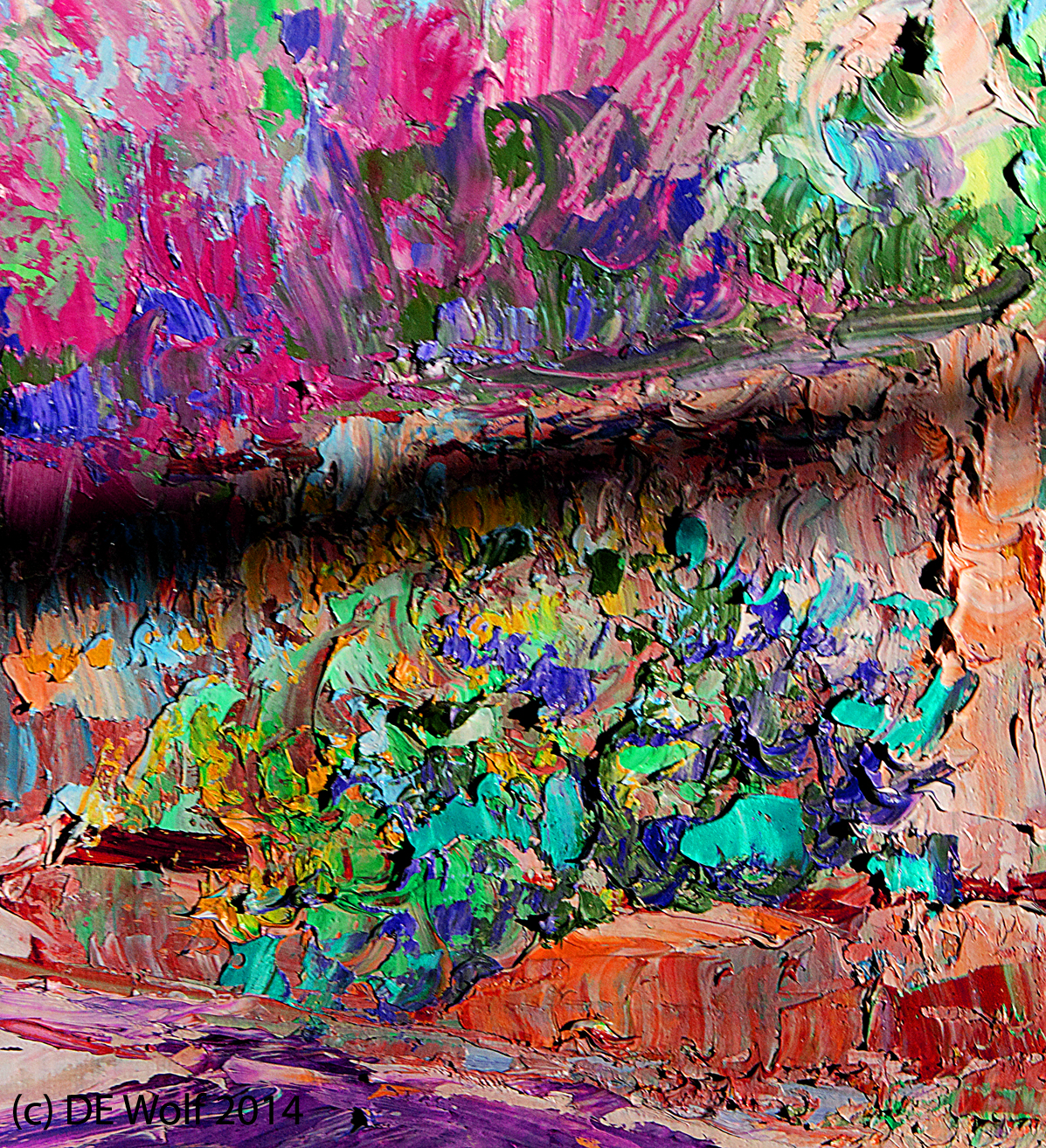
I find that there is real value in having your camera with you at all times.  You never know when a trick of light, color, or shadows is going grab you and demand to be photographed.  Today was a relatively warm day between the endless string of snowstorms.  I had been taking photographs and was putting away my camera at home, when I noticed the golden light of sunset bathing an oil painting and casting the shadows pattern of the window frame.  It was a high contrast light, and I was particularly taken by the flaky texture of the paint.  So I came in really close so as to capture the colors and the texture and I carefully lined up the horizontal shadow of the mullion in such a way as to emphasize the and give three dimensionality to a roof line in the painting.  Figure 1 is my own impressionist interpretation of what was already an impressionist scene.  The colors allow me a short escape from winter’s cold blue tones to a warmer world.

Shakespeare and St. Valentine’s Day – wolves and Ophellia

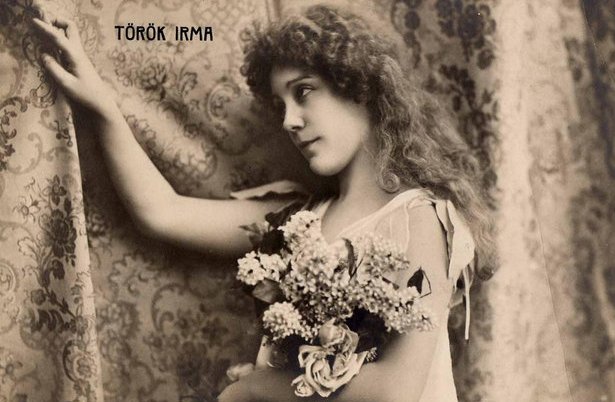
Figure 1 - Hungarian actress Török_Irma in the role of Ophelia in 1901.  Image from the Wikimedia Commons and believed to be in the public domain.

Figure 1 – Hungarian actress Török_Irma in the role of Ophelia in 1901. Image from the Wikimedia Commons and believed to be in the public domain.

Happy St. Valentines’ Day everyone!  For me Valentine’s Day is filled with Shakespearean connotations.  For regular readers of this blog, there’s no surprise in that!

First of al,l St. Valentine’s Day was meant to replace the ancient Roman holiday of the Wolf, the Lupercalia. So, of course, Hati and Skoll is going to celebrate it.  The Roman holiday was, in fact, celebrated on February 15, but what’s a day in 2100 years.

Shakespeare’s play Julius Caesar begins during the feast of the Lupercal.  Mark Anthony in his “Friends, Roman, countrymen…” eulogy alludes directly to the point:

“You all did see that on the Lupercal
      I thrice presented him a kingly crown,
Which he did thrice refuse. Was this ambition?
Yet Brutus says he was ambitious,
And, sure, he is an honorable man.”


And then there is the fair Ophellia from Shakespeare’s Hamlet, who met her untimely  death by suicide, driven mad by Hamlet, on St. Valentine’s Day.  It is, of course, fitting because in a sense she dies for love, caught up in vortex of ambiguity at being in love with her father’s killer.

 ‘Tomorrow is St.Valentine’s Day
And early in the morning betime,
I’m a girl below your window
Waiting to be your Valentine.”


For years I thought of Ophelia as a hopeless twit.  But then in 2009 I saw Sir Patrick Stewart’s made-for-television Hamlet and I was quite blown away by Mariah Gale’s Ophelia.  She is stunning!  For the first time ever, and I have seen a lot of versions of Hamlet, I related to Ophellia and felt sorry for her.  So as an aside, if you love Shakespeare as much as I do and have never seen this version, do so.

There are some really amazing images of Ophelia over the years.  Some of these are paintings: for instance John Everett Millais (c1851), John William Waterhouse (1908), and, of course, Dante Gabriell Rossetti (1884-1888).  Figure 1, shows a photographic postcard of one of the great beauties, who has played Ophelia, Hungarian actress Török Irma c 1901.  It is such a lovely image that I thought that I would share another image of Török Irma from the Hungarian Wikisite as Figure 2.  It shows her in  Herczeg Ferenc’s “The Nabob’s Daughter.”
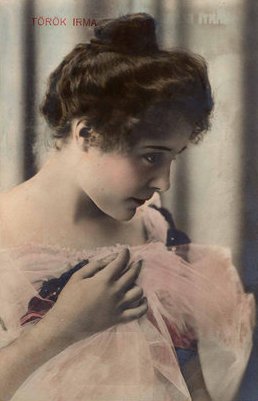
Figure 2 - Török_Irma in "The Nabob's Daughter" 1893.  Image from the Hungarian Wikipedia and believed to be in the public domain/

Figure 2 – Török_Irma in “The Nabob’s Daughter” 1893. Image from the Hungarian Wikipedia and believed to be in the public domain/
 

New at the Hati and Skoll Gallery

Thanks to all of the loyal readers of the blog at Hati and Skoll Gallery.  I have finally gotten my act to together and have brought the galleries up-to-date.  So there are a few changes.  First, I have move the images from the New Gallery to the other galleries as appropriate.  The New Gallery is currently empty but will be repopulated soon. Second, I have added some new photographs to the Man-made and Places galleries.  And finally, in keeping with my New Years’ Resolution to take more portraits I have added a gallery called En Persona, which features some of the better portraits that I have taken over the years.  And as I say more to follow.  Thanks again to everyone!

Extreme selfie-ing

Figure 1 - Extreme Selfie of the Artist, (c) DE Wolf 2014.

Figure 1 – Extreme Selfie of the Artist, (c) DE Wolf 2014.

The other night I was watching the Olympics on television.  There are all these new sports.  It is just a bit bewildering.  And in the United States, if you watch the coverage on network television, you really don’t get that much coverage of any given event.  I understand the problem, but they never have found the right formula.  So when you find yourself contemplating the broadcasters, who haven’t lost a single lock of hair in the past thirty years, you start to wonder what is going on.

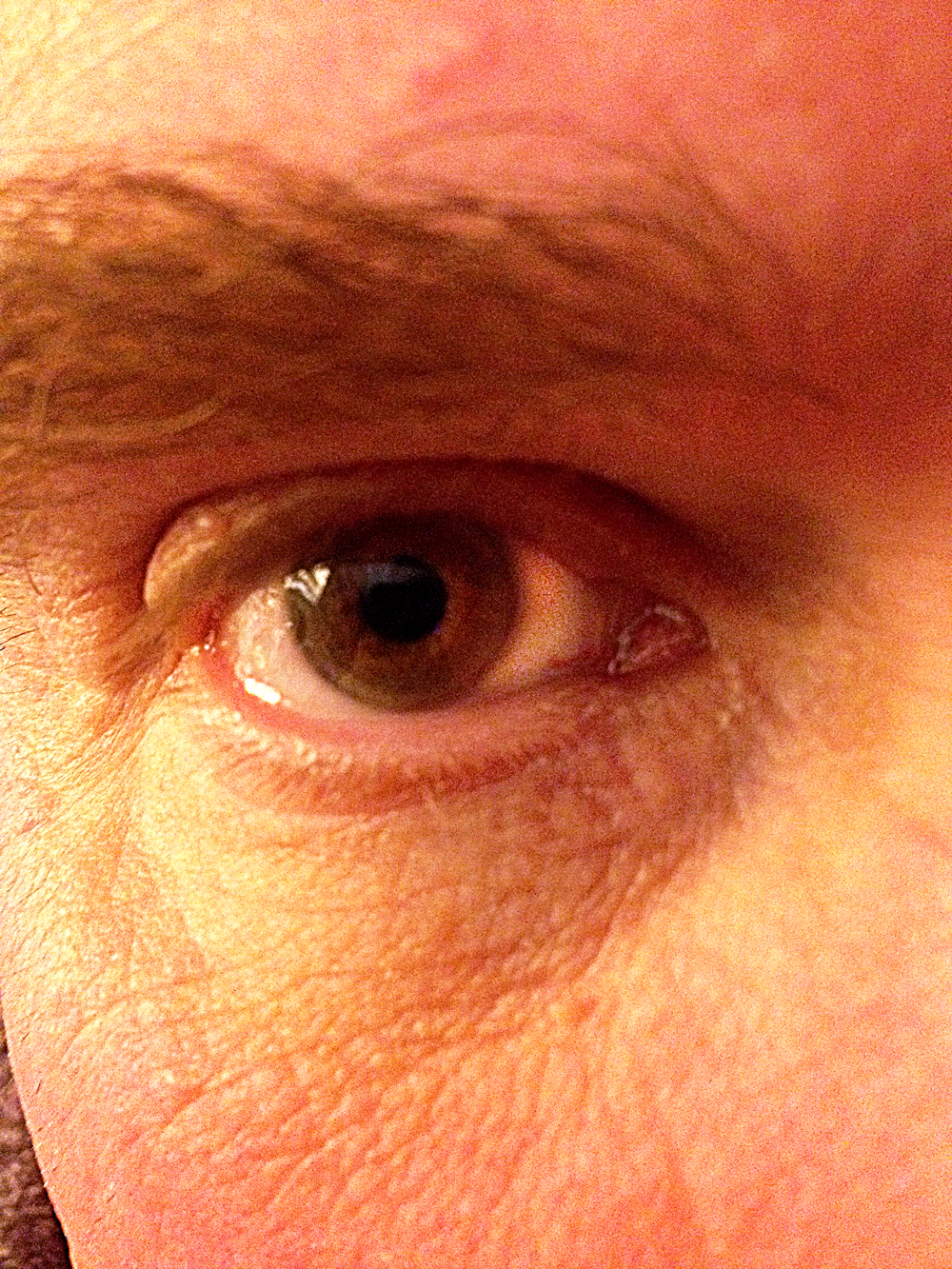
One of the interesting points is that winter sports keep going more and more extreme –   “extreme skiing, extreme snowboarding.”  So that got me thinking what about extreme “selfie-ing?” And needless-to-say since the whole show was getting pretty soporific; so I found myself trying it for myself.  As a result I give you Figure 1 – Extreme Selfie of the Artist.  I first tried it out with the front-facing camera on my IPhoe.  But as we discussed the rear-facing camera is a whole bunch better, and since you cannot see what you are doing past a certain distance it really doesn’t matter.  Just stare close into the lens and try to hold the phone straight and flat.

I am actually pretty impressed with the result.  The depth of field is pretty much nonexistent.  But where it is in focus, it’s surprisingly sharp.  And then we can go off on one of those mindlessly profound stories of how the eye is the portal of the soul, or some such.  Well, Dr. Freud, sometimes a pencil is just a pencil, and more often than not, a selfie, even an extreme selfie, is just for fun!

Camera optics – mirror images

MirroredSelfie

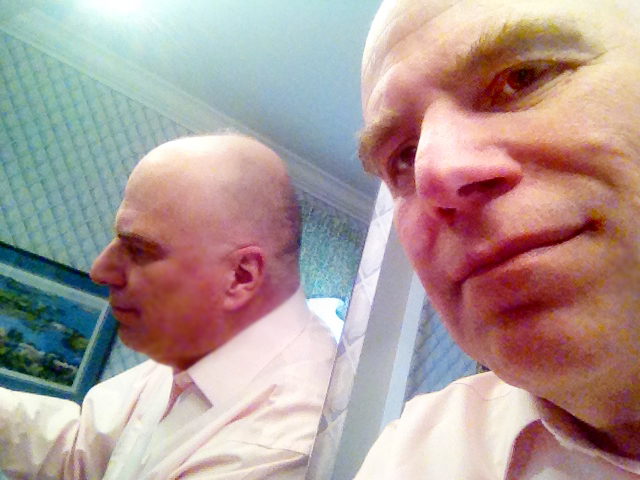
Figure 1 – Mirrored selfie, (c) DE Wolf 2014.

I wanted to talk a bit about what I call “camera angles.”  Why do we hold different types of cameras the way we do? And what exactly is going on inside the different types of camera viewfinders. Curiously, what got me interested in this subject is that I was shaving this morning in front of the bathroom mirror and started to play around with self images (selfies) of myself and my mirrored reflection.  One of these experiments is shown in Figure 1. That’s me on the right looking at the camera and alter me on the left looking disdainfully away from the camera.

So much for art and the magic of mirrors mixed with cameras, what about the physics?  OK, look at yourself in the mirror, or flip you cell-phone camera so that you can see yourself on the LED screen.  The person in the mirror is right-side up.  Excellent!  Now raise your right hand.  What does the person in the mirror do? (S)He raises her/his left hand.  Hmm.  So we conclude that mirrors maintain up and down but flip right and left.

Well that is kinda cool!  Now try something else.  Point your finger at the mirror or camera and move it first up, then a bit to the left, then down, and right back to where you started.  You are moving your finger counter-clockwise.  What is the fella in the mirror doing? Let’s see, well first of all (s)he’s moving her/his left hand, first up, then right, then down, then left.  The mirror person sees his/her hand moving clockwise.  Oh my!  So clockwise and counterclockwise are also flipped.

Now here is where I’m going to confuse you, or take you out of the realm of nice little rules.  What I want you to do is keep your mirror as before or your camera still in the back-view (in your face) setting.  But now I want you to tip it at a forty-five degree angle downward towards the floor and look at the image of someone across the room. What you see is that the person is upside down and because right and left haven’t changed they are now correct for the inverted person.

So hopefully you find this is interesting.  If not, I hope you at least liked the selfie.  But significantly because cameras are essentially composed of three types of optical components: mirrors, lenses, and prisms, we have taken an important step towards understanding why they are constructed the way that they are.

Like they say on television: “to be continued.

New exhibit of David Wolf’s photographs

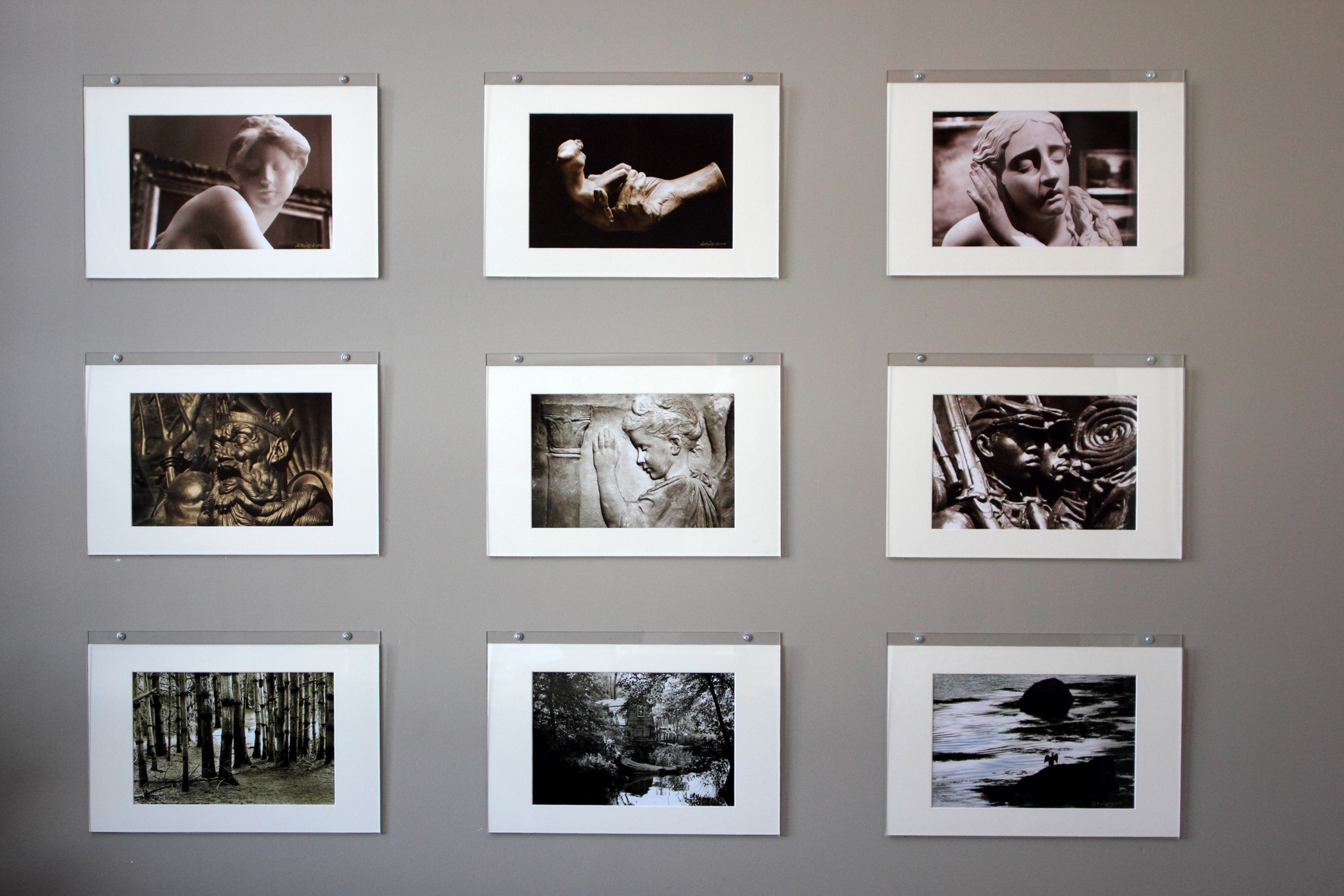
Figure 1 - New exhibit of David's photographs at RMD in Watertown, MA. (c) DE Wolf 2014

Figure 1 – New exhibit of David’s photographs at RMD in Watertown, MA. (c) DE Wolf 2014

Hati and Skoll Gallery is pleased to announced that a permanent exhibit of David’s photographs has been installed in the Operations and Human Resources Department at Radiation Monitoring Devices at Watertown, Massachusetts.  A photograph of the exhibit is shown in Figure 1.  Several of the pictures may also be viewed on this website.  The photographs on display are:

Top Row (L to R)

“Blind Cupid,” “Rodin and the creation of woman,” Nydia the Blind girl of Pompeii”

Middle Row (L to R)

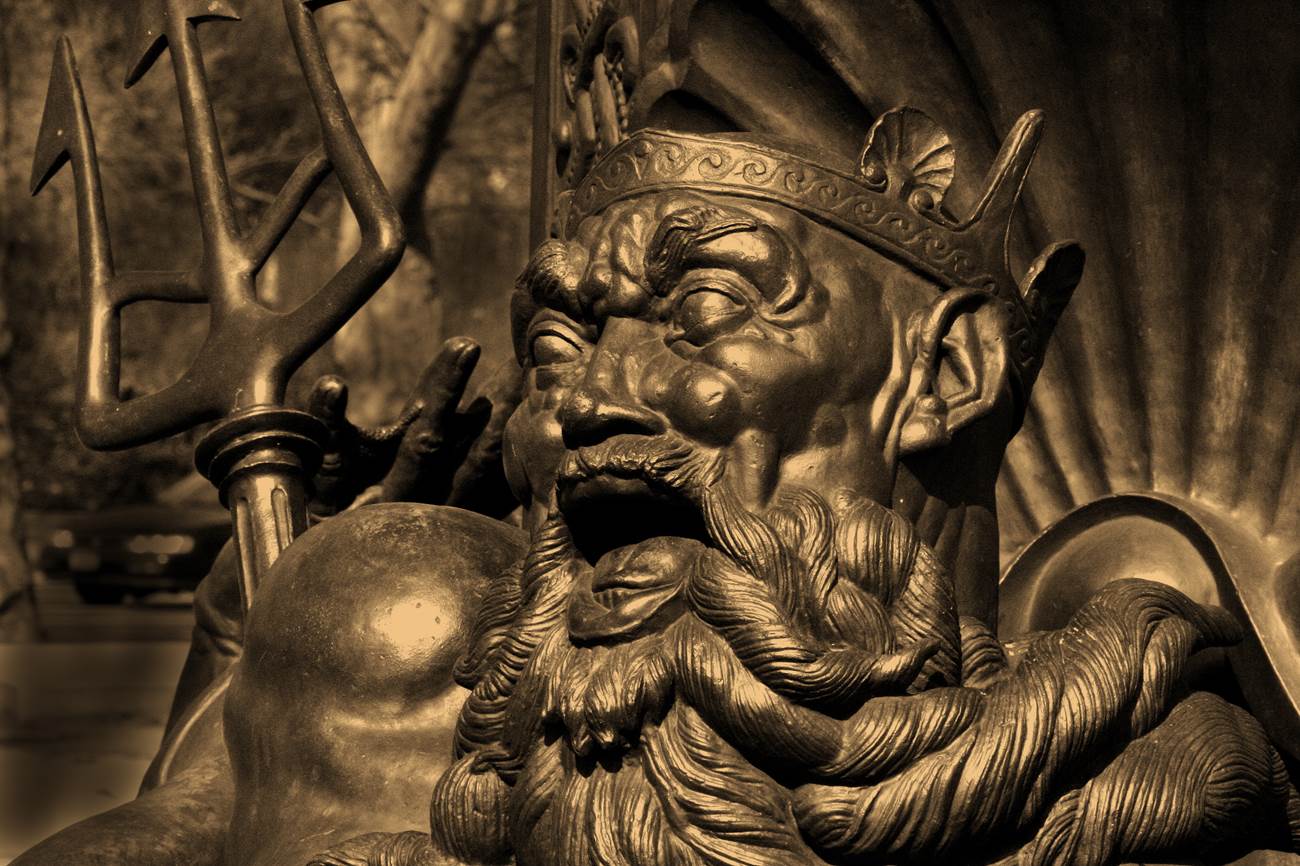
Neptune Fountain,” “Daniel Chester French memorial detail,” “Shaw Memorial”

Bottom Row (L to R)

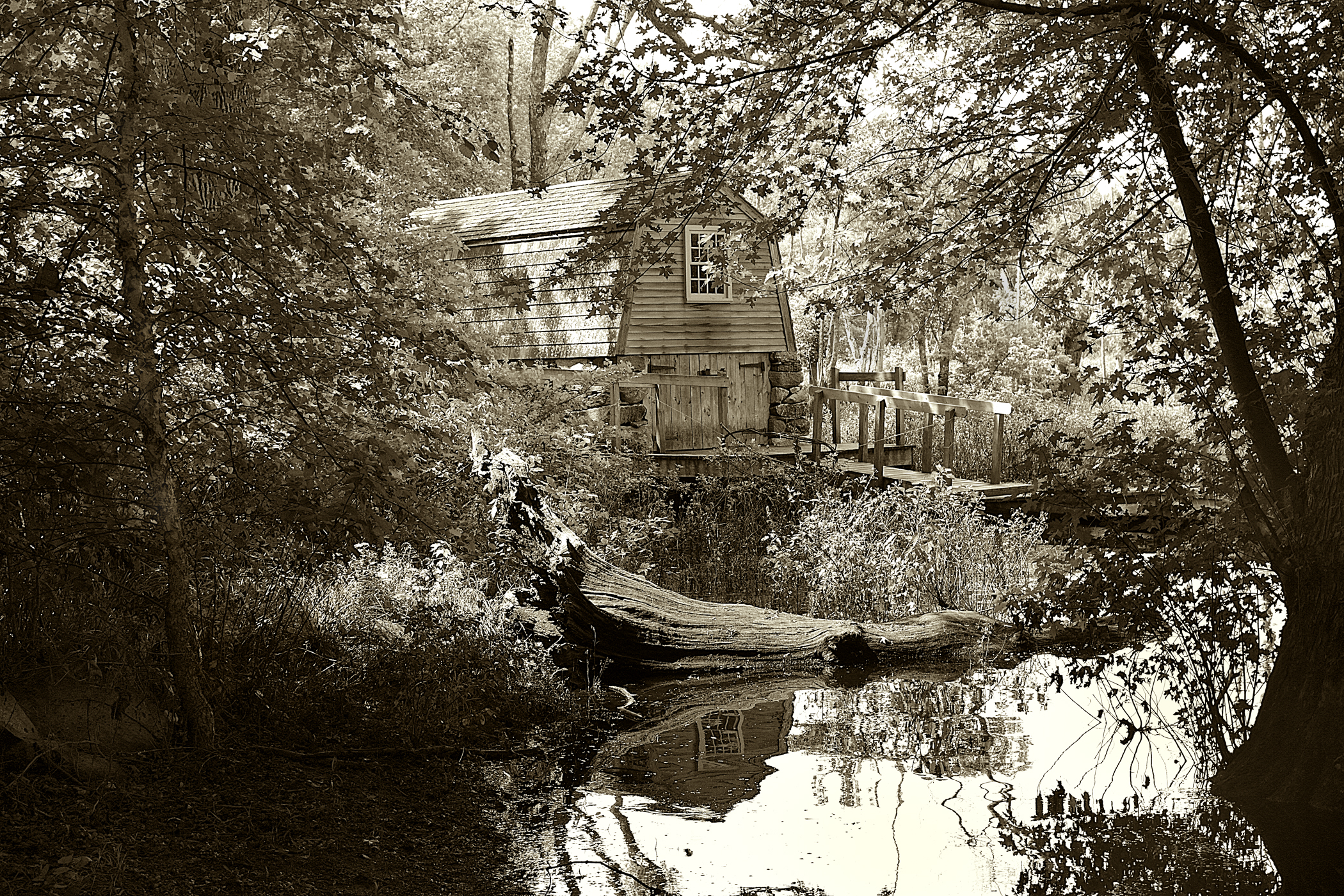
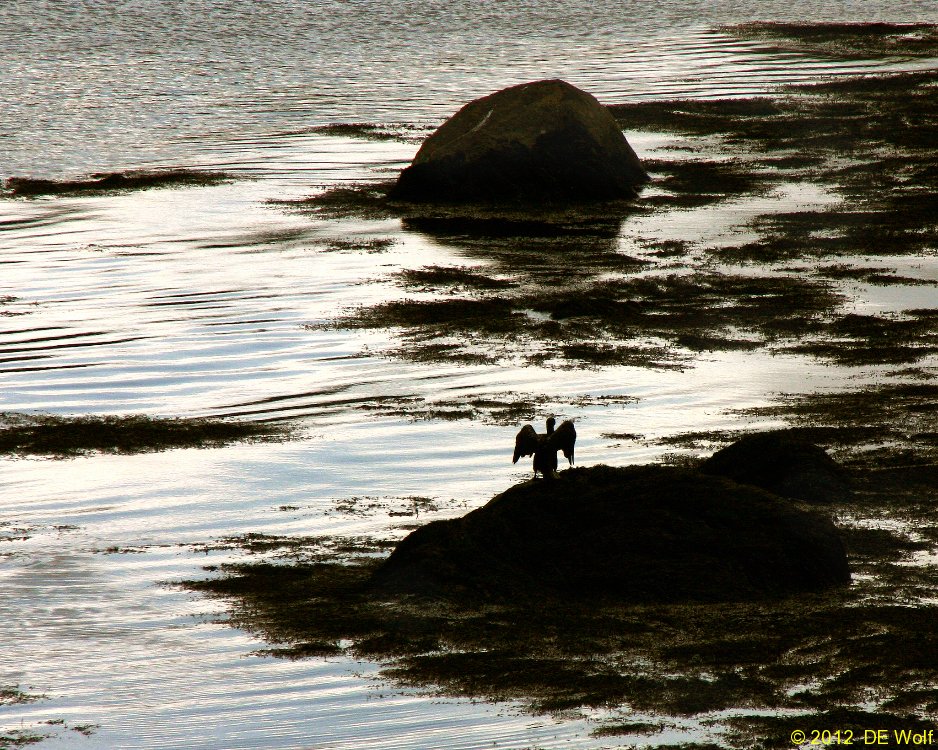
Pine Forest,”Boat house Old Manse,” Cormorant

If you would like to visit the exhibit please call ahead to RMD.

Snow on the weekend

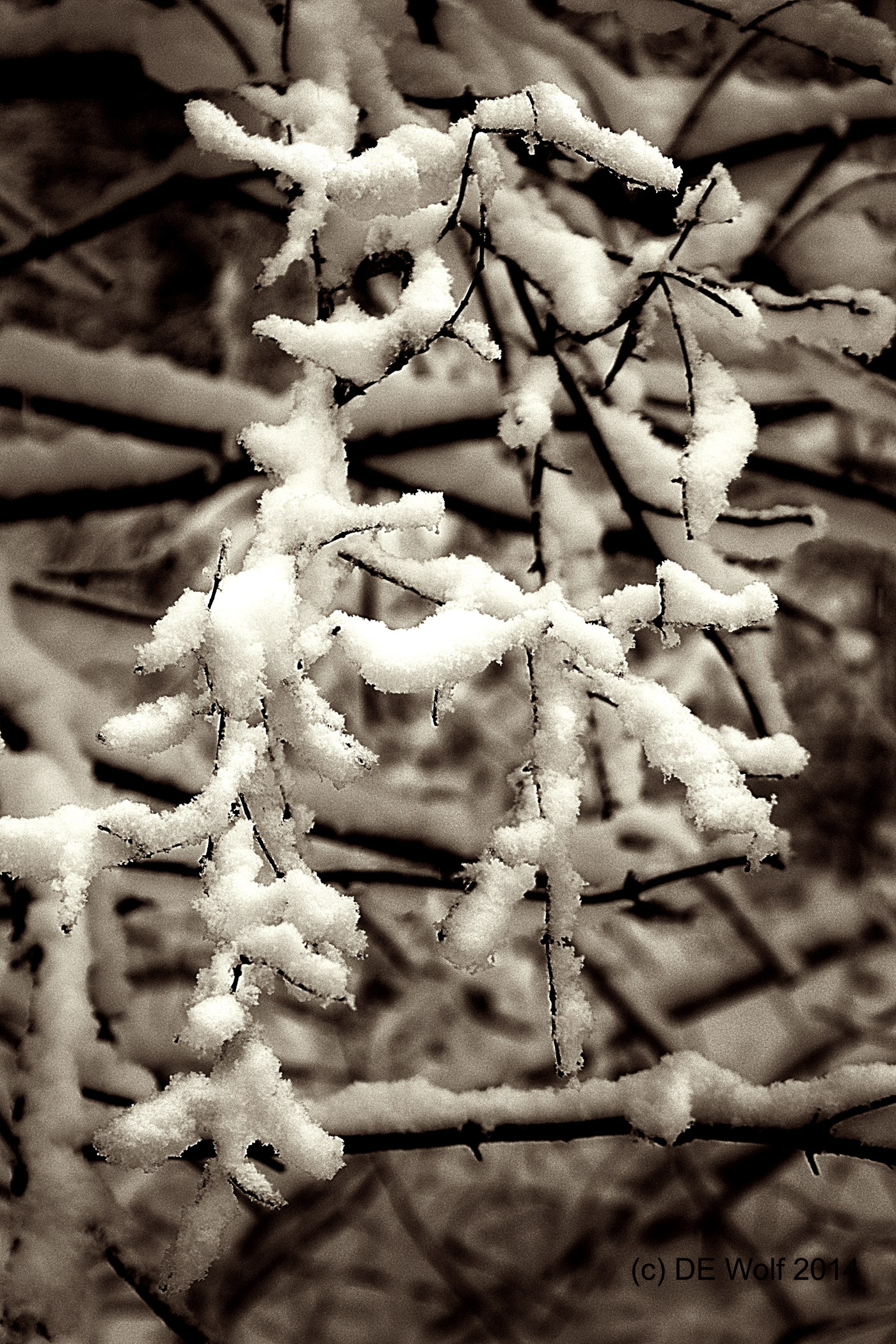
Figure 1 - Snow covered branches, Sudbury, MA, (c) DE Wolf 2014.

Figure 1 – Snow covered branches, Sudbury, MA, (c) DE Wolf 2014.

Snow on the weekend is wonderful beautiful snow.  You don’t have to drive to work  in it and you can just sit at home curled up by the warm fire and watch it come down.  When I got up this Saturday morning, I looked outside and was amazed at how well the recent January thaw had cleared away all the remnants of our early January snowstorm.

By the time I got downstairs after breakfast it had started and the lawn and woods looked like they were coated in confectioner’s sugar.  It was an unusual snow since the temperatures were in the low thirties, and as a result the flakes were huge – some an inch and a half in diameter.  When I examined them closely I saw that they were actually clusters of ice crystals.  Still it kept coming down.  I was beginning to get suspicious of the prediction of a coating to two inches.  In the end we got between four and five.

Saturday for my wife and me is dump day. When we got to the town dump the paths were untreated and we were shocked to find ourselves skidding despite AWD and driving really slowly and deliberately.

We came home for lunch, and then I had the brilliant idea of going out in the flaky deluge to take some pictures.  It was by that point a true fairy wonderland outside, and snow pictures always pose one of my favorite challenges – tone on tone.  I chose to use my Canon EF-M 18-55mm f/3.5-5.6 IS STM Lens.  I didn’t want to have to deal with my monopod; and this lens has lovely image stabilization and a fabulous modulation transfer function for sharp pictures of woodsy objects like branches.

OK, so I put on by snow boots, set my camera to a plus one exposure compensation (after a bit of through the window experimentation with the light), grabbed a hand-towel to cover and keep the camera dry, and off I went.

With the towel over my head, I became a bumbling photographic idiot.   Every time I tried to compose the towel would slip in front of the lens.  When I ventured a bit deeper into the woods and scrub, snow came off a tree and down the back of my neck – not so much fun.

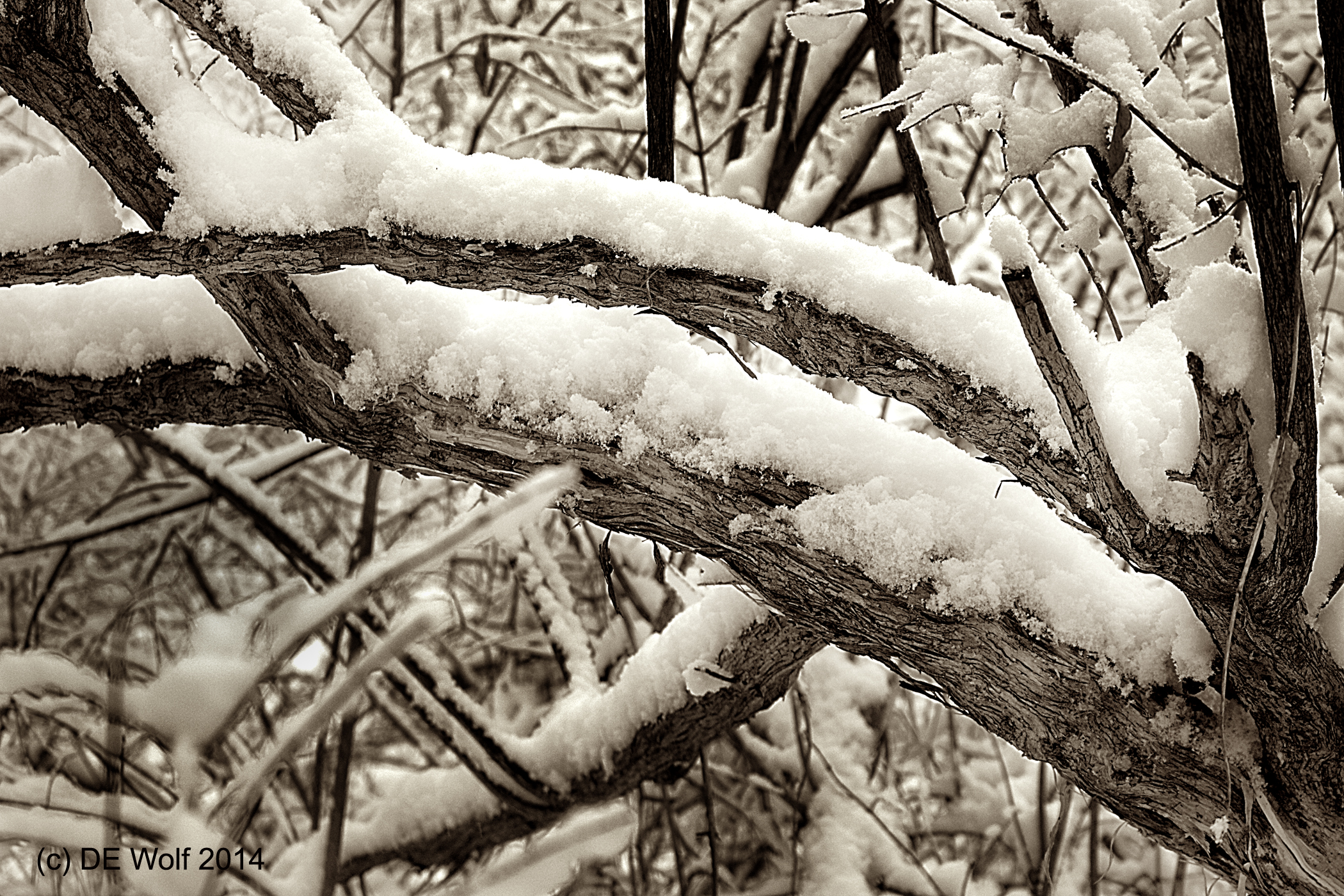
But it was wonderful and peacefully silent.  It was amazing how as I pushed my way into the woods all signs of suburbia vanished.  I could as well have been trailblazing in the seventeenth century.  OK, I’ve got a bit of an overactive imagination – you will recall the pareidolia.  In the end, I got a couple of fairly decent images (shown here as Figures 1 & 2) – Photoshop by the fire.  The endless debate in my mind of whether to tone warm or cold for snow, landed on the warm side this time.  I want to dedicate these images to all of my California friends and readers who are suffering in the worst drought on record, and there isn’t even much snow in the Sierras.

Figure 1 - Snow covered trees, Sudbury, MA, (c) DE Wolf 2014.

Figure 2 – Snow covered trees, Sudbury, MA, (c) DE Wolf 2014.