Early color photography – the autochrome process

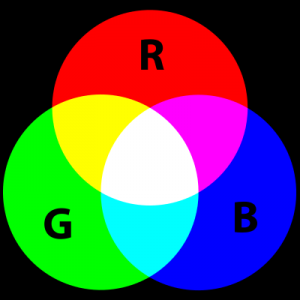
AdditiveColor.svg

Figure 1 – The additive color wheel from the wikicommons b Mike Horvath New version by jacobolus and released to the public domain.

Yesterday we discussed the fact that color photography first became practical with the introduction of the Autochrome process in 1907.  Autochrome was patented by brothers Auguste Marie Louis Nicholas and Louis Jean Lumière  in 1903,  It was the dominant form of color photography until the introduction of Kodachrome in 1935.  As many photographers lament, Kodachrome succumbed to the commercial onslaught of digital photography and was withdrawn from the market in 2010.  Kodachrome had a very unique soft pastel quality.  I think that you will agree, after seeing some Autochrome images here, that Autochrome also had its own unique appearance and aesthetic quality.
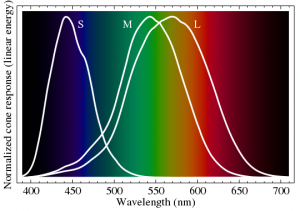
Color Receptors Human Eye

Figure 2 – The spectral sensitivity of the S, L, and M type cones in the human eye. Image from the Wikicommons and in the public domain.

Autochrome was an additive process (see Figure 1).    The human eye has three types of color receptors, S, M, and L cone types, each with its own spectral sensitivity, as shown in Figure 2. .  Color vision, in its essence, comes from the relative excitation of the these three types of photoreceptor cells.In additive color a set of primary colors, usually red, green, and blue is used for illumination.   You might imagine, for instance, that the image of Figure 1 was created with three slide projectors, projecting a red, a green, and a blue circle respectively.  Where they all mix equally you get white.  Essentially, any color can be achieved by varying the proportions of these three primary colors.
Lumiere

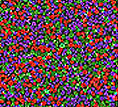
Figure 3 – A closeup of the potato starch particles in an Autochrome from the Wkicommons and in the public domain

Your eye will respond accordingly.  What does that mean?  It means that the different cone types respond according to the responses shown in Figure 2.  These responses are then interpreted by the brain to perceive color.  This is what we mean by physiological optics.  It’s not just a question of the laws of optics.  It’s the laws of optics interpreted by the eye and the brain.  Some will recall Plato’s admonition against trusting the perception of our senses in seeking truth about the universe (see for instance, Richard Tarnas, “The Passion of the Western Mind“).

This kind of additive color process is exactly how a modern LED monitor works.  There are three light emitting diodes that make up a pixel.  Each with its own color spectrum.  We tend to take our technology for granted, which we really shouldn’t do.  Think about how minutely small these diodes need to be, how perfectly the thousands of them must be assembled to create a monitor, and finally recognize that there is so little room for error.  You wouldn’t accept a monitor with many bad pixels.  All of this is why new technologies are so expensive initially.
Taj_Mahal_1921

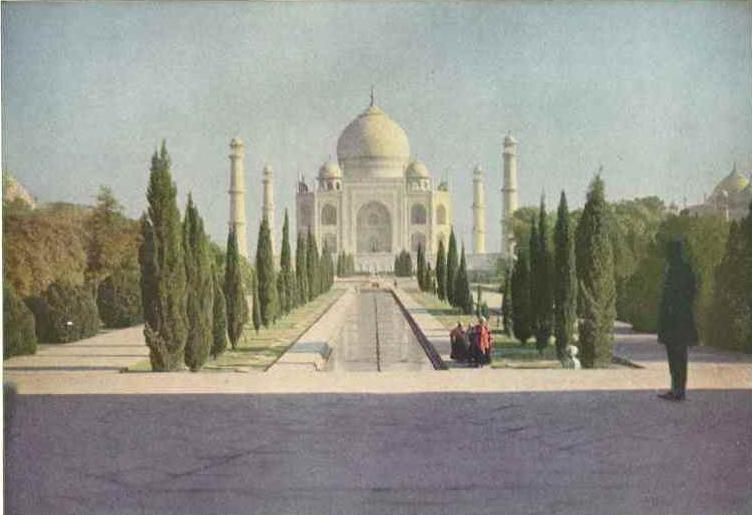
Figure 4 – The Taj Mahal an Autochrome taken by Helen Messinger Murdoch for the National Geographic Magazine, March 1921 from the Wikicommons and in the public domain.

The reason that I am blithering on about how marvelous our digital technology is, is that I now want you to image that it is over a hundred years ago.  The only tools that you have are analogue ones.  But you want to do the same thing.  You want to create a minute color pixel matrix.  How did the Lumiere brothers do it?  They used potato starch.  As a modern technology inventor, I stand in total and complete awe of them.
Nieuport_17_C.1

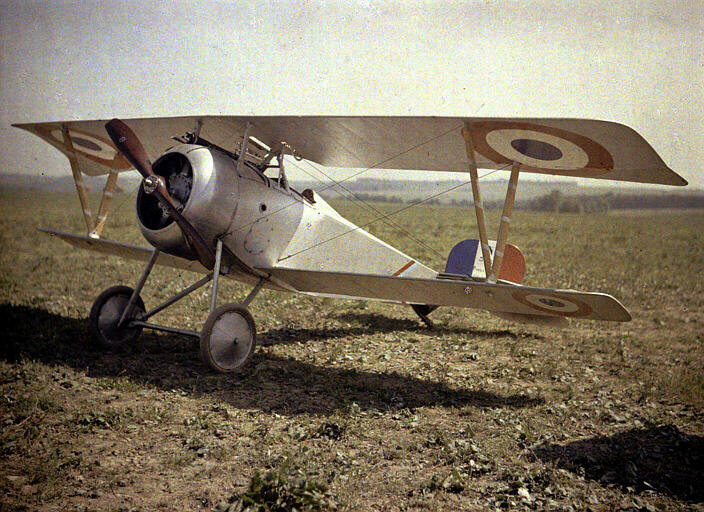
Figure 5 -n Autochrome of a Nieuport 23 C.1 fighter plane 1917 from the Wikicommons and in the public domain

The Autochrome process works as follows.  An adhesive layer was coated onto a glass plate. Potato starch grains graded to 5 to 10 um where attached to this layer.  The starch grains were dyed with either red orange, green, or blue violet dye (an unusual color wheel). Gaps between the grains were filled with lamp black (essentially soot). A closeup of this “pixel” pattern is shown in Figure 3.   Note that if we are dealing with a two inch by two inch plate, this density corresponds to about a 5.3 MPz image – pretty impressive for 1907.  This fragile layer was coated with a shellac and then overlain with a conventional silver halide gelatin emulsion.  Because of the high sensitivity of these emulsion to UV light from the sun, a yellow orange filter needed to be placed in front of the camera lens when taking a photograph to block-out these rays.
Arnold_Genthe-California_golden_poppies,_Autochrome

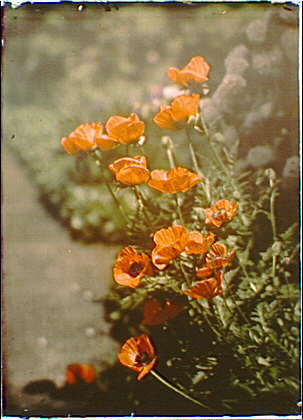
Figure 6 – California Golden Poppies an Autochrome taken between 1907 and 1911 by Arnold Genthe in the LOC from Wikicommons and in the public domain

When a photograph was taken the colored potato starch grains acted as minute filters.  The silver halide emulsion was developed by conventional means and then reversed to a positive by what is effectively a bleaching process.  Since the colored starch matrix remains intact, when the positive image (say illuminated from behind) will become colored as light passes back through the filter matrix.

This process very successfully creates color images, which certainly accounted for its popularity during the three decades of its dominance.  It should also be noted that towards the end of its commercial span roll film versions were also successfully introduced. Several examples of beautiful Autochromes are shown in Figures 4 to 6.



Lesley and Louise Brown – Madonna and child for the ages

Ever since seeing the Kennedy to Kent State Exhibit at the Worcester Art Museum, I have been haunted by images from the sixties and seventies: war, prejudice, assassination …  This past weekend I came across another image from that era, a Madonna and child and one that I have not, in fact, seen before.  It is a picture taken on Oct. 9,  1978 by Brian Bould of the London Daily Mail, of Lesley and Louise Brown, documenting the first successful in vitro fertilization by English scientists Patrick Steptoe and Robert Edwards.

The picture is simple and shows simple joy.  It could be of any mother and any infant child.  It is all of us, and therein lies its power.  Lesley Brown died this past June at age 65.  Let us celebrate her courage and take her life and that of her daughter as symbols that we can, in fact, “dream better dreams.”


The “Blue Marble”

Today marks the fortieth anniversary of the taking of a remarkable photograph on December 7, 1972.  The image is of the planet Earth and was taken by the astronauts of Apollo 17, then racing to the moon.  The image is often referred to as “The Blue Marble.”  It conjures up the same thoughts now as it did then.  We are all connected. The world is a beautiful place. We have tremendous power of technology, that we may chose to use for good or evil.   Why do we continue to kill each other, pollute, and destroy our beautiful planet?

Figure 1 – “The Blue Marble” taken by the astronauts of NASA flight Apollo 17, December 7, 1972

Joseph Petzval and the dawn of modern lens design

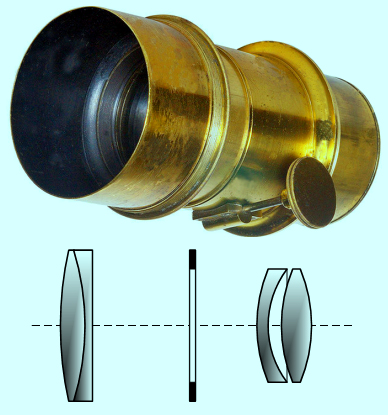
Figure 1 – An example of one of Joseph Petzval’s lenses.By Szőcs TamásTamasflex (Own work by uploader – Lens Photo by Андрей АМ) [CC-BY-SA-3.0 (http://creativecommons.org/licenses/by-sa/3.0) or GFDL (http://www.gnu.org/copyleft/fdl.html)], via Wikimedia Commons

In reading the January 2013 issue of Shutterbug (Is it really 2013 already?), I came upon an interesting excerpt from “Pring’s Photographer’s Miscellany” about Joseph Petzval (1807-1891) that was worth looking into further.  Petzval was a Slovakian physicist and eventually chair of Mathematics at the University of Vienna. He was the first person to design camera lenses mathematically; so in that respect was the father of geometric optics and modern lens design.  There is a wonderful Antique and Classic Cameras website that offers an excellent discussion of  early camera lenses.

The bottom line is that early Daguerreotypists were plagued by the very high f-numbers of their cameras and the long exposures that they consequently demanded.  The original lens that Daquerre used was a  cemented doublet achromatic Chevalier 15-inch telescope objective with an f-number of 15.

Petzval’s innovation was to design a  pair of doublets, where the second doublet compensated for the aberrations of the first.  This produced a sharp image at the center with a softer focus off center as well a vignetting at the edges.  Such a lens was ideal for portraiture, where the goal is to focus the eye on the subject not the background.  Indeed, Petzval lenses are still manufactured today so as to achieve just this effect.

At f/3.6 this lens was almost 25 times faster than the original Chevalier lens.  This made sitting times for portraits manageable, even for children. In this respect, Petzval may be credited with contributing significantly to the development of modern photography.

Petzval initially teamed with Voigtlander & Sons to produce his lens.  Utimately, Petzval fell out with Peter Wilhelm Friedrich von Voigtländer (1812–1878) .  Patent laws were problematic in the 19th century; so they continued to produce copies of his lens design and there was a dispute as to who held the legal right to manufacture these lens.   In 1859, Petzval’s home was burglarized and his manuscripts and notes were destroyed.  He never was able to reconstruct all of his previous work and he ultimately withdrew from society and died a destitute hermit in 1891.  This seems, sadly, to be a common epilogue for the photographic geniuses of the 19th century.

Peter, the whipped slave

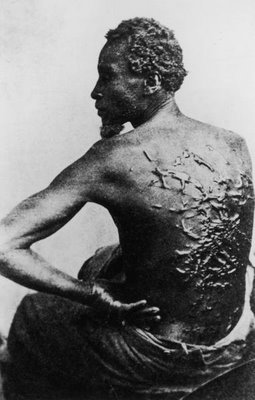
Figure 1 – Peter, 1863, an African American slave from Baton Rouge shows the scars inflicted by his overseer. Photographer unknown. Image is in the public domain because of its age.

Those of you who have seen Steven Spielberg’s new movie: “Lincoln.” may recall the scene where little Tad Lincoln is lying by the fire looking at lantern slides.  He ponders for a moment, fixated by the horrible image of a beaten slave. This is an actual and infamous abolitionist image of an ex slave from Baton Rouge, named Peter, who bears the scars, brutally inflicted by his overseer.

The photographer is unknown.  The image is brilliant.  Written on that poor man’s back is the history of his life, indeed the history of his people.  In one still image the photographer speaks to us of the immeasurable cruelty of slavery, and of unspeakable toll that it takes on its victims.

Slavery was abolished in the British Empire in 1833.  As a result photography could play no role as its chronicler.  Of course, as we have seen through the brave work of Lisa Kristine and others, it continues to this day.  In the United States, the abolitionist movement and the American Civil War were contemporary with the invention of slavery.  As a result, we can today still see the effects, the reality, and the after effects of slavery and subsequent Jim Crow documented in vivid images.

As for Peter, he was freed and went on to fight in the Union Army against slavery.  That unequal justice is also documented in Spielberg’s “Lincoln,” in Ken Burns’ “The Civil War” and in Edward Zwick’s 1989 film “Glory.”


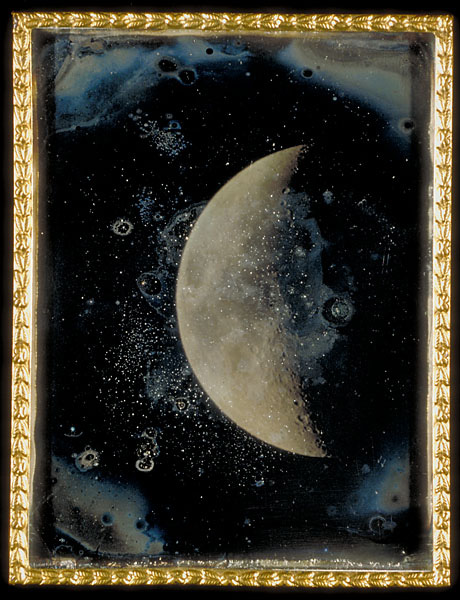
Photographic Firsts #3 – The first photograph of the moon

The question of the first photograph of the moon appears to be a bit of a fuddle.  Daguerre (1787 – 1851) himself is said to have photographed the moon.  Unfortunately, on March 8, 1839 Daguerre’s diorama, his laboratory, early experimental works, and his notes were all destroyed in a fire.  So his image of the moon was destroyed.  Indeed, there are currently less than twenty-five existent daguerreotypes that can be unambiguously attributed to Daguerre.

Next, the New York University Professor John Draper (1811 – 1882), who collaborated with Samuel F. B. Morse (1791-1872) actively produced daguerreotypes of the moon in March of 1839 at NYU’s observatory in Washington Square.  An image in the archives of NYU taken on March 26, 1839 appears to be the earliest moon photograph currently in existence.

Figure 1 – John Adams Whipple “View of the Moon, 1852” in the public domain.

A very interesting exposure sequence daguerreotype of the moon was taken by Samuel D. Humphrey, author of “Handbook of the Daguerreotype,” on September 1, 1849 in Canandaigua, NY.  As a side note, because the moon is lit by the sun, photographing the moon is like photographing an earthly scene on a sunny day.  As a result, the exposure typically falls within the old rule of thumb, shoot at f/11 at one over the ISO.  This rule served Ansel Adams (1902 – 1984) well in determining the correct exposure for “Moonrise Hernandez, NM, 1941.”

Finally, a magnificent set of daguerreotypes of the moon were taken by Harvard Professor John Adams Whipple (1822-1891), in collaboration with astronomer William Cranch Bond (1789-1859), between 1847 and 1852.  These images won the prize for technical excellence in photography at the 1851 Crystal Palace Exhibition in London.  On the night of July 16–17, 1850, Whipple and Bond also made the first daguerreotype of a star (Vega).

I’ll leave you with that image to ponder.  By 1852 astrophotography was certainly born as a tool for science.

Samuel F. Morse and the Birth of the Modern


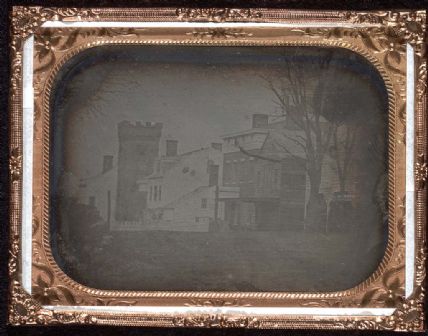
Figure 1 – Early American daguerreotype by Samuel F.B. Morse and John Draper 1839/1840 showing the Unitarian Church on Washington Square from the roof of the old NYU building. Image is in the public domain.

I mentioned that William Brady studied photography under Samuel F. Morse (1791-1872), who introduced the Daguerreotype to America in 1839.  That may be a bit surprising.  Most of us remember Morse as the inventor of the Morse code and the telegraph. However, if you take a trip to a Museum like the Museum of Fine Arts in Boston, you will realize that Morse was a skilled portrait painter.  What was he an artist or a scientist-inventor?

The answer to that question takes us to a remarkable book by historian Paul Johnson, “The Birth of the Modern, World Society 1815 – 1830.”  Johnson targets the period between 1815 and 1830 as marking  the pivotal transition of world society into the modern world.  This marked the transition into a scientific society.  As Johnson shows, a key factor was the development during this period of both the McAdamized road and the steamboat.  Of course, the key here was the evolution of the shrinking world, the speedier and speedier communication of ideas.  We have in due course:

  • The postal service
  • The railroad
  • The telegraph
  • The telephone
  • Wireless communications
  • The automobile
  • Radio
  • The airplane
  • Television
  • The computer
  • The internet

They all stem from the revolution set in place by this critical fifteen year period in human history.

And there is something else that happened at that moment, something that answers the question of whether Samuel F. B. Morse was a scientist or an artist.  Up until that time, as the scientific revolution developed men and women of intellect could
consider themselves to be both.  In the footsteps of Leonardo, Daguerre and Morse could, and were, both.  Science was, as much, as any art, a humanity.

Allow me to quote Johnson directly (last page of chapter seven):

“So too, he (the artist Turner) felt an affinity with Faraday; they were both experimentalists, working skillfully with their hands as much as with their eyes and their brains, to explore the physical secrets of the world.”

“But as the 1820s progressed, it became harder to maintain that all men of genius could speak to one another.  There was a sad moment at Lowther Castle in 1827, when Sir Humphrey Davy and William Wordsworth met for the last time.  Wordsworth later complained to a correspondent that it had no longer   been a meeting of kindred spirits: ‘His scientific pursuits had hurried his mind into a course where I could not follow him, and had diverted it in proportion from objects with which I was best acquainted.’ The parting of the ways between art and science, the bifurcation into two – indeed into many cultures was only one aspect of modernity.”

This then is the key to understanding the invention of photography.  Men like Daguerre, Morse, and Talbot saw themselves, in the finest tradition of men of genius, in their times, as both scientists and artists.  There was no ambiguity or dichotomy in that view.

Mathew Brady – The Steve Jobs of the Nineteenth Century

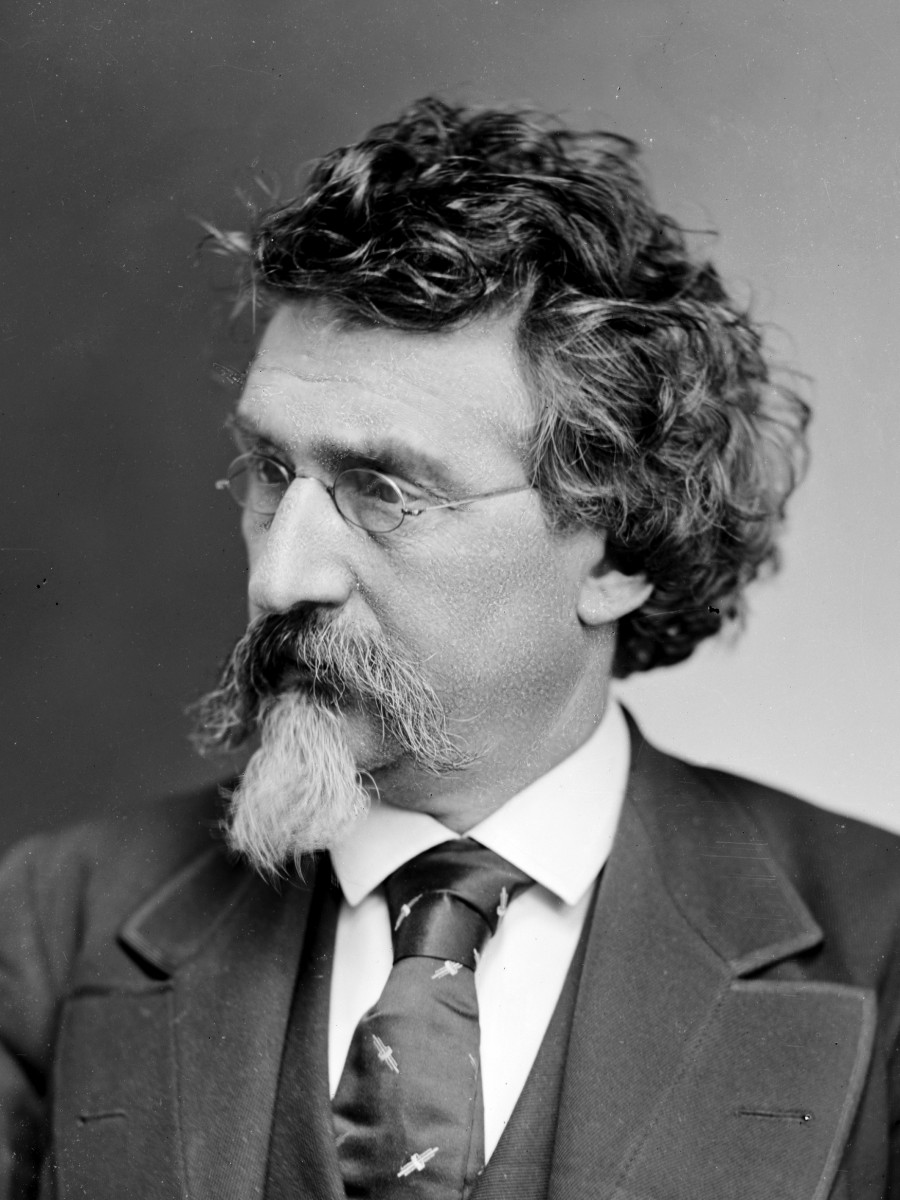
Figure 1 – William Brady, 1875 from the collection of the LOC

And continuing our discussion of presidential photographs, photographer and grand showman, Mathew Brady (1822 – 1896), photographed eighteen of the nineteen presidents from John Quincy Adams to William McKinley.  The only exception was William Henry Harrison, who died in office three years before Brady began his project of photographing presidents and other important people of the day.

Brady started his career studying portrait painting under William Page.  At age seventeen Brady moved to New York City, where he met artist Samuel F. Morse, who had just introduced the daguerreotype to America. Brady studied the new art form under Morse.  He opened a studio in New York City and in 1845 he began to exhibit portraits of famous Americans, which led to “The Gallery of Illustrious Americans.” In 1849 he opened a second studio in Washington, DC.

Recognize that photography was to the nineteenth century what the IPhone and IPad are to the twenty first.  People could not get enough of the new invention.  In a sense, Brady was the Steve jobs of the nineteenth century.  It was the latest in modern technology, a combination of science and seeming magic.  People flocked to have their pictures taken: first as daguerreotypes, then ambrotypes, and finally on glass negatives that we made into albumin prints.

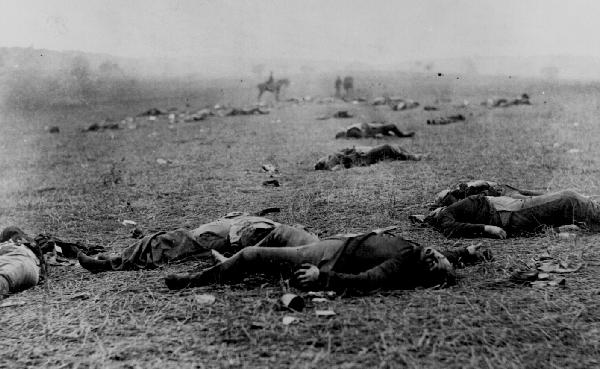
Figure 2 – “The Dead at Gettysburg, 1863” photographed by William Brady from the LOC

Brady traded a brisk business in popular carte de visites for soldiers during the American Civil War.  Brady became obsessed with the idea of photographing the war itself.  He received permission to travel to the battle fields from President Lincoln and because emulsions were too slow to photograph war action he photographed Lincoln, famous generals, and hundreds of rotting corpses on the battlefield instead.  These now serve as gruesome illustrations for Ken Burns’ haunting documentary “The Civil War.”  Brady’s Civil War images are in the tradition of Roger Fenton’s images of the Crimean War a decade earlier. It should also be pointed out that while these pictures are listed under Brady’s studio stamp, he had a team of over twenty photographers in the field including such illustrious names as that of Timothy O’Sullivan, now famous for subsequent pictures of the American West.  These photographs brought the war home to clientele in the North and skyrocketed Brady’s fame.

Fame, of course, as history teaches can be a very fleeting thing.  Today we owe an enormous debt to Brady.  He gave us pictures of presidents and generals we would never otherwise know – capturing forever brief instances of the nineteenth century.  But as contemporary interest in the Civil War waned, so did Brady’s fortunes.  He went bankrupt and died in poverty.  As Ken Burns laments, many of his glass negatives were sold as window glass for green houses and cold frames.  They became bleached and crumbled with the century.


Photographic Firsts # 1 – The first presidential portrait

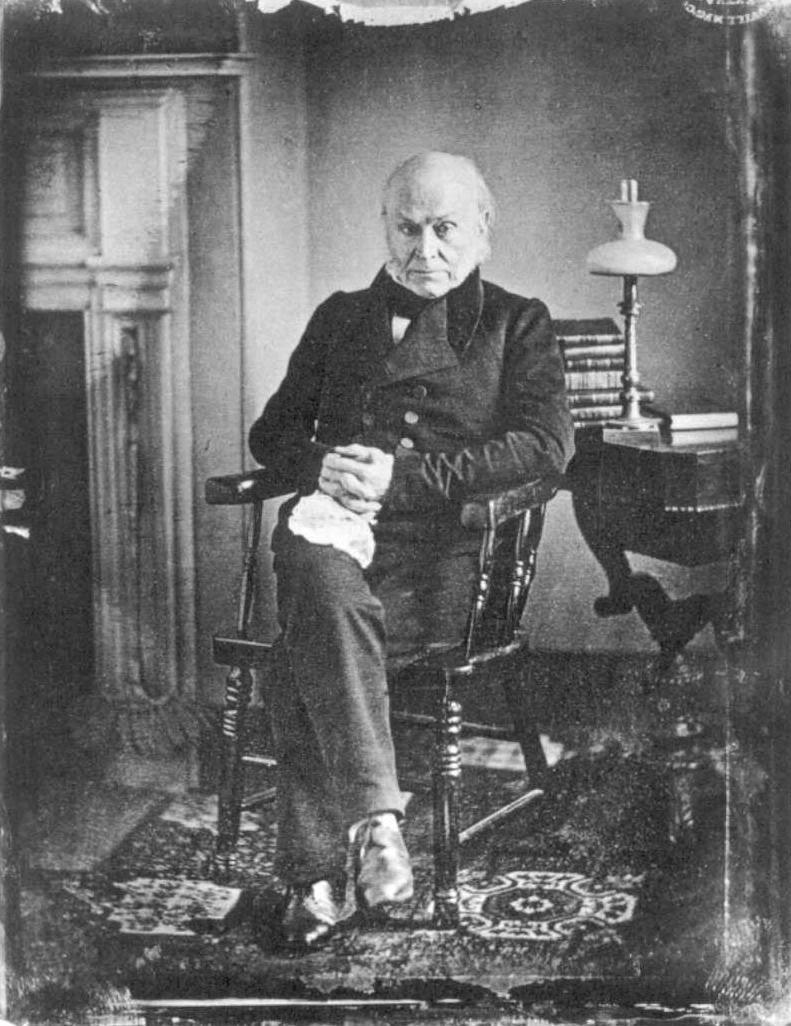
Figure 1 – Daguerreotype of John Quincy Adams, 1841

All this talk about antique images got me thinking along the lines of what was the first photograph of x, y, or z.  So I thought that for fun we might periodically ask and explore one of these questions.  So today we ask, who was the first American President to be photographed?

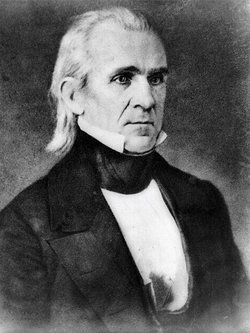
This would be sixth American president John Quincy Adams (1767 – 1848). Adams was president from 1825 – 1829 and this wonderful daguerreotype was taken in 1841; so twelve years after he left office.  The distinction of being the first American president photographed while in office goes to eleventh president James Polk (1795 – 1849).  Polk was president from 1845 – 1849and this photograph was taken shortly before his death in 1849

Figure 2 – Photograph of President James K. Polk, 1841-1849, and this photograph was taken shortly before his death in 1849

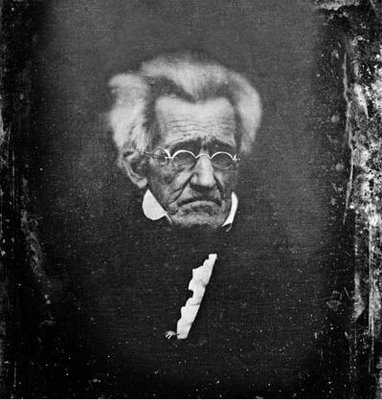
There are several photographic images of seventh president Andrew Jackson (1767 – 1845).  Jackson was president from (1829 – 1837), and my favorite is a daguerreotype taken in 1844/1845, when the president was 78.  It is very expressive, although Jackson certainly looks a lot better on the twenty dollar bill.

These may not be people that you ever expected to see in photographs.  Their lives just extended into the photographic age, and here they are recorded for posterity by Talbott’s “pencil of nature.”

Figure 3 – Daguerreotype of President Andrew Jackson, 1844/45

Finally, it may be worth noting, that presidential photographic firsts continue into the present.  The first president whose official portrait was taken with a digital camera was forty-fourth president Barak Obama.  This was a mere 167 years after John Quincy Adams posed for his portrait.