Edward S. Curtis – Short Nights of a Shadow Catcher

A reader has brought to my attention a new biography of photographer Edward S. Curtis, who over the course of thirty years in the early twentieth century, documented native American populations.  I am certainly going to read this book by Timothy Egan; so I reserve judgment on that.  But reading the review in the New York Times, reintroduced me to the photographs of Curtis and that is always a welcome experience.
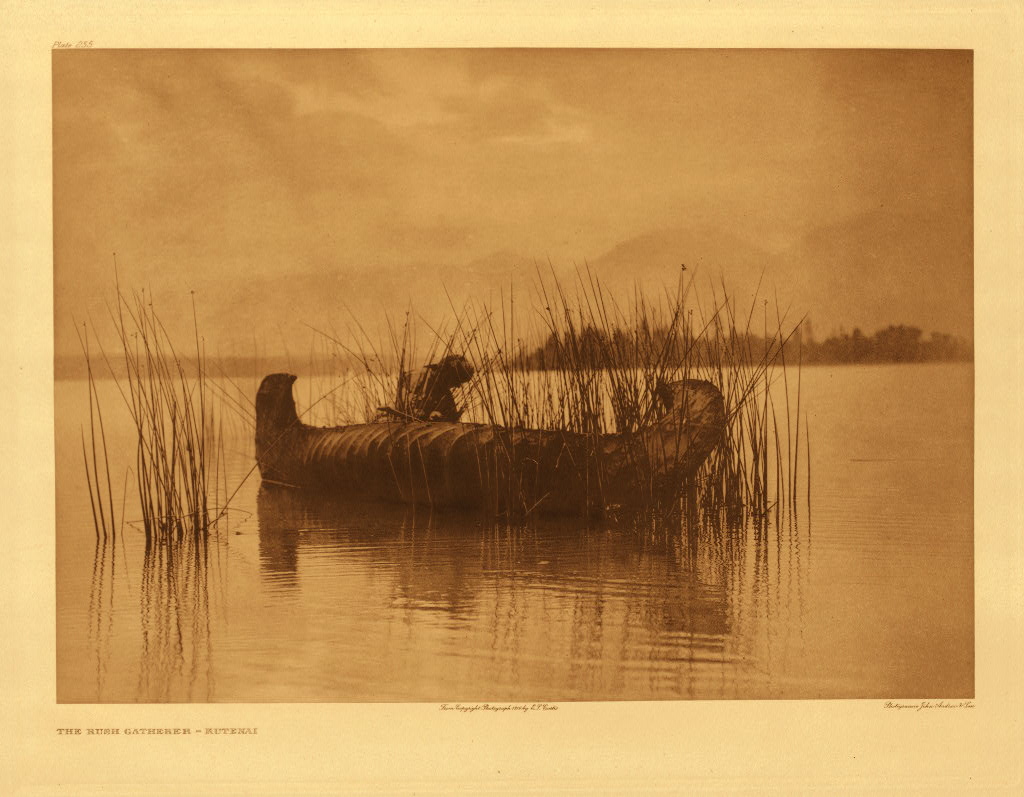
Figure 1 – One of Edward S. Curtis’ most popular images “Rush Gatherer, Kutenai, 1911” from the collection of the LOC.

The topic is a complex one.  We are confronted with the imperial age view of manifest destiny, the glorification of the American west, and the worship and emulation of the manly, personified by Theodore Roosevelt.  At the same time, Curtis was contemporaneous with Franz Boas, “the father of modern anthropology,” and the emergence of the concept of cultural relativism, itself a hugely complicated and controversial idea. The attempted eradication of native peoples and native cultures is a terrible blot on our moral credibility as a nation.  Curtis, with his concept of “the vanishing race,” believed that he was documenting the demise of the native peoples.  In reality he was documenting their transition into modern times.

Fortunately, our focus here is on the photographic, and Curtis was a grand master of the photographic image.  His work is monumental.  His goal was to document every Native American tribal group then in existence.  He filled twenty volumes with sensitive and beautifully crafted photographs.  As an ethnographic record it rivals, indeed eclipses, Roman Vishniac’s “A Vanished World,” which documents the end of Hebraic culture in Eastern Europe on the eve of World War II.

Curtis has been criticized for staging or posing many of his images, albeit to recreate well researched scenes.  It is important to recognize the limits of contemporary emulsions.  No less posed and staged were John Thomson’s equally significant photographs of nineteenth century London street life, published 1876-7 and taken under much less trying circumstances.  The role of photographer as a chronicler of visions that will never be seen again is both important and profound.
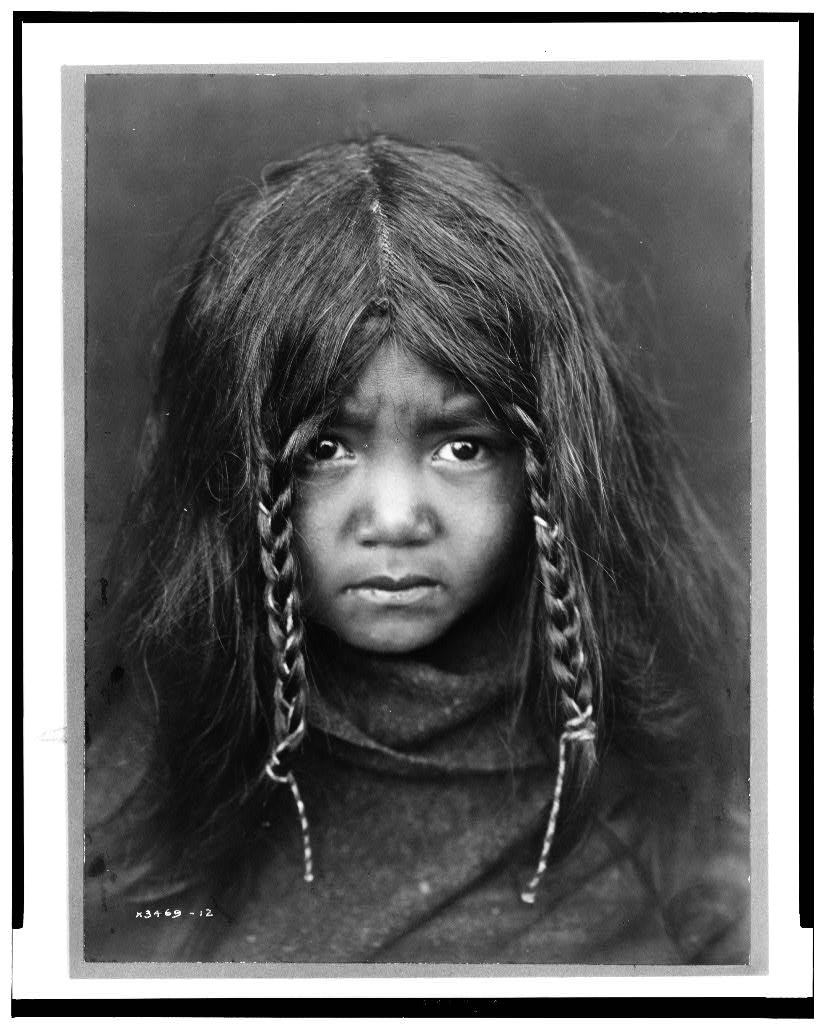
Figure 2 – Edward S. Curtis, “Quilcene Boy, 1913,” from the collection of the LOC.

I really had no understanding of just how prodigious Curtis’ output was, until I started researching this blog and visited the Library of Congress (LOC) and Northwestern University  pages dedicated to providing a resource for Curtis’ work.  There is also an excellent resource at the Edward S. Curtis Gallery, which offers many of these wonderful works for sale.  There are hundreds of beautiful images of people in portrait or posed in the course of their daily and spiritual lives, as well as images of their handiwork.  Always compelling are the beautiful images of children.  It invariably haunts me to see the flash and beauty in the eyes of children in images now a hundred years old.  The flash is there for eternity, while the individual is long gone.  Photography, more than any other form of portrait art, has this effect, and it is a tribute to Curtis’ impact that native Americans today use his photographs to teach the current generation of their children about their cultural heritage.
Alf Kumalo- Photo-chronicler of apartheid

I learned yesterday of the passing on October 21, 2012, of South African photojournalist Alf Kumalo.  Last week we spoke about an exhibit of Vietnam War era journalist photographs. Two images in particular stood out in my mind: Edie Adams’ “Brigadier General Nguyen Ngoc Loan Executing the Viet Cong Guerilla, Bay Lop, 1968” and Nick Ut’sChildren Fleeing South Vietnamese Air Force Napalm Attack on the Village of Trang Bang, 1972” These two pictures, arguably more than any others turned American sentiment against the Vietnam War and ultimately ended it,  Alf Kumalo’s work had a similar effect on a generation of South Africans and contributed significantly to the end of apartheid. 

It has always amazed me how a photojournalist, when confronted by a horrific scene, can have the presence of mind to abstract him or herself, at least long enough to compose and take a photograph.  In this context, it is all the more significant that Kumalo, as a black African male, was himself subjected to the same harassment and beatings by authorities as his subjects.  He not only chronicled what he saw but lived it.

For a brief biography of his life I suggest visiting his obituary in the New York Times.  For those of you who would like to see print images, I suggest his photo-biography “Through my Lens.”  And finally in memoriam view Alf Kumalo’s works online, visit Axis Gallery.  We may reflect, that this is why photography matters.

Annie Brigman and the photo-secession

Let us take a break from technical issues today and recognize that photography is ultimately about art.  The technical aspects are to be mastered like learning to paint.  Technical proficiency is a necessary step towards achieving a subjective vision of what is in front of the camera.

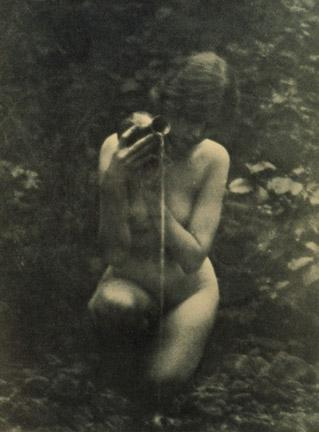
Figure 1 – Anne Brigman “The Source, 1909” From wikimedia.org

This is essentially the view of the photo-secessionist movement founded by Alfred Stieglitz and Holland Day in 1902.  Stieglitz and Day’s photo-secessionist group mirrored a British coterie, “The Ring,” that had seceded from “The Royal Photographic Society.”  This view that photography was about pictoralism,  not so much about accurate depiction as about manipulation of the image by the photographer to achieve his/her artistic goals was, at the time, highly radical.  And in that sense, it ushered in a new century in photography.

A quintessential member of this movement was California photographer Annie Brigman, who is famous for her nudes photographed in rustic settings, usually the Sierra Nevada.  She heavily reworked her negatives to achieve classic mythic imagery that often paralleled significant paintings.  I, personally, discovered Brigman at the RISD Museum “America In View” exhibit and, honestly, some of her works take my breath away.  They appeal to a deeply engrained sense of the spiritual.


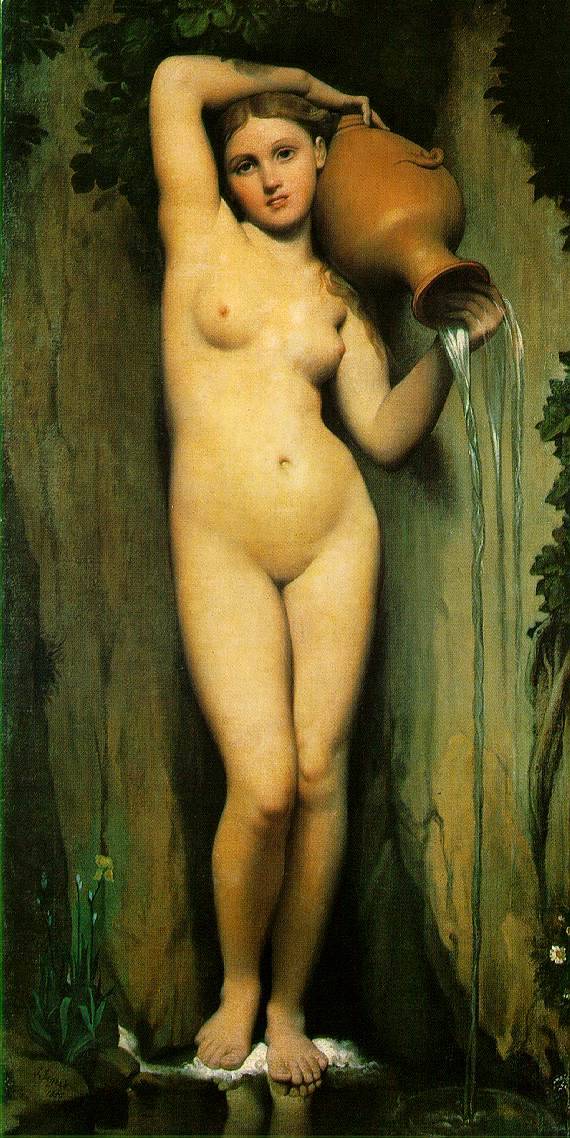
Figure 2 – Photograph of Jean Auguste Dominique Ingres’ “The Source, 1856” in the Musée d’Orsay. From wikimedia.org

Anne Wardrope Nott Brigman was born in Honolulu in 1869.  In 1885 she moved to Los Gatos, CA.  In 1894, she married sea captain Martin Brigman and accompanied him on several journeys to the South Seas. Around 1900, she settled in San Francisco and became active in the Bohemian community. Stieglitz listed her as an official member of the secessionist movement in 1902.  Between 1903 and 1908 her photographs were featured in several issues of Stieglitz’s photo-secessionist journal “Camera Work.”  Brigman became a significant figure and highly revered in the community of California artists and photographers.  A major retrospective of her photographs and poetry, “Song of a Pagan,” was published in 1949 a year before her death.

Three of her works standout in my mind.  These are: “The Source,” first published in Camera Work in 1909;  “The Bubble,” also first published in Camera Work in 1909, and “Figure in Landscape, 1923.”

The source depicts a female nude pouring water on the ground from a clay urn.  Needless-to-say this evokes the mythic sense of the mother goddess, sanctifying the Earth, and the source of a great and nourishing ancient river, such as the Nile.  It is a classic image as evidenced by the similarly titled work by Jean Auguste Dominique Ingres in the Musée d’Orsay.

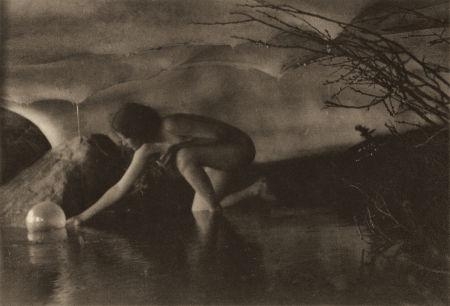
Figure 3 – Anne Brigman, “The Bubble, 1909,” from wikimedia.org

“The Bubble” is a fantastic image of a female nude, creating and launching a bubble on a mystic stream.  The references to the mother goddess again seem clear and engrained.  The bubble, which appears in several of Brigman’s works, evokes the ovum from which we are all born.  The river is not only the birth canal but the river of life on which we must all journey.

The Figure in Landscape” is something quite different. A female nude stands in the distance on a ledge above a lake.  She looks away from us, perhaps about to take the risk and dive into the water.  For me, this creates a sense of the possibilities of youth, heightened by the unspoiled purity of the American wilderness.  I have read that Brigman typically photographed herself or the rugged and self-assured young women that had the strength to live and thrive in the Sierra Nevada.  It is cliché now to say that the twentieth century was the American Century.  But in a sense this lone figure, like the photo-secession itself, seems to open and define that century.


Faking it Manipulated Photography before Photoshop

A reader has brought to my attention an important new exhibit at the Metropolitan Museum of Art in New York City: “Faking it Manipulated Photography before Photoshop,” which runs from October 11, 2012 to January 27, 2013.  It looks well worth the trip or, absent that, well worth a careful study of the website.

I am happy to see Annie Brigman featured on the homepage.  She was famous for heavily reworking her negatives to remove unwanted features and add others, not to mention liberating the view of women while staying within the context of very classical imagery.

It is, of course, the case that much of what Photoshop and other artistic software does, is an evolution of techniques that were previously achievable only with intense effort.  These efforts typically included proper choice of both negative and print development and various methods of retoughing, such as dodging and burning.  And, of course, there were even more laborious techniques, such as effective multiexposure techniques and photomontage.  In a real sense modern artistic image processing methods have freed the photographer by making these techniques simpler and therefore much more accessible.  Also you are freed of that little cash register in your head that was always calculating how much a picture was costing you in paper, chemicals, not to mention time.

The exhibit also approaches the important subject of motivation.  Why is the image being manipulated?  Is the motivation artistic?  Is it for advertising purpose, to grab and evoke emotion? Or is it political, like the RMONEY subject of a previous post?

So I think that well worth seeing.  Now I just need to figure out how and when to get down to NYC.