Samuel F. Morse and the Birth of the Modern


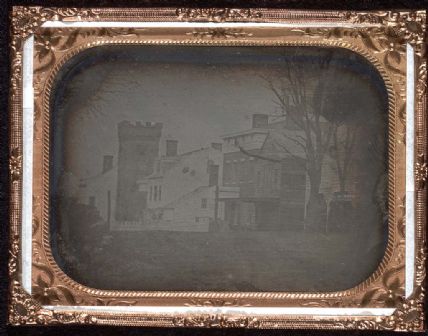
Figure 1 – Early American daguerreotype by Samuel F.B. Morse and John Draper 1839/1840 showing the Unitarian Church on Washington Square from the roof of the old NYU building. Image is in the public domain.

I mentioned that William Brady studied photography under Samuel F. Morse (1791-1872), who introduced the Daguerreotype to America in 1839.  That may be a bit surprising.  Most of us remember Morse as the inventor of the Morse code and the telegraph. However, if you take a trip to a Museum like the Museum of Fine Arts in Boston, you will realize that Morse was a skilled portrait painter.  What was he an artist or a scientist-inventor?

The answer to that question takes us to a remarkable book by historian Paul Johnson, “The Birth of the Modern, World Society 1815 – 1830.”  Johnson targets the period between 1815 and 1830 as marking  the pivotal transition of world society into the modern world.  This marked the transition into a scientific society.  As Johnson shows, a key factor was the development during this period of both the McAdamized road and the steamboat.  Of course, the key here was the evolution of the shrinking world, the speedier and speedier communication of ideas.  We have in due course:

  • The postal service
  • The railroad
  • The telegraph
  • The telephone
  • Wireless communications
  • The automobile
  • Radio
  • The airplane
  • Television
  • The computer
  • The internet

They all stem from the revolution set in place by this critical fifteen year period in human history.

And there is something else that happened at that moment, something that answers the question of whether Samuel F. B. Morse was a scientist or an artist.  Up until that time, as the scientific revolution developed men and women of intellect could
consider themselves to be both.  In the footsteps of Leonardo, Daguerre and Morse could, and were, both.  Science was, as much, as any art, a humanity.

Allow me to quote Johnson directly (last page of chapter seven):

“So too, he (the artist Turner) felt an affinity with Faraday; they were both experimentalists, working skillfully with their hands as much as with their eyes and their brains, to explore the physical secrets of the world.”

“But as the 1820s progressed, it became harder to maintain that all men of genius could speak to one another.  There was a sad moment at Lowther Castle in 1827, when Sir Humphrey Davy and William Wordsworth met for the last time.  Wordsworth later complained to a correspondent that it had no longer   been a meeting of kindred spirits: ‘His scientific pursuits had hurried his mind into a course where I could not follow him, and had diverted it in proportion from objects with which I was best acquainted.’ The parting of the ways between art and science, the bifurcation into two – indeed into many cultures was only one aspect of modernity.”

This then is the key to understanding the invention of photography.  Men like Daguerre, Morse, and Talbot saw themselves, in the finest tradition of men of genius, in their times, as both scientists and artists.  There was no ambiguity or dichotomy in that view.
Photographic Firsts # 2 – The first photograph


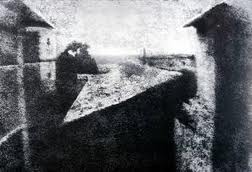
Figure 1 – The first photograph, “View from the Window at Le Gras, 1826”, in the public domain in the United States.

The first photograph, certainly the first photograph currently in existence, is usually credited to French amateur scientist, Joseph Nicéphore Niépce (1765-1833).  This image, “View from the Window at Le Gras”, produced on pewter is currently in the collection of the Henry Ransom Center at the University of Texas at Austin.

Niépce first experimented successfully with copying engravings onto lithographer’s’ stones, using a process he referred to as heliography as early as 1824.  (The term, photograph, was first used by astronomer, John Herschel, in 1839.)  Eventually he settled upon using pewter plates as a support medium.  In the summer of 1826, in the window of his upper-story workroom at Le Gras, Niépce set up a camera obscura using a polished pewter plate coated with bitumen of Judea (an asphalt derivative of petroleum) and exposed the plate for at least eight hours. The exposed regions of the plate became hardened by the light, much like dentist currently cure cements with UV light.  Niépce removed the plate and used a mixture of oil of lavender and white petroleum to dissolved away the the unhardened bitumen.  This produced a direct positive image on the pewter, which has now lasted close to two hundred years.

Niépce formed a partnership with the French artist Louis Jacques Mandé Daguerre (1787-1851), in 1829 and he died of a stroke in 1833. Daguerre, of course, went on to invent the daguerreotype in 1838.  The two are generally attributed, along with Englishman Henry Fox Talbot, with the invention of photography.  Readers are also referred, however, to the important work of Hércules Florence, who after Niépce but before Daguerre made important contributions to the invention.  Florence worked obscurely in Brazil and as a result was not recognized by his contemporaries.


A Thanksgiving hike in the Massachusetts wetlands

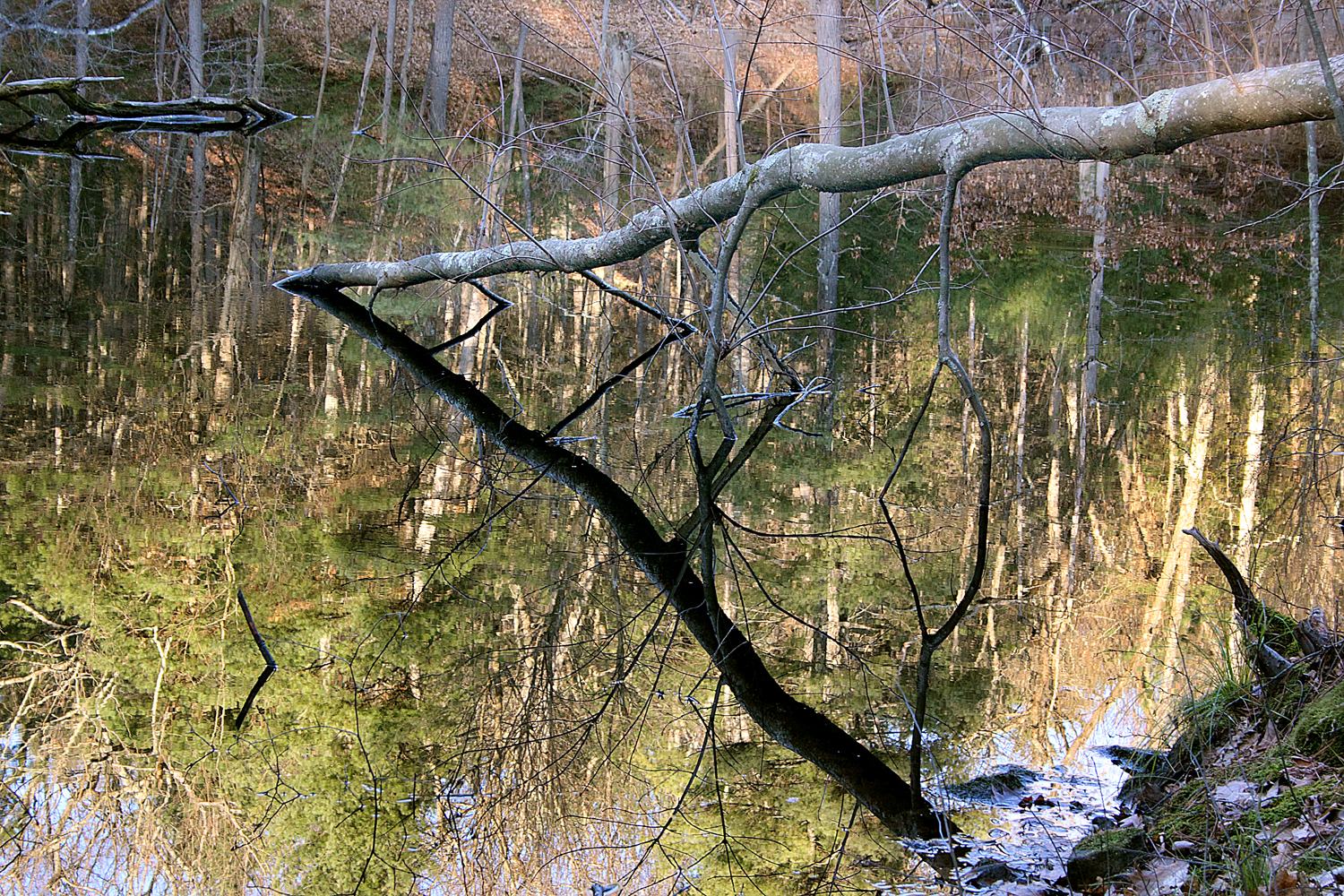
Figure 1 – Broken tree in Pond

The weather on Thanksgiving this year was “Picture Perfect” in Massachusetts – high forties, clear, and crisp.  We took the time to explore the late fall wetlands in Lincoln.  The Massachusetts landscape is dominated by glacial topography: drumlins and kettle ponds.

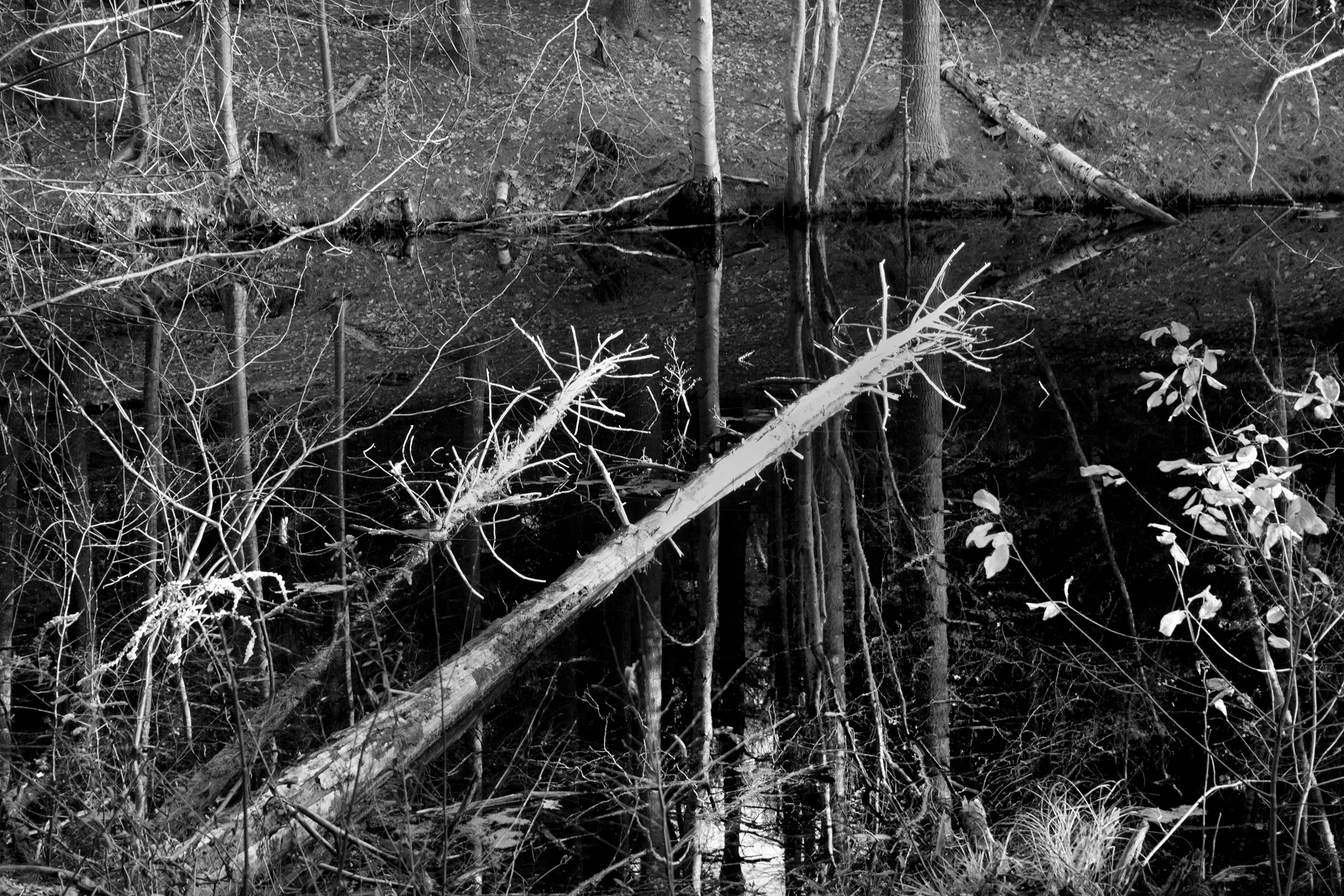
Figure 2 – Fallen trees in pond

The autumn has lingered, with the color persisting into late November.  Even now there are a few trees, mostly oaks, showing leaves.  This combines with jet black and highly reflective ponds, powder blue skies, and lichen coated bark to project delicate pastel shades wherever you look.  The after effects of hurricane Sandy are twisted, snapped, and fallen trees limbs.

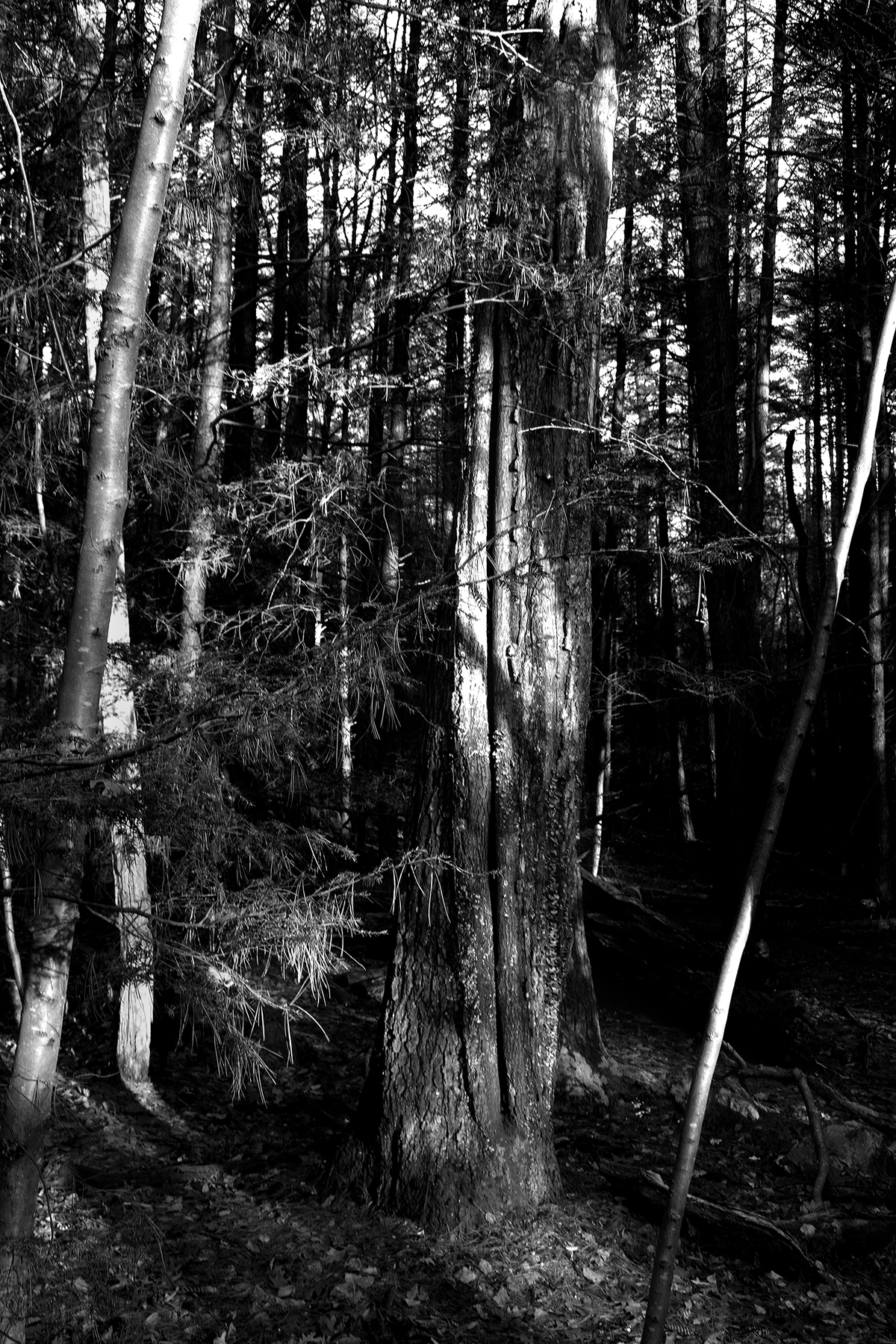
Figure 3 – Tree lit by November sun

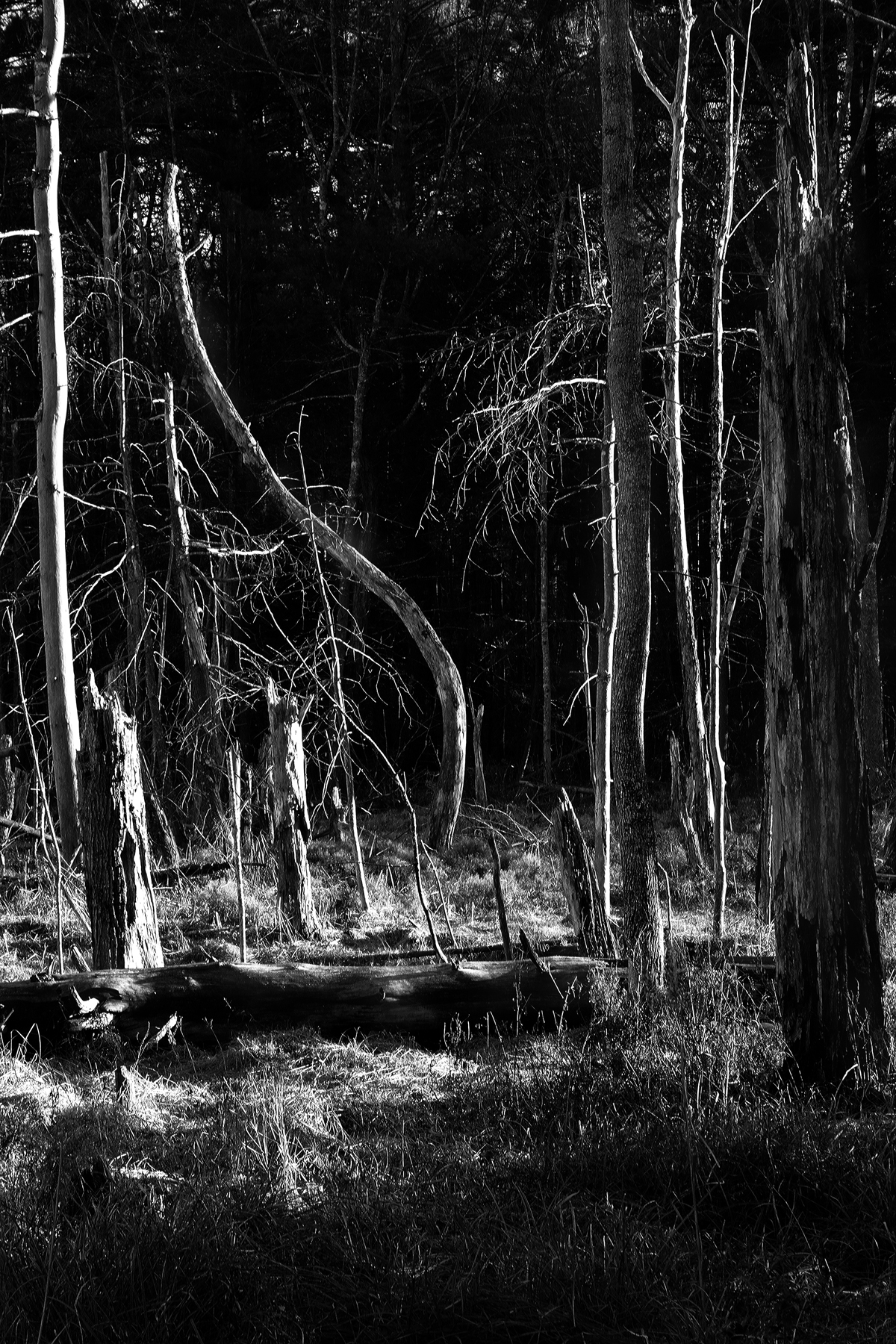
We emerged at one point into a massive sunlit meadow, now used for community farming, then followed a ridge line back into the woods only to find a marsh with strangely twisted trees lit gloriously by the late afternoon sunshine.  Such places always remind me of a famous, now known to be inaccurate, mural at the American Museum of Natural History, showing the then imagine Jurassic Swamp with giant brontosaurus grazing on lush vegetation.

It was a glorious afternoon and I took at least one photograph that I was happy with.

Figure 4 – Sunlit marsh


Photography and the tanning line

All of this talk of daguerreotypes and ambrotypes and albumin prints is taking us perilously close to a discussion of photoprocesses and how they work.  So, perhaps, it would be best to begin with a discussion of tanning lines.  Everyone is familiar with tanning lines.  Stay out in the sun too long and you get a pale shadow – a negative image of your watch, your hat, or your bathing suit.

What is going on here?  Well, obviously, some of the skin is protected from the sun and doesn’t tan.  The rest is hit by the sun, mostly the UV rays, and does tan.  But what are the underlying biochemical processes?  There are two tanning mechanisms or chemistries.  The human body produces a protein called  melanin, which is designed to absorb and therefore protect the skin’s DNA from UV radiation.  There are two photomechanisms involved in the tanning process.  In the first, a rapid response, the light causes the melanin to oxidase and darken.  The second is a slower process whereby the body detects UV damage to the DNA – technically the production of pyrimidine dimers.  In response to this damage, the body locally produces more melanin and therefore absorbs more light in the exposed areas.  Note that in both cases light energy causes a chemical change that results in increased light absorption or darkening.

Tanning is a classic example of a solar gram.  You can achieve the same effect with a piece of colored construction paper.  Place a few opaque items, like keys or coins on the paper and put it in the sun for a few days.  The sun causes a chemical reaction that bleaches out the color, leaving shadows of the objects behind.

This is all fine and dandy; but there is a big problem.  If you show someone your beached paper or tanning line you are exposing it to sunlight and eventually it too bleaches in the case of the paper or tans in the case of the skin.  Early experimenters in photography had a similar problem.  They had all sorts of chemical reactions  that were caused by light, but they needed a way to fix the image – to remove unreacted  photosensitizer.  How they solved this problem is the key to the story of early photography.

Lisa Kristine – Chronicler of twenty-first century slavery

In response to my blog on Alf Kumalo, who photo-chronicled apartheid, reader Rajan shared with us the remarkable work of fine art photographer Lisa Kristine who has made it her work to chronicle modern slavery.  This is in the finest tradition of photojournalism and photoessay.  Like Kumalo, Kristine is compelled do do this work at great personal risk.  There is a video of her lecturing on this human tragedy, which is illustrated by her beautiful photographs that documents both the horror of what she has witnessed and the fundamental dignity of human hope in the midst of total dispair.  I really should not say any more, but let her work speak for itself.  Watch this video and visit her website.

Mathew Brady – The Steve Jobs of the Nineteenth Century

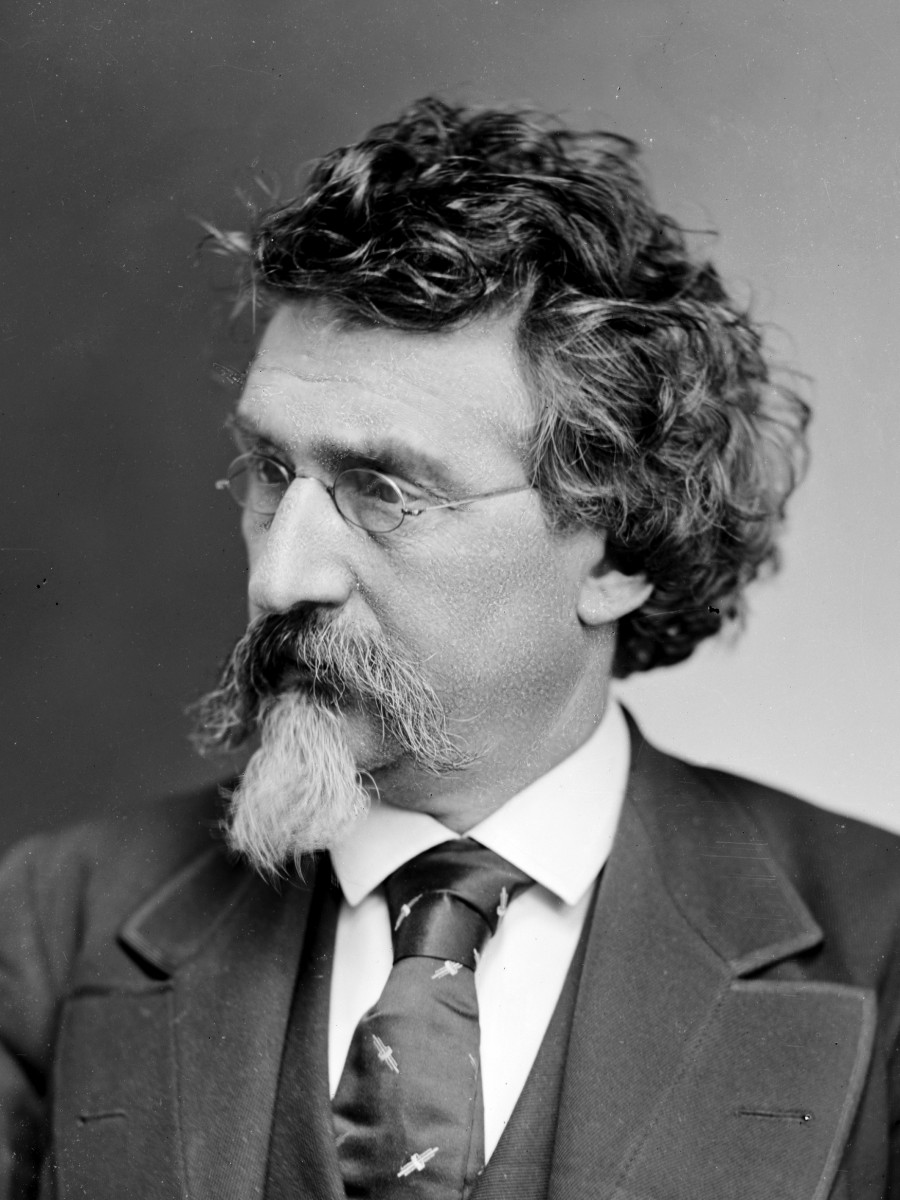
Figure 1 – William Brady, 1875 from the collection of the LOC

And continuing our discussion of presidential photographs, photographer and grand showman, Mathew Brady (1822 – 1896), photographed eighteen of the nineteen presidents from John Quincy Adams to William McKinley.  The only exception was William Henry Harrison, who died in office three years before Brady began his project of photographing presidents and other important people of the day.

Brady started his career studying portrait painting under William Page.  At age seventeen Brady moved to New York City, where he met artist Samuel F. Morse, who had just introduced the daguerreotype to America. Brady studied the new art form under Morse.  He opened a studio in New York City and in 1845 he began to exhibit portraits of famous Americans, which led to “The Gallery of Illustrious Americans.” In 1849 he opened a second studio in Washington, DC.

Recognize that photography was to the nineteenth century what the IPhone and IPad are to the twenty first.  People could not get enough of the new invention.  In a sense, Brady was the Steve jobs of the nineteenth century.  It was the latest in modern technology, a combination of science and seeming magic.  People flocked to have their pictures taken: first as daguerreotypes, then ambrotypes, and finally on glass negatives that we made into albumin prints.

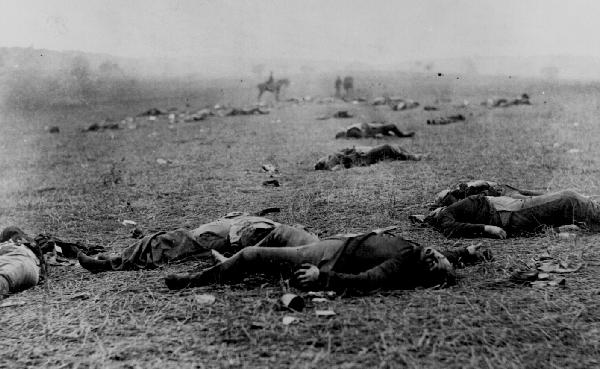
Figure 2 – “The Dead at Gettysburg, 1863” photographed by William Brady from the LOC

Brady traded a brisk business in popular carte de visites for soldiers during the American Civil War.  Brady became obsessed with the idea of photographing the war itself.  He received permission to travel to the battle fields from President Lincoln and because emulsions were too slow to photograph war action he photographed Lincoln, famous generals, and hundreds of rotting corpses on the battlefield instead.  These now serve as gruesome illustrations for Ken Burns’ haunting documentary “The Civil War.”  Brady’s Civil War images are in the tradition of Roger Fenton’s images of the Crimean War a decade earlier. It should also be pointed out that while these pictures are listed under Brady’s studio stamp, he had a team of over twenty photographers in the field including such illustrious names as that of Timothy O’Sullivan, now famous for subsequent pictures of the American West.  These photographs brought the war home to clientele in the North and skyrocketed Brady’s fame.

Fame, of course, as history teaches can be a very fleeting thing.  Today we owe an enormous debt to Brady.  He gave us pictures of presidents and generals we would never otherwise know – capturing forever brief instances of the nineteenth century.  But as contemporary interest in the Civil War waned, so did Brady’s fortunes.  He went bankrupt and died in poverty.  As Ken Burns laments, many of his glass negatives were sold as window glass for green houses and cold frames.  They became bleached and crumbled with the century.


Photographic Firsts # 1 – The first presidential portrait

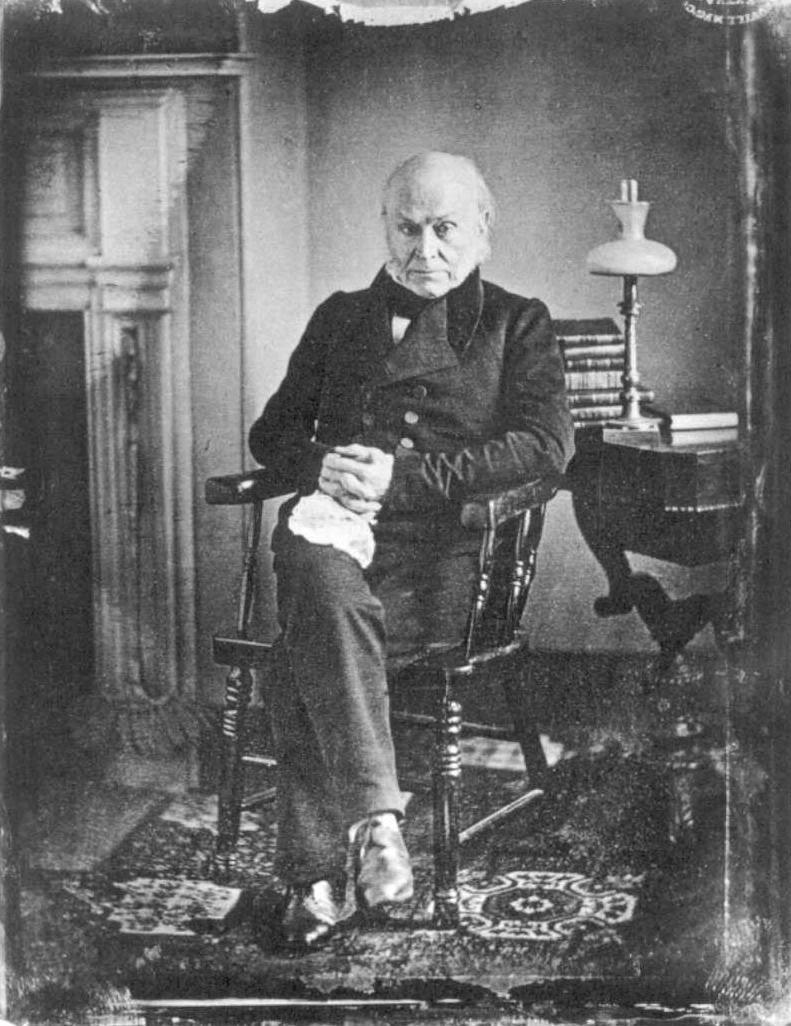
Figure 1 – Daguerreotype of John Quincy Adams, 1841

All this talk about antique images got me thinking along the lines of what was the first photograph of x, y, or z.  So I thought that for fun we might periodically ask and explore one of these questions.  So today we ask, who was the first American President to be photographed?

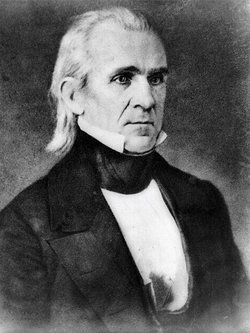
This would be sixth American president John Quincy Adams (1767 – 1848). Adams was president from 1825 – 1829 and this wonderful daguerreotype was taken in 1841; so twelve years after he left office.  The distinction of being the first American president photographed while in office goes to eleventh president James Polk (1795 – 1849).  Polk was president from 1845 – 1849and this photograph was taken shortly before his death in 1849

Figure 2 – Photograph of President James K. Polk, 1841-1849, and this photograph was taken shortly before his death in 1849

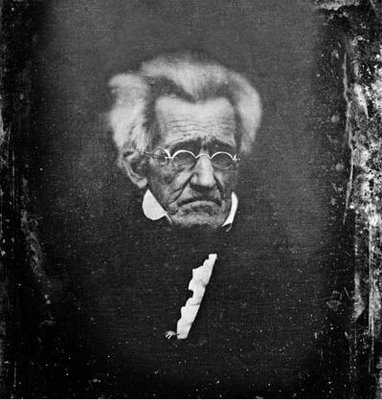
There are several photographic images of seventh president Andrew Jackson (1767 – 1845).  Jackson was president from (1829 – 1837), and my favorite is a daguerreotype taken in 1844/1845, when the president was 78.  It is very expressive, although Jackson certainly looks a lot better on the twenty dollar bill.

These may not be people that you ever expected to see in photographs.  Their lives just extended into the photographic age, and here they are recorded for posterity by Talbott’s “pencil of nature.”

Figure 3 – Daguerreotype of President Andrew Jackson, 1844/45

Finally, it may be worth noting, that presidential photographic firsts continue into the present.  The first president whose official portrait was taken with a digital camera was forty-fourth president Barak Obama.  This was a mere 167 years after John Quincy Adams posed for his portrait.

Ken Burns’ “The Dust Bowl” and the power of black and white photography

Like a large part of the nation, I have been watching Ken Burns’ latest documentary, “The Dust Bowl.”  Burns is a master of the art form.  He has an effective formula: still photos augmented with video clips, if they exist; a silver tongued narrator, here Peter Coyote; interviews with eyewitnesses; and underscoring with folksy tunes, here strummed and sung by Woody Guthrie.  I have been admiring and amazed at the quality, the sharpness and tonality, of the photographs.  They look as if they were not eighty to ninety years old but very modern and taken yesterday.

Well, there’s something curious going on here.  I’m not sure to what degree the images have been restored and enhanced – I need to explore that a bit.  But what is interesting is that Burns has turned the tables on us.  Usually black and white pictures convey, and are used to convey, a sense of age. And you can throw in a dash of sepia toning to emphasize the effect.  Here we think, and are meant to think, that these look so modern like they were taken yesterday.  He shows you a vibrant image of a baby or a young child and you say “what a beautiful little girl.”  And then he tells you, or better still, has a family member tell you how she died a terrible death due to “black dust pneumonia.”  It is absolutely heart-wrenching.

We have been talking about how when you see a person in an antique photograph you naturally wonder, what happened to the person.  Here we see the effect of making the image appear modern so that you can directly relate to the person and the catastrophe they experienced.  These events are not in the remote past, but could happen to you or someone you know tomorrow.

We see in these pictures the continued relevancy of black and white imagery.  They remain profoundly able to elicit psychological effect.  Even in the absence of color photography can provide a truly subtle pallet for the manipulation of human emotion.

Iwan Baan – Caught in a moment

We have talked a lot about photojournalism and the creation of iconic images that not only define the instant, but can also effect great change.  In our modern electronic world, images bombard us continuously and can to use, the latest vernacular term – go viral.  Watching an image evolve in this way is like the experience an astronomer has witnessing the birth of a star in the cauldrons of the universe.

So I offer you, as example, the magnificent photograph taken by Dutch architectural photographer Iwan Baan of New York City in the aftermath of hurricane Sandy.  This is the cover photograph of the latest issue of New York Magazine showing the city split in two by power outages.  Baan explains this photograph in Poynter Magazine: “It was the only way to show that New York was two cities, almost.  One was almost like a third world country where everything was becoming scarce. Everything was complicated. And then another was a completely vibrant, alive New York.”

Other Baan images of the hurricanes aftermath may be found at De Magazine Zeen. Baan took to the air to obtain the cover photo.  I think that we will be seeing this picture for a long time to come – an icon in the making.