Dorset Quarry

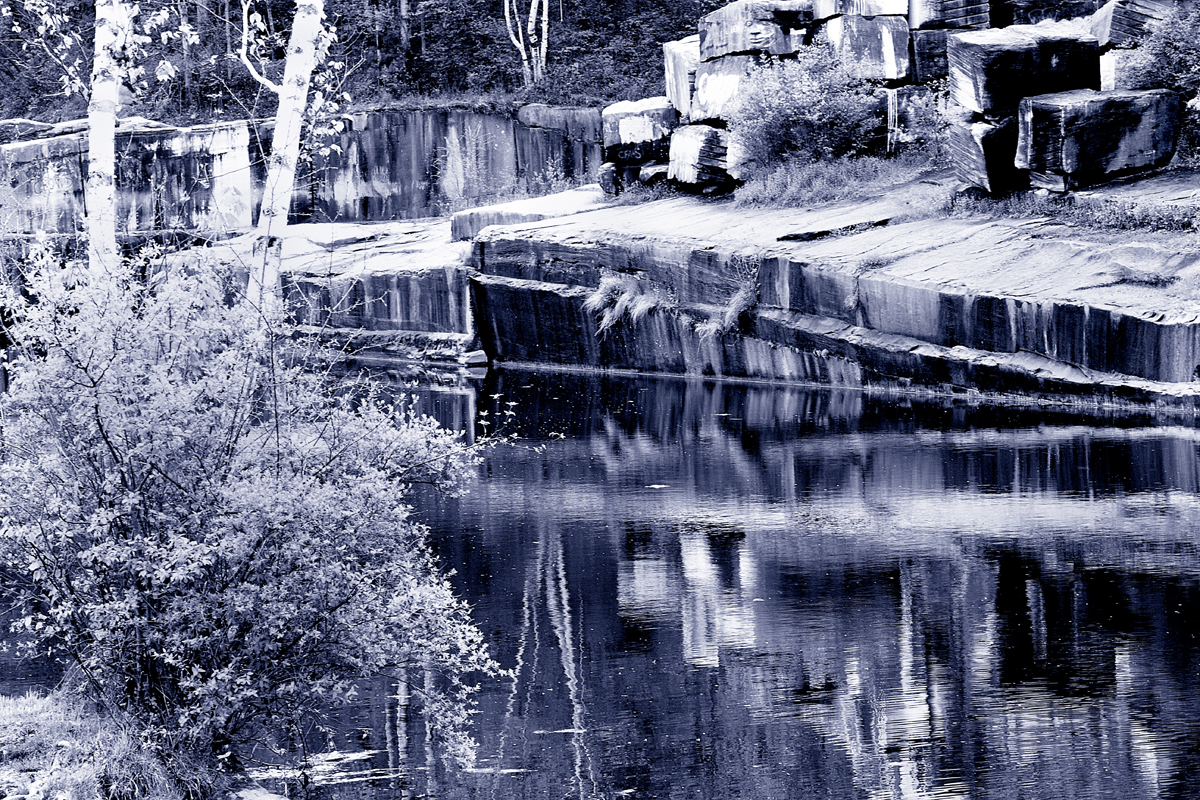
Figure 1 - View of the Dorset Quarry, Dorset, VT (c) DE Wolf 2013.

Figure 1 – View of the Dorset Quarry, Dorset, VT (c) DE Wolf 2013.

Vermont is marble!  Indeed the old part of Manchester Village, opposite the Equinox Resort, is actually paved with marble blocks.  So on my recent trip to Vermont, I had one destination in mind, ahead of time, and that was the Dorset Quarry in Dorset, Vermont.  I had been there before and knew that it was an ideal location for the kind of geometric images that I love.

Dorset Quarry was the first commercial marble quarry in the United States.  It was opened in South Dorset by Isaac Underhill in 1785 and continued to produce marble for the next 130 years.  There were ultimately at least  two dozen quarries located on Mts.  Dorset Mountain and Aeolus. Dorset marble was widely used for headstones, hearths, and mantels as well as for sculpture.  This marble was used for several major architectural masterpieces including:the New York Public Library, the library of Brown University, and Memorial Continental Hall of the Daughters of the American Revolution in Washington, D.C. as well several of the stately mansions on Fifth Avenue in New York City.Figure 1 is just a snapshot to give you a sense of the location.

It is the usual black as night water filled town swimming holes.  It conjures up nightmares of accidental drowning deaths.  However, I am assured that the actual safety record of the quarry is much better and that there have not been any fatal incidents at the Dorset Quarry.  Still it seems the perfect setting for a Stephen King novel or M. Night Shyamalan movie.

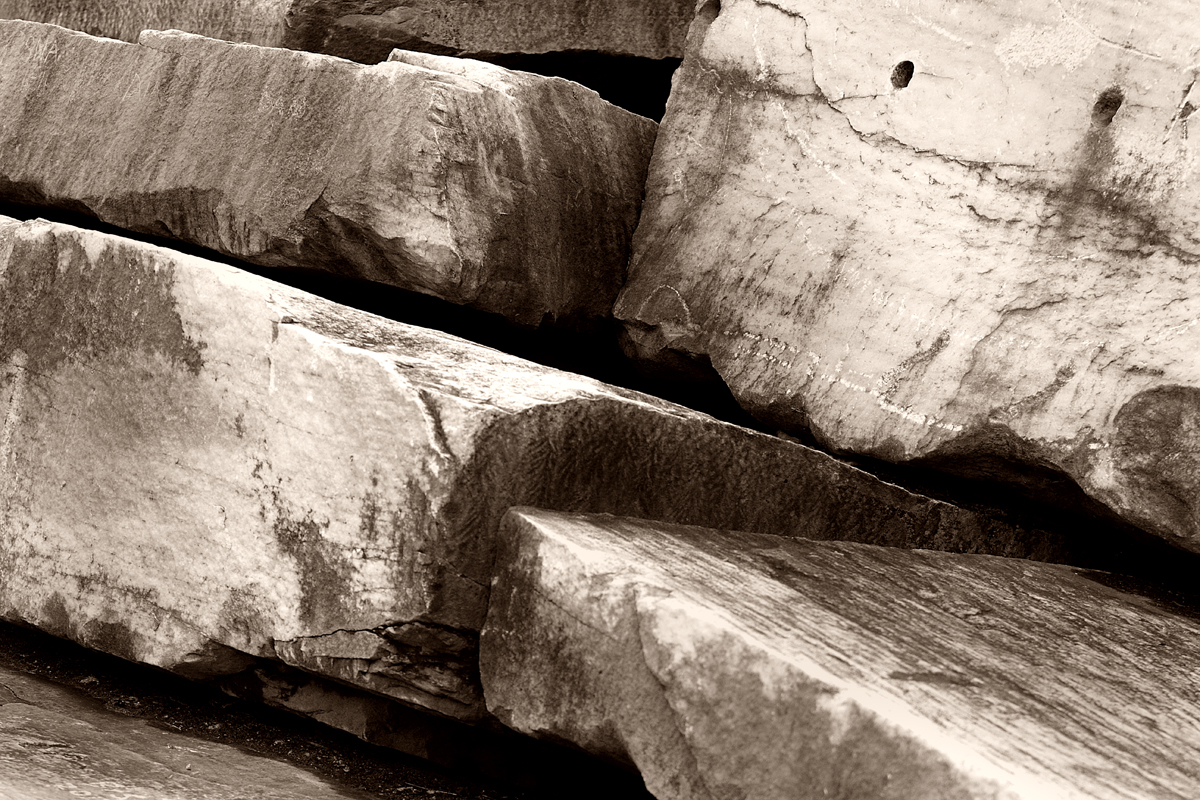
There are huge blocks of graffiti covered quarried marble blocks which decorate the site.  These form abstract designs ideal for photography.  I have several successful photographs from this trip, which I will publish over the next few weeks.  Figure 2 is an example.   I find that the man-made bore holes enhance the majesty of the marble.  Marble is an interesting substance to photograph.  It comes in many varieties.  Dorset marble is know for its blueness.  However, a given image seems to call out fro its own intrinsic toning.  I have chosen a cold blueish tone for Figure 1 but a warmer sepia tone for Figure 2.

Figure 2 - Dorset Quarry #1 Dorsert, VT, (c) DE Wolf 2013.

Figure 2 – Dorset Quarry #1, Dorset, VT, (c) DE Wolf 2013.

Vermont Color

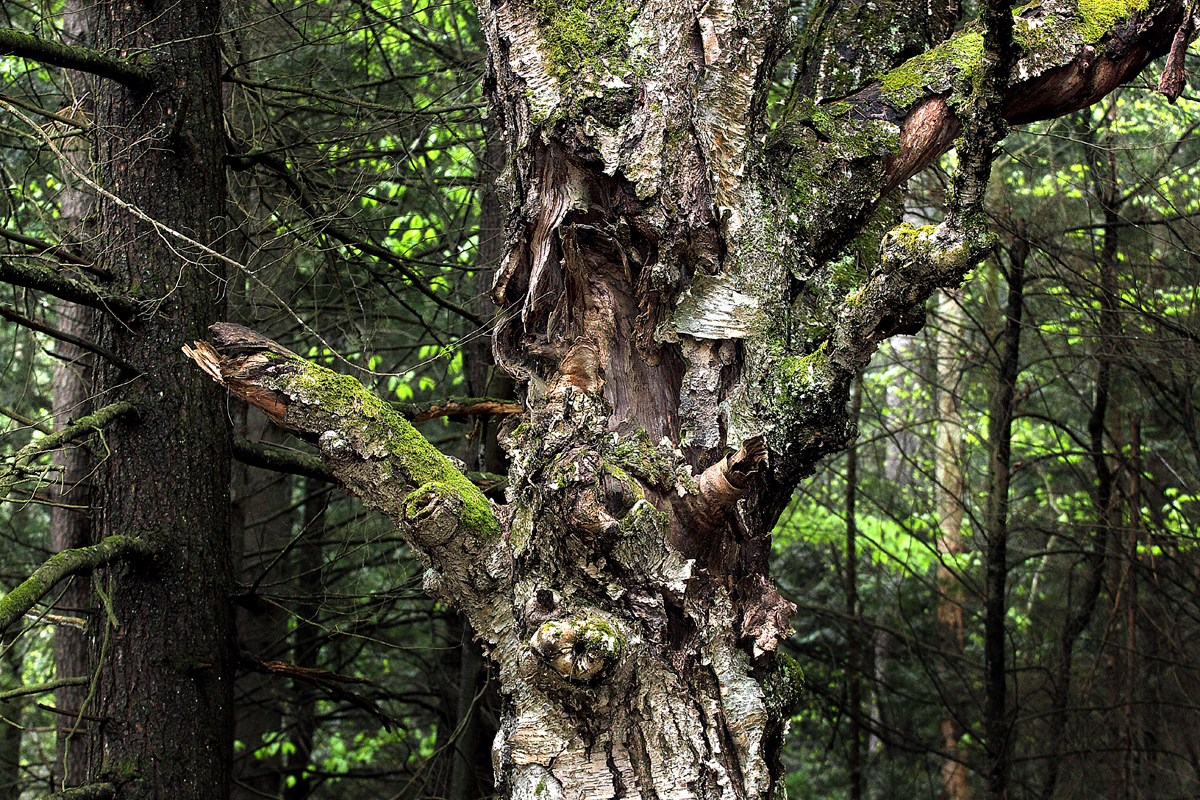
Figure 1 - Tree, Norwich, VT, (c) DE Wolf 2013

Figure 1 – Tree, Norwich, VT, (c) DE Wolf 2013

We have been taking a short vacation to Manchester, Vermont – which is a very beautiful valley set in the Green Mountains.  Reminiscent of our vacation last year to Maine, the beautiful weather ended the day we left – but sunshine is where you make it. So once again it was time to be creative with my camera and to continue to learn about the subjects that I like to photograph.

Vermont is, of course famous for its fall colors.  But spring too has its own magnificent shades, starting with the perfect chartreuse  greens of the newly born spring leaves, emergent everywhere.  The flowering trees are magnificent, and even the lilacs are starting to come out in abundance.

On the way up, we stopped first in Norwich at the King Arthur Flour Bakery and Bakery School Campus.  I saw a trail that led into a pine forest and couldn’t resist.  The colors inside were very subtle shades of reddish brown.  A golden retriever greeted me, anxious to be my friend  and play.  The forest went through a wetland, and a little flat board bridge took me across a bog, where I found the remains of an old tree, covered in moss, and still raising what was left of its branches in a mock spooky greeting.  I paused to photograph it using my monopod and experimented a bit to determine whether augmenting the subdued light with flash would improve the scene.  In the end, I settled on the subtlety of the natural light.

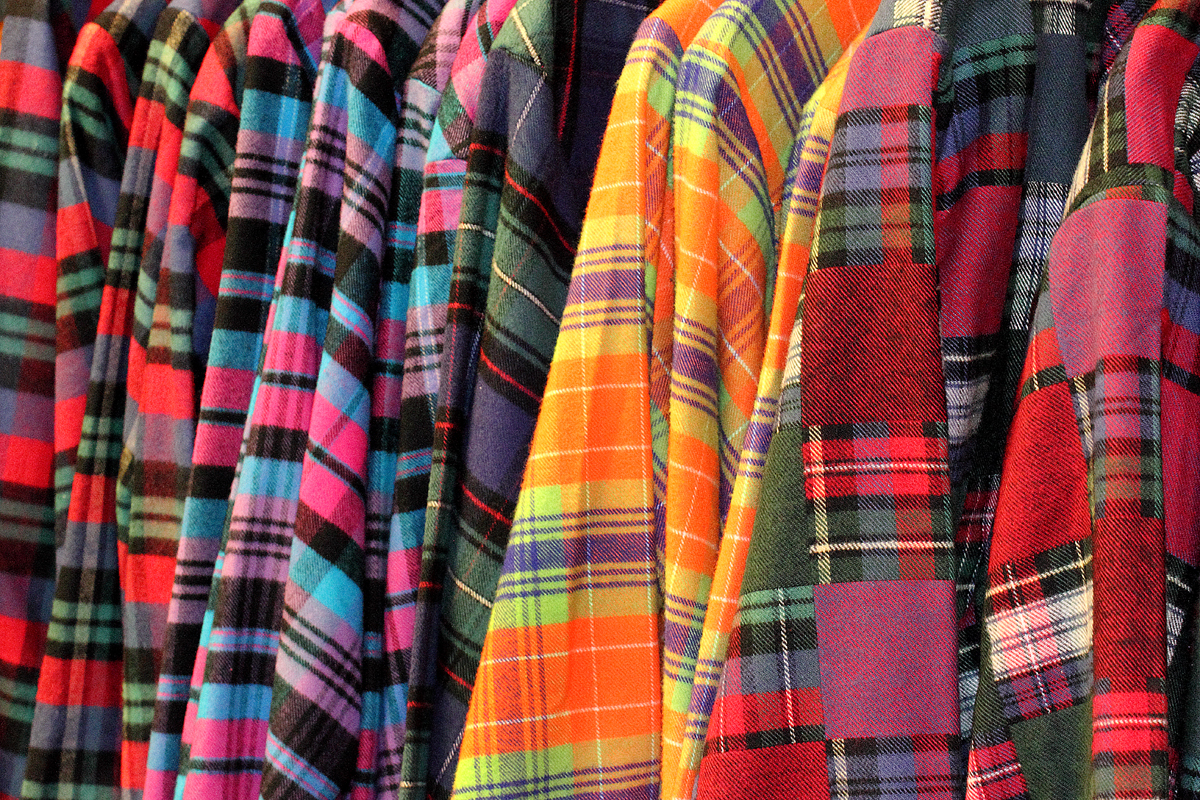
Figure 2 - Vermont Flannel, Woodstock, VT, (c) 2013 DE Wolf.

Figure 2 – Vermont Flannel, Woodstock, VT, (c) 2013 DE Wolf.

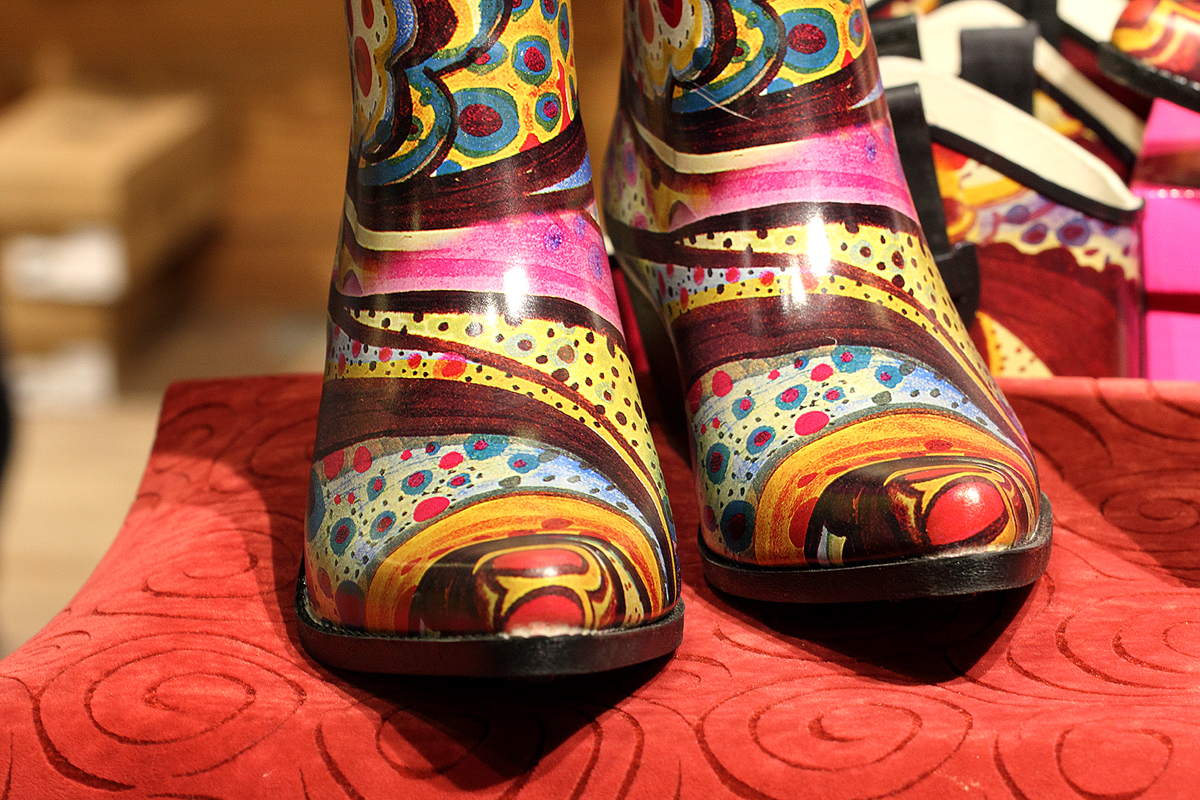
From Norwich we drove to historic Woodstock, where we discovered, or rediscovered, the brilliant color of Vermont Flannel.  This little narrow shop is  a Vermont mainstay.  It is famous for the three children (manikins) that sit outside, dressed in colorful flannel regardless of the weather, and is stuffed with brightly colored reminders that winter is never far behind in this part of New England. I had trouble framing pictures because the shop was so long and narrow, but did manage a few images that I liked in the end.  Picking up on the same theme, we stopped later in the day at the Vermont Country Store in Weston, VT where I found a pair of women’s rain boots that matched the enthusiasm of all the flannel.  So despite the rain I marked it up as a very colorful day in the end.

Figure 3 - Boots at the Vermont Country Sore. (c) 2013 DE Wolf.

Figure 3 – Boots at the Vermont Country Sore. (c) 2013 DE Wolf.

Changing meaning or morphin’ memes in photography

It is curious how within one’s lifetime, one can witness the connotation of an image or word change by 180 degrees.  For me the classical example of this is contained in a poem by English poet Robert Graves (1895-1985), “The Naked and the Nude.”  I think that to us today, the word naked refers to the lustful, the lascivious, and the sinful – something that you would see on a billboard at an adult movie theater.  In contrast, I think that the word nude describes the artful, the beautiful, the epitome of humanness – something that you would see in an art museum or gallery.  But here’s what Robert Graves said, scarce half a century ago (first published in 1961).

“For me, the naked and the nude
(By lexicographers construed
As synonyms that should express
The same deficiency of dress
Or shelter) stand as wide apart
As love from lies, or truth from art.

Lovers without reproach will gaze
On bodies naked and ablaze;
The Hippocratic eye will see
In nakedness, anatomy;
And naked shines the Goddess when
She mounts her lion among men.

The nude are bold, the nude are sly
To hold each treasonable eye.
While draping by a showman’s trick
Their dishabille in rhetoric,
They grin a mock-religious grin
Of scorn at those of naked skin.

The naked, therefore, who compete
Against the nude may know defeat;
Yet when they both together tread
The briary pastures of the dead,
By Gorgons with long whips pursued,
How naked go the sometimes nude!”

It is as if the two words have totally switched and interchanged their meaning.

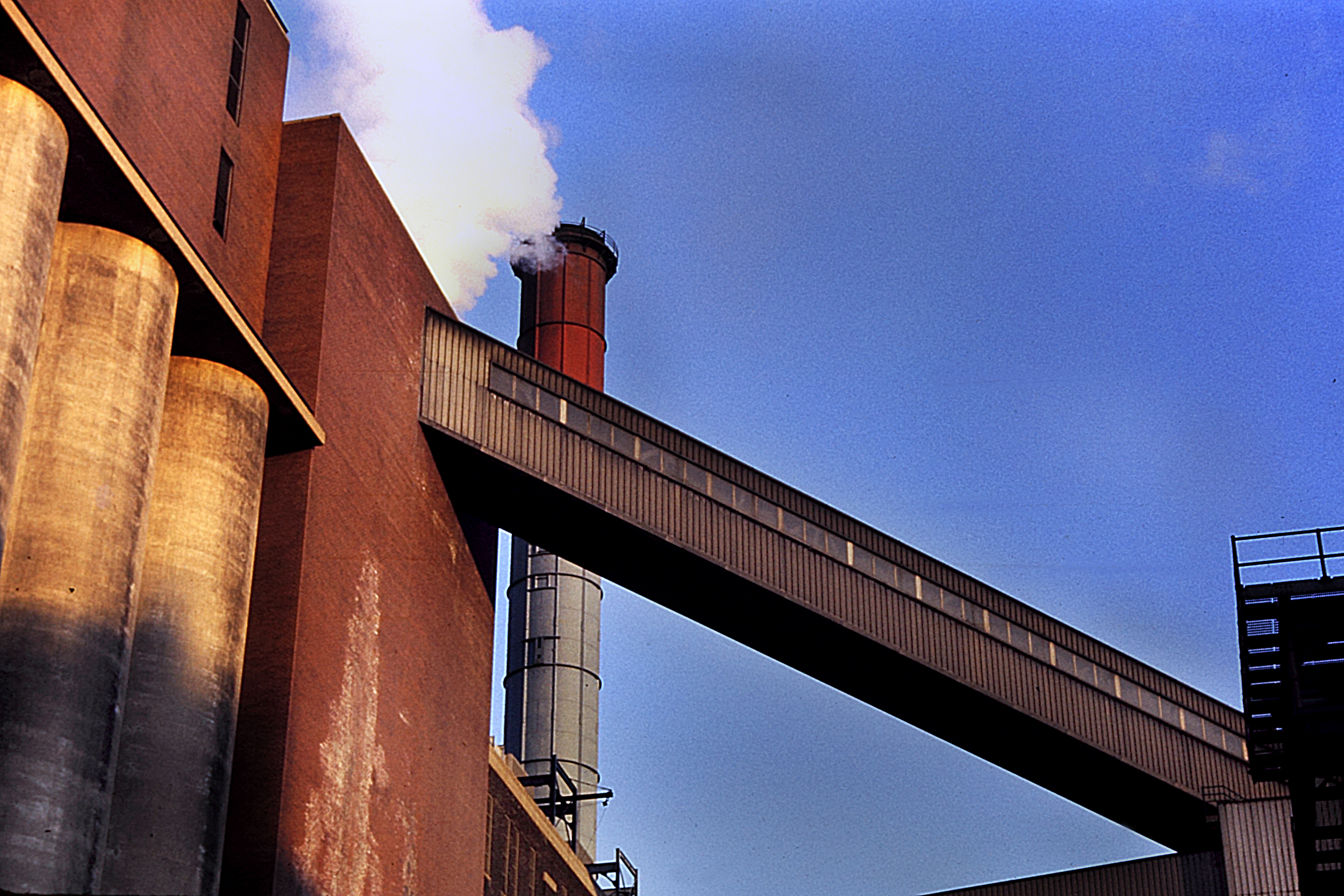
Back in 1968, I took a set of three Kodak Transparency images of the Consolidated Edison Steam Power Plant on the lower East Side of Manhattan.  Before that day, in the fifties and early sixties such an image would most certainly have been a meme for industrial power, strength, and national growth.  By 1968 the meme was undergoing metamorphosis.  Such an image was coming to mean industrial pollution, global warming, and national putrification.  These images were taken right on the cusp of the transition – so much so that my friend and I were chased away by overzealous security guards at the power plant.

Figure 1 - Consolidated Edison #1, 1968, digitized from a Kodachrome transparency. (c) DE Wolf

Figure 1 – Consolidated Edison #1, 1968, digitized from a Kodachrome transparency. (c) DE Wolf

Why Albert Einstein is wearing his wife’s coat explained

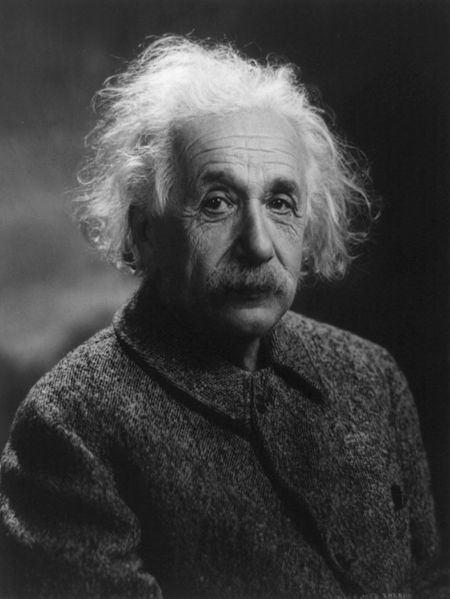
My posting about memes and the fact that Albert Einstein is wearing his wife’s coat – a jacket that buttons right to left has generated some interest.  As a result I decided to delve into the problem a bit and do some photographic forensics.

Figure 1 - Einstein facing the right way and wearing his own coat.  1947 from the Wikimediacommons and in the public domain.

Figure 1 – Einstein facing the right way and wearing his own coat. 1947 from the Wikimediacommons and in the public domain.

I wanted to put Einstein in what was definitely the correct perspective.  I found two images where the orientation is definitive.  The first, shows Einstein writing on the blackboard, where if we can read the equations, it’s not a mirror image.  The second, shows Einstein shaking hands, a right hand activity, upon receiving his certificate of US citizenship from Judge Phillip Forman.  The important point in these images is to notice the distinctive nature of Einstein’s two eyebrows.  The right eyebrow is darker in the center, while the left is more uniform in coloration.

So then if you return to our original image.  You see that it is the left brow that is smaller.  The image is reversed, mirror flipped.  The Wikimedia site is definitive.  It shows the original image from 1947 and facing right and facing left variants.  Somebody along the way decided that Albert would look better facing to your right, despite the fact that it dressed him in borrowed robes, and was just a bit disconcerting to the dress-code meme-sensitive among us.  So allow me to restore Einstein to his full uncropped and unflipped 1947 glory in Figure 1.  I am certainly glad that we got that straightened out!  Columbo and Monk would be proud.


Photography and the sin of pride

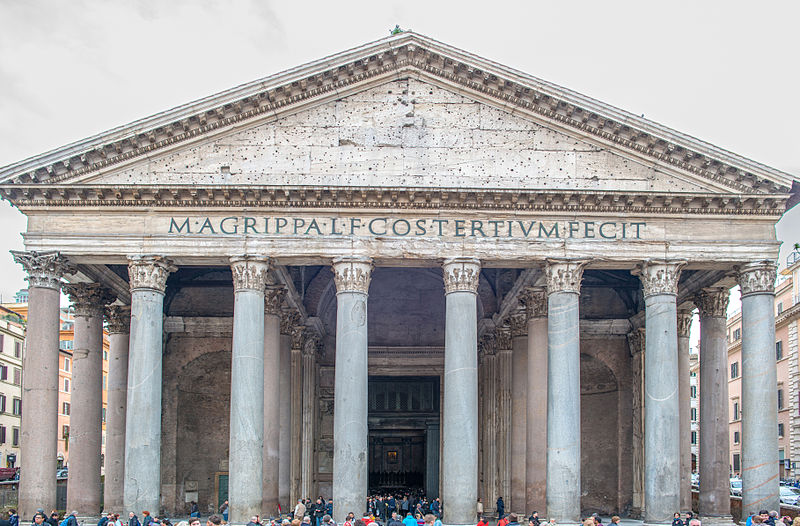
Figure 1 - The Roman Pantheon, from the Wikimediacommons, image by Bengt Nyman under creative commons license.

Figure 1 – The Roman Pantheon, from the Wikimediacommons, image by Bengt Nyman under creative commons license.

Among the seven deadly sins the sin of pride is considered not only the worst, but the root cause of all others.  The construction of the Tower of Babel was considered a classic biblical example of the sin of pride. Dante’s definition of pride was “love of self perverted to hatred and contempt for one’s neighbour”.  Whoa!  That’s serious stuff and not really what I want to write about here.  I’m more concerned about your everyday pride – perhaps not reading so high on the Father Guido Sarducci’s “How to Pay for your Sins Scale.”

There’s a lot of things that we as individuals are proud of.  I am proud of some of the scientific work that I have done, proud of some of my scientific writings, proud of the book book that my colleague Kip Sluder and I have edited and nurtured through four editions, and yes, proud of some of my photographs.  There’s not so much wrong with any of this kind of feel good about yourself stuff as long as you remember not to take yourself too seriously.

And as long as you remember to keep it all in proper perspective.  I remember that when my book first came out I would hold it up and think: “Pretty good I made this!”  Well, at about that time I happened to visit Rome on vacation, where I wandered into the Roman Pantheon – The Temple to all the Gods.  This is a remarkable building.  I have included an image of it as Figure 1. The Pantheon is deceptively designed in that its facade is meant to look like the Athenian Parthenon, the Temple of Athena.  But when you enter it you emerge into a giant dome, really a sphere (the ancients realized that the Earth was a sphere and believed that it was surrounded by the concentric spheres of cosmos) with a marvelous window at its center.  This is meant to symbolize everything (a modest endeavor to be sure).  This building is truly wonderful and almost beyond description.  You emerge again breathless and look back from whence you came and there above the portico, inscribed in giant letters for all the world to see are the words: “M·AGRIPPA·L·F·COS·TERTIUM·FECIT,” which basically means: “MARCUS AGRIPPA MADE THIS.”*

Hmm, my little book paled in comparison.  I tell you this story kind of as a parable in relationship to photography.  In photography, indeed in life, one needs to do for the love of doing and seek to do good and beautiful work.  One reads so many biographies of photographers, scientists, artists that say something like: (s)he was unappreciated is her/his lifetime.  The point is that while it is nice to be loved, do it for yourself, the rest: fame, riches, whatever is serendipity.  Indeed, the goal to be great as opposed to the goal to be good is a dangerous one, witness all of the cases of scientific fraud, perpetrated by those who sought fame and somewhere along the way lost the meaning of being a scientist.  This takes us full circle to the sin of pride.

I know so many people that are true amateurs – someone who does something purely for the love of it.  And among these are some of the finest photographers that I know.  And how do I judge that?  The answer is obvious.  It is that their work speaks to me and contains a deeply personal vision.

And what of Marcus Agrippa and the Pantheon that he built?  What of the deadly sin of pride?  The answer, of course  lies in the famous poem “Ozymandias” by Percy Bysshe Shelley (1792-1822).

I met a traveller from an antique land
Who said: “Two vast and trunkless legs of stone
Stand in the desert. Near them on the sand,
Half sunk, a shattered visage lies, whose frown
And wrinkled lip and sneer of cold command
Tell that its sculptor well those passions read
Which yet survive, stamped on these lifeless things,
The hand that mocked them and the heart that fed.
And on the pedestal these words appear:
`My name is Ozymandias, King of Kings:
Look on my works, ye mighty, and despair!’
Nothing beside remains. Round the decay
Of that colossal wreck, boundless and bare,
The lone and level sands stretch far away”.

* Actually the inscription was put there during a later renovation by the Emperor Hadrian and means, in its entirety: “Marcus Agrippa the son of Lucius made this in his third term as consul.”

Marcus Aurelius, Kurt Vonnegut, and the photograph as time machine

 “For a man cannot lose either the past or the future: for what a man has not, how can any one take this from him?

Marcus Aurelius “Meditations,” 167 A.C.E.

In his, Meditations, Marcus Aurelius (121-180) raises the point, since echoed by many western philosophers, that we only possess the present,  We don’t possess the past, because it is gone, and we don’t possess the future, because we don’t have it yet and perhaps never will.  It is the Stoic rendering of live, perhaps better stated, act in the moment.

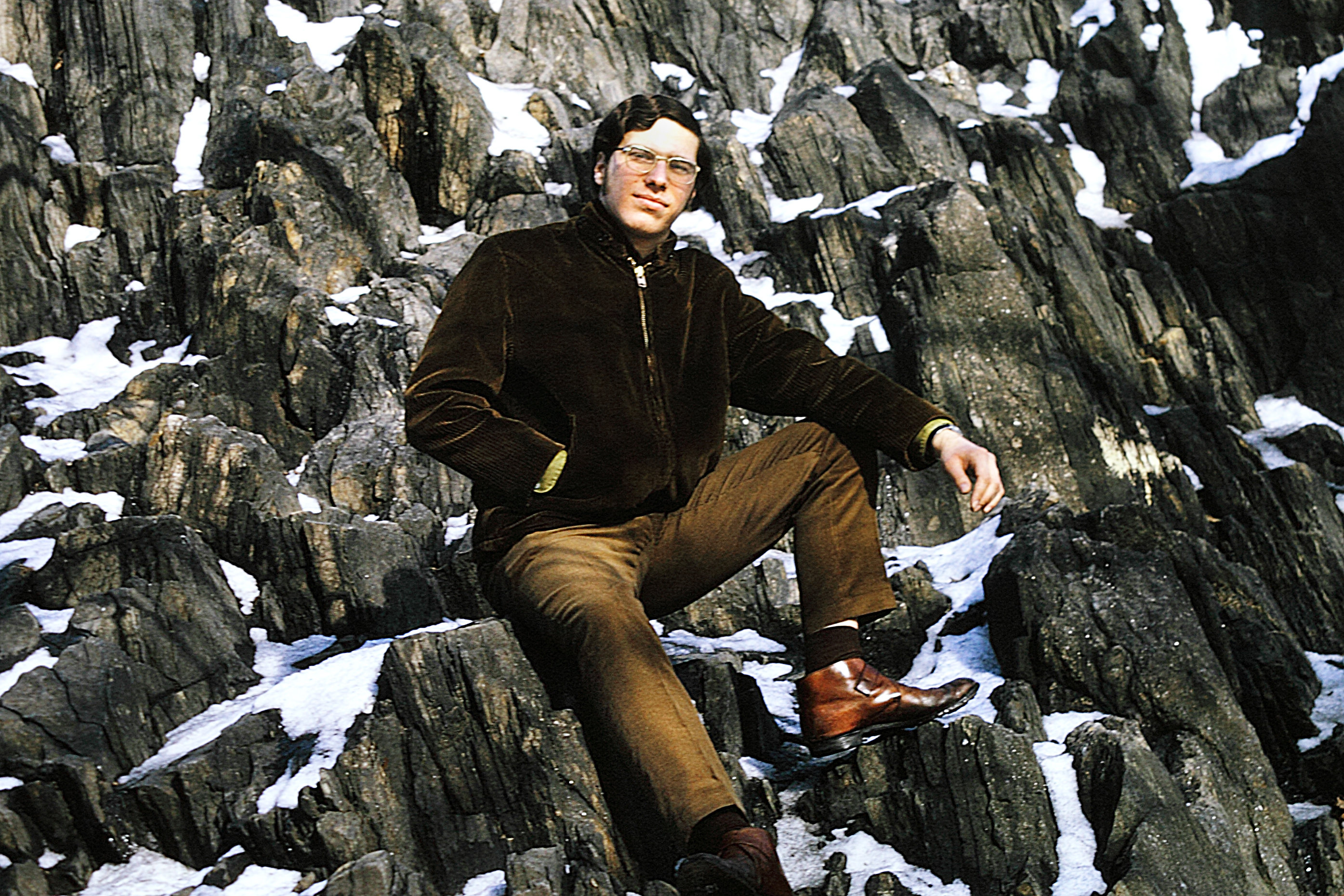
I spoke yesterday about copying my old slides.  My photographic life, in terms of color images, is divided into three strata.  My slides days, my color print days, and my digital days.  So my slides are the oldest and their digitization takes me back to things that I really haven’t seen sometimes in forty-five years.  There are a couple of aspects to that.  First of all you get to relive all of the moments – I can invariably remember the act of capturing the image.  And second, there is the desire to understand the person who took the images.  That person is you, or somehow related to you, and you feel that if, via these images, you can somehow get into the head of that photographer that you somehow learn something important about yourself. Phew!  That’s a complex sentence.

Figure 1 - "Portrait of the artist as a young man, 1971," sigitized Kodachrome transparency. (c) DE Wolf 2013.

Figure 1 – “Portrait of the artist as a young man, 1971,” digitized Kodachrome transparency. (c) DE Wolf 2013.

In this context photograph functions like a time machine.  Photography is momentary and it is intimate.  If I show you a painting or a sculpture of, say, Abraham Lincoln, you think: “OK, nice painting or nice statue.” It’s somehow abstracted.  You know that it is a creation and therefore at least one degree of separation away from the subject (Abe Lincoln).  But if I show you a photograph of Honest Abe, you think: “Oh wow.  That’s really him!”  A photograph brings this magic with it.  Fox Talbot and Louis Dageurre put that magic there, and we are still enchanted 150 years after.  And even more curious is the fact that if I tell you that it’s really only Lincoln’s head and face transposed on Calhoun’s body, you are unperturbed.  The intimacy remains!  The magic is still in the photograph.

So there you have your life, spread out randomly on the table – chronology lost.  Photography creates the sense that Aurelius was wrong – that is, of course, an illusion.  But for a while, at least, you feel like Kurt Vonnegut‘s Billy Pilgrim.  You have become “unstuck in time.”  You can ponder your own youthful face or the image of some long forgotten scene – a place that might no longer even exist.  This is truly the magic of the medium.

Life returns to normal in Watertown

Last Friday a colleague and I went out for lunch and watched a helicopter hovering over the site of the capture of the Marathon bomber.  It turns out that this was recording the removal of the now infamous bullet-riddled boat as evidence.  Well, Watertown and Boston, at some level, are returning to normal.  Spring is magnificent on the Charles Reserve.  So after all this heavy duty discussion about memes and memetic evolution, I thought that something light was in order – something warm and cuddly, something symbolic of renewed hope.

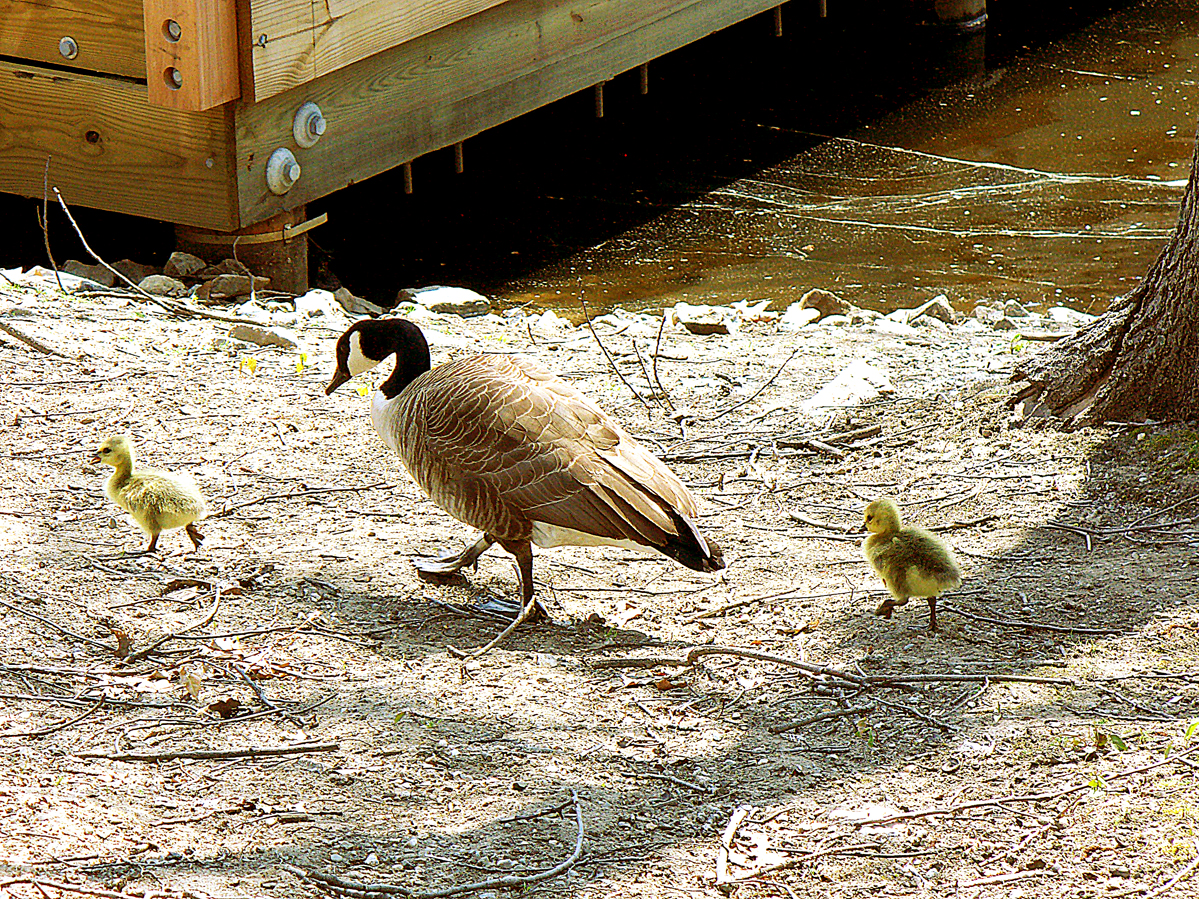
This past weekend the first gaggle of Canadian baby geese was born.  I was amazed at how many of them there were.  They had not yet taken to the water, but hid themselves perfectly camouflaged by the moss on the river bank.  Papa goose had proudly taken the majority of his gosling charges  along.  Momma stayed behind to bring up the rear and prod on these two slow pokes.  There was something wonderfully normal in all of this – something expectant and promising.

Figure 1 - "Hey! Wait for us, mom!" (c) DE Wolf 2013

Figure 1 – “Hey! Wait for us, mom!” (c) DE Wolf 2013


The meaning of photography – are we more or less connected, revisited

We started this discussion about the meaning of photography and of images as memes with the basic question whether we are more or less connected today compared to people of the past.  I think that you can guess where I stand on the issue.  Overwhelmingly, I believe that we are more connected.  Photographic images are representative of memes and the more we share photographs and other forms of information and memes, the more we are connected as a global community.

So if you are engrossed in your communication with a larger community than just the people around you, then you are more connected.  I emphasize the word just.  Don’t ignore the people you are with.  You are interacting directly with them in a much more human context than can ever be achieved electronically.  Indeed, failure to do so can, for example, totally ruin your love life.  You are treading perilously close to what William Congreve (1670-1729) (not William Shakespeare) said in his “The Mourning Bride (1697):”

“Heaven has no rage like love to hatred turned
Nor hell a fury like a woman scorned.”

If you to any degree believe in the concept of memetic evolution, then you accept, to that degree, the view that this kind of replication through social communication of ideas (and images) is essentially a manifest destiny.  We are meant to do it and must do it in order for our culture (a global and interconnected culture) to evolve.

This said, it must be pointed out again that technology expands choices.  It does not make ethical decisions.  There is as much misinformation as valid information on the internet.  I am constantly dismayed by the foolishness on social media – doctored images and false “facts” to name but two.  It is as if everyone’s brains had turned to mush!

As we reach for the for a better world through communication of images, memes, and ideas; as we literally reach for the stars, we must remember what, this time William Shakespeare, said:

“The fault, …, is not in our stars,
But in ourselves, that we are underlings.”

Image and the meaning of the sacred

Yesterday, I wrote about images of the Challenger disaster and how the event, and by connection the images of the event, became sacred.  Not surprisingly, sacred memes and their connected images are a quintessential element of human culture.  The example given spoke directly of God.  But it is very important to point out that while the sacred as it relates to religion and numinous deities is certainly a widespread class of cultural memes, there are other memes that we hold sacred.  We hold family sacred. We hold country sacred.  We hold our political systems and institutions sacred.  We hold our cultural traditions, our literature and our legends all sacred.  These are all memes, and whenever an image resonates with a sacred meme it strikes a chord with which we relate very deeply.

Our religions seek to explain our place in the universe.  And, in a sense, anything that serves the same role we also hold sacred.  If we are overwhelmed by the beauty of nature, we hold that sacred.  If we stand in respectful awe at ancestors who defended our nation and way of life, we hold them sacred.  In the past couple of weeks, I showed images of several scientific greats: the Curies, Einstein, and Tesla.  All of these individuals sought to explain the place of men and women in the universe, and in a very real sense we hold them sacred.

The role of photography in all of this is defining.  Look at the images of these people, we can almost touch them, and the hair may rise on the back of our necks.  But in all cases these people are gone from us, replaced, extended, and redefined by palpable and cogent memes.

It is significant to point out that the sacred is culturally specific.  In his magnum opusThe Masks of God,”  Joseph Campbell points out that God does not appear to the native American, in the sweat lodge, in the robes of Jesus, but rather in the form of an eagle.  But we believe that the context is universal.

I  have seen this mask effect first hand.  I was once in a museum looking at a painting of a woman in a shower of gold coins.  It seemed very strange, and I read the label “Zeus Seducing Danaë in a Shower of Gold.”  We hold very dear and sacred the myths of the Greeks and Roman.  Judging by our art, it is almost as if they are part of our religions.  But this image, this meme, so clear in the renaissance was lost to me.  The story is from Ovid’s “The Legend of Danaë.”  At least I recalled that she was the mother of Perseus set adrift in a box (like the Meme of Moses).  When Acrisius consulted the oracle(ever up to mischief) he was told that he would have a daughter, whose son would grow up to kill him.  Now that was a big “uh oh” in Greek mythology, otherwise ever ripe with matricide, infanticide, and patricide.  So he cast his daughter Danaë in a subterranean dungeon so that she would not meet any suitable men.  So along comes Zeus, who to impress the maid appears as a shower of gold coins.

Another example of meme lost or meme mutated is when we attempt today to read Shakespeare.  Hamlet says: “Time is out of joint.  Oh cursed spite, that ever I was born to set it right.”  We have come to believe in an ever rapidly changing world.  To the Elizabethans the universe was static and unchanging.  Hit them with a comet and watch out.  Hamlet knows that to mess up the order of the world put you in serious trouble with the big guy upstairs.  However, his uncle has upset the world order, and it is Hamlet’s responsibility to fix it.  But this very act of fixing it, he is messing it up again.  It’s kind of a Shakespearean “Catch 22.

What we are ever seeking is to understand our place in the universe and in that context, we are ever seeking the sacred and images that resonate with sacred memes.  Let’s be clear what we mean by resonate.  You move a bow across the a string on a cello.  The bow attempts to impart all sorts of tones to the string, but they are almost all damped out.  The bow may even attempt to get the string to vibrate laterally, which it refuses to do.  All of the frequencies or tones fall victim to the damping forces except for the very few that have just the right frequencies (those that have nodes on either side of the string).  These are the resonances: pure and clear and loud.  So too, images that resonate with sacred memes are the ones that effect us the most strongly.

And while we seek and gravitate towards those memes that are particular and defining of our own individual culture, we search forever for the universal memes, those that define what it fundamentally means to be human.  Some years ago I visited Chartres Cathedral and I was amazed to see a stained glass window depicting a man with a tree growing out of his loins.  It struck me at the time that this was an image depicting Vishnu living in a lotus blossom that grew out of the navel of Brahma.  Each night the lotus would close up.  Each morning it would open up again.  A life had passed.  I wondered why was this Hindu meme to be found at this holy christian site.  Of course, that wasn’t it.  It is foretold in Isaiah:

“11:1 And there shall come forth a rod out of the stem of Jesse, and a Branch shall grow out of his roots:

11:2 And the spirit of the LORD shall rest upon him, the spirit of wisdom and understanding, the spirit of counsel and might, the spirit of knowledge and of the fear of the LORD.”

This is the lineage of the Christ.  But you see, the meme of the world tree the central axis of the world is one of those universal memes.

The Cathedral of Chartres is one of those truly amazing universally sacred places.  Needless-to-say, I didn’t take any photographs that day.  If I had been a better photographer, I might have found a way resonate my images with all of the sacred universal memes that define that site.  I was in awe.  And the great Hebraic scholar Joshua Abraham Heschel (1907-1972) has taught us to look for the sacred in the awe.