Images from the deserted mall

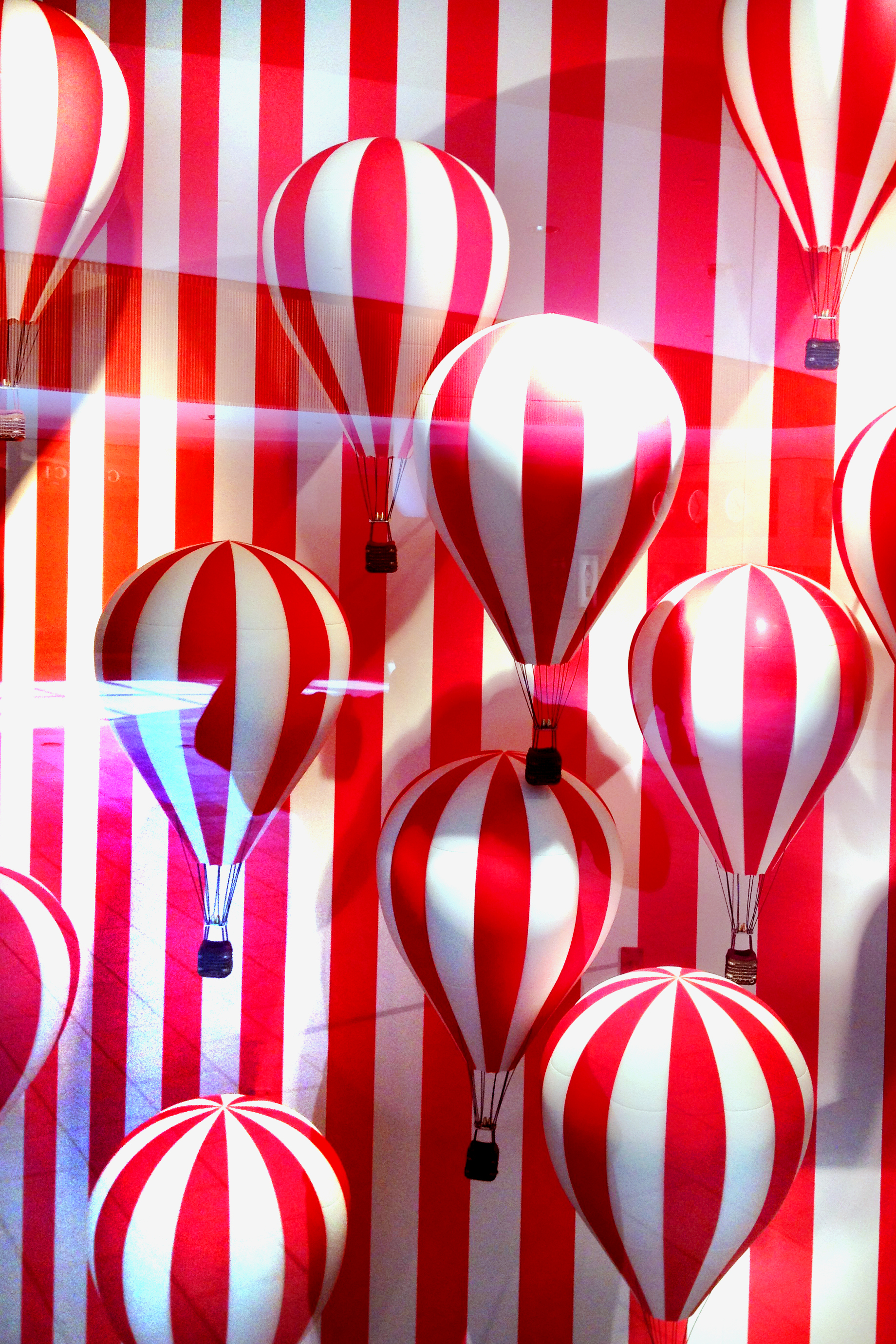
Figure 1 - Louis Vuitton Balloons (c) DE Wolf 2013.

Figure 1 – Louis Vuitton Balloons (c) DE Wolf 2013.

We have reached that penultimate time in New England (the ultimate being Fall), as the solstice has heralded in perfect sunny days.  I knew that I would be going out in the afternoon to take photographs, but out of curiosity thought that I would take a walk at the local mall and see what my Iphone could photograph.

The mall was, as one my expect, largely deserted, a few families and a few people with the determined look of destination and get me out of here wandered about.  I purchased my iced coffee from a smiling teenage girl, who seemed happy to have a summer job even if it doomed her to this troglodyte existence.  We exchanged pleasantries and I headed off in search of photographic game.
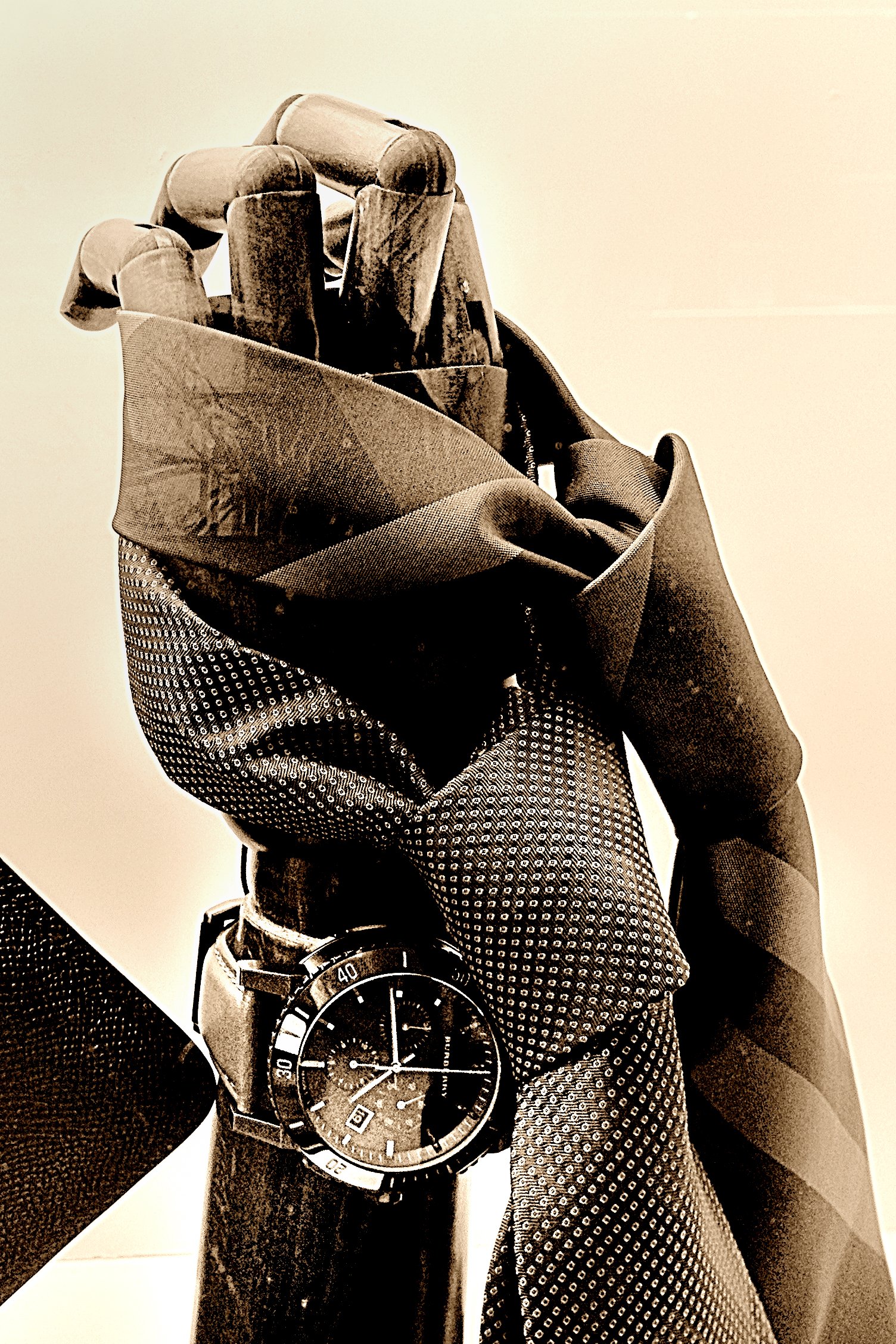
Figure 2 - Burberry, Hands and Ties, (c) DE Wolf 2013.

Figure 2 – Burberry, Hands and Ties, (c) DE Wolf 2013.

The first stop was the windows of Louis Vuitton which never ceases to amaze.  They have wonderful and highly talented window designers.  And this month’s theme was red and white striped hot air balloons all floating playfully against a striped background.  For once, I did not find the reflections in the glass disturbing, but felt instead that they even added a bit of asymmetric ambiguity to the picture.

The second stop that caught my eye was at Burberry.  A very mechanical manikin’s fist wore a wrist watch and clutched two ties.  The effect was very stark and harsh because of the brightly lit background, and I think in the end it was just a bit, yes I have to say it, surreal.

From there I had to move on.  The skies outside were turning very bright, and the temperatures were climbing up into the nineties.  It was time to leave the mall for colder times and to head out doors.  That of course is another story filled with other pictures, taken with more serious cameras.

The Pizza Pan Ceiling

Figure 1 - Pizza Pan Alley, Wellesley, MA, 2013, (c) DE Wolf

Figure 1 – Pizza Pan Alley, Wellesley, MA, 2013, (c) DE Wolf

Imagine that you’re in the Sistine Chapel and want to photograph the ceiling – or in the Roman Pantheon and want to shoot straight up to the middle of the dome.  Such photographs are very challenging, and unless you’re willing to ultimately shoot blind, are beyond the capabilities of most DSLRs.

Well I recently found myself in just such a situation.  There I was in Wellesley, Massachusetts at the “Upper Crust” pizza parlor waiting to be served, when I discovered the famous pizza tray ceiling, which distinctly reminded me so much of the game of “Tetris.”  With my Canon T2i or even my Panasonic Lumix this would present formidable challenges.  But for my IPhone 4s, no problem!  Indeed I start to wonder if this isn’t what it was made for.  So I give you “The Pizza Pan Ceiling, 2013.”

Ducks on the Concord River and weather of biblical proportions

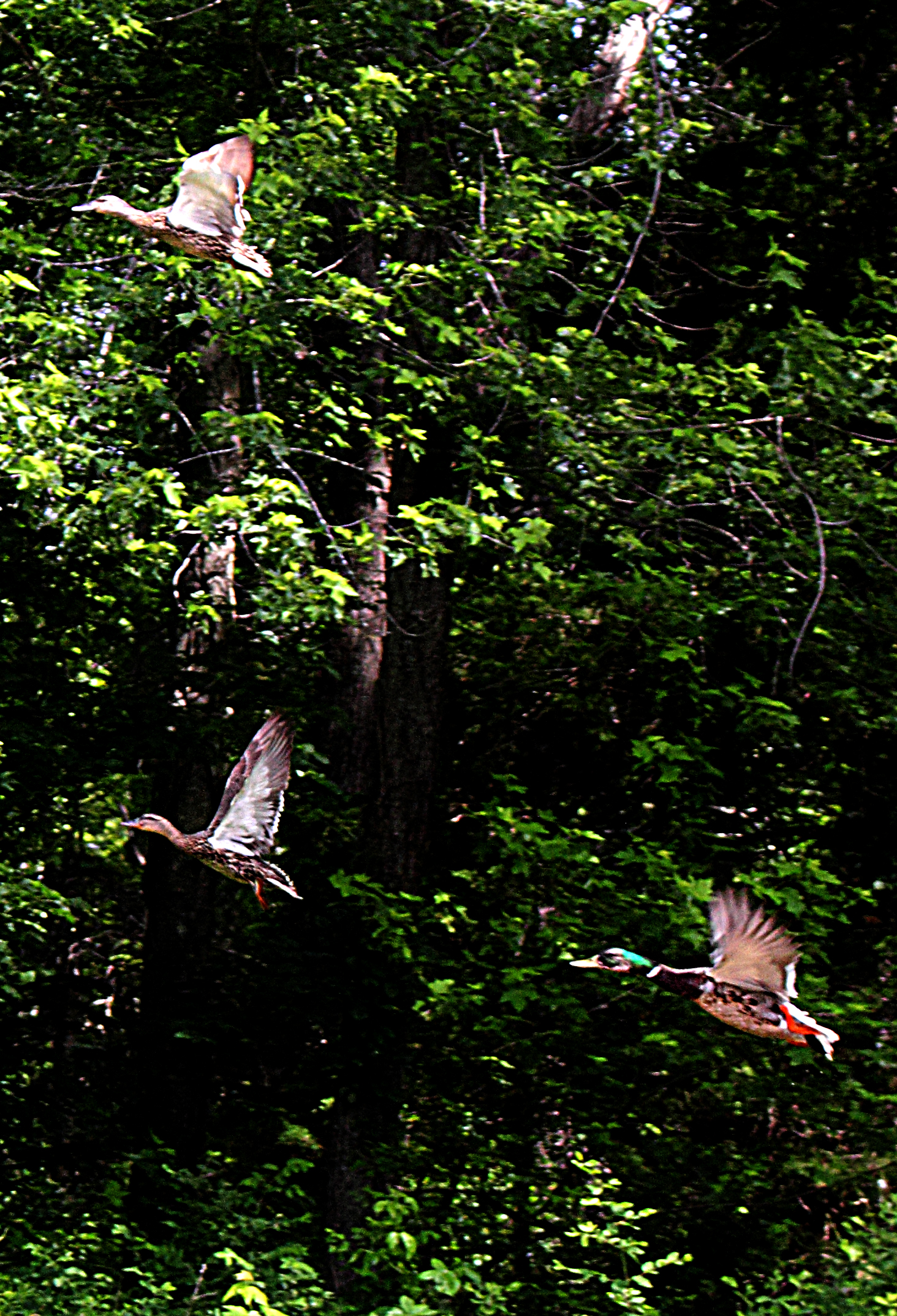
Figure 1 - Ducks taking flight, Concord, MA (c) DE Wolf 2013

Figure 1 – Ducks taking flight, Concord, MA (c) DE Wolf 2013

I went to Concord, Massachusetts today to take pictures at one of my favorite spots the National Historic Site at the Old North Bridge.  I walked down the path towards Daniel Chester French’s heroic Minute Man Statue and chatted with one of the park rangers about how high the river was because of recent rains – and I commented how Eagle Pass, TX had gotten over seventeen inches of rain yesterday.  Then I had to stop in my tracks.  Just beyond the bridge, the Concord River had consumed the foot path.  There was no going forward.

I continued to poke around a bit.  But no pictures grabbed by eye.  I wandered back towards my car along a little flooded meadow.  A pair of mallards thought that I was getting a bit too close, infringing on their personal space.  So they swam off towards a crowd of ducks.  Suddenly as I approached these, they all took to the air – retreat getting the best of valor.  I had no time to compose or anything.  Just lifted my camera up, pointed it in the general direction of the ducks, and pressed the shutter.  The ISO was 400 and the shutterspeed 1/4000 secs.  The results were not perfect.  The lens was wrong.  But they were just a bit satisfying – a little more satisfying then to merely have to speak of “the one that got away.”

This has truly been a year for terrible weather throughout the United States.  Most recently there was El Derecho and terrible rain and hail storms pounding the Midwest.  There is a wonderful photograph from June 12 of a lightening strike on the Willis Tower in Chicago by Chicago-based photographer, Scott Olson of Getty Images.   This is weather of biblical proportions and we are reminded of the movie “Ghostbusters.”

Dr. Peter Venkman: “This city is headed for a disaster of biblical proportions.”
Mayor: “What do you mean, “biblical”?”
Dr Ray Stantz: “What he means is Old Testament, Mr. Mayor, real wrath of God type stuff.”
Dr. Peter Venkman: “Exactly.”
Dr Ray Stantz: “Fire and brimstone coming down from the skies! Rivers and seas boiling!”
Dr. Egon Spengler: “Forty years of darkness! Earthquakes, volcanoes…”
Winston Zeddemore: “The dead rising from the grave!”
Dr. Peter Venkman: “Human sacrifice, dogs and cats living together… mass hysteria!”
Mayor: “All right, all right! I get the point!”

Lessons learned

Well, I learned a lesson, or three, today.  I received a comment from a reader that my link to Narinder Nanu’s picture from yesterday was broken.  What I discovered was that MSN.com front loads its latest and greatest pictures so that the file name within their slide show keeps shifting.  So apparently you need to hyperlink to the URL, where the picture is stored.  This took me quite a while to find.

Probably this is a detail that you can live without.  However, in searching and trying to find a more permanent link to Nanu’s image I searched through hundreds of his images.  So the second lesson learned was, “Wow what a wonderful photographer he is.”  I highly recommend your doing a similar search.  It’s enlightening.

But then there’s the third lesson learned, or really relearned – in fact constantly being relearned.  All of what I said yesterday about why this is such a wonderful image is so true.  Great pictures lie in the light, the composition, and the quintessential ability to our appeal to our humanity.  The angle in that picture is oh so perfect.  The way the light strikes the face and turban and the way it is reflected in the water are magical.  And finally the subject matter is introspective, personal, and ultimately transcendent.  It gives us something to aspire to, both as photographers and as human beings.

But wait!  I have spoken about the same photograph two days in a row.  So I certainly hope that I’ve got the link right this time.*

*I have hopefully fixed the link in yesterday’s blog.

Optical illusions

I needed something absolutely light this morning and found it on www.msn.com.  It is a set of “optical illusion” photographs.  Most of them involve the flattening of perspective that telephoto lenses create – like the tree or lamp post that you discover growing out of Uncle Harry’s head in you family snap shot.  Still, I really like the soapy eyeball and the owl and the mountain village about to be engulfed in a giant ocean wave.  Check it out for fun!

New Analogue Gallery at Hati and Skoll

As promised I have added a new gallery, “The Analogue Gallery” to the Hati and School website.  As the name implies gallery contains digitizations of Kodachrome, Ektachrome, and Agfachrome transparencies.  That I took from 1968-2002.  It was a lot of fun taking the trip down memory lane, revisiting, and reworking these images.  It is gratifying to finally have them as I envisioned them when they were taken.  Such is truly the power of digital photography.

I’d like to thank readers Rajan, Suzy, and CJHinsch for taking the time to help me sort through and pick the best images.

David

New at Hati and Skoll Gallery

I wanted to thank everyone for their continued support of the Hati and Skoll website and Gallery.  Our readership is continuing to grow rapidly and that is very gratifying.  Plus I am enjoying everyone’s thoughts and comments coming in on the blog, in person, directly by email, and through Facebook.

I have made a few changes to the site and wanted to bring everyone up-to-date about these.  First, the snow pictures previously in the “New Gallery” have been moved into an appropriately named new “Snow Gallery.”  While we are all wishing good riddance to winter, it is a fact of life that snow in all its beauty will return to New England.  It is a recurring theme.  Second, I have placed the images that I took in Vermont this May in the “New Gallery.”  Please visit it and let me know what you think.  Many of these photographs I have not published before.

I have been hard at work digitizing and processing many of the color transparencies that I took between 1968 and 2002.  This has been arduous work but a lot of fun, quite literally like seeing old friends again.  I anticipate putting some of these images up on the site and will let you know when I do.

Thanks again to everyone.

David

Of a moment’s light, Cartier Bresson, and Giorgione’s “The Tempest”

“Photography is not like painting. There is a creative fraction of a second when you are taking a picture.  Your eye must see a composition or an expression that life itself offers you, and you must know with intuition when to click the camera. That is the moment the photographer is creative. Oop! The Moment! Once you miss it, it is gone forever.”

Henri Cartier-Besson (1908-2004)

It was in this way that Henri Cartier-Bresson described capturing the decisive moment in photography.  And we have all been brought up on the myth of Ansel Adams’ “Moonrise Hernandez, NM, 1941”  Actually, I like Adams’ description of that creative moment, of how he almost bungled the whole scene.  I like it because I can relate to it.  More often than not, I do something wrong.  Nowadays, it’s more often than not that I’ve got the camera on power-save off.

Still using a camera has certainly gotten a lot easier.  In the “good?” old days, I used to go out and assess the light, set my camera to a likely exposure and set my focus to an appropriate likely depth-of-field range.  Today you might not even know what I am talking about.  Still I was ready – ready to bungle it all again!

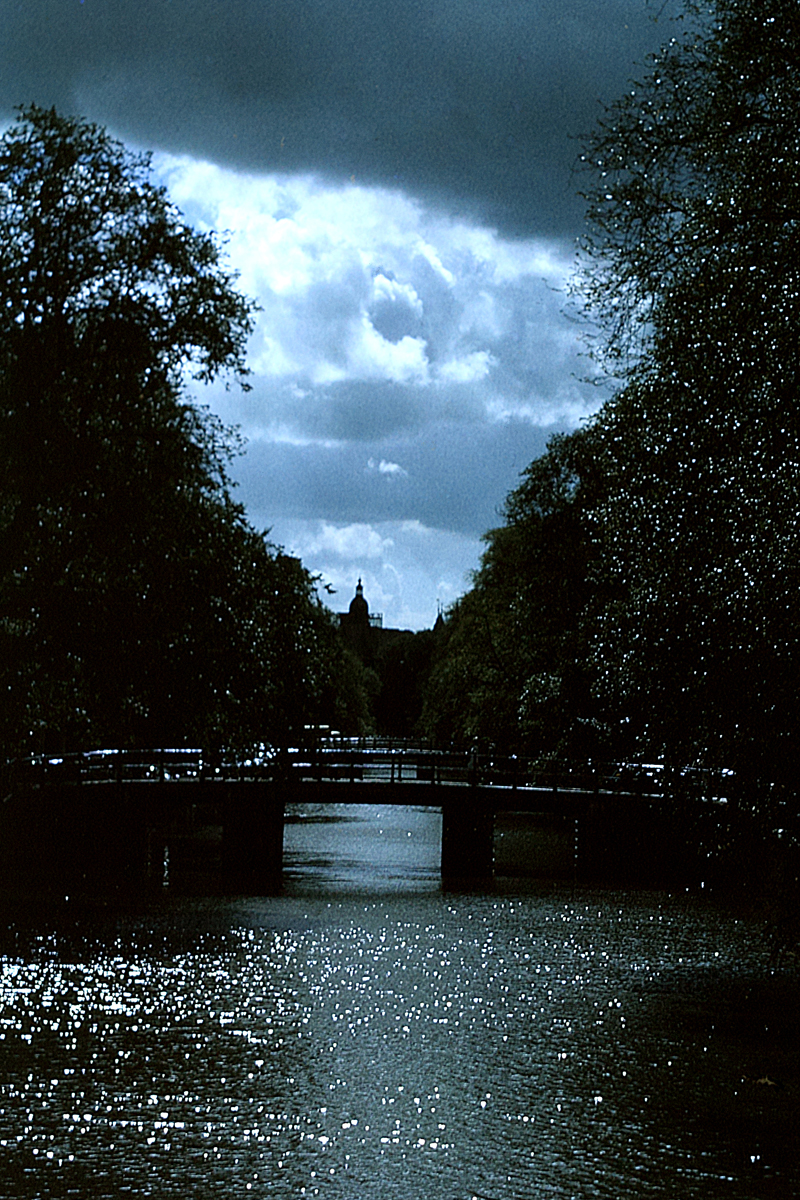
But of course, what you remember best are not your mistakes but your successes.  It was the summer of 1970 and I happened to be standing on a bridge over a canal in Amsterdam, NL.  My Leica M3 was in my supposed preordained state of readiness.  In an instant, and for an instant, I was transported into the threatening, inky-blue, vaporous light of Giorgione’s “The Tempest, 1508.”  I had time for a single exposure.  It was the greatest success of my analogue days.

Figure 1 - Amsterdam, 1970, digitized from an Ektachrome transparency. (c) DE Wolf 2013.

Figure 1 – Amsterdam, 1970, digitized from an Ektachrome transparency. (c) DE Wolf 2013.

Death and resurrection in marble

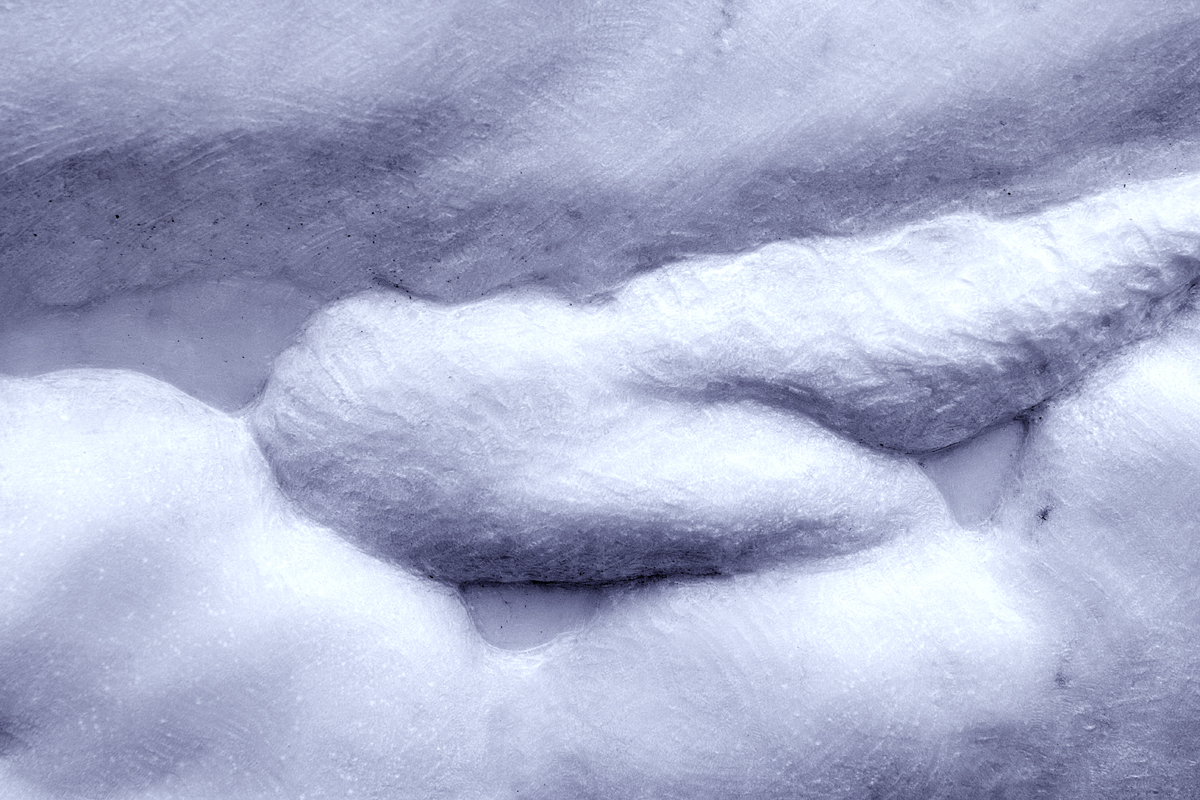
Figure 1 Death, Delwood Cemetery, Manchester, VT, (c) DE Wolf 2013.

Figure 1 – Death, Delwood Cemetery, Manchester, VT, (c) DE Wolf 2013.

The other side to Vermont marble is the magnificent monuments carved in it.  In the old cemeteries of Vermont and New Hampshire you see the great skill of New England sculptors.  It was for that reason that I was enticed to explore Manchester Vermont’s Delwood Cemetery, whose entrance is just adjacent to the entrance to Hildene House, the summer home of Robert Todd Lincoln.

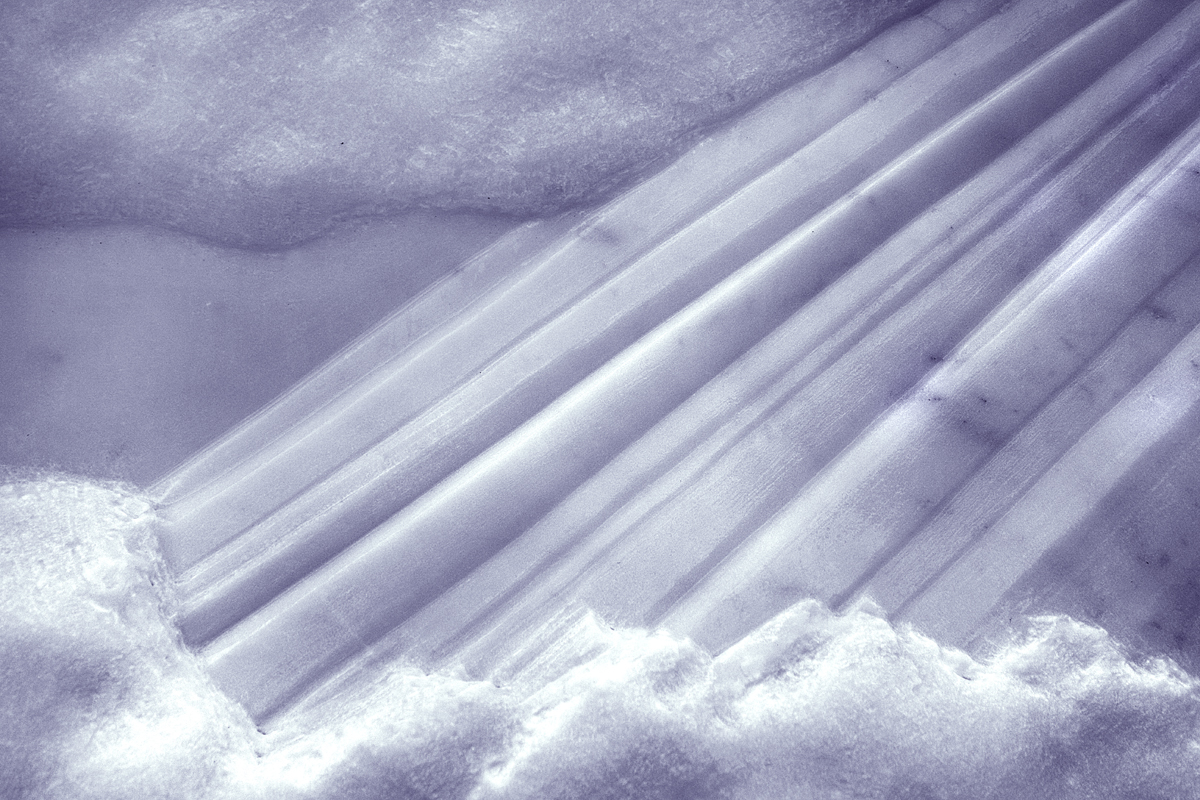
Ponder the meaning of a cemetery.  Its essential message is dependent upon the religion  that dominates. If it is a Christian cemetery the essential message is one of death and resurrection.  You see a multitude of epitaphs affirming this poignant message.  However, at Delwood I saw something that I thought was truly amazing, the expression of this sentiment strictly in image, an image carved in marble.  It is  part of a plot that is adorned by a wonderful angel carved in the classical style in marble by contemporary artist Fred X. Brownstein. On either side of the angel and close to the ground are two friezes carved in high relief.  One shows great looming clouds and the second a curtain of light rays emerging from the clouds.  I have taken closeups of these two tablets and reinterpreted them as Figure 1 and 2, which I call “Death” and Resurrection.”

Unusual for me is the use a blue tone.  In analogue photography this would have been done with an iron salt.  I experimented with many tonal variants, but concluded that this was just right for emphasizing the emerging light.

I think that there is a tremendous level of understanding and creativity associated with capsulizing the quintessential message of the cemetery in stone without words.  It is a tribute to the power of image as meme.  I think also that the choice of the clouds and the light is all the more powerful because in this Vermont valley, dense clouds hanging over and between the mountains is all around you as are the sudden ephemeral tricks of emergent light.

Figure 2 - Resurrection, Delwood Cemetery, Manchester, VT. (c) DE Wolf 2013.

Figure 2 – Resurrection, Delwood Cemetery, Manchester, VT. (c) DE Wolf 2013.