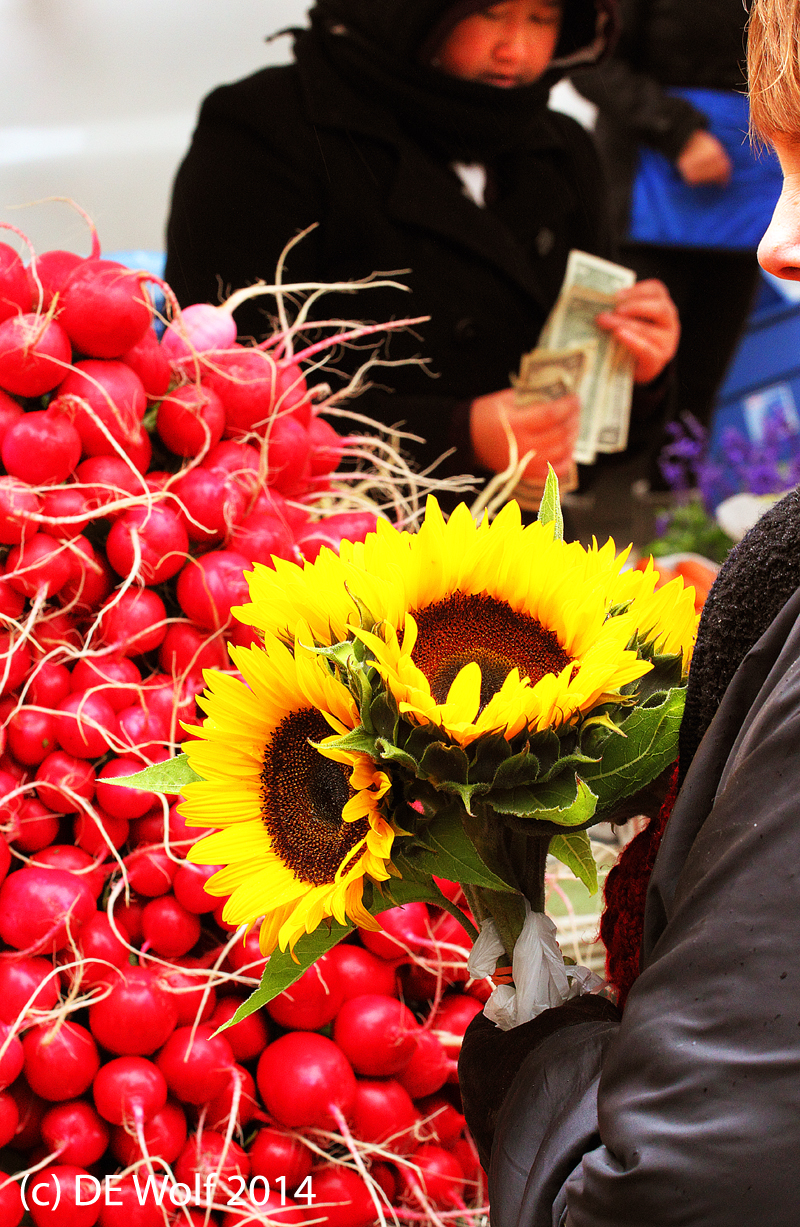
Radishes and sunflowers

Figure 1 - Radishes and sunflowers, Madison, WI. (c) DE Wolf 2014.

Figure 1 – Radishes and sunflowers, Madison, WI. (c) DE Wolf 2014.

The image of Figure 1 was meant to be an experiment.  The goal was to let color dominate but then to break a few compositional rules, or at least to be quirky.  It was a cold wet morning at the Madison, WI farmers’ market when I saw this woman buying sunflowers. The brilliant yellow sunflowers were beckoning and they stood out against a pile of gorgeous radishes.  I had thought to exclude the woman’s face, but it seemed more interesting to let her nose and bangs enter into the image.  The vendor counting change and looking rather cold is relegated to the background.

I got exactly what I was after. With a little knife and a shaker filled with salt I could feast on those radishes! Whether it is a success, I have to ask you.

Sometimes green is best

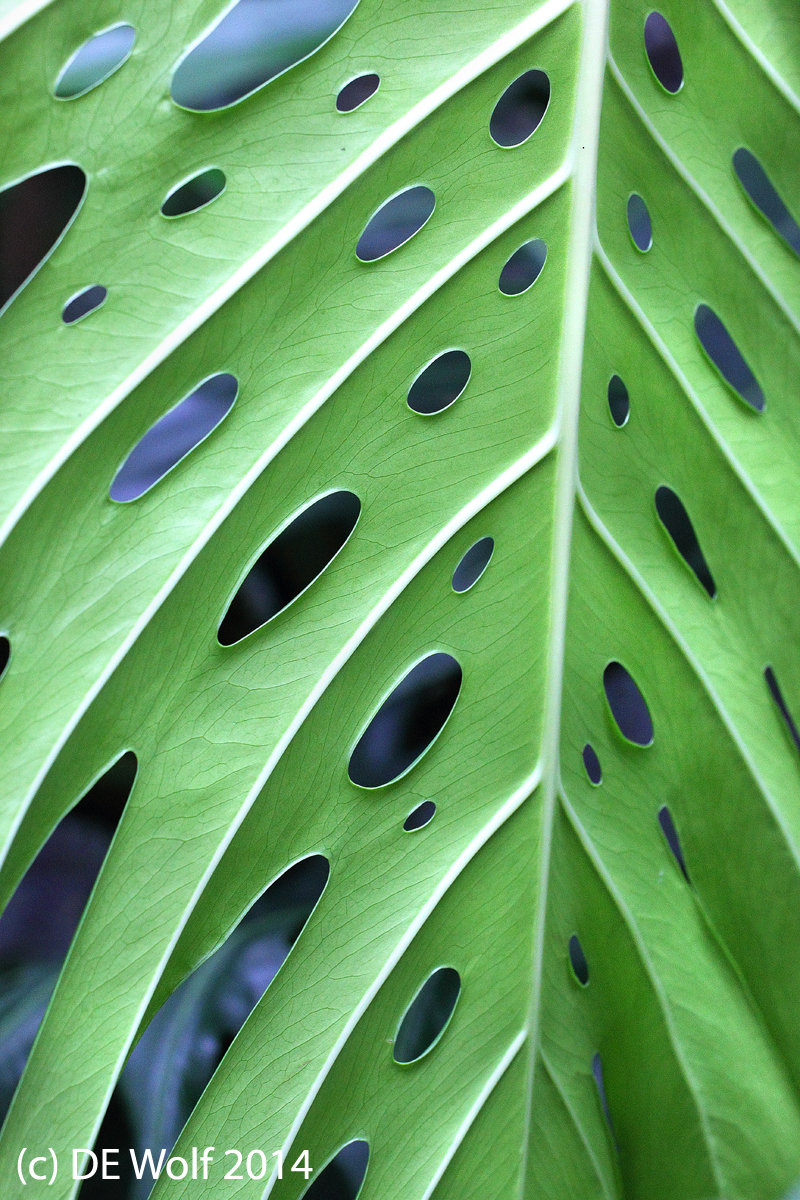
Figure 1 - Leaf in the Olbrich Botanical Gardens, Madison, WI. (c) DE Wolf 2014.

Figure 1 – Leaf in the Olbrich Botanical Gardens, Madison, WI. (c) DE Wolf 2014.

In photography two things often surprise me.  The first, is that many times, when I open the RAW format of an image that I have destined to be black and white, how the color can already be almost monotone.  This is probably the unassuming quality of RAW format.  It assumes very little about what you are trying to do.  The second, is diametrically opposed to the first.  It is the moment when I start to convert the image to grey scale and suddenly it is as if someone has put on the brakes.  The image demands, or at least is highly enhanced by, color.

Such is the case of the leaf image of Figure 1.  I took it inside the green house of the Olbrich Botanical Gardens in Madison, WI earlier this month.  I had conceived a black and white photograph focusing on texture and form.  But the greens of the leaf itself and the contrasting blue tones of the bokeh behind it were just too appealing to be dismissed out of hand.  And the other point about this image is that it was taken in a very flat overcast light.  The greenhouse was actually quite dark and demanded a high ISO.  But the illumination is beautifully even and still manages to accentuate the veins in the leaf. I have learned to low this kind of light and do not fear an overcast day.

I begin to question Kermit the Frog’s song “It’s not easy being green.”  Green is so easy on the eyes and speaks volumes about the essense of life.  It is so easy to be seduced by green; so perhaps the better song to sing is “Greensleaves.”

As i revisit the lyrics I am captured by the phrase: “Your vows you’ve broken, like my heart, Oh, why did you so enrapture me? Now I remain in a world apart,But my heart remains in captivity.” Green houses are in a sense meant to deny death or to deny, at least the season. Here we have a green and vibrant tropical leaf, stolen in a sense from its real world,  held captive in a place that isolates it from a cold Midwestern winter, a place where it is always spring.

Canon T2i with EF70-200mm f/4L USM at 98 mm, ISO 1600, Aperture-priority AE mode 1/160th sec at f/6.3 no exposure compensation.

October nor’easter and makimono

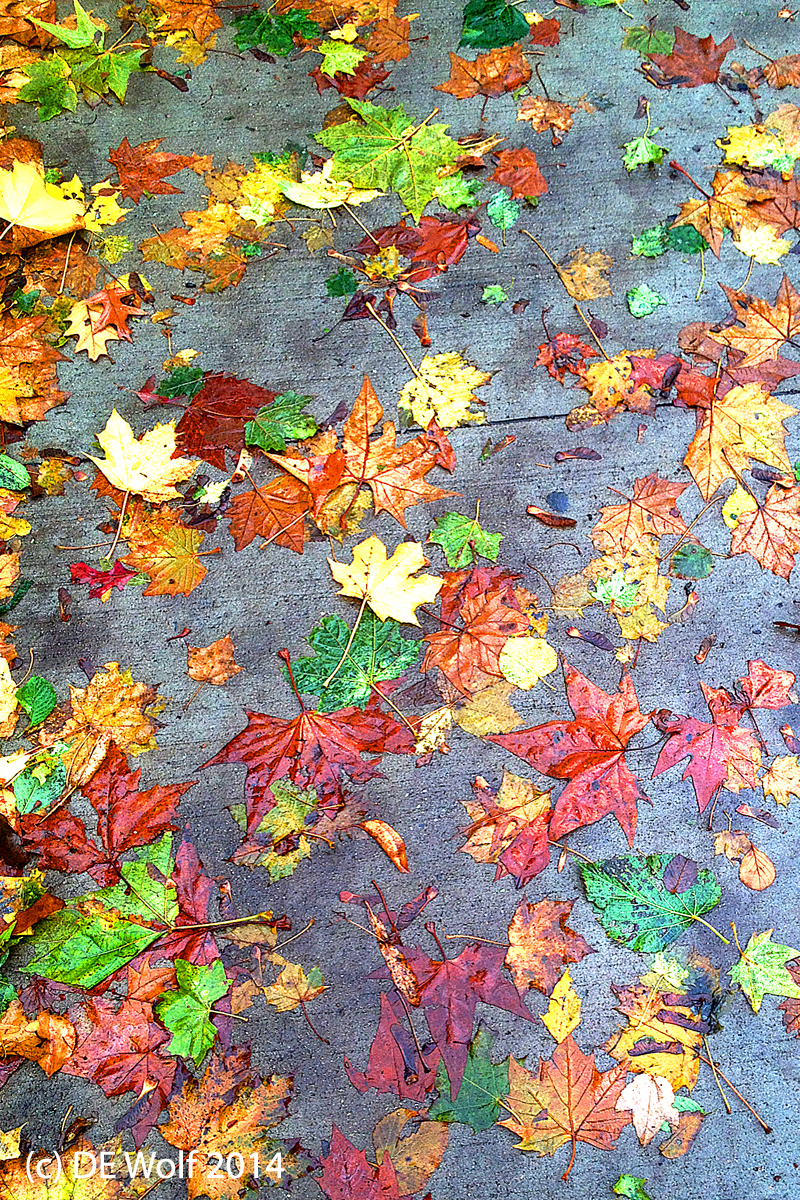
October nor'easter, Cambridge, MA. IPhone photograph. (c) DE Wolf 2014.

October nor’easter, Cambridge, MA. IPhone photograph. (c) DE Wolf 2014.

The Boston area is currently experiencing an October nor’easter.  A nor’easter is a storm that moves up the coast and lingers, churning over the ocean.  Since it is turning counterclockwise winds come in from the northeast and dump huge amounts of precipitation.  This is a four day storm and so far has dumped 3 inches of rain, which is a lot better than the 30 inches of snow, which is what it would be in January.  Anyway, eat your hearts out California!

But coming in October, it does have the effect of ravaging the remaining foliage, accelerating us into November.  Today after four hours contemplating the details of the electron transfer chain of oxidative phosphorylation (again this is what us geeks do), I found myself in need of two things: a cold wet blast of rain and wind in the face and makimono for lunch.  The two were fortunately tied together, and I headed off to the local Japanese restaurant for lunch.

It was then that I recognized an important point.  The beauty of autumn is not just colorful leaves on trees, but wet leaves on the sidewalk in a rain storm, and even the fossilike impressions left by these leaves on the pavement.  So I captured the image of Figure 1 with my IPhone on my walk back to the office and am left with the sense that I have captured the true experience of an October nor’easter.

Embden geese – Anser anser domesticus

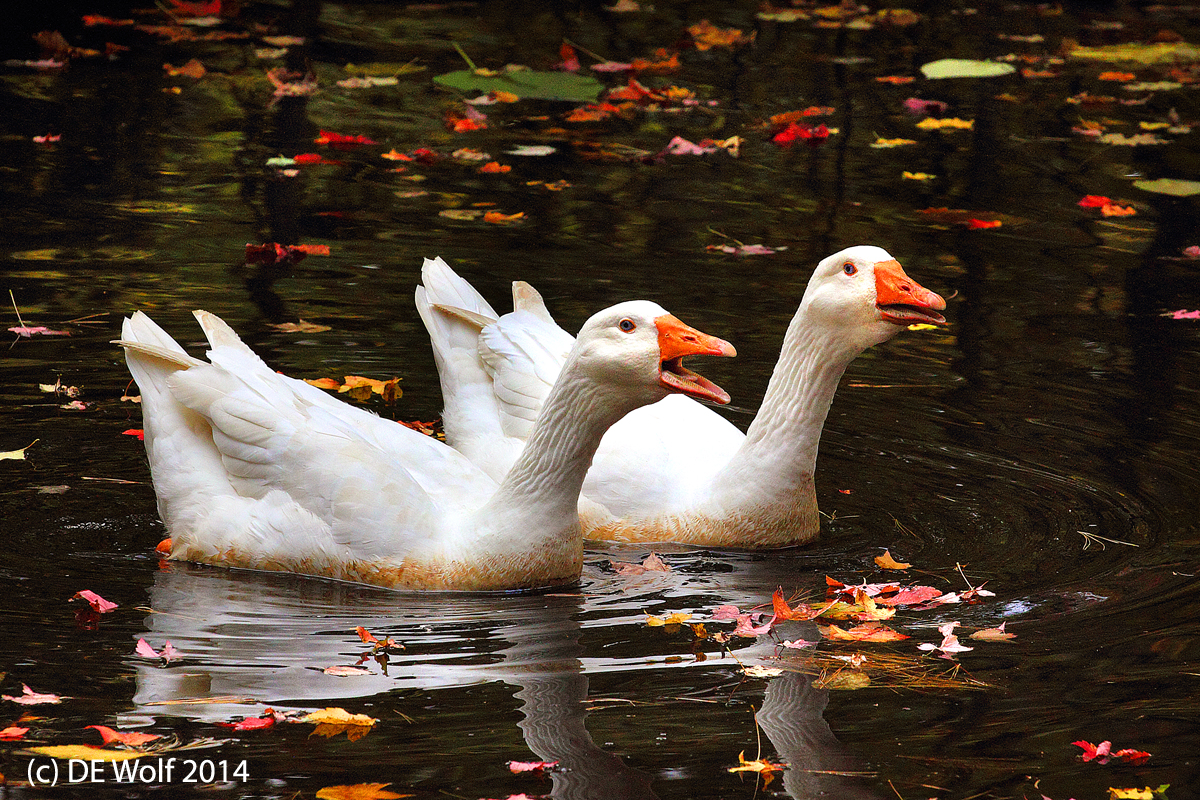
Figure 1 - Embden geese, Morton Park, Wellesley, MA. (c) DE Wolf 2014.

Figure 1 – Embden geese, Morton Park, Wellesley, MA. (c) DE Wolf 2014.

This past weekend was the absolute peak foliage weekend.  Unfortunately the weather was less than obliging.  Sunday was cold and a bit damp.  Still the colors were magnificent, and I took a short trip through the woods at Morton Park in Wellesley, MA.  The geese were out in force and the water dark and leaf covered.  I was hand-holding my 200 mm lens again but the geese were close and cooperating; so I got the feather, eye, and beak detail that I was looking for.

The result is Figure 1.  these are Embden Geese, the common domesticated geese, Anser anser domesticus.  Their proud heritage of domestication is well documented and quite ancient as shown by Darwin.  While these particular specimens are doomed to little more than the laughter of children, their cousins elsewhere are pretty likely to find themselves on a dinner plate or stuffing a ski parka.

These two were quite friendly and just a bit erked that I was not providing them with any bread crumbs.  You can see from the picture that they were both talking loudly to me.

Canon T2i with   EF70-200mm f/4L USM Lens at 176 mm, ISO 1600, M Evaluative Metering Mode, 1/800th sec at F/8.0.

Ring necked duck – Aythya collaris

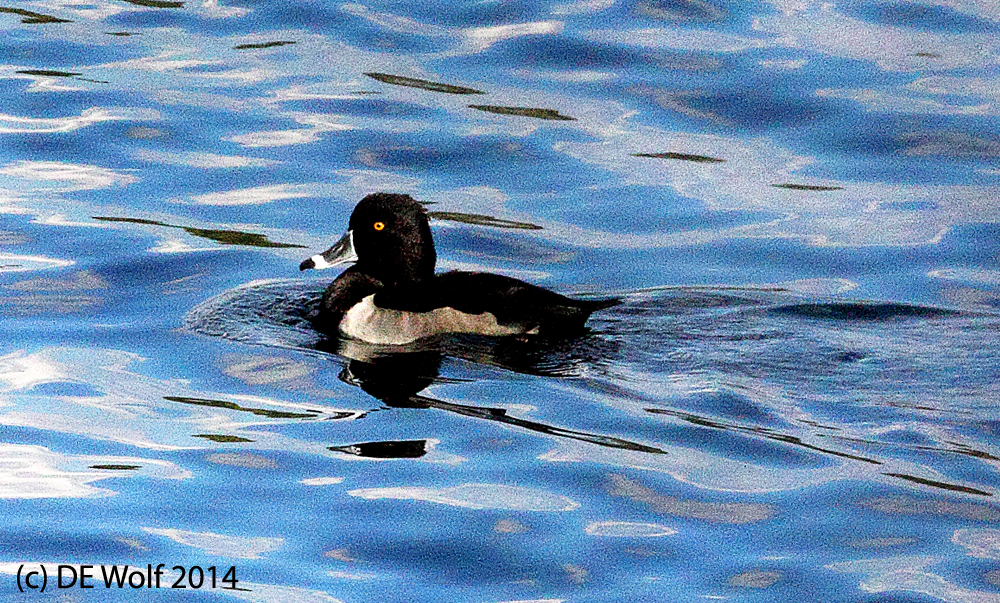
Figure 1 - Ring necked duck on Fresh Pond, Cambridge, MA. (c) DE Wolf 2014.

Figure 1 – Ring necked duck on Fresh Pond, Cambridge, MA. (c) DE Wolf 2014.

The rangers at Cambridge’s Fresh Pond Reservoir don’t make photographing the water fowl easy. Access to the pond is everywhere blocked by fences, and except in very limited places these fences are above my head. I am guessing that these fences were not around when Teddy Roosevelt skated on the pond!

As we’ve moved into fall the water birds, the ducks and geese, not to mention a few confused seagulls (You must take Madame Arkadina away from here; what I wanted to say was, that Constantine has shot himself. ), have started showing up in abundance; so the temptation to photograph them is pretty strong. It was strong enough that yesterday I not only tested the limits of my ability to hand-hold my 200 mm lens, but I also thought I would see if by putting the lens up to a hole in the fencing I could still get a decent picture. The answer to both questions turned out to be, yes, I can.

The quality of the light was amazing. A breeze was causing the water to ripple, which to my eye gave the image a sense at once of motion and stillness. The light was intensely specular, and the color of a powder blue sky was strongly reflected in the water.

My specific quarry was a ring necked duck (Aythya collaris). This bird was a bit farther off than really capturable at high resolution with the 200 mm lens. The eye is sharp as is the bill, but in general I only call it a complete success when I can see the details of the feathers. It was a situation that definitely calls for a longer lens. And the fact that I was hand-holding meant that I had to use a high (1600 IS) which added a lot of grain because I had to do some very serious cropping.

However, what I find appealing about the result is how much like a watercolor it looks. Hmm! I look at the picture and I cannot quite figure out if it was photographed or painted and it is that ambiguity that draws me to the image.

Canon T2i with EF70-200mm f/4L USM Lens at 200 mm, ISO 1600, Aperture-Priority AE Mode 1/1600th. sec at f/13.0 with no exposure compensation.
The equality of fall

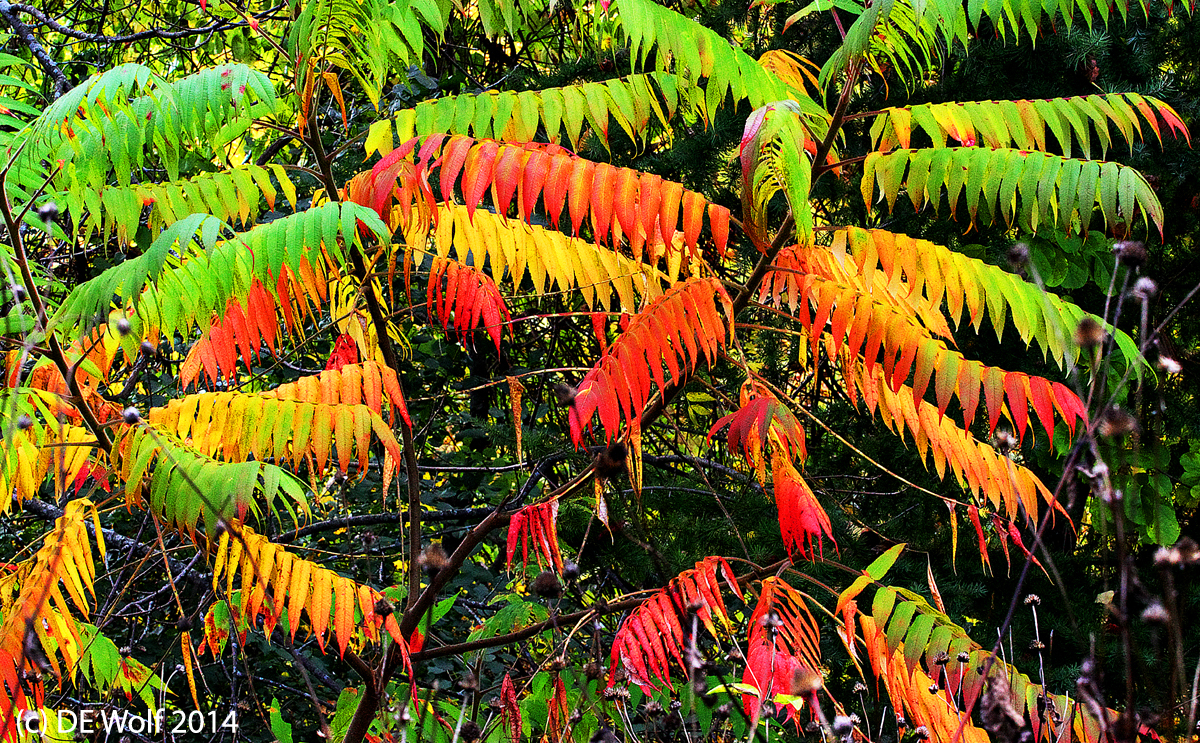
Figure 1 - Sumac, Cambridge, MA. (c) DE Wolf 2014.

Figure 1 – Sumac, Cambridge, MA. (c) DE Wolf 2014.

I have been facing the dawn each morning, driving through an amazing canopy of color and contemplating the subtle glow of the sunrise.  It truly gives one pause.  My lunchtime walks have been equally contemplative and chromatic.  The sequence of autumn is regal, and every few days some other tree takes center stage in the parade.  There is a certain equality about it.  In this regard nature is truly egalitarian.  The meanest of plants can suddenly come into their own and demand your eye.

The first example is the poison ivy.  It has been hiding, well not really as I am ever cautious of it, all summer.  But they other day it was the turn of the sumac bushes.  They had such an intense color that was so tropical in nature as they made the transition from green to red and yellow that I had to revisit them on a second day to be sure that I wasn’t insanely exaggerating the color of Figure 1.  Soon these too will fade and shed to become first matting underfoot and then next spring, after the winter snows, they will be so much mulch for a new botanical generation.  In the meanwhile I turn to other color.

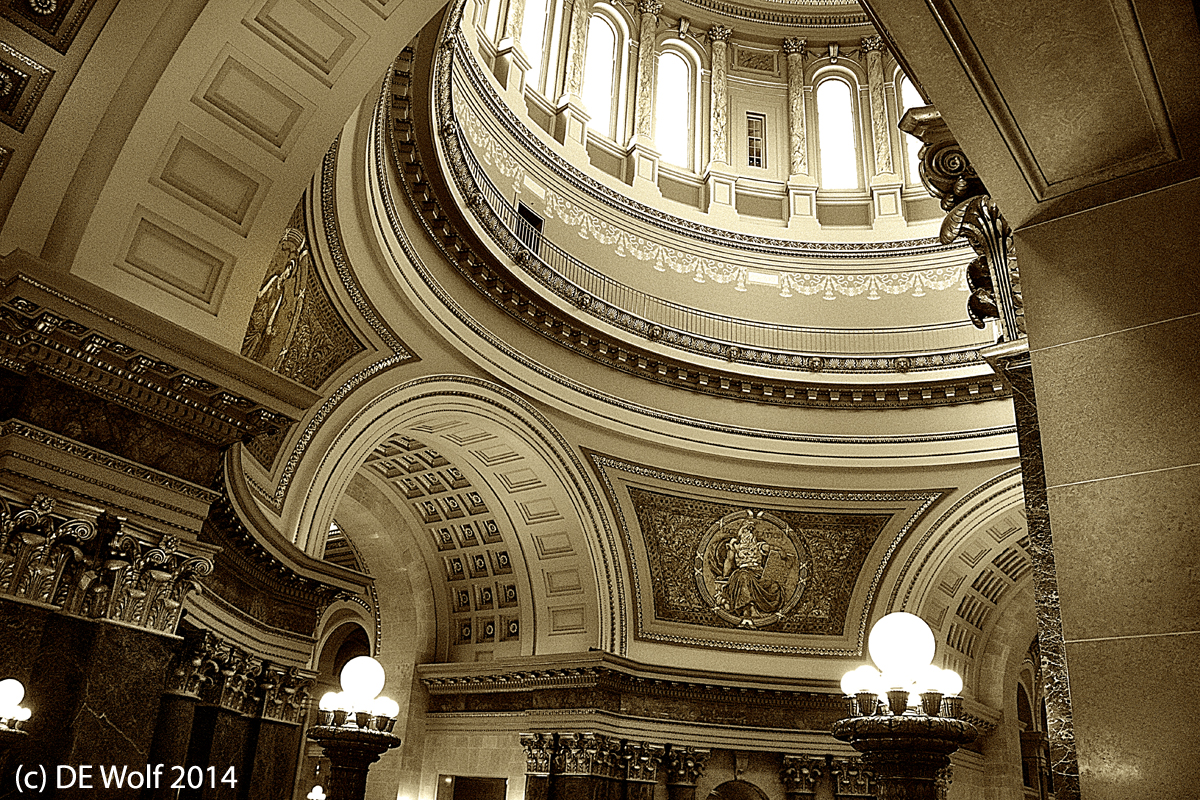
A tribute to Giiovanni Battista Piranesi

Figure 1 - A Tribute to Piranasi, Madison, WI. (c) DE Wolf 2014.

Figure 1 – A Tribute to Piranasi, Madison, WI. (c) DE Wolf 2014.

Circumventing the interior of the Wisconsin State House I was struck by the multitude of columns, arches, and circles, by the light of the sky piercing in through the dome combined with the lamps and the atmospheric darkness.  It reminded me so much of an architectural etch by Giovanni Battista Piranesi (1720-1778).  And it was just this etching quality that I sought to capture in the image of Figure1. I think that both the toning and the graininess of the light at ISO 3200 both lend to the sense of ink.  To include as many of the architectural features as I could I used the widest lens setting I had 18.0 mm. I feel that it is almost like a bromoil print and is exactly what I wanted.

Canon T2i with EF-S18-55mm f/3.5-5.6 IS STM Lens at 18.0 mm, ISO 3200, Aperture- Priority AE mode at 1/200th sec at f/4.0 with no exposure compensation.
The first and the last

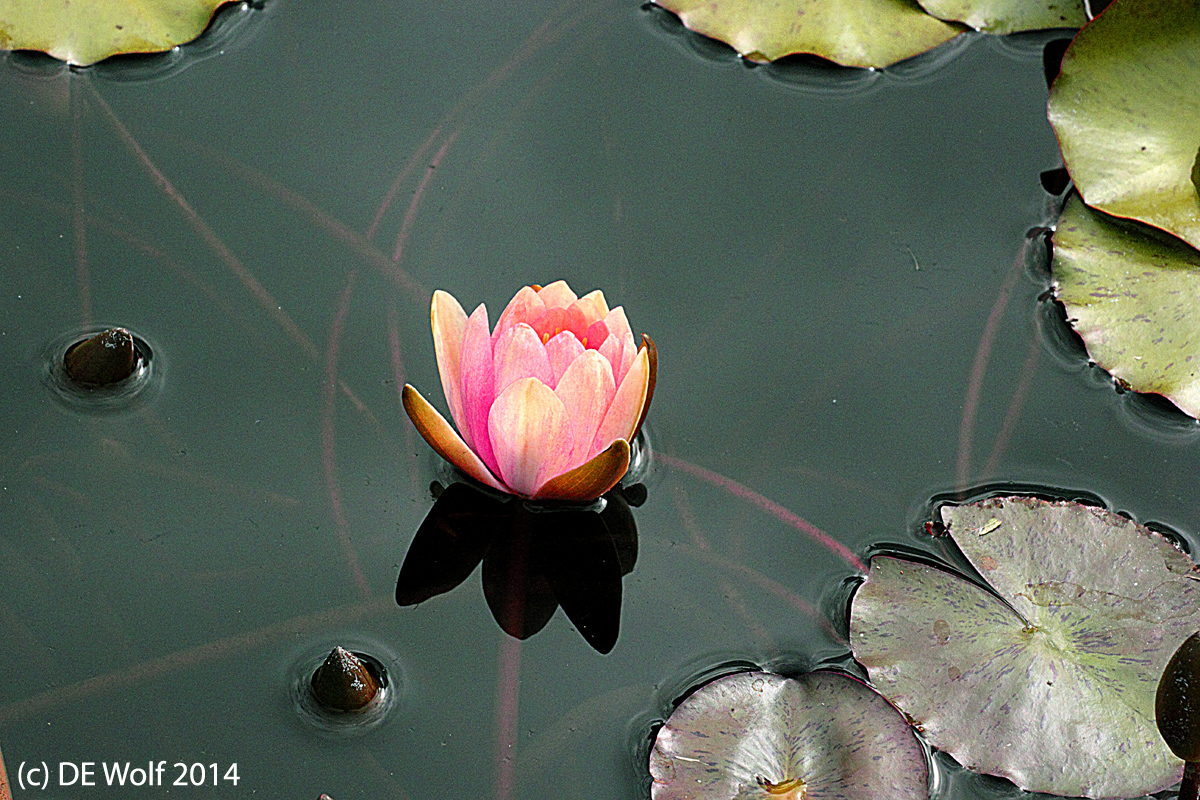
Figure 1 - The Last Water Lily, Olbrich Botanical Gardens, Madison, WI. (c) DE Wolf 2014.

Figure 1 – The Last Water Lily, Olbrich Botanical Gardens, Madison, WI. (c) DE Wolf 2014.

We seem to attach special significance to the first and to the last, to the alpha and to the omega.  I’ve had an ongoing theme in this blog about photographic firsts and recently I posted about fall’s first color – and it is proving to be a very glorious fall here.  Well, we are in the thick of it now.  Fall color is everywhere, even though some hardy flowers persist.  But last Sunday on my adventure to the Olbrich Botanical Gardens in Madison, WI something struck me.

It was a chilly and grey day, with little to really remind one of summer.  There is this little reflecting pool, which now bears only the remnants of water lilies, and even these had started to turn a shade of red.  So as I stared into the dull water, I was thinking about glacial verves – appropriate since  Wisconsin has a glaciation named after it.  These are the “rings of the Earth” fine bands of sediment that once settled annually when glacial lakes froze over in winter and now turned to stone. It seemed wholly appropriate, since the water lilly, Monet’s flower, is related spiritually, if not taxonomically, to the sacred lotus a symbol of life, death, and rebirth – of the endless cycle of life on Earth.

And then I saw it, and tried to capture the feeling in Figure 1.  There was one remaining water lily blossom – still ever so perfect.  It was in essence the last bloom of a summer now past. And it defiantly proclaimed the promise of spring.

The five headed serpent

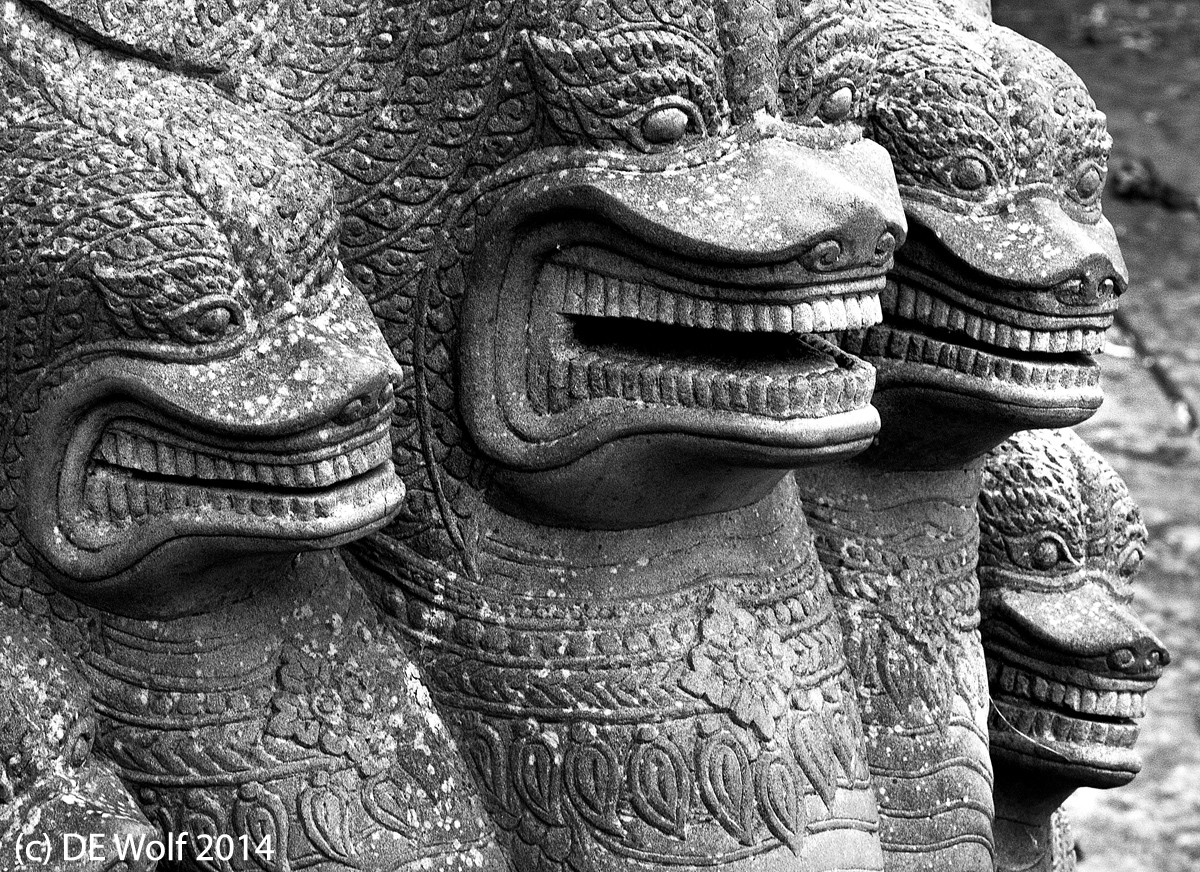
Shesha the Five Headed Cobra, Olbrich Botanical Gardens, Madison, WI. (c) DE Wolf 2014.

Shesha the Five Headed Cobra, Olbrich Botanical Gardens, Madison, WI. (c) DE Wolf 2014.

I held at least one sculpture photograph back from my Saturday post. This is Figure 1. Also in the Thai Pavillion of the Olbrich Botanical Gardens in Madison is this wonderful five headed cobra.  This is the first perspective that I photographed it from and it only shows four of the five heads.  I took several other images slowly progressing to full frontal with all heads shown.  But in the end I found that I liked the drama of first perspective best.

And exactly what is this an allusion to?  We have in the mythologies of the world many multiheaded beasts. There is Cerberus the usually three headed dog that guarded the gates of Hades, the underworld in Greek and Roman mythology.  Then we have the Whore of Babylon who rides the seven headed beast at the time of the Christian Last Judgment. But this, I believe, is the Hindu Shesha, (see also the Buddhist nāga) also known as Sheshanaga, who holds the universe on his hoods and constantly from all his mouths exclaims the glory of Vishnu. And most beautifully, it is said that his uncoiling is the creative event that causes time to move forward but when he recoils the universe ceases to exist.

This I think explains why there is serenity not terror in this wonderful sculpture.  The quality of stone, particularly the speckles is to me amazing. It serves to animate the serpent as it emerges from a galaxy of stars. Both in its relationship with the origin and meaning of time and its connection with stellar evolution, the Shesha seems, in my mind, to merge ancient and modern concepts of cosmogony.