Updates at Hati and Skoll Gallery

I want to thank everyone for their continued support of Hati and Skoll Gallery.  I have made several updates to the Galleries.  Images from Kennebunkport, ME previously in the “New Gallery” have now been distributed to the other galleries and new images have also been added to these galleries.  These include new bird photographs placed in the “Cabinet of Nature Gallery.” The “New Gallery” now contains photographs that I took in Madison, Wisconsin in early October 2014.

Thanks again to all of my friends and readers.

David

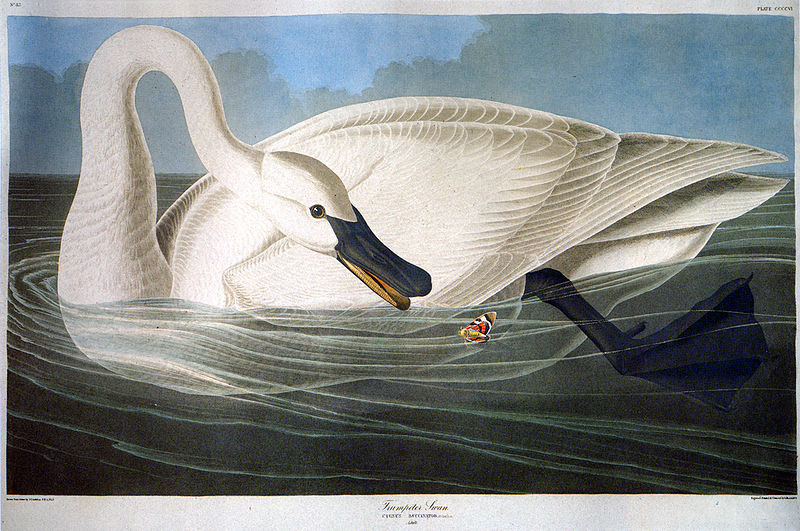
Whistling swan – Cygnus columbianus

Figure 1 - Whistling swan, Marlborough, MA. (c) DE Wolf 2014.

Figure 1 – Whistling swan, Marlborough, MA. (c) DE Wolf 2014.

Figure 1 is a photograph of the great indigenous wild eastern American swan, called the “Whistling swan” (Cygnus columbianus).  It tends to be less pure white than the introduced european swan (the muted swan – cygnus olor) and is distinguished by it’s black as opposed to orange in, the muted, beak.  These birds are true peaceful elegance.  They are delightful to watch and truly seem to glide through the water.  You can always hear Saint-Saens music in your head.

John James Audubon (1785 – 1851) painted this bird in 1838. Whenever I visit a Massachusetts lake or pond, I look for them and, when I see them, I try to imagine what wild untouched America was like.  They are a connection with an otherwise forgotten past..

Herring gulls – Larus argentatus

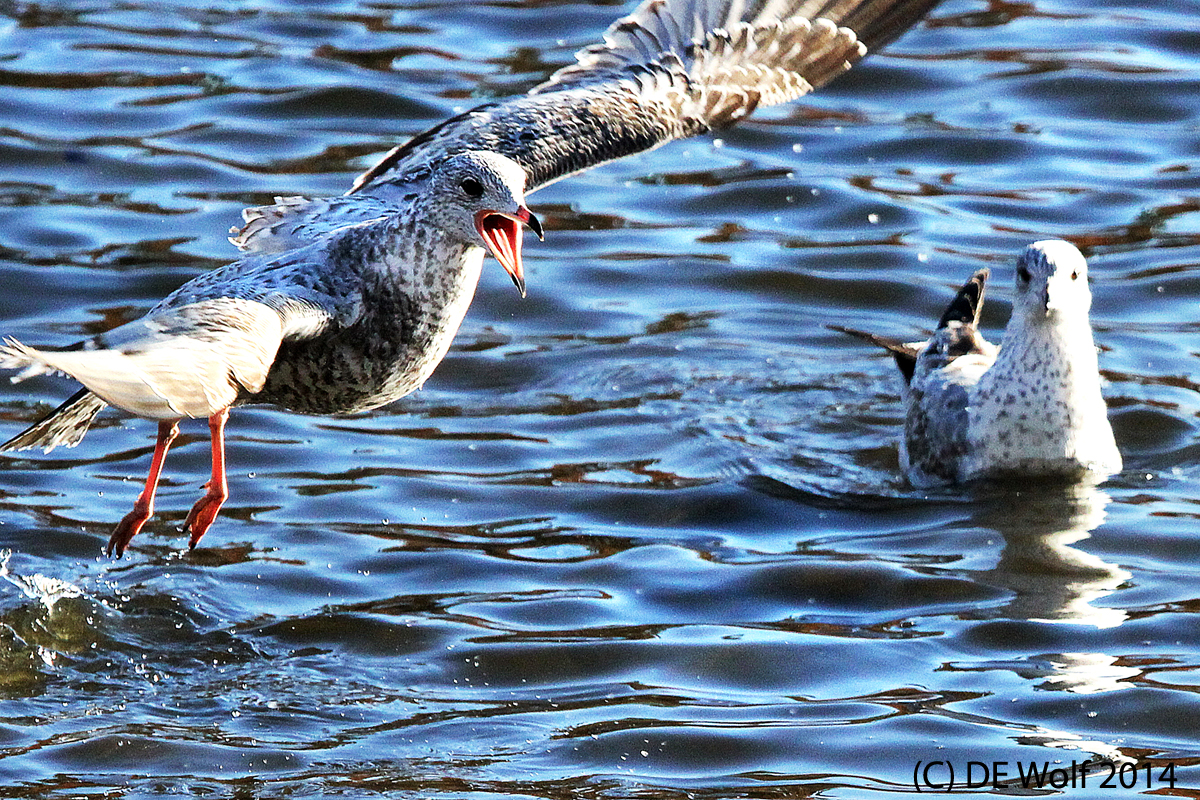
Figure 1 - Herring gull on the attack, Marlborough, MA. (c) DE Wolf 2014.

Figure 1 – Herring gull on the attack, Marlborough, MA. (c) DE Wolf 2014.

I decided that I have been pretty lazy about lens choice in my bird photography. I have been carrying my 70-200 mm zoom rather than my big lens 100 – 400 mm. So this past Saturday, I planned a little excursion to a spot in Marlborough, MA where there are lots of water birds and where children like to go and “feed the duckies,” thinking I would get some praactive with the larger and nmore appropriate lens. I mounted my lens to my monopod and went out and snapped pictures gleefully.

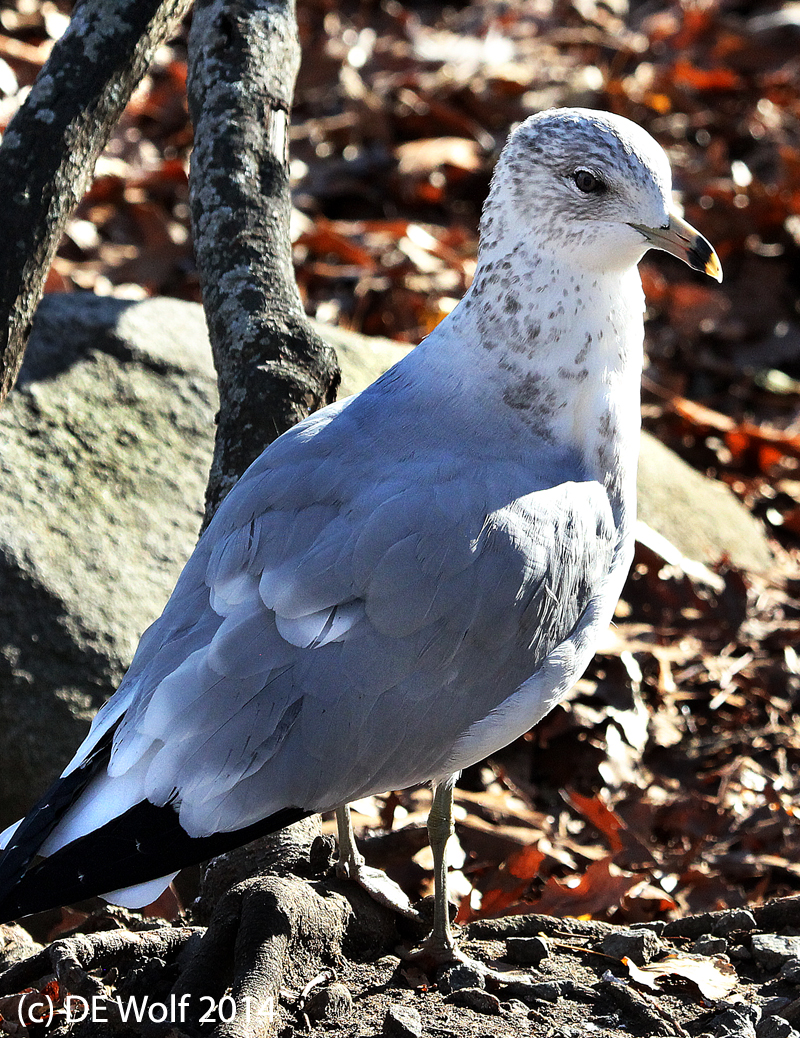
I was photographing a swan, which will be the subject of tomorrow’s post. The swan was gliding along and came onto the turf of a bunch of juvenile delinquent herring gulls (Larus argentatus), who basically got very upset about the incursion and attacked the swan. The swan however was essentially nonplussed and could care less. But I did get the image of Figure 1 showing a gull in mid aerial attack. The coloring of the gull suggests that it is a second winter juvenile. You can also see water droplets thrown up by gull fury and captured mid air. I have framed it with another gull out of focus and floating on the water on the opposite side of the image. This to create an intentional contrast. I thought that for contrast I would also post a more tranquil gull resting very close to me on the shore.

This lens is wonderful for bird photography, and I happily find myself often pulling in the lens. Literally on the Canon EF100-400 f/4.5 – 5.6L IS USM lens, it’s pull and slide rather than turn to change focal length. I just keep focusing on the eyes and shooting every time I get or anticipate a pose that I like!

Figure 2 - Juvenile Herring gull, Marlborough, MA. (c) DE Wolf 2014.

Figure 2 – Juvenile Herring gull, Marlborough, MA. (c) DE Wolf 2014.

Figure 1 – Canon T2i with EF100-400mm f/4.5-5.6L IS USM at 260 mm, ISO 1600 aperture-priority AE mode, 1/1600th sec at f/8.0 with no exposure compensation, monopod mount, IS 1 engaged.

Balloon Plant – Gomphocarpus physocarpus

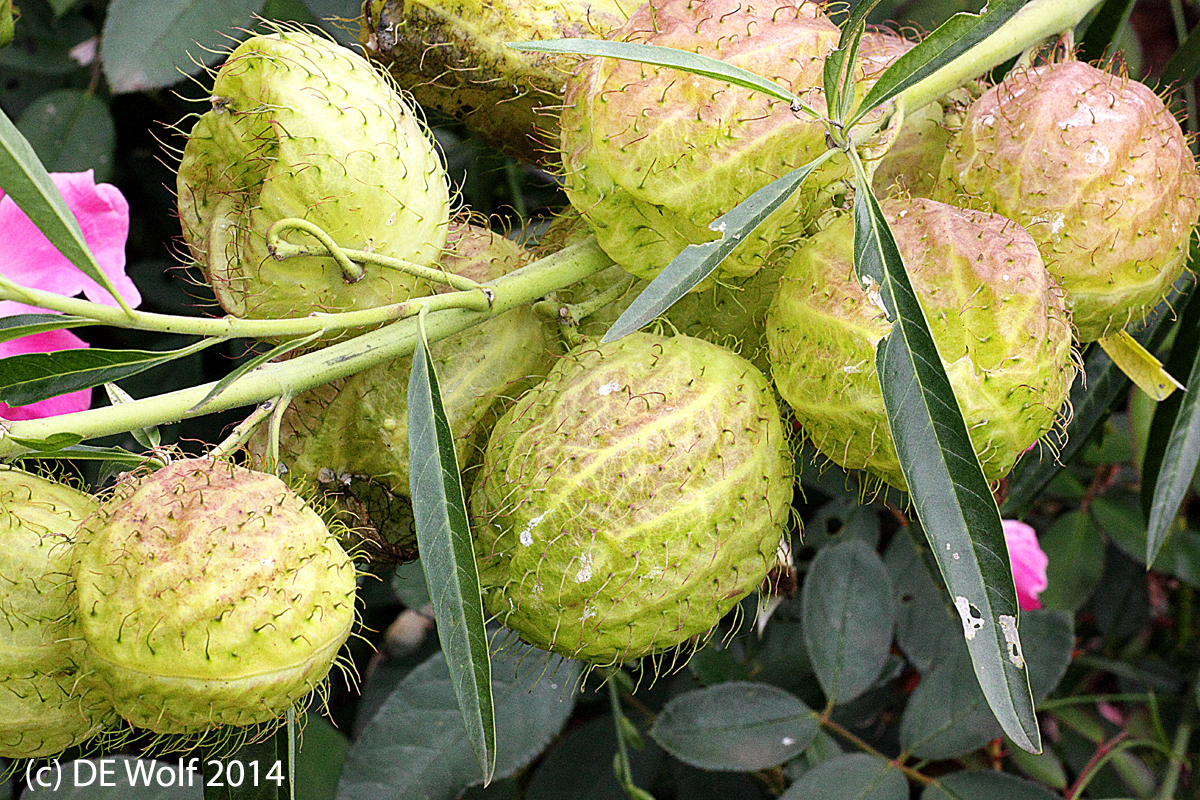
Figure 1 - Balloon Plant or Bishop's Balls, Madison, WI. (c) DE Wolf 2014.

Figure 1 – Balloon Plant or Bishop’s Balls, Madison, WI. (c) DE Wolf 2014.

Figure 1 is a photograph of the Balloon plant a form of milk weed that I photographed last month at the Olbrich Botanical Gardens in Madison, Wisconsin.  It has the formal name – Gomphocarpus physocarpus but has many common names.  My favorite is “Bishop’s Balls.”

The photographic appeal is obvious.  It is a study in shape, composition, and texture.  The needles add a complexity of texture.  But what appeals to me the most is the subtle contrast between the greens and the magentas.

Canon T2i with EF70-200mm f/4L USM lens at 118mm, ISO 1600, Aperture-priority AE Mode 1/250th sec at f/18.0 with no exposure compensation.

Double crested cormorant – Phalacrocorax auritus

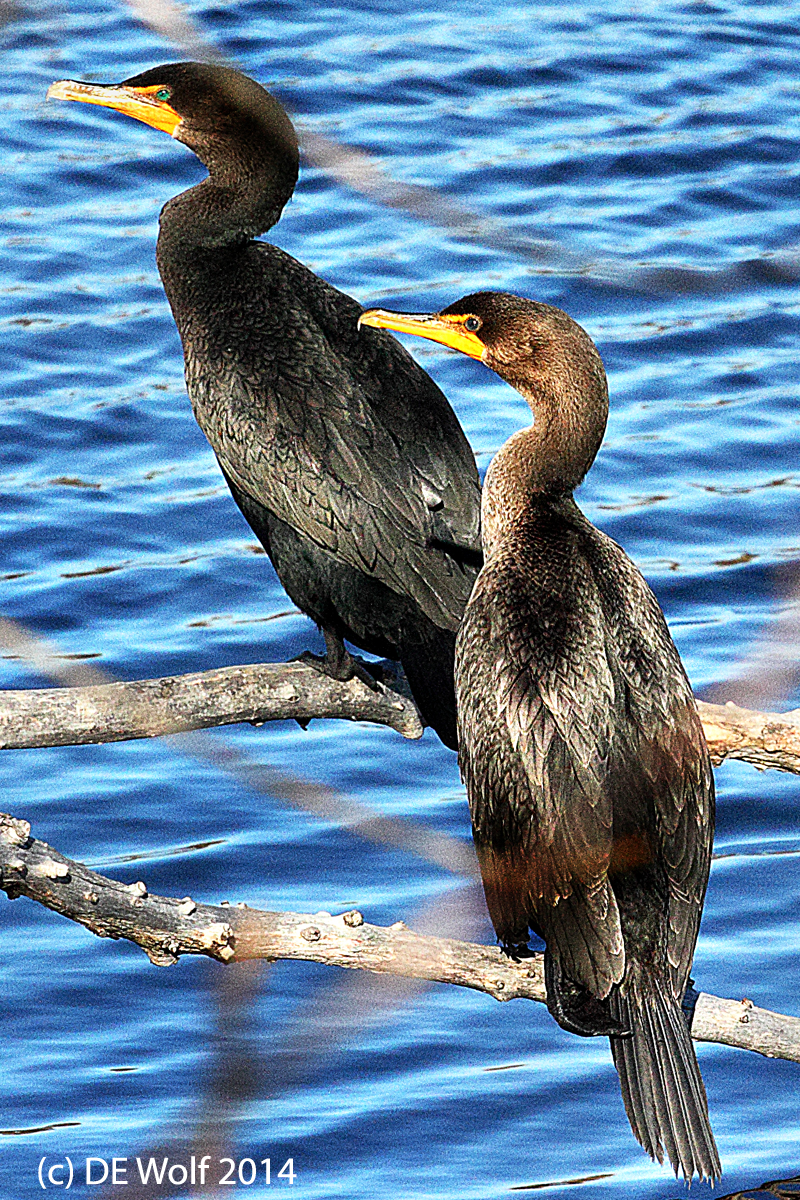
Figure 1 - Double crested cormorants on Fresh Pond, Cambridge, MA. (c) DE Wolf 2014.

Figure 1 – Double crested cormorants on Fresh Pond, Cambridge, MA. (c) DE Wolf 2014.

By this point if there is one thing that I have learned about photographing birds is that there is always an issue.  Nothing is ever perfect.  Today was cold, blustery, and there was a spectacular sunlight that reflected off the water. I spotted three double crested cormorants, Phalacrocorax auritus, sitting on a branch that was just above waterline about an 1/8th of a mile ahead of me.  I was convinced that they would fly away before I got there.  But to my surprise the birds stayed put.  Not only that, it was one of the few places on Fresh Pond where the fence is low.  In fact I could rest the camera on top of the fence for extra support.  But then I found the problem.

Try as I would, there was no way to totally avoid intervening branches.  In the end I decided that I would take it as indicative of the surrounding brush, my need to stalk the birds, and their need to hide themselves.  the other problem was that the grouping of three just didn’t work compositionally.  No matter what I did, the photograph seemed out of balance.  So in the end I chose to show only two of these magnificent birds, who to my eye really make a handsome pair.  These are truly gorgeous giants!

Canon T2i with EF70-200mm f/4L USM lens at 172 mm, ISO 1600, Aperture-Priority AE mode 1/4000th sec at f/8.0 with no exposure compensation.


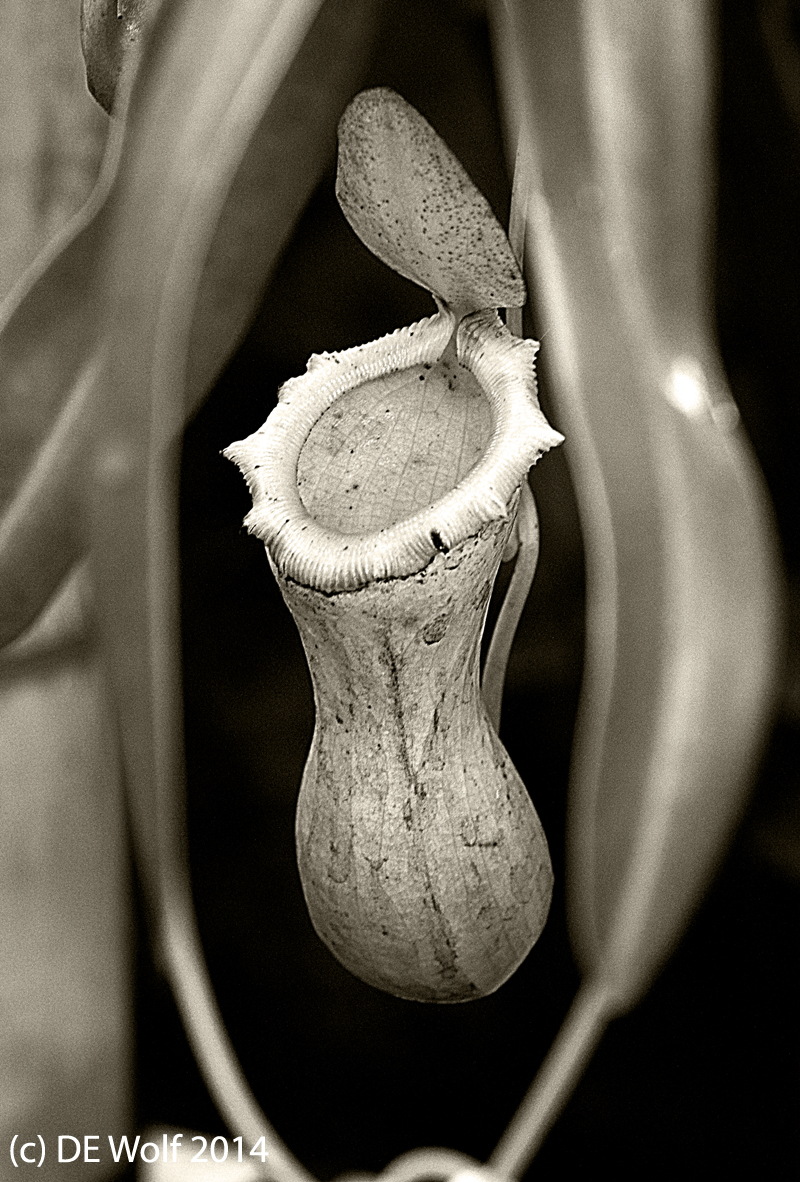
Pitcher plant

Figure 1 - Pitcher flower, Olbrich Botanical Gardens, Madison, WI. (c) DE Wolf.

Figure 1 – Pitcher flower, Olbrich Botanical Gardens, Madison, WI. (c) DE Wolf.

The gloomy weather here continues: cold, rainy, and windy.  We have even had our first snow, albeit of the nonsticking variety.  So I continue to “work up” photographs.  So today I am offering up an image of a pitcher plant again taken at the Olbrich Botanical Gardens in Madison, WI, and again under really poor light.  But it was ever so vivid that I remember the moment including the damp warm smell of the Earth and the sound of running water.  These are always intriguing plants, and here I was attracted by the lovely, yet savage, shape captured between two blade like and out-of-focus leaves,

Pitcher plants are an adaptation of four families of carnivorous plants. Insects, such as flies, are attracted to the cavity formed by the pitcher shaped leaf. Often this involves an alluring smell or visual appearance.  The insect becomes trapped inside and ultimately drowns in the pitcher’s nectar.  The body of the insect is gradually dissolved.  The mechanism of this digestion can be quite complex.  It can involve symbiotic bacteria or lytic enzymes.  But also it can involve digestion by insect larvae within the liquid, in which case the insect excretes nutrients into the fluid. All these mechanisms create a nutritive brew of amino acid and other metabolites for the plant to feast upon.  It is a tribute to Darwinian evolution.

They are splendidly complex objects for photography. And I have photographed them before. The depth of possibilities is brilliantly explored by photographer Beth Moon in her “Savage Garden” series.

Canon T2i with EF70-200mm f/4L USM lens at 98 mm, ISO 1600, Aperture-Priority AE mode, 1/100th sec at f/6.3, with no exposure compensation.
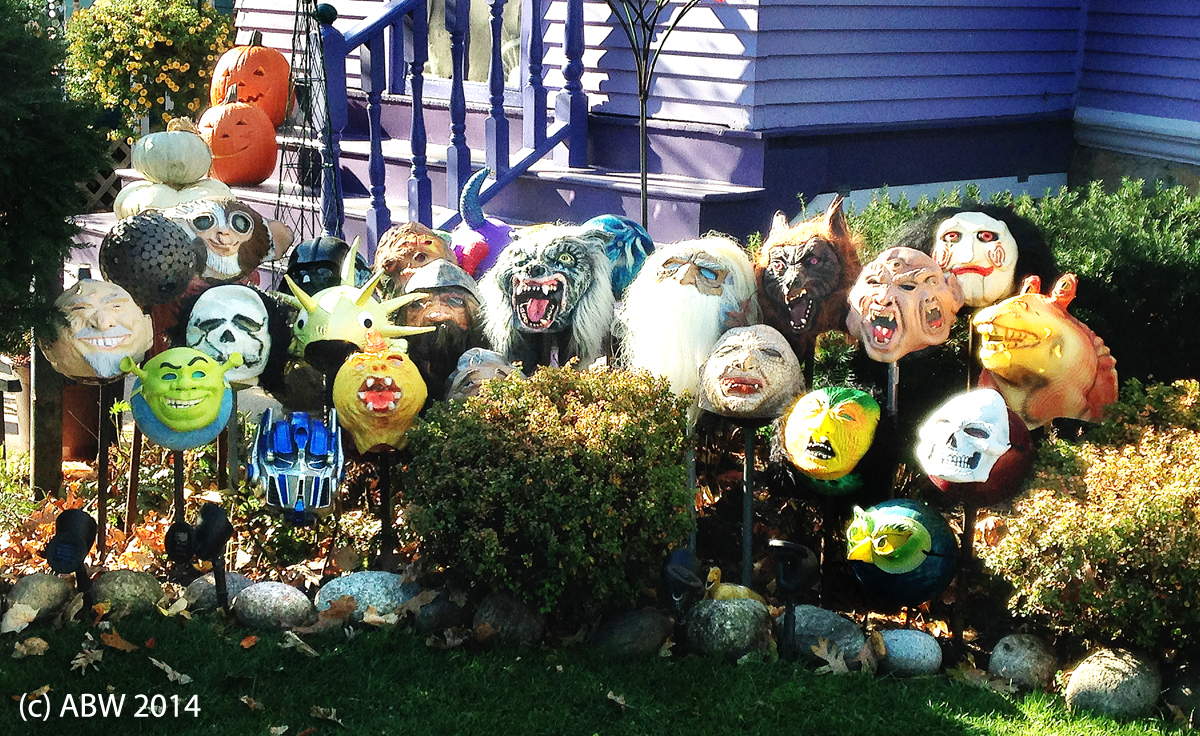
Bowling Ball Heads

Figure 1 - Bowl Ball Garden decorated for Halloween. (c) ABW 2014.

Figure 1 – Bowl Ball Garden decorated for Halloween. (c) ABW 2014.

Halloween is pretty much my favorite holiday.  What could be better: costumes, candy, and really no religious baggage – Día de Muertos.  So it is pretty much with remorse each year when November rolls around.  Sometime in the seventies Halloween started to become a big deal commercially: costumes for adults, home decorating, and the like.  I am a great fan of giant blowup pumpkins, spiders, and ghosts!

But yesterday a reader posted on his Facebook page a picture from Wisconsin of his neighbors bowling ball garden, decorated for Halloween.  Every bowling ball had a ghoulish mask.  So I asked this reader to send me a higher resolution shot from his IPhone, which he was kind enough to do.  So as I take down the “Halloween Gallery” for another year, I thought that I would share this snapshot with you.  Also, I am hoping that it inspires people all over the world to decorate their bowling ball gardens for appropriate holidays: Christmas, Chanukah, Kwanza, Diwali.  The possibilities are endless.

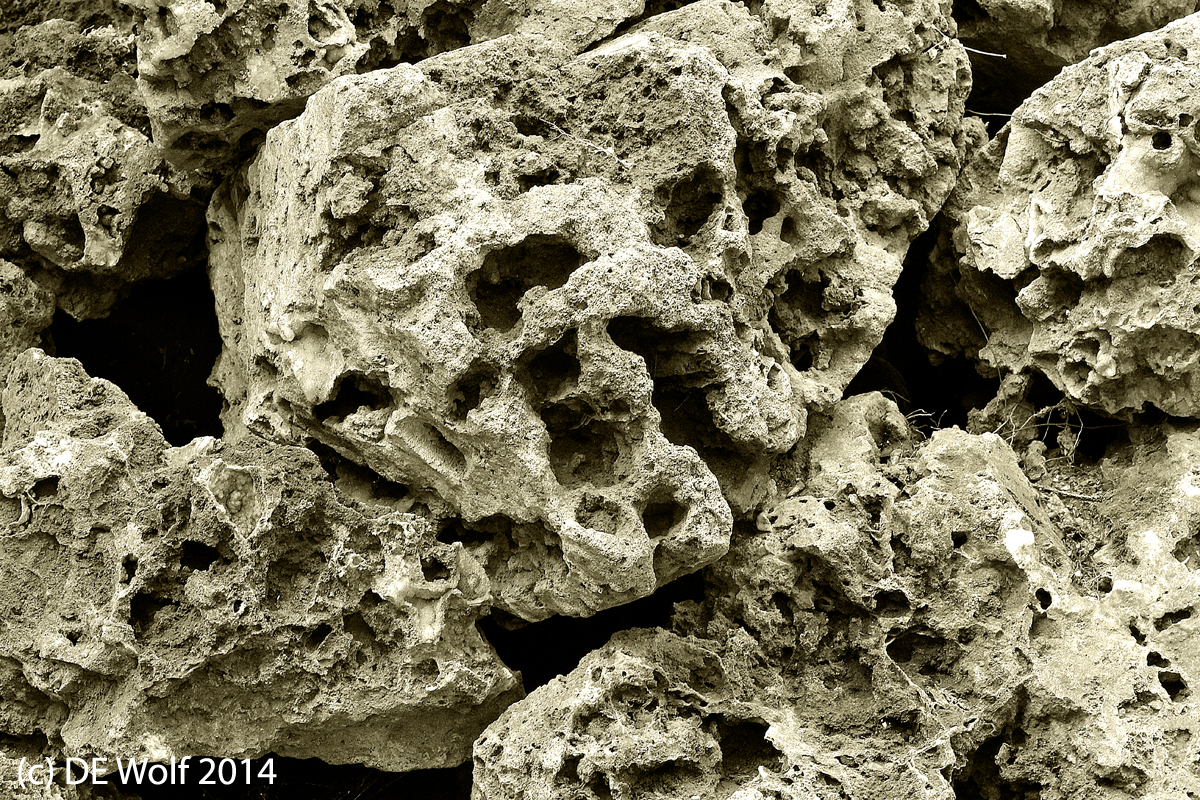
Scoria

Figure 1 - Scoria at the Thai Garden in the Olbrich Botanical Gardens, Madison, WI. (c) DE Wolf 2014

Figure 1 – Scoria at the Thai Garden in the Olbrich Botanical Gardens, Madison, WI. (c) DE Wolf 2014

I am sitting in my dining room at my computer and listening to a cold rain falling on the roof.  It is a washout for the first Saturday in November, although I did venture out with my camera for a short walk through the woods.  Nothing grabbed me photographically, but I was content to watch the raindrops and the leaves fall into Sudbury’s Cricket Pond.  There is something really special about leaf covered paths on a rainy day  There is an inner peace to the dampness and the muted colors..

But now I am back home, warm, and happy to have some unfinished photographs to “work up.”  I am reasonably pleased by the image of Figure 1 of some scoria in the Thai Garden at the Olbrich Botanical Gardens in Madison, WI. Scoria is a volcanic rock, filled with cavities from gaseous bubbles.  There is something wonderful about it – something that binds us to an ancient, growling Earth. Although our Hawaiian friends staring in the face of home-threatening lava fields may not agree.

Tonight is the time change and last night I thought nostalgically about the fading light.  I will not drive home from work in the light again until the first week of February.  The light of September that I spoke so fondly about is now long past, and I found myself wondering about night photography.  That is much more accessible and doable than it was in the days of film. On the other side of cycles, I may again enjoy the light of dawn illuminating fog enshrouded cows on my drives in. I guess that it is time to take down Hati and Skoll’s Halloween Gallery.

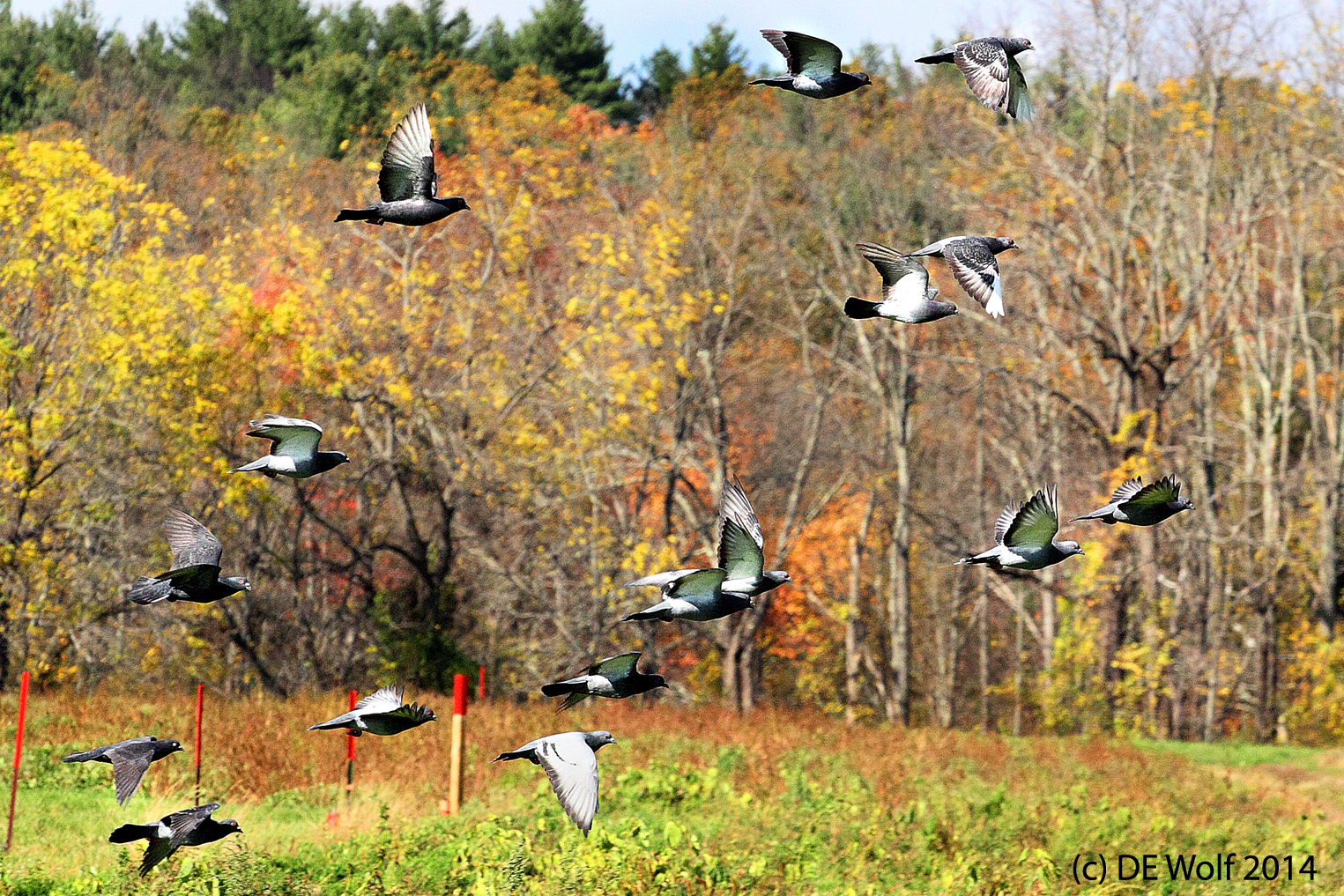
Rock doves (Columba livia) in flight

Figure 1 - Pigeons in flight, Concord, MA. (c) DE Wolf 2014.

Figure 1 – Pigeons in flight, Concord, MA. (c) DE Wolf 2014.

Rock dove is a fancy name for our common pigeon.  The ones in Figure 1 were photographed in Concord, MA; so they are suburban birdsand probably drive BMWs.  As a result, they need a fancy Latin name, hence “Columba livia.”  I was watching these birds, their identity was obvious from the way they flocked and their flight pattern, as I walked along a muddy path this past Saturday at a farm in Concord.  They were obviously drawn by the remnants of September’s harvests but were quite a bit off.  But in the end my patience was rewarded when they flew frenzied past me against the background of the late fall foliage.

Birds are hard enough to photograph, but birds in flight represent a true challenge and it is more than a bit of a challenge to achieve the eyes in focus goal.  I didn’t quite accomplish it here.  But the feathers on the wings are well defined, and the seemingly random asynchronous beating delightful.  Birds always seem to be in a frenzy come October – all hurrying somewhere.  My father used to tell me that they were debating whether to go south for the winter and that birds like these pigeons debate too long.

I know that these guys will be huddling together come January, and it is a tribute to the resilience of nature that anything can survive outside in those elements.  We have ultimately to consider the pigeon quite noble.  They figure prominently in Darwin’s thought process that led to his “Origin of Species,” and for that we owe them a great gratitude.