Mourning dove – Zenaida macroura

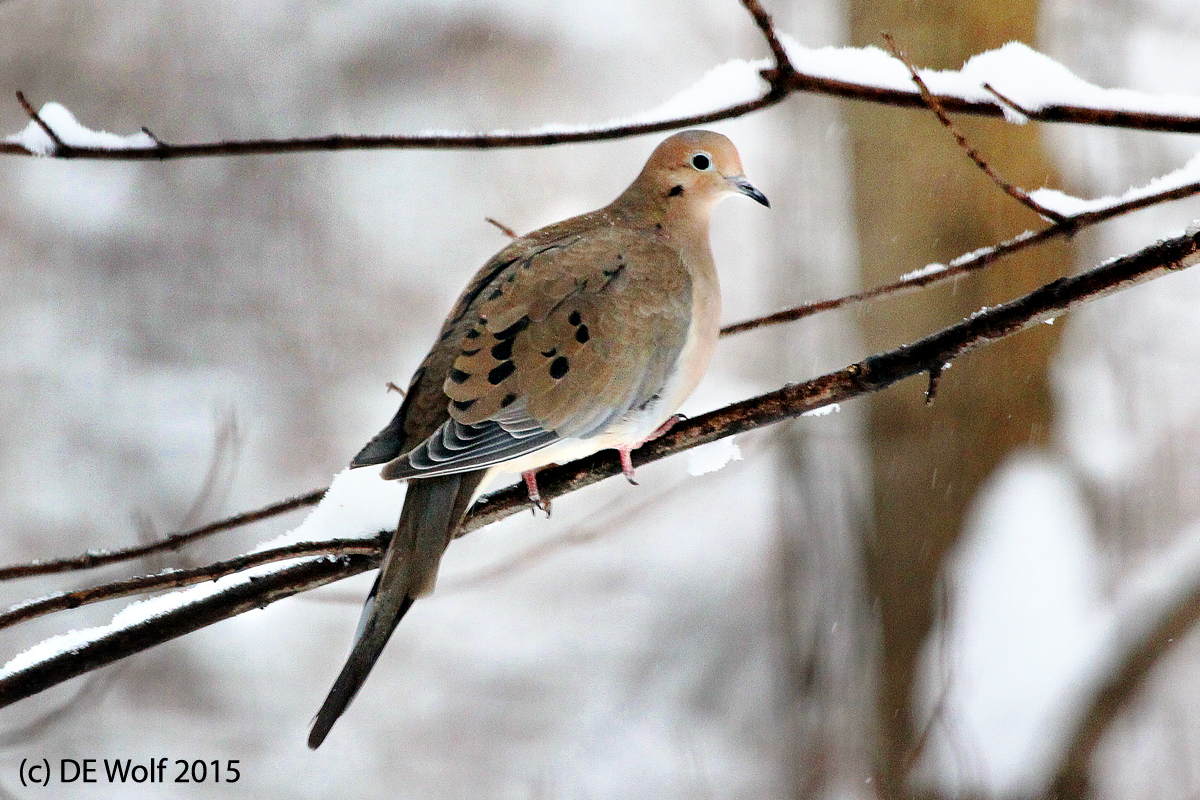
Figure 1 - Mourning dove in winter, Sudbury, MA. (c) DE Wolf 2015.

Figure 1 – Mourning dove in winter, Sudbury, MA. (c) DE Wolf 2015.

Figure 1 is another post-storm visitor, the unassuming but, I think quite elegant, mourning dove – Zenaida macroura.  It is “mourning” not “morning” just like with Eugene O’Neill’sMourning becomes Electra.”The name mourning comes from the mournful sound that this dove makes, reminiscent of mourning at a funeral.  But it has other names as well: turtle dove, American mourning dove, rain dove, and Carolina pigeon or Carolina turtledove. Turtle dove, appropriately conjurers up images of Christmas as two turtle doves was my true love’s gift on the second day. For some reason I am reminded of winter boy scout camp years ago and finding a rock hard frozen partridge.

What I like about them is that they are calm and understated.  They were just sitting quietly in a tree watching the world. And in a subtle way they are beautiful.  Here again I hand-held through glass – have been experimenting with that as it is the warm approach to bird photography, and here the sharpness was not an issue.  I am also pleased with the falling flakes of snow from the branches on the right and by the warm earthy tone of the bird and the way that it complements the tree behind him.

Canon T2i EF100-400mm f/4.5-5.6L IS USM lens, IS on. ISO 1600, 1/400 sec at f/5.6 with +1 exposure compensation.


Eastern Bluebird – Sialia sialis

Figure 1 - Eastern Bluebird - Sialis sialis, Sudbury, MA. (c) DE Wolf 2015.

Figure 1 – Eastern Bluebird – Sialia sialis, Sudbury, MA. (c) DE Wolf 2015.

On my commute to work Thursday morning I passed a little bush that was filled with Eastern Bluebirds – Sialia sialis feasting on red berries.  These little beauties are not really rare, but I have never seen them at my feeder and at that particular moment I wished that I had my camera with me and imagined standing in traffic snapping away happily.

Well, this Saturday morning I was rewarded or given a second chance.  We had had the first major significant snowstorm of the season and at around seven I had ventured out to make sure that the feeder was full since the birds were likely to be ravenous.  I was having coffee watching the feeder when to my delight a group of Eastern Bluebirds appeared.

I  grabbed my camera, fitted it with my big lens, turned the IS on and broke all of own self imposed rules.  1. I handheld the camera. 2. I photographed through a pane of glass.  Indeed, I wound up resting the lens against the window. And, in fact, one of the birds settled in a birch that was very close to me enabling the shot at 180 mm. I am pretty happy with the results of Figure 1.

Canon T2i EF100-400mm f/4.5-5.6L IS USM lens, IS on. ISO 1600, 1/400 sec at f/5.6 with +1 exposure compensation.

Winter respite

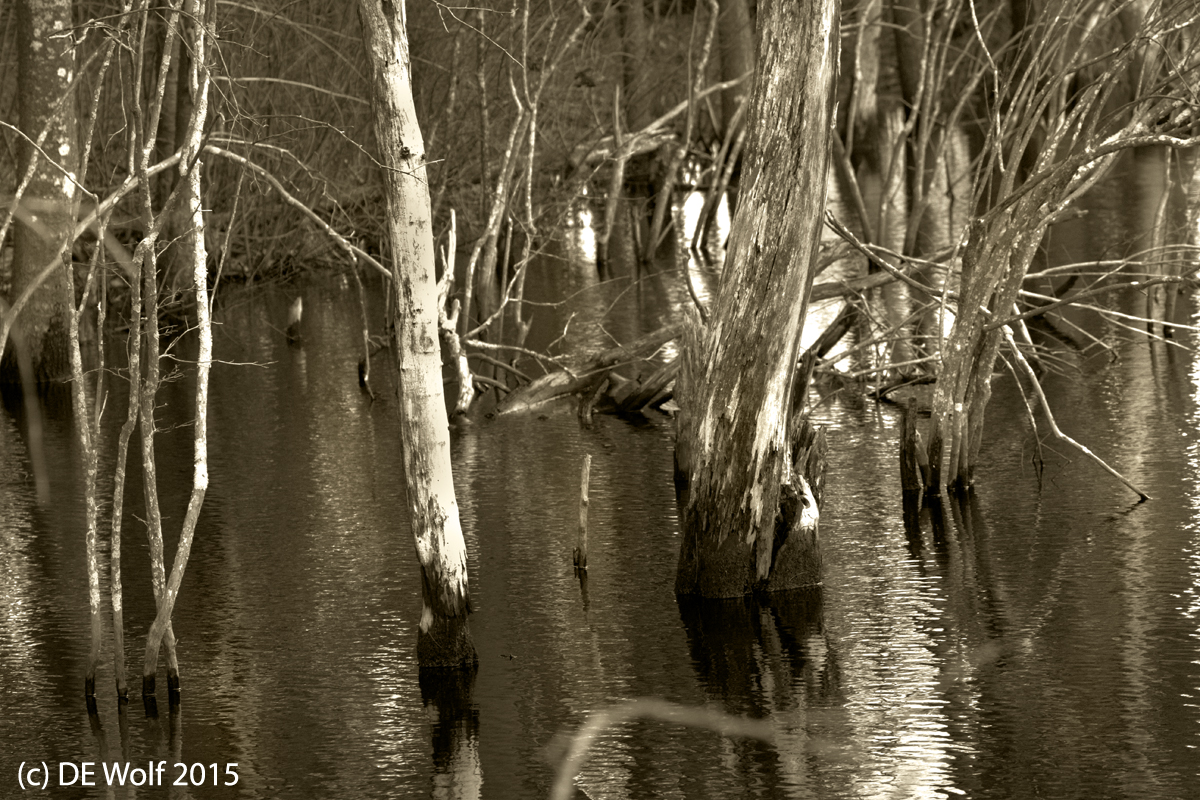
Figure 1 - Assabet River Wildlife Refuge Winter. (c) DE Wolf 2015.

Figure 1 – Assabet River Wildlife Refuge Winter. (c) DE Wolf 2015.

Work took me to Fort Worth, Texas this week and the drizzly temperatures in the thirties and forties (F) were a welcome respite from the single digits that we have been experiencing in Boston.  Also welcome was some great food, Mexican and Barbeque.  The Mexican restaurant we had dinner at on Wednesday night seemed to have a theme setting everything on fire theme, flaming fajitas and flaming margaritas.  All was very entertaining.

I am back home.  It is Saturday morning and 8 deg F.  Tomorrow however, promises to copy Fort Worth and be back in the forties, yes with drizzle.  I thought that I would post today another of the series of images that I took just before New Years at the Assabet River Wildlife Refuge.  This is a perhaps more intimate image showing a close up of some flooded trees sticking out of the river.  The lighting was fairly low contrast, dark, and moody.  It befits a New England winter.

Canon T2I with EF100-400mm f/4.5-5.6L IS USM at 100 mm IS on. ISO 1600, 1/100th sec at f/7.1 with no exposure compensation.

January’s jaws

Figure 2 - Assabet River Wildlife Refuge. (c) DE Wolf 2015.

Figure 2 – Assabet River Wildlife Refuge. (c) DE Wolf 2015.

I thought today that I would share an image that I took last month at the Assabet River Wildlife Refuge.  January in New England is not as amusing as it was when I was a graduate student years ago in upstate New York. We had friends over last night for dinner, and right now my hands are burning from washing dishes.  January’s jaws are gnawing away at us. Still and all, there is a special long-shadowed quality to early winter light and an intense cobalt color to the sky and sky reflected in water.  Even now I have noticed the lengthening of the days, and one has the sense that there is a certain triumph to be felt at conquering winter.

In the end, the planet continues to rotate and revolve.  My undergraduate physics professors would remind me of precession and nutation.  These are the ever insistent motions to which biological life must adapt – and adapt it does, We may truly marvel that life endures against the northern cold, but it does.  Indeed, in its search for evolutionary niches life seeks the cold out.  If you stand still, sniff the air, listen and watch carefully you begin to realize that this is not a dead and frozen world, but one filled with living things.

Assabet River Wildlife Refuge

Figure 1 The Assabet Watershed #4, (c) DE Wolf 2015.

Figure 1 The Assabet Watershed #4, (c) DE Wolf 2015.

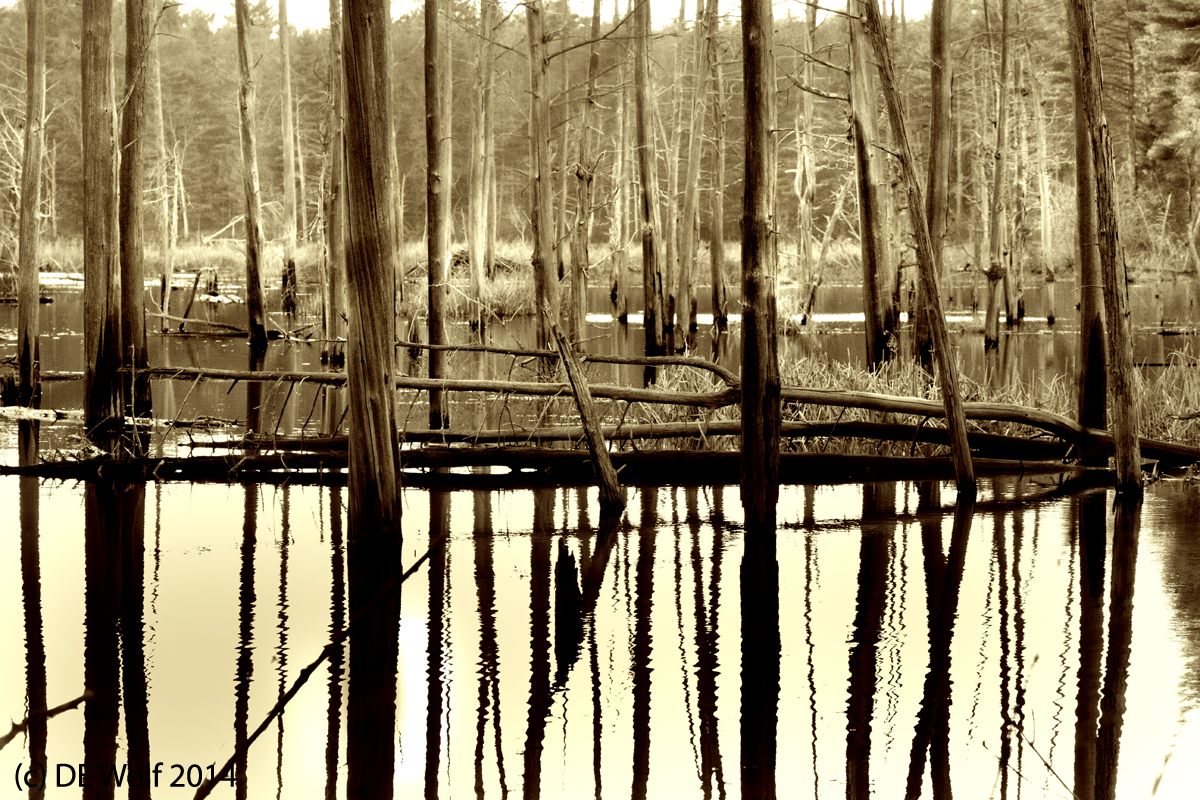
The Assabet River National Wildlife Refuge is a 2,230 acre wildlife refuge that was reclaimed from the U.S. Army’s Fort Devens-Sudbury Training Annex on March 26, 2005.  Part of the Assabet River watershed, it is the epitome of an eastern Massachusetts wetland.  So if you think of scrubby trees, piney groves, and stomping through soggy marshes, you’ve got the image, and it is truly spectacular in its wildness.

Back at the height of World War II in 1942 the federal government seized the land by eminent domain, giving residents only about ten days to pack up and leave, and paying them, well, not so much. Most intriguing today are decaying World War II era ammunition bunkers. The significance of the site was that it was convenient to railroad shipping to the Boston Navy Yard (of ammunition), yet far enough inland as to be out of range of German battleships. could not shell the area. Each of the 50 bunkers, officially referred to as “igloos,” has inside dimensions of 81x26x12 feet, with a curved roof. Sides and roofs were mounded with dirt for extra protection and disguised from aerial view.

After WWII this site served as a troop training ground, ordinance testing center, and laboratory disposal area for Natick Labs (U.S. Army Soldier Systems Center). Not surprisingly, it became categorized by the EPA as a “Superfund” clean-up site.  It was was contaminated with arsenic, pesticides and lots of other nasties. The US Army spent years cleaning up the site and in 2000 turned it over to the U.S. Fish & Wildlife Service. Today as you walk through the woodlands and along the lake you suddenly come upon some solitary feature, a fireplace or piping, not to mention the bunkers, which speaks to the refuge’s past.

It is one of those places that seems to beckon the photographer, and I had a wonderful, and I think successful, time walking there in the waning light on December 27.  The image that I posted on January 2 (The path ahead to the New Year) was taken there as was Figure 1* an example of the marshland with drowned trees at its best.

This image I hope speaks to the fact that wild places can be reclaimed.  But there is something profounder going on.  In summer the woods are dense, and it’s all kind of a playground.  But in winter there is a harshness, both of landscape and of environment. If you shut your eyes to the fact that you can easily return to the warmth of your car and then back to hearth and home, you feel your own fragility and you become keenly aware that nature survives, the creatures of the forest and the trees have been in these post-glaciation woods for thousands of years and before that in other forms, indeed, stretching back millions of years.  This is only an instant, and that ultimately is the message of wild landscape photography.
 

Judging the quality of sunbeams by the warmth on your nose

Figure 1 - Judging the quality of sunbeams by the warm on your nose. (c) DE Wolf 2014.

Figure 1 – Judging the quality of sunbeams by the warmth on your nose. (c) DE Wolf 2014.

I have taken a long and wonderful winter break that was filled with good things, with family and friends.  And I am most grateful for all of these. One of those wonderful things was resting and napping.  This is a journey into a feline world, where in winter the best naps are taken by the fire or better still in the glow of an expected sunbeam.  For cats, the quality of sunbeams is best judged by the warmth on your nose.

So now I am rested, as one is meant to me after vacation, and I am ready and excited to return to work.  My cat on the other hand will return to her naps. She will awaken for a while to explore the gurgle of the humidifier, to watch the birds at the feeder, always beyond reach, or to bat a toy around.  And then more naps.

Canon T2i with EF-S18-55mm f/3.5-5.6 IS STM lens IS on at 51 mm, ISO 100, 1/8th sec f/5.6, external flash, first curtain synch, evaluative metering, no exposure compensation.

Some photographic resolutions for 2015

Lost Giant in a September Light, Fresh Pond Reserve. Cambridge, MA. (c) DE Wolf 2014.

Lost Giant in a September Light, Fresh Pond Reserve. Cambridge, MA. (c) DE Wolf 2014.

January 2, 2015 and it’s time to take stock in how I did on my photographic resolutions for 2014 and to make new or continued one’s for 2015.

Beginning with last year’s resolutions, we have:

  1. Focus on seeing.  As I said last year, this is an intensely personal and a continuing lifetime lesson.  You see all the time and you compose untaken images all the time, and a very important aspect is not to become merely an observer, not to use photograph to abstract yourself out of your own life.  I’ll give myself a B on this, I have taken some images that I am very proud of, or at least that I like very much.  But there is always so much more to see, so many more possibilities.
  2. Spend more time taking photographs and have my camera with me more often. Yep to this and maybe a B+. I have a camera with me a lot, but not always. IPhone doesn’t count.  And invariably, when I don’t, I wish that I did.
  3. Slow down, concentrate on composing the image, on setting and checking the light. This speaks to the fundamental technical task, and I have worked very hard at it. An A for effort, but a minus for when I have failed; so A-. Psst, I’m an easy grader!
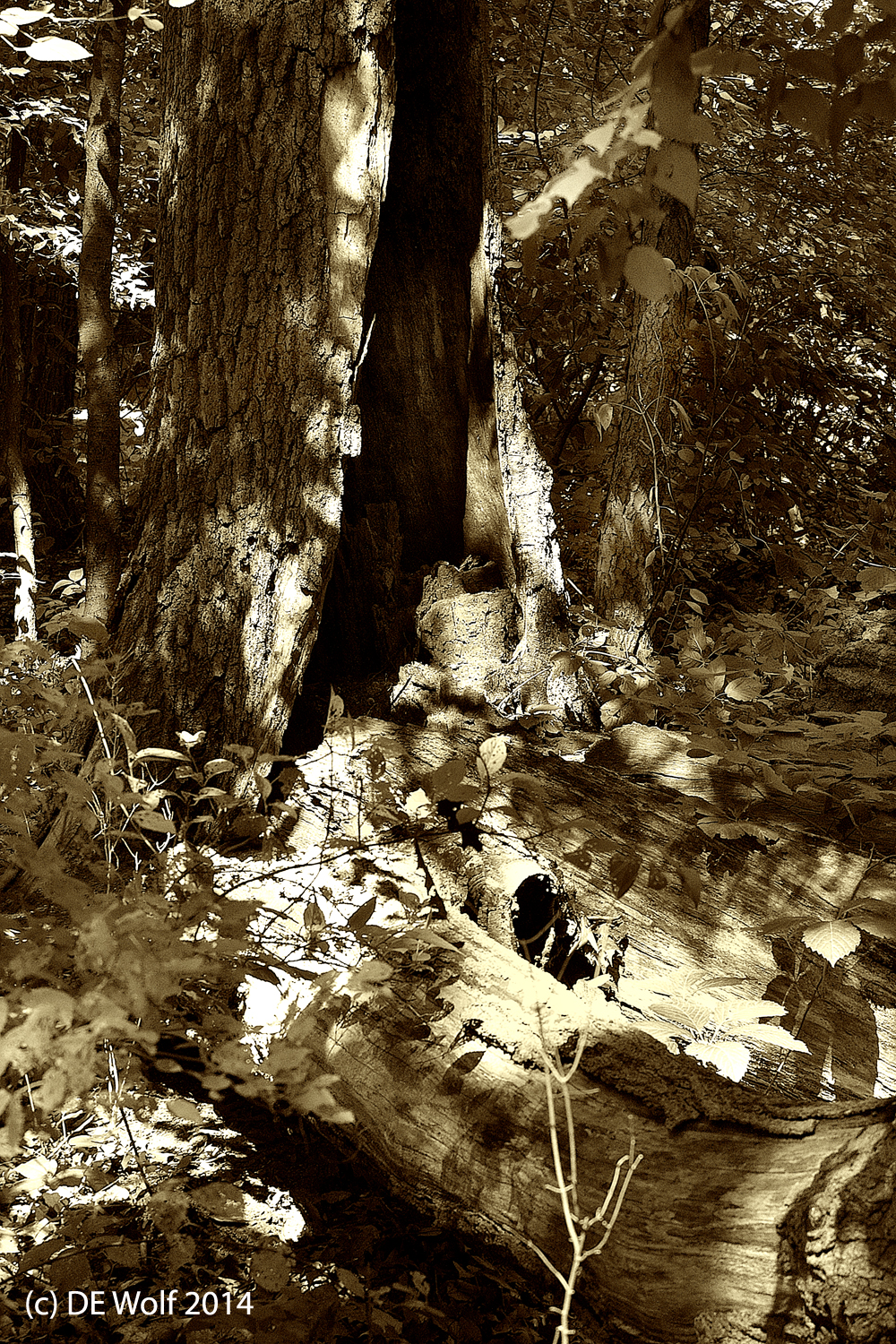
  4. Continue to learn to photograph trees.  I continue to believe this and I decided to give myself and A if there was one image of a tree that I took this past year and that truly met my goal and expectation.  I actually found several, but my favorite is shown in Figure 1, and image that I took the past September at Fresh Pond.
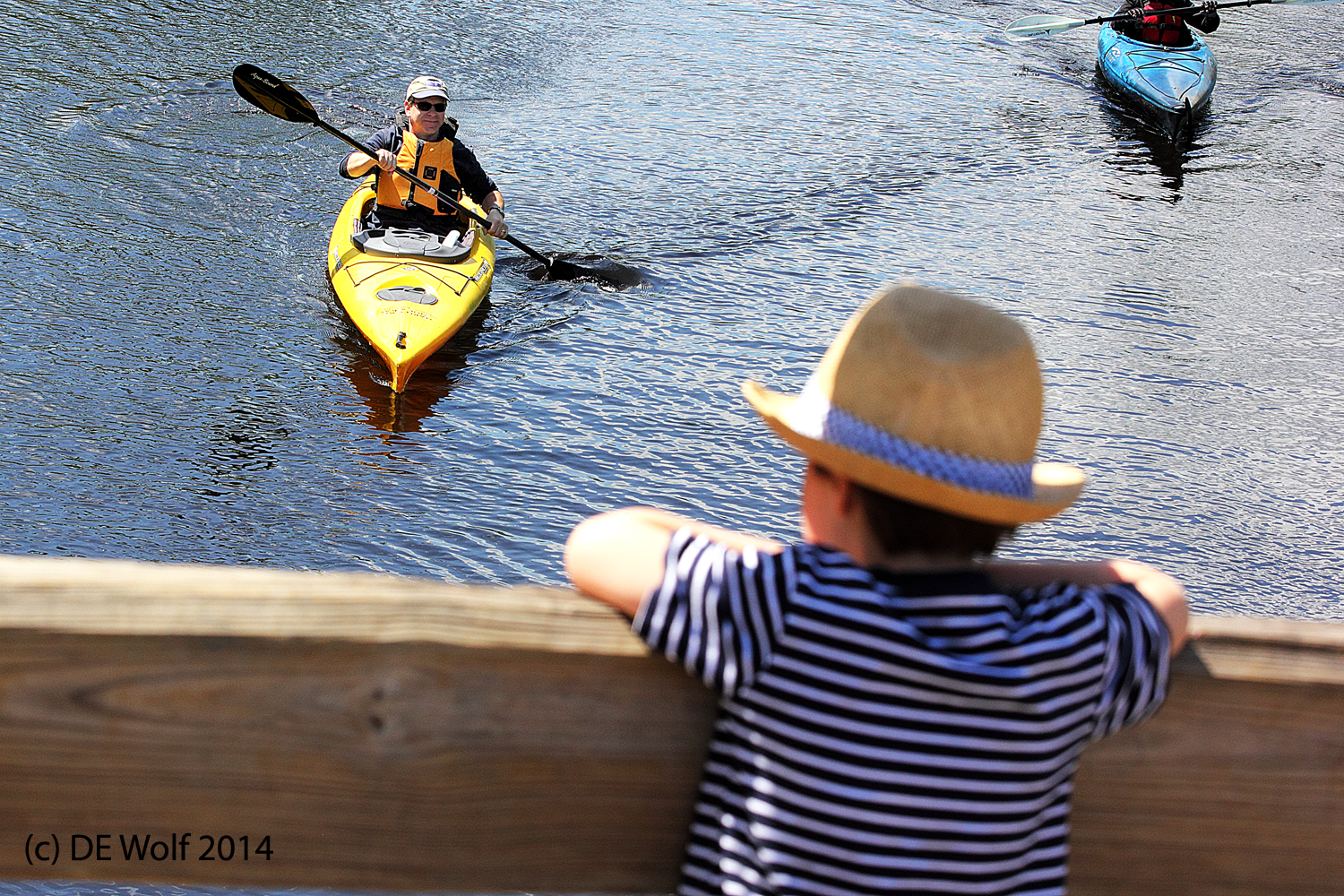
  5. Spend more time photographing people, learn to take better portraits and to develop a personal portrait style. Hmm! I have worked on this.  I did set up the En Persona Gallery on Hati and Skoll and there are some portraits taken in 2014.  But, I still have the temerity associated with photographing strangers, of asking whether I can take their picture, and as a result I did not take as many people-pictures nor did I focus much on learning portraiture, nor have I yet developed a personal style.  So C+ to you Wolf!  Gonna be hard on myself with this. I include as Figure 2 one pleasing image that I took on the Old North Bridge in Concord Massachusetts this past summer.

So, what about going forward into 2015.  My New Year photographic resolutions for 2015 carry over a few from last year:

  1. Focus on seeing.  I think that this always must be there.
  2. Spend more time taking photographs and have my camera with me more often.
  3. Slow down, concentrate on composing the image, on setting and checking the light. And yes, learn more about the camera controls, the one’s you don’t use, but should. This remains the key and is a lifelong lesson.
  4. Continue to learn to photograph trees.  They remain the most worthy of subjects.
  5. Work more on portraiture.
  6. Learn and utilize strobe-light techniques in portraiture.
  7. Continue to photograph birds and to develop better technique.
Figure 1 - Wonder of Childhood, Concord, MA. (c) DE Wolf 2014.

Figure 2 – Wonder of Childhood, Concord, MA. (c) DE Wolf 2014.

The path ahead to the New Year

The Path ahea to the New Year, Assabet River Wildlife Reserve. (c)  DE Wolf 2014.

The Path ahea to the New Year, Assabet River Wildlife Reserve. (c) DE Wolf 2014.

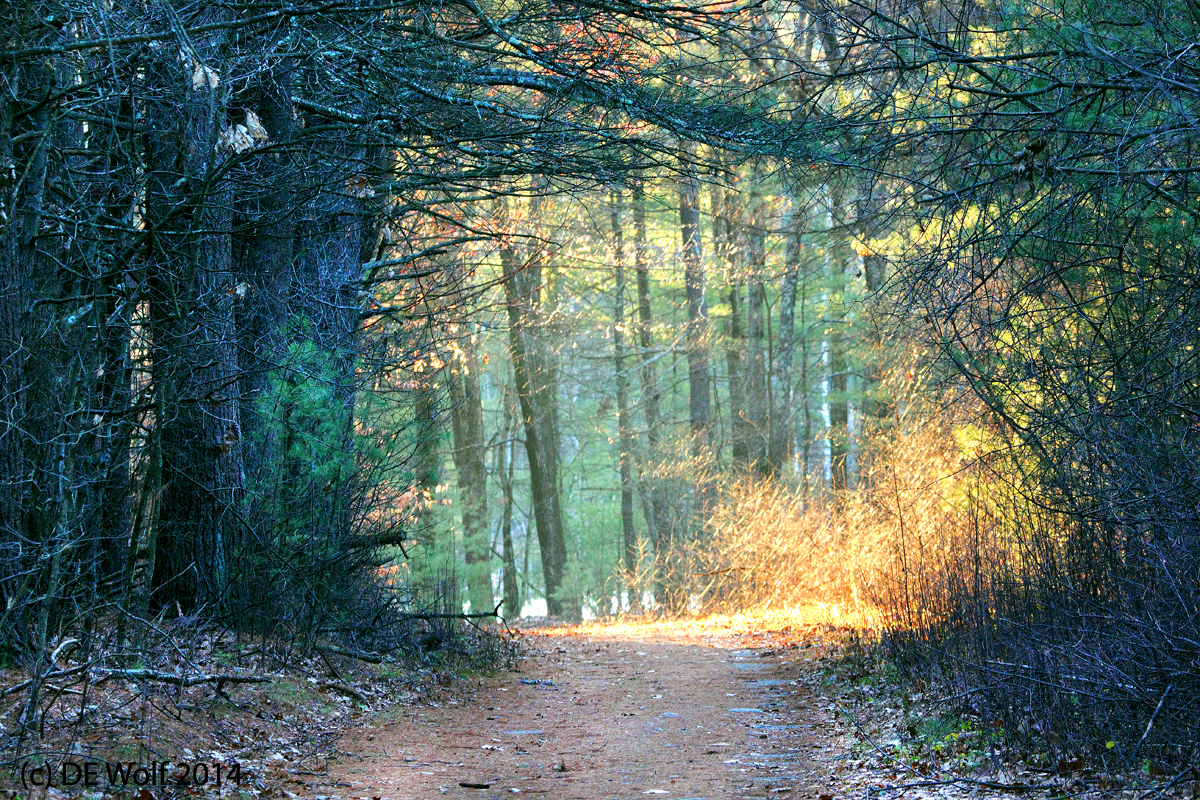
At the very end of December my son and I went for a short hike at the Assabet River Wildlife Reserve. These are the shortest days of the year in the Northeast. Still there is beautiful light to December afternoons, just not a lot of it. And, of course, you’ve got to look for it early, 3:30 to 4:30 pm.  Still the calendar promises that the coming year is on the ascendent. Slowly the days will become longer and eventually warmer, ‘though before the we must pay our dues for mild New England summers.

We came around a bend in the path and saw a golden glow in front of us.  It was a dazzling light that made the pine forest ahead not quite clear. And it demanded to be photographed, with Figure 1* the result. I was immediately reminded of Marco Secchi image that I discussed yesterday, and my discussion of the tabula rasa.  It is the pastel light that summons us forward into the future.

*Canon T2I with EF100-400mm f/4.5-5.6L IS USM at 180 mm, ISO 1600, Aperture Priority AE Mode, 1/80th sec at F/7.1 with no exposure compensation. Image taken with IS 1 on a monopod.

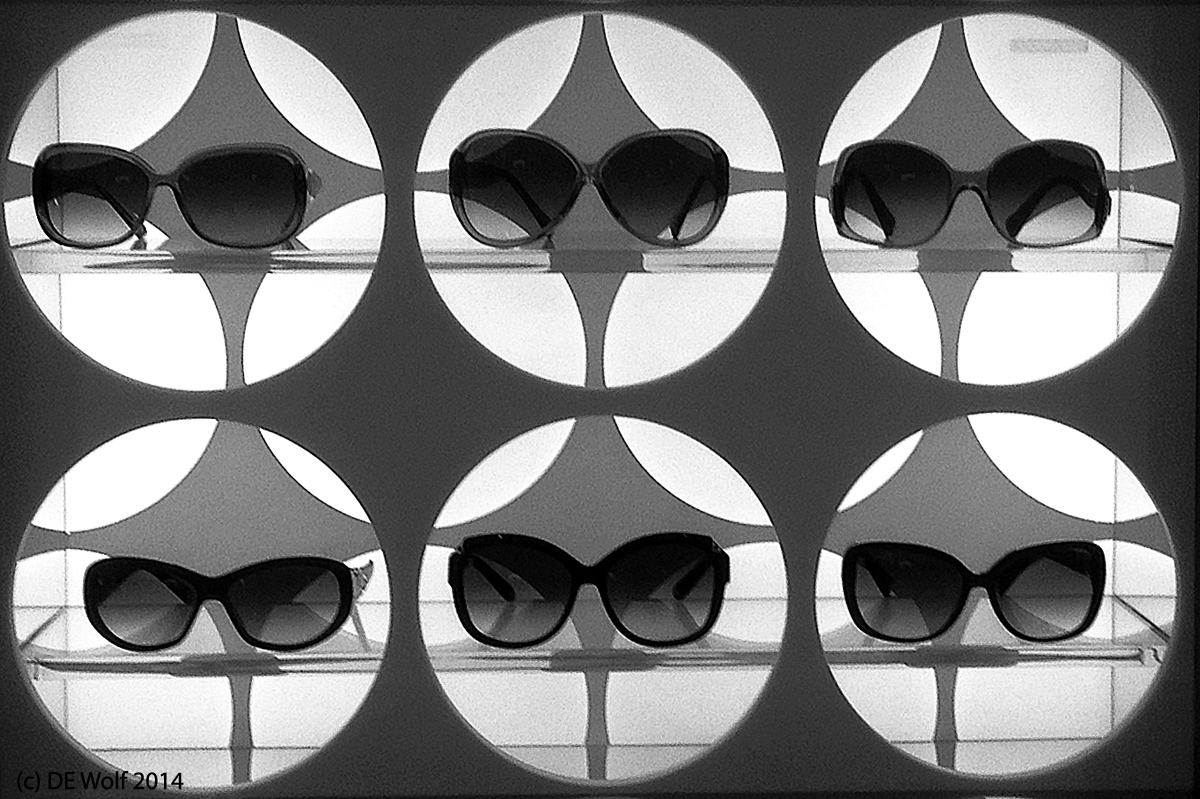
Sunglasses

Figure 1 - Sunglasses, Natick, MA. (c) DE Wolf 2014.

Figure 1 – Sunglasses, Natick, MA. IPhone photograph. (c) DE Wolf 2014.

Saturday afternoon I found myself trekking across a farmer’s field to try to photograph some wild turkeys.  The turkeys, perhaps still leery of Thanksgiving, had other ideas, and I learned the reason that farmers wear boots, especially after three inches of rain.  Hmm!  So I am learning, or relearning, the value of a winters walk at the mall, photographing with my IPhone.

Also Saturday, I took this photograph (Figure 1) of a display in the window of Louis Vuitton at the Natick Collection in Natick, MA.  They have incredibly talented window designers and this image falls under the category of derivative art.  It appeals to my sense of symmetry and geometry, not to mention (well maybe I am) the dream of warmer days to come.  After all, next weekend the winter solstice is upon us and the days will start to get progressively longer.  At some point, I hope soon, I will need my sunglasses for my morning commute again!