March the first

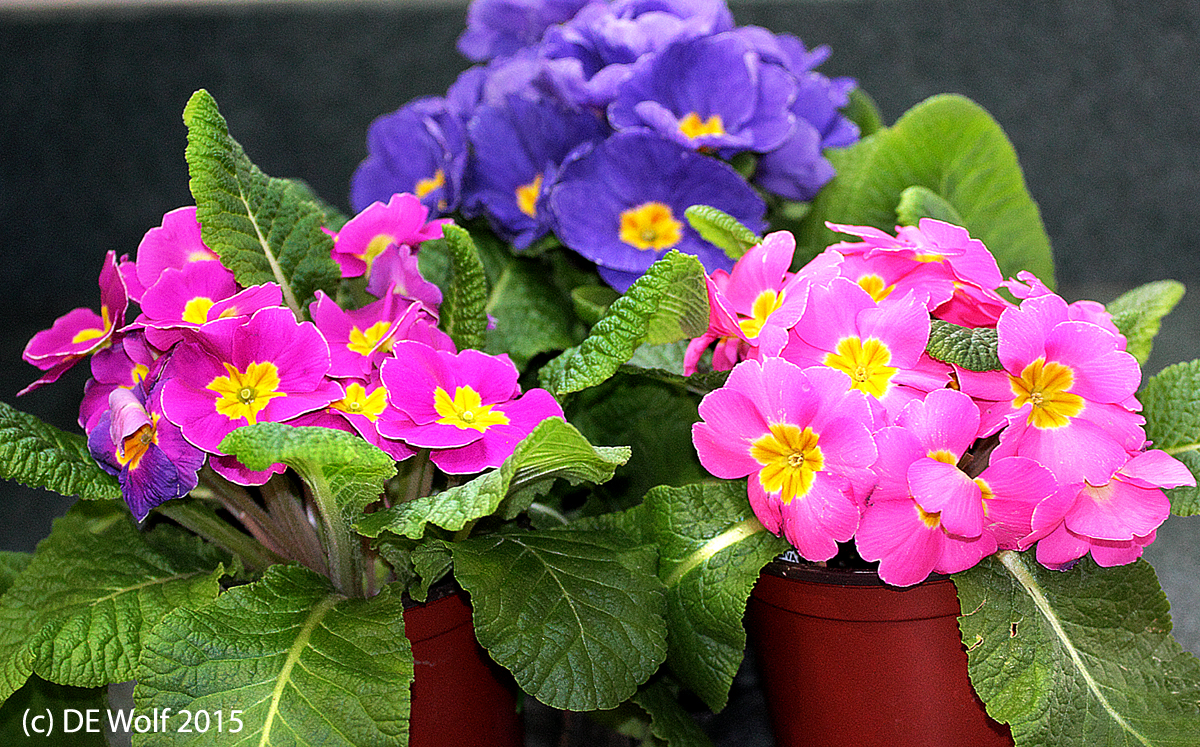
Figure 1 - Primroses. (c) DE Wolf 2015.

Figure 1 – Primroses. (c) DE Wolf 2015.

To all my readers and friends in the Northern hemisphere, today is March the first.

Think spring!

And remember what Ophelia said to Laertes:

“Do not, as some ungracious pastors do,
Show me the steep and thorny way to heaven,
Whiles, like a puffed and reckless libertine,
Himself the primrose path of dalliance treads,
And recks not his own rede.”

Hamlet (1.3.48-52)

Photominimalism and winter

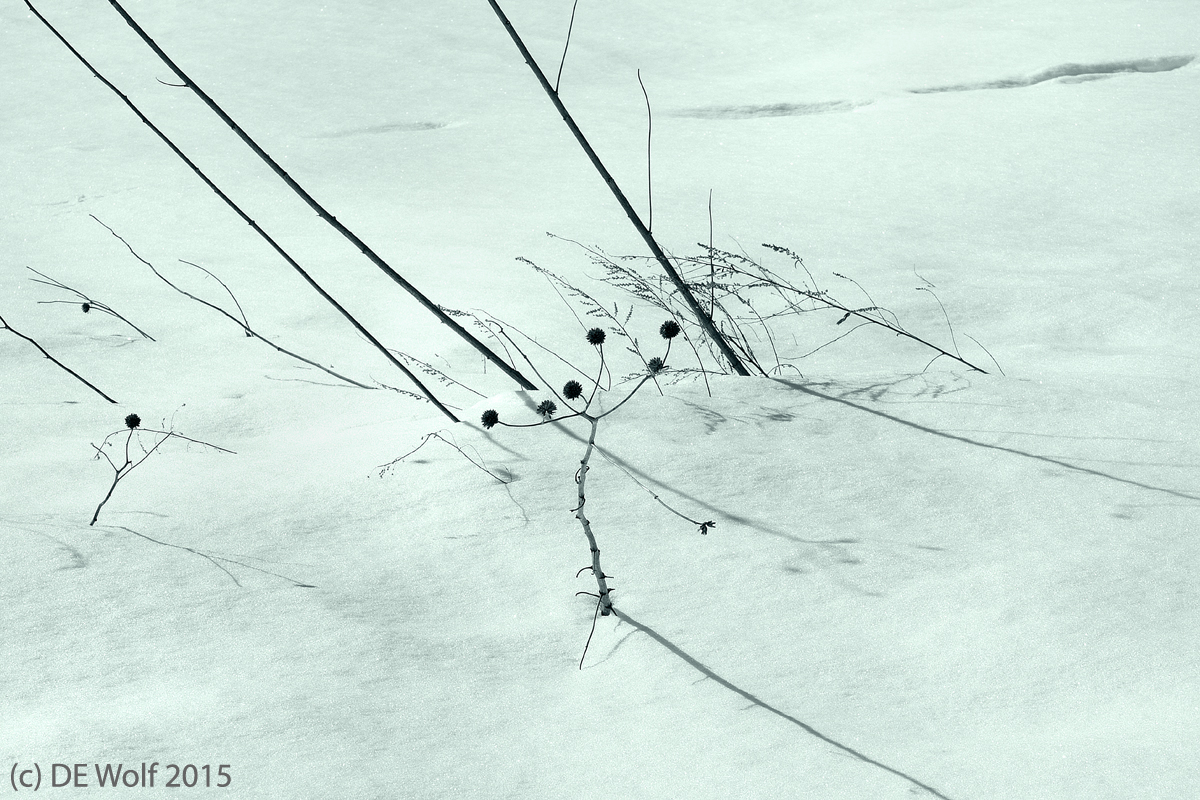
Fingure 1 - Winter 2015, Photominimalism. Fresh Pond Reserve, Cambridge, MA. (c) DE Wolf 2015.

Figure 1 – Winter 2015, Photominimalism. Fresh Pond Reserve, Cambridge, MA. (c) DE Wolf 2015.

Even more than sand and seaweed snow provides the ultimate environment for photominimalism.  It is all about contrast, just short of pure black and pure white – a binary image.  Figure 1 shows one of my favorite subjects in this medium, a pure white, cold, and windy landscape broken only by some dried and intriguing plant forms.  These are the merest remnants of last summer and thus emphasize the sterile lifelessness of winter contrasted with the abundant life of spring and summer.  It provides a promise.

And what I have tried to accomplish here is to create the sense that the light is on the verge of overwhelming the scene and the image.  I take this from the book of J. M. W Turner (1775-1851).  Turner was referred to as “the painter of light,” and through his career the light slowly seized control and methodically overwhelmed the subject. We move now towards the vernal equinox towards the ascendance of the light.

Canon T2i with EF70-200mm f/4L USM lens at 100 mm, ISO 400, Aperture-Priority AE mode, 1/500th sec at f/16.0, with +1 exposure compensation. Cold toned black and white image.

A dead robin

Figure 1 - Winter 2015 # 1, Sapling and squirrel trail on Little Fresh Pond, Cambridge, MA. (c) DE Wolf 2015.

Figure 1 – Winter 2015 # 1, Sapling and squirrel trail on Little Fresh Pond, Cambridge, MA. (c) DE Wolf 2015.

Temps in the 30’s F yesterday; so it was time to clamp on my crampons and venture out into the wilderness of the Fresh Pond Reserve. Everything was absolutely gorgeous. It was enough to restore my faith in the glories of winter.

I happened upon a dead and frozen robin. I am not one to photograph dead and decaying things, this despite the Rembrandt tradition where a side of beef alludes to the crucifixion. It was a personal tragedy for that poor bird the night before, and I can empathize with that and the continuity of the natural world. So I took no photographs of it. I’ll leave that art form to others.

For the natural world winter is a testing ground, a major obstacle to be survived, an evolutionary challenge. Still when you survey the landscape you realize that first there is the pure beauty of the physical phenomena of cold, ice, and wind. You might as well be on a lifeless alien world. But, second you realize that it is a world alive. The signs of life are what challenges or contrasts with the desolation.

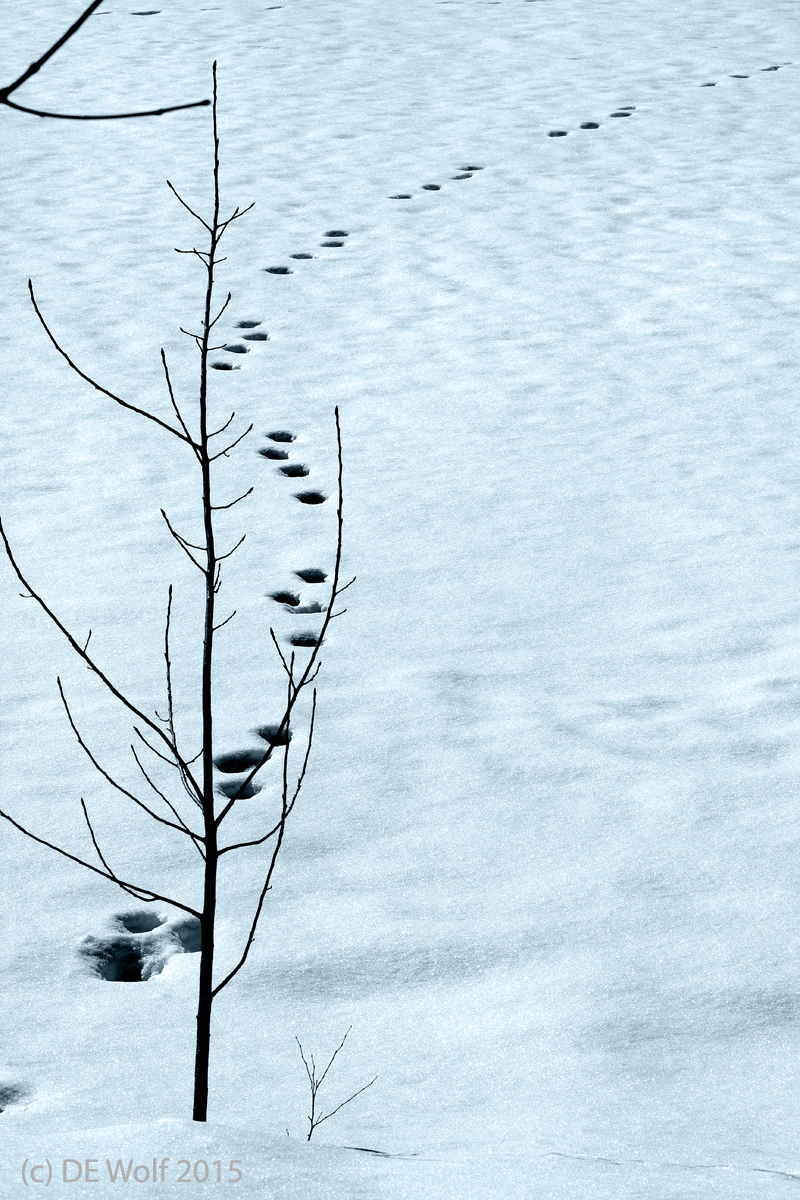
These are the thoughts that went into my first photograph of the afternoon. There was a little sapling struggling to survive on the shore of what is called “Little Fresh” pond. And winding away from this diminutive tree is a trail, made I suspect by a grey squirrel hopping through the snow. The squirrels are always busy in winter. Their lives are not like those of “Chip and Dale.” There is the constant searching for food, and food is essential to maintain body temperature against the snow. Again, I can empathize and, as a result, I do not begrudge these guys for relentlessly helping themselves to sunflower seeds from my bird feeder. They have to eat too!

But back to the photograph (Figure 1). As always underexpose by a stop. I love the simple geometric contrasts of snow patterns. I did this as a black and white. At the end I converted it to color again and tinted with a cold tone. Cold tone is not my usual choice. But it is appropriate for snow. Indeed I could have stayed in color mode from all the get go.

Canon T2i with EF70-200mm f/4L USM lens at 70 mm, ISO 400, Aperture Priority – AE mode, 1/640th sec at f/16.0 with +1 exposure compensation.
Caramel lace

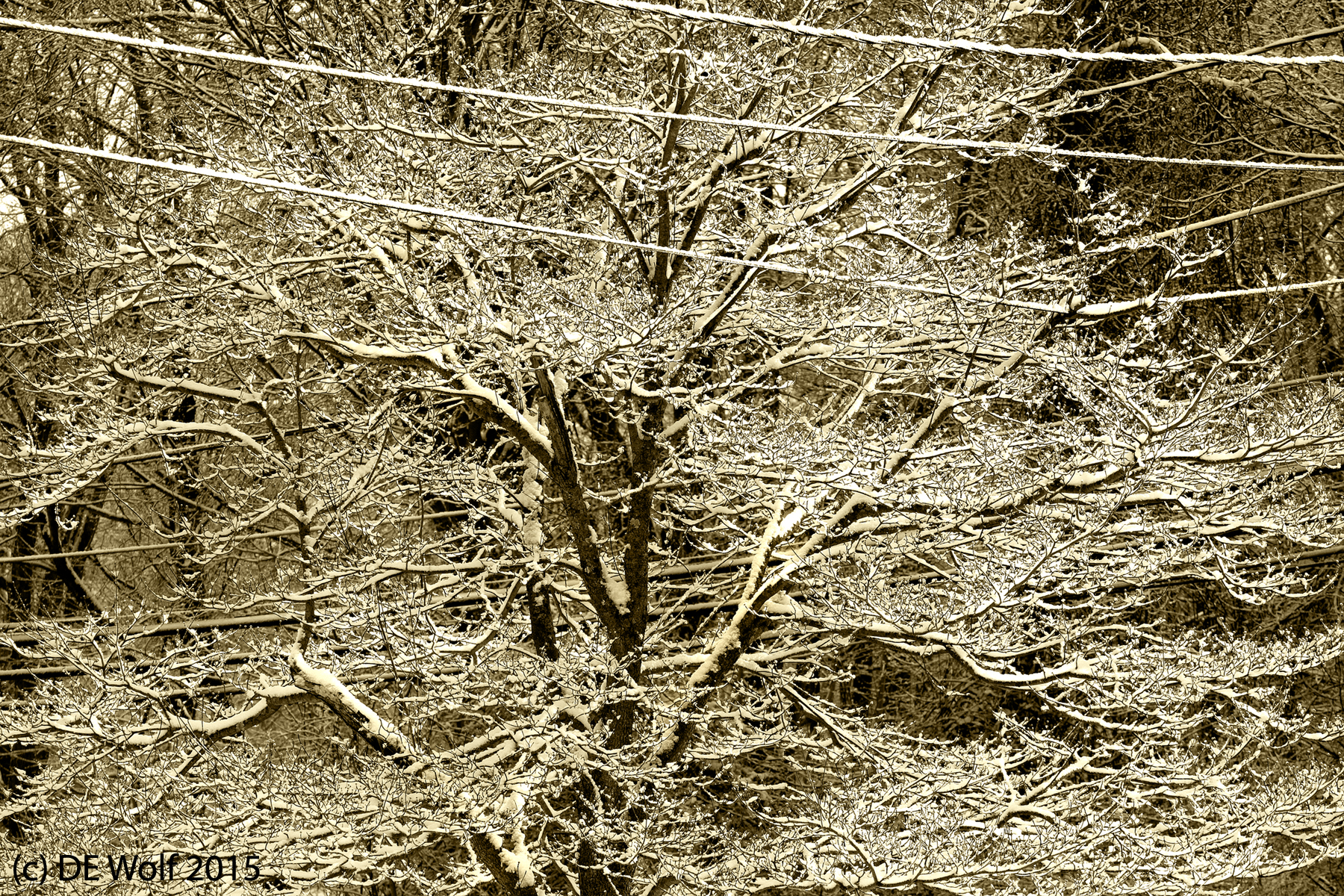
Figure 1 - Caramel lace, Sudbury, MA, February 2015. (c) DE Wolf 2015.

Figure 1 – Caramel lace, Sudbury, MA, February 2015. (c) DE Wolf 2015.

An amazing aspect about snow is that you can’t stay made at it for long.  It’s all about a love/hate relationship. And now that I’ve got about a billion pounds of it taken off my roof, I’m back to focusing on just how beautiful it is, and I will continue loving it until I have to drive in it again. Hmm!

Last night we have a gentle snow fall and awoke to the sense that some numinous deity had sprinkled confectioners sugar on all the trees.  I was packing the car for work when I was captured by the site of my neighbor’s tree.  It was glistening in the morning light like so much caramel lace. I say “caramel” because, of course, I was going to sepia tone it.  I was especially struck by the contrast between the dendritic fractal pattern of the branches and the parallel lines of the electrical wires – all equally snow encrusted.

I could, in fact, have stopped a hundred times this morning to take tree images.  Well maybe.  The thing is that our streets are now snow tunnels, and it is impossible to safely pull over to take photographs.  SO I had to remain satisfied with the image of Figure 1.

Canon T2i with EF70-200mm f/4L USM Lens at 98 mm, ISO 400, Aperture-priority AE mode. 1/400th sec at f/9,0 with no exposure compensation.

Snowstorm at dawn

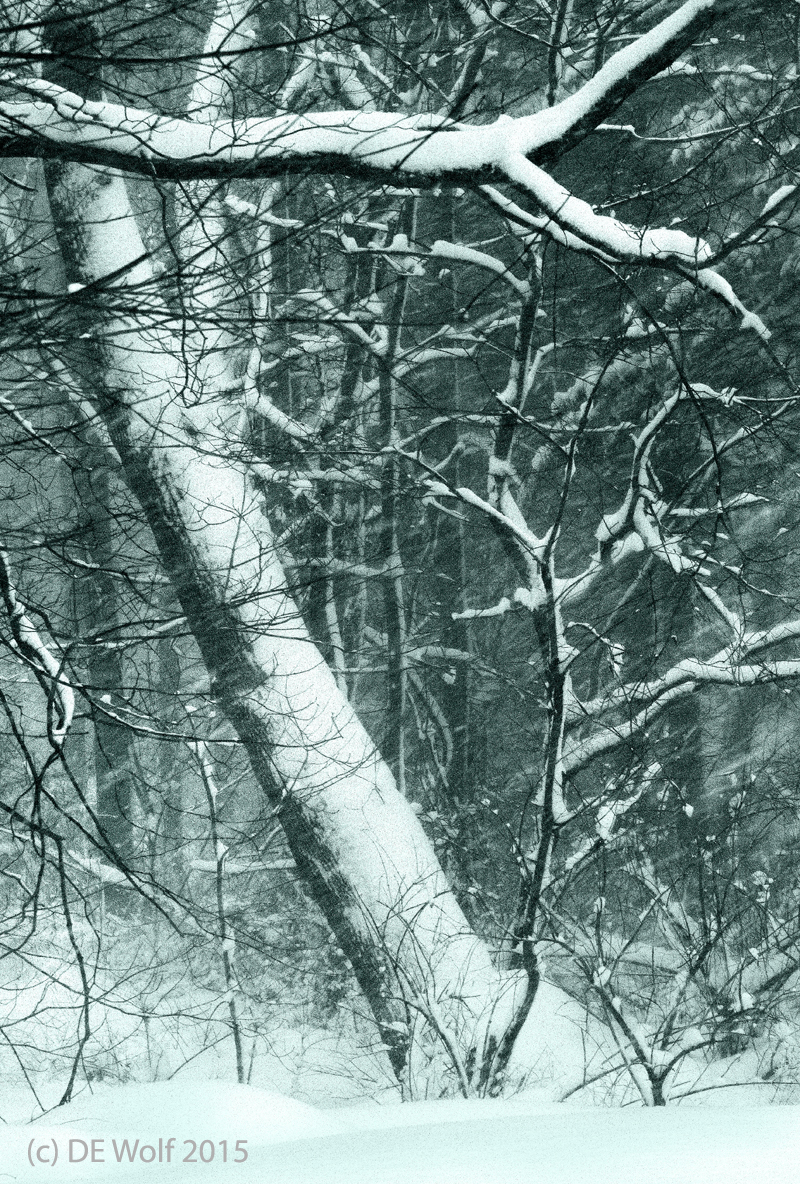
Figure 1 - Snowstorm at Dawn, February 15, 2015. (c) DE Wolf 2015.

Figure 1 – Snowstorm at Dawn, February 15, 2015. (c) DE Wolf 2015.

It is dawn on the day after Valentine’s Day, February 15, 2015 and it is snowing like crazy, again.  I am looking out my back window at the birds frantically trying to find food to maintain their body temperatures.  I thought that I would try to capture the scene, the pale blueness everywhere and the gusts of wind causing the snow to swirl  The result is Figure 1.  I am hand holding without IS; so shooting with my lens resting against the window pane and at ISO 3200.  I try to use as long an exposure as possible to capture some of the snow trails. I am hoping that the tree leaning to the right gives a sense of opposition to the wind. I found that I preferred taking the image first to black and white and then adding a subtle amount of blue or cold toning.

Pretty soon, I fear that I will no longer be able to see outside the windows as the snow drifts up against.  There is a glorious dullness to the scene, a lack of contrast, and all is quiet because all sound is muffled by the snow-pack.  This is interrupted only by and the wind.

Canon T2i with EF70-200mm f/4L USM lens at 75 mm, ISO 3200, Aperture-Priority AE mode, 1/40th sec at f/9.0 with no exposure compensation.

Winter’s bite

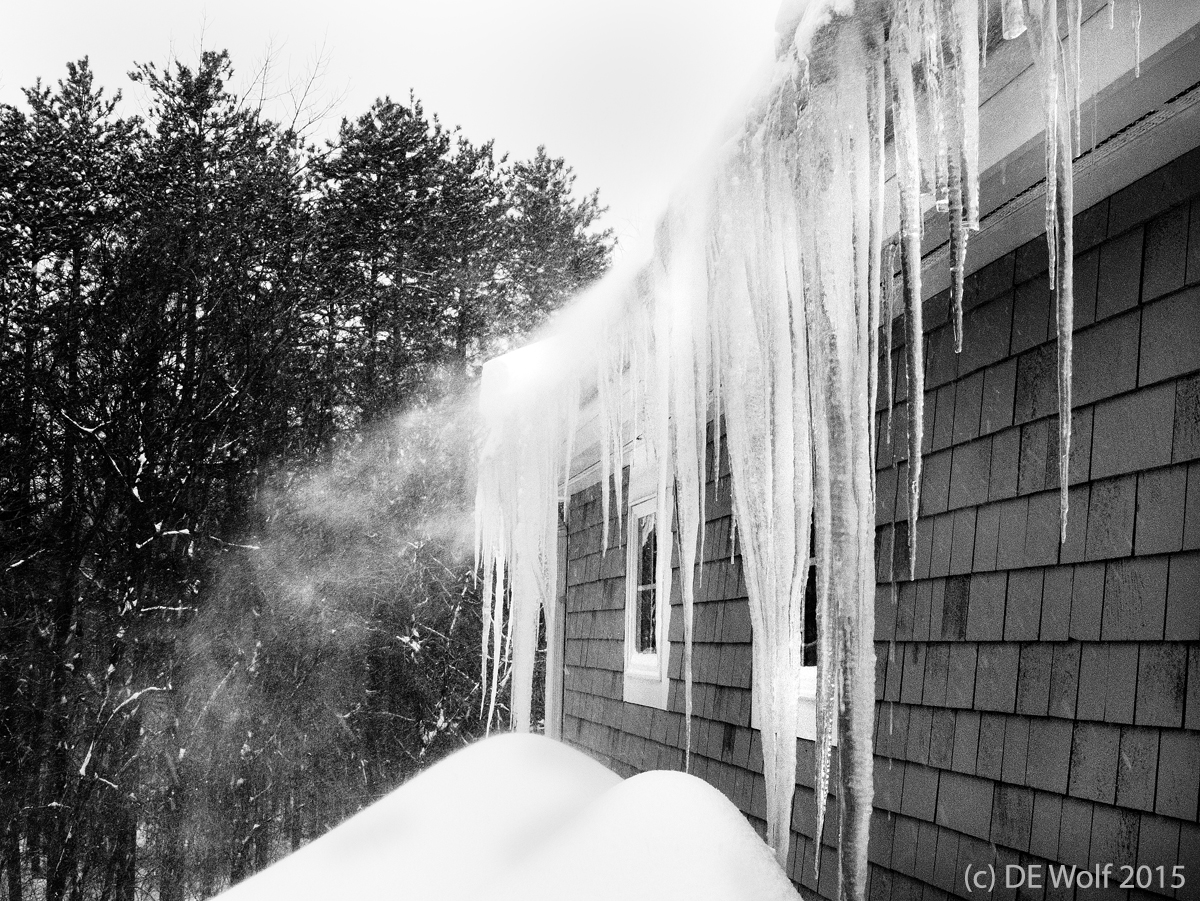
Figure 1 - Winter's Bite, February 9, 2015, Sudbury, MA. (c) DE Wolf 2015.

Figure 1 – Winter’s Bite, February 9, 2015, Sudbury, MA. (c) DE Wolf 2015.

There’s all this talk about the weather! The news has been obsessing on this winter’s relentless snowstorms in New England and rainstorms in California.  But if you don’t live there, it is all an abstraction.  We are in the midst of another snowstorm today and the sheer amount of it is really amazing. So there’s the point of perspective.  In the Sierras this latest 14″ would be merely a dusting.  Still we see ourselves as tough New Englanders ever ready to grin and bear. So I thought today that I would share the view from the second floor of my house.  I had to take the screen off to take this image and let both the cold and the snow in.  See what I’ll do for the sake of art!

Canon T2i EF-S18-55mm f/3.5-5.6 IS STM lens with IS on at 28 mm, ISO 1600, Aperture-Priority AE Mode, 1/125th sec at f/20 with no exposure compensation.

Bedpost bathed in a winter sunbeam

Figure 1 - Bedpost bathed in a winter sunbeam. (c) DE wolf 2015.

Figure 1 – Bedpost bathed in a winter sunbeam. (c) DE Wolf 2015.

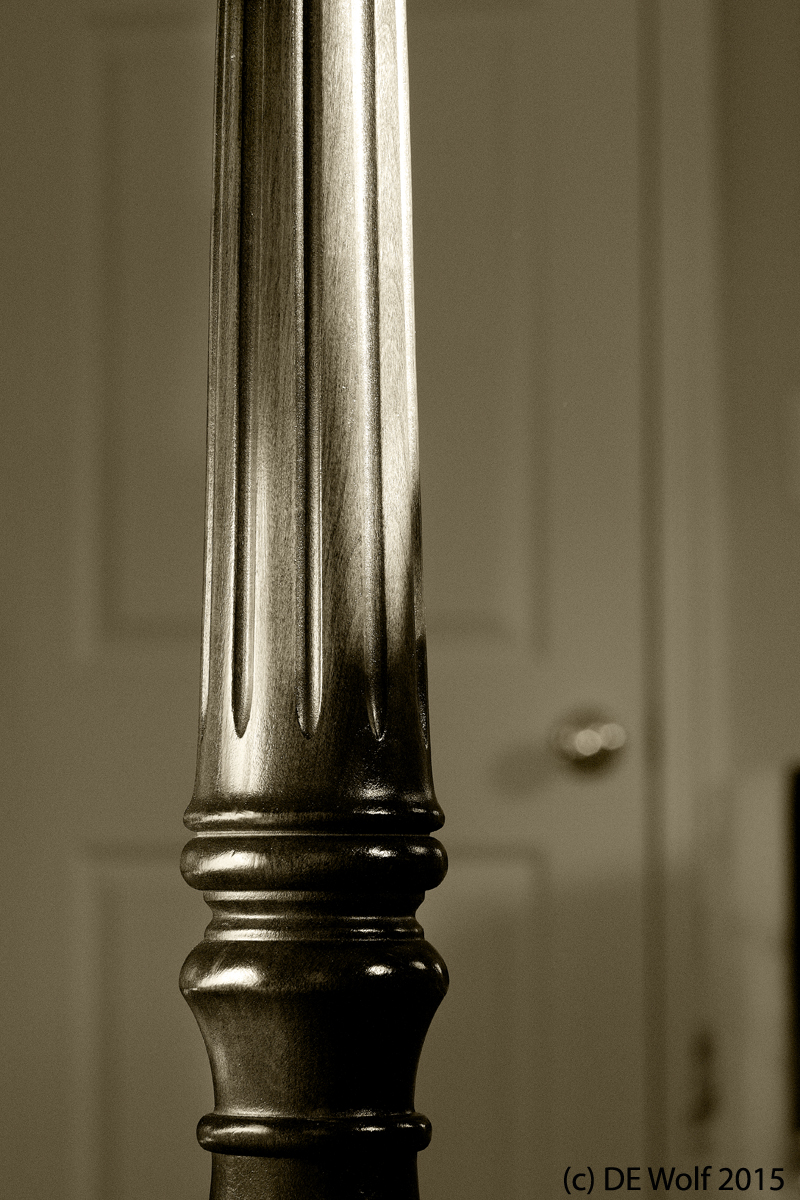
One of the things that I really like about winter is that the sun is low in the sky, and when you least expect it can suddenly fill a room with a golden sunbeam.  It is almost a contradiction to have this kind of friendly warmth on a February’s day.  Still there it is there, transforming something as ordinary as the bedpost of Figure 1 into something and almost magical. I played with this sunlit bedpost for sometime, paying close attention to how much of the post should appear in the photograph and exactly what the out of focus background should be.  In the end I decided that it should be only the door with vertical and parallel lines that complement the post.  I especially like the solidity of the wooden post and the way in which the angle of the shot creates the illusion of vaulting height.  The post seems to hold the image up, and I also like the double bokeh of the doorknob. For my taste at 70 mm the degree of out-of-focus of the door is perfect for the composition.

Canon T2i with EF70-200mm f/4L USM lens at 70 mm, ISO 1600, Aperture-Priority AE mode, 1/125th sec at f/8.0 with -1/3 exposure compensation.

Merely a tourist

Figure 1 - IPhone image of the frozen Concord River on the First of February 2015. (c) DE Wolf 2015

Figure 1 – IPhone image of the frozen Concord River on the First of February 2015. (c) DE Wolf 2015

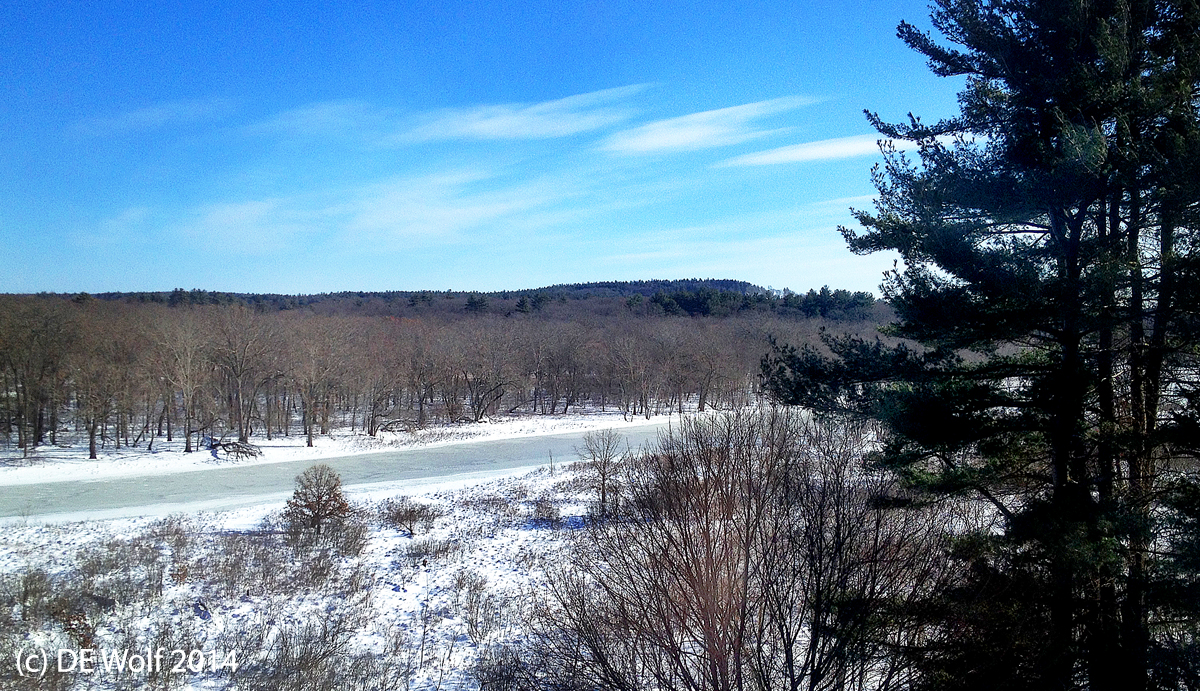
OK, so Monday morning and snowing again. Welcome to New England, in all its spectacular winter glory.  I found myself yesterday with a most excellent view of the historic and very frozen Concord River and only my IPhone to record it.  This is the land of Emerson, Alcott, and Thoreau. So please accept Figure 1 for what it is.  Merely a tourist’s snapshot, appropriately taken with a cell phone.  This just in case you are wondering why we put up with this kind of weather.  It is so, so beautiful and we love it.

American goldfinch – spinus tristis

Figure 1 - American Goldfinch in winter plumage, January. (c) DE Wolf 2014.

Figure 1 – American Goldfinch (spinus tristis) in winter plumage, January. (c) DE Wolf 2014.

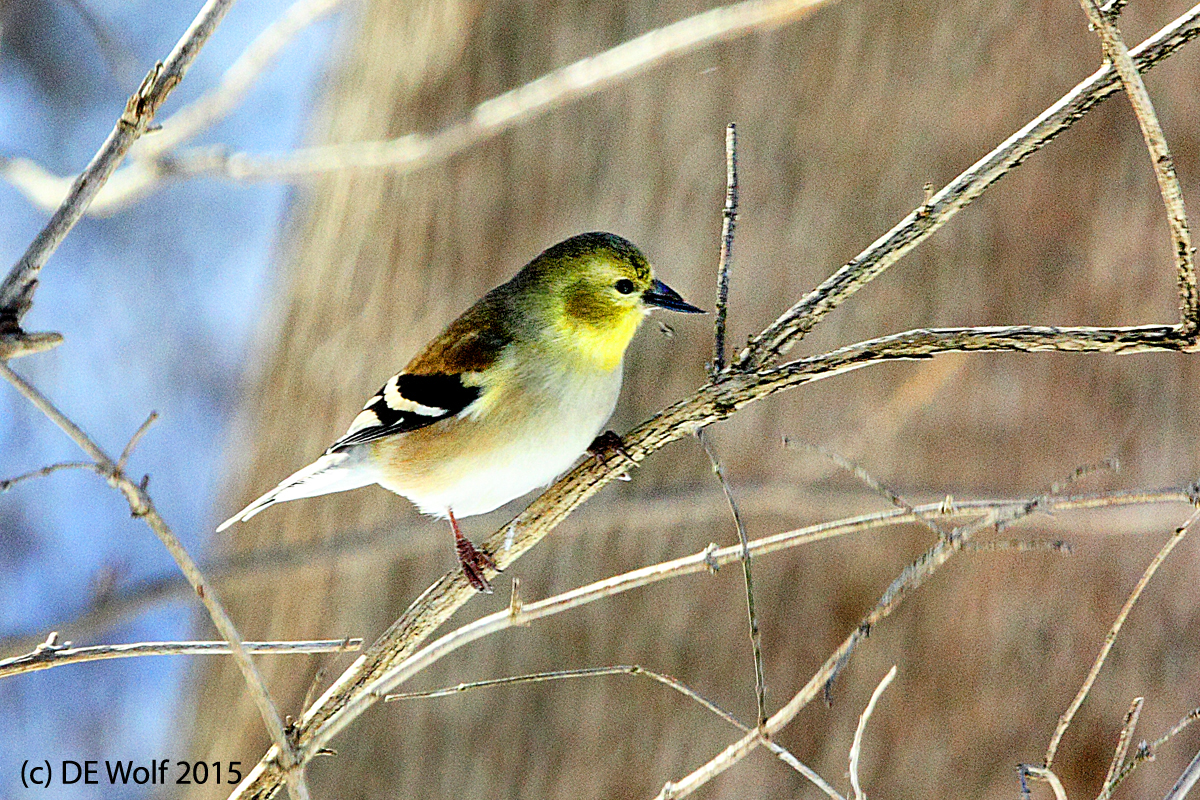
At this time of year, the beautiful American goldfinches are pale shadows of their late summer selves.  They are however, grateful visitors to my feeder, and unlike many of the more frenetic birds, they seem to sit politely at the feeding stations, like well-behaved dinner guess. Of course, sitting with their heads buried in the feeder is hardly they way yu want to photograph them The fellow pictured in Figure 1, with his prized sunflower seed, had a cowl of gold that very much exceeded that of most of his peers.  Perhaps he is a Boston Bruins fan. What has most intrigued me is that if I take a picture of even the palest goldfinch, I find that with just a little boosting of the color saturation they become brightly yellow.  No other adjustment is necessary.  The color is there latent and subdued, ready to pop out – like the Yin of summer buried deep within the Yang of winter.

This image was taken hand-held and again through glass at 300 mm.  The little birds are a bit demanding subjects.  But I think that this was reasonably successful.

Canon T2i with EF100-400mm f/4.5-5.6L IS USM lens at 300 mm, ISO 1600, Aperture Priority A mode,1/160th sec. at f/11.0 with +1 exposure compensation