Abraham Lincoln and the transposed head

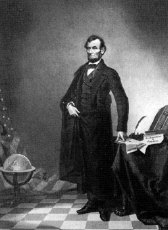
Figure 1 - Portrait of Abraham Lincoln, 1860 - or is it.  From the Wikicommons and in the public domain.

Figure 1 – Portrait of Abraham Lincoln, 1860 – or is it. From the Wikicommons and in the public domain.

What Lincoln supporters needed was a dramatic photograph of the president.  What was called for was a pose of elegant and powerful grandeur.  But no such image existed.  The result is shown in Figure 1 – the imperial president ready to slay the foes of abolition and union. Many of you may remember this image from childhood, because it hung for generations in classrooms nationwide.

However, no such image existed at the time – not did it ever really exist.  What did exist was a portrait of a very stately John Calhoun, a Southern leader and a Mathew Brady image of Lincoln’s face.  So what was done was that the face of Lincoln was cut out of the Brady portrait and pasted onto Calhoun’s body.  It was then rephotographed to create the final Lincoln image. But first one more piece of photographic art had to be performed. In the Calhoun’s image, the papers on the table read “strict constitution,” “free trade,” and “the sovereignty of the states.” In the Lincoln image, these have been changed to read, “constitution,” “union,” and “proclamation of freedom.”
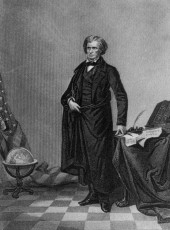
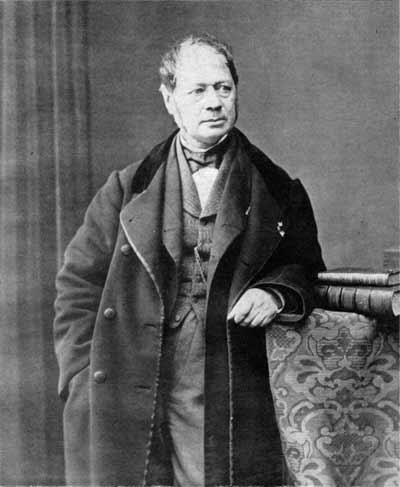
Figure 2 - John Calhoun 1860 - from the Wikicommons and in the public domain.

Figure 2 – John Calhoun 1860 – from the Wikicommons and in the public domain.


Would we do such a thing today?  Of course we would.  This kind of transposition of heads and bodies is today a common tool of the fashion and tabloid world, where the goal is to augment chest size of reduce body weight.  Visit the Oddee website for some famous examples.  But let me offer two choice examples.  The is Oprah Winfrey’s head on Ann Margaret‘s body.  from the cover of TV Guide in August 1989.According to Oddee, the composite was created without permission
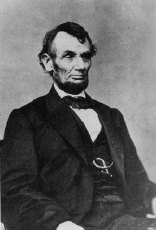
Figure 3 - Mathew Brady, Lincoln Portrait, 1860 from the Wikicommons and in the public domain.

Figure 3 – Mathew Brady, Lincoln Portrait, 1860 from the Wikicommons and in the public domain.

of Winfrey or Ann-Margret, and was detected by Ann-Margret’s fashion designer, who recognized the dress.  The second is the famous gun tottin’ Sarah palin in patriotic bikini – not.  Sorry to disappoint everyone on that score.

So the real question is: does anyone still believe that a photograph never lies?  I have gotten so skeptical of every image that I see on the web that the first thing that I invariably do is a quick search of the web for the subject and the word fake.  I believe that I have previously recounted how once when I expressed my doubts on Facebook with the words “If it’s true.”  Another friend of a friend almost immediately countered that “it didn’t matter if it were true.”  Well to all my friends – of no matter what degree of separation – it kinda’ does matter!
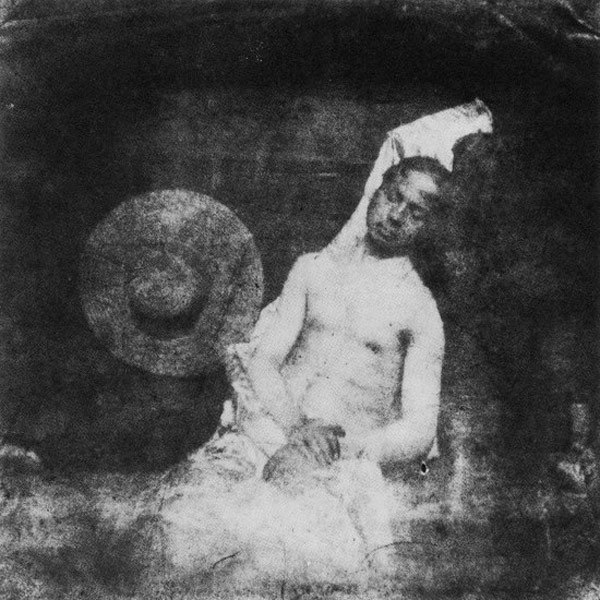
Photographic First #10 – Hippolyte Bayard’s faked suicide

BayardsFakedSuicide

Figure 1 – ,” the world’s first faked photograph from the Wikicommons and in the public domain.

Todays blog fits in both with our series of photographic firsts and with the question of photographic fakes and manipulations.  Figure 1, Hippolyte Bayard, “Self-portrait as a drowned man, 1840,” is widely viewed as the first photographic fake.  Hippolyte Bayard (1801 – 1887) was a French photographer and direct competitor with Louis Daguerre. He invented his own unique direct positive process, and exhibited his work on 24 June 1839. He claimed to have been the first inventor of photography, predating both Daguerre and Fox Talbot.

However, little credit came Bayard’s way and in reaction to what he perceived to be a great injustice, he created the first staged photograph entitled, “Self Portrait as a Drowned Man, 1840.”   In the image, he pretends to have committed suicide.  On the back of the photograph Bayard wrote:

Figure 2 - Hippolyte Bayard Self Portrait, 1863, from the Wikicommons and in the public domain.
Figure 2 – Hippolyte Bayard Self Portrait, 1863, from the Wikicommons and in the public domain.

“The corpse which you see here is that of M. Bayard, inventor of the process that has just been shown to you. As far as I know this indefatigable experimenter has been occupied for about three years with his discovery. The Government which has been only too generous to Monsieur Daguerre, has said it can do nothing for Monsieur Bayard, and the poor wretch has drowned himself. Oh the vagaries of human life….! … He has been at the morgue for several days, and no-one has recognized or claimed him. Ladies and gentlemen, you’d better pass along for fear of offending your sense of smell, for as you can observe, the face and hands of the gentleman are beginning to decay.”

This announcement of Bayard’s untimely death in 1840 was premature, as illustrated by Figure 2, a second self-portrait taken twenty three years later in 1863. He went on to enjoy a highly successful career in photography and died in 1887 at age 86.

Photographic first #8 – Les Horribles Cernettes, the first photograph on the internet

There are something like 250 million photographs uploaded to Facebook each day, and, of course, Facebook is not the only repository for uploading images.  It is staggering!  But have you ever wondered when it all began?  What and when was the first photograph ever uploaded to the internet?

The answer to the what question is clear. It is a photograph of the parody pop-band, “Les Horrible Cernettes.”  The when is just a tad murky, but it was officially celebrate last July as having been July 10, 1992.  That’s twenty years ago, and those of us old enough to remember the internet of the 1990’s, remember it in all its DOS-based amber and green glory – just then blooming in color.

Last July was a fitting time to remember it, because on July 4, 2012, those of us with nerdy underpinnings rose early to hear lectures from the Central European Organization for Nuclear Research, CERN, announcing that events consistent with the fabled and long sought after Higgs Boson had been measured with strong statistical certainty by CERN’s large Hadron collider. (How’s that for scientific equivocation and qualification?) CERN played a pivotal role in the development of the internet as it sought to connect its particle physicists and their computers from around the globe.

An idea was born, as were Les Horribles Cernettes, a singing group comprised of female employees of CERN.  Their first great hit was “You never spend your nights with me.  You prefer your collider,” and expresses the painful and particular lament of the significant others of physicists everywhere.  And finally, here they are singing their tribute to the Professor Higgs and his boson as the finale to their farewell concert at the Hardronic Festival 2012, last July.


On this day in history

SuffrageMarch

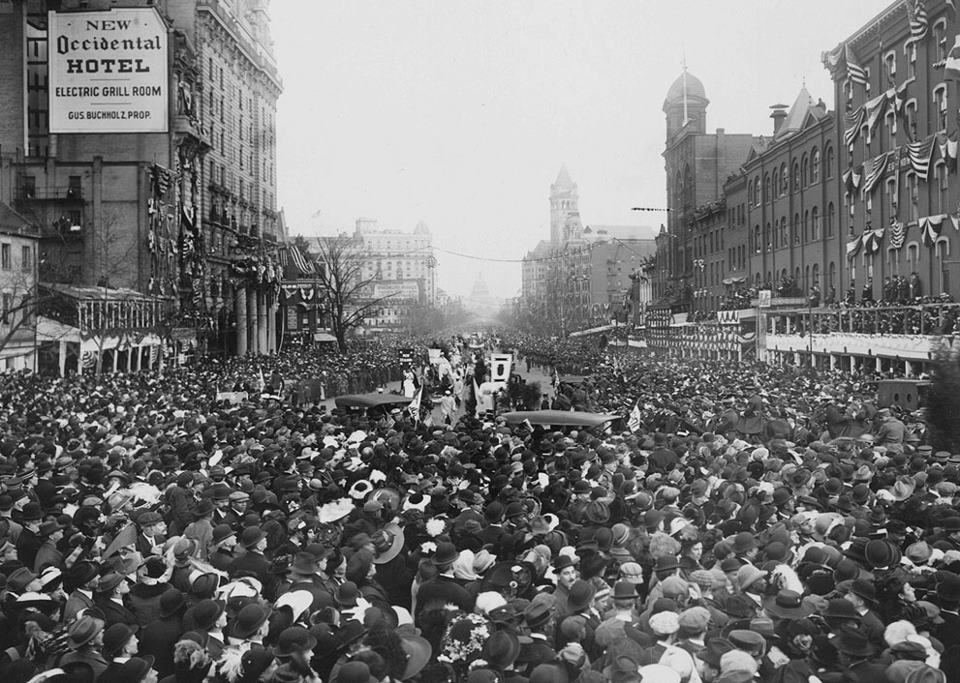
Figure 1 – Supporters of Women’s Suffrage march on Washington DC on March 3, 1913, the day befor President Wilson innauguration. From the United States National Park Service and in the public domain.

Looks like I missed this image, from the United States National Parks Service, by 48 hours.  Still I thought that I would share this historic photograph with you.  On March 3, 1913, one hundred years ago 8000 women marched down Pennsylvannia Avenue and on Washington, DC demanding suffrage.  It was the largest such protest in the US capital and was met by unruly men trying to block the March and shouting derogatory statements at the marchers.  President Wilson, who was innaugurated for his first term the next day, was no supporter of the suffrage movement either.  Protestors were injured and Congress ultimately dismissed Washington’s Chief of Police.


The Cottingley Fairies

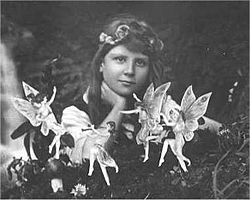
Figure 1 - The first of the five Cottingly Fairies photographs, 1917, from the Wikicommons and in the public domain in the US.

Figure 1 – The first of the five Cottingly Fairies photographs, 1917, from the Wikicommons and in the public domain in the US.

Well, here I am fresh from the season finale of “Downton Abbey,” and my thoughts are with the early twentieth century English countryside.  So what better story is there than the great photographic “fake before Photoshop” known as the “Cottingley Fairies.”  It is a wonderful story about how two young girls duped there elders for over sixty years.

In 1917 ten year old Frances Griffiths was staying with her cousin sixteen year old  Elsie Wright in the village of Cottingley in West Yorkshire.  There were stories that fairies lived beside the stream or “beck,” which was at the bottom of the garden.  Frances and Elsie borrowed Elsie’s father’s camera and went to prove the existence of the fairies by photographing them.

The girls produced two photographs in 1917 of themselves with the fairies.  Elsie’s father thought them pranks, but his wife was convinced that they were real.  The story took off, when in 1919 Elsie’s mother attended a meeting of the Theosophical Society about “Fairy Life” and she showed the photographs to the speaker, Polly Wright.  They were subsequently displayed at the annual meeting of the society and came to the attention of Edward Gardner, who was a leading member of the society.   Gardner had the negatives examined by photography expert Harold Snelling, who declared them genuine.  Perhaps, needless-to-say, Snelling supplied prints for sale at Gardner’s lectures.

The story might have rested there, were it not for the fact that they came to the attention of Sherlock Holmes author and spiritualist Sir Arthur Conan Doyle, who was writing an article on fairies for the Christmas Issue of “The Strand.”   Doyle was initially skeptical and had the photographs examined by experts at Kodak, who again declared them to show no signs of fakery, but pointed out that they could not certify that they were authentic images of fairies. Experts from Ilford , on the other hand saw definite signs of faking.  The photographs were published along with Doyle’s article.

In 1920, Doyle contracted Gardner to confirm or disprove the story of the photographs.  In Gardner’s words:

“I went off, to Cottingley again, taking the two cameras and plates from London, and met the family and explained to the two girls the simple working of the cameras, giving one each to keep. The cameras were loaded, and my final advice was that they need go up to the glen only on fine days as they had been accustomed to do before and tice the fairies, as they called their way of attracting them, and see what they could get. I suggested only the most obvious and easy precautions about lighting and distance, for I knew it was essential they should feel free and unhampered and have no burden of responsibility. If nothing came of it all, I told them, they were not to mind a bit.”

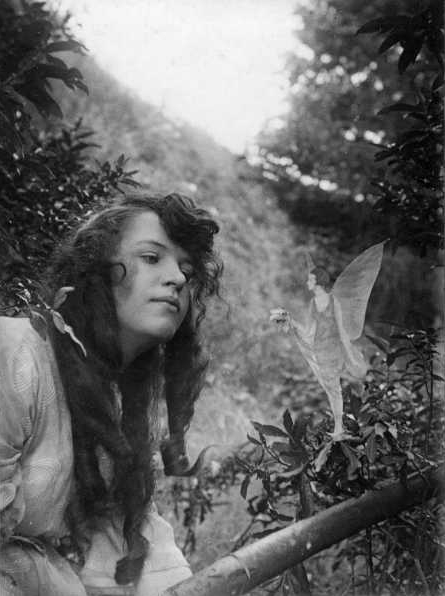
Figure 4 - The fourth photograph of the Cottingley fairies, Fairy Offering Posy of Harebells to Elsie, 1920.  From the Wikicommons and in the public domain in the US.

Figure 4 – The fourth photograph of the Cottingley fairies, Fairy Offering Posy of Harebells to Elsie, 1920. From the Wikicommons and in the public domain in the US.

Of course, the girls insisted that the fairies would not show themselves in the presence of anyone else, and here’s a surprise, they captured three more fairy pictures (or is it pixie pics?).  Thus, began the long and controversial saga of the Cottingley Fairies.

It was not until 1983 that the cousins admitted in an article published in the magazine “The Unexplained” that the photographs had been faked, although both maintained that they really had seen fairies. Elsie had copied illustrations of fairies from a popular children’s book of the time, “Princess Mary’s Gift Book (1914).” They said they had then cut out the cardboard figures and supported them with hatpins, disposing of their props in the beck once the photograph had been taken.  It was an amazing prank, perpetrated on the gullible for sixty-six years.  Frances died in 1986, and Elsie in 1988.

If we look at the pictures today, we are surprised by their crudity and the fact that they could fool people for so long.  It is not so much a study in photographic fakery as it is a lesson in wishful thinking.  Who would not hope that Tinkerbell is real?  The remaining question is what would Lord Grantham, Lady Cora, and Lady Mary think?

Photographic Firsts # 7 – the first color photograph

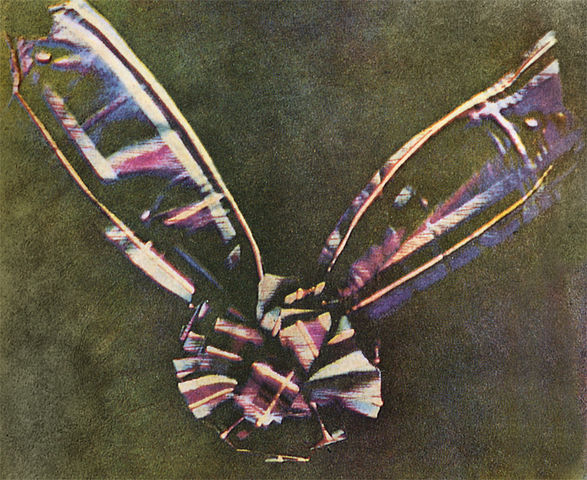
Figure 1 - The world's first color image, a picture of a tartan ribbon, produced by the three color method by Thomas Sutton for Sir James Clerk Maxwell

Figure 1 – The world’s first color image, a picture of a tartan ribbon, produced by the three color method by Thomas Sutton for Sir James Clerk Maxwell (from Wikimedia and in the public domain)

As described in yesterday’s blog, additive color theory says that one can create any color by mixing the primaries from three projectors.  This fact was described by the great Victorian physicist, James Clerk Maxwell.  The critical point made by Maxwell was that the cells of the retina did not perceive color, rather color perception involved the relative stimulation of the red, green, and blue cone cells.  He predicted that  if three transparent (what we now call slides) black and white photographs of the same scene were taken through red, green and blue filters, and then projected in register onto a screen all of the colors of the original scene would be reproduced.

In 1861 such  a set of images, referred to as color separations, were taken by Thomas Sutton, who used them to illustrate a lecture by Maxwell on color.  The image was of a tartan ribbon and is shown in Figure 1, the worlds first color photograph. Maxwell commented on the inadequacy of the result, pointing out the need  for a photographic material more sensitive to red and green light.

Today photographic historians are puzzled by this image because the emulsion used by Sutton was insensitive to red light.  It is now believed that the red in the image actually results from ultraviolet sensitivity of the process.

Of course, these experiments soon faded into obscurity.  They were reinvented in the late nineteenth century.  We have already discussed the Lumiere brothers Autochrome invention – the first commercially practical color photography process

The FSA in the Kodachrome era

Russell-Lee

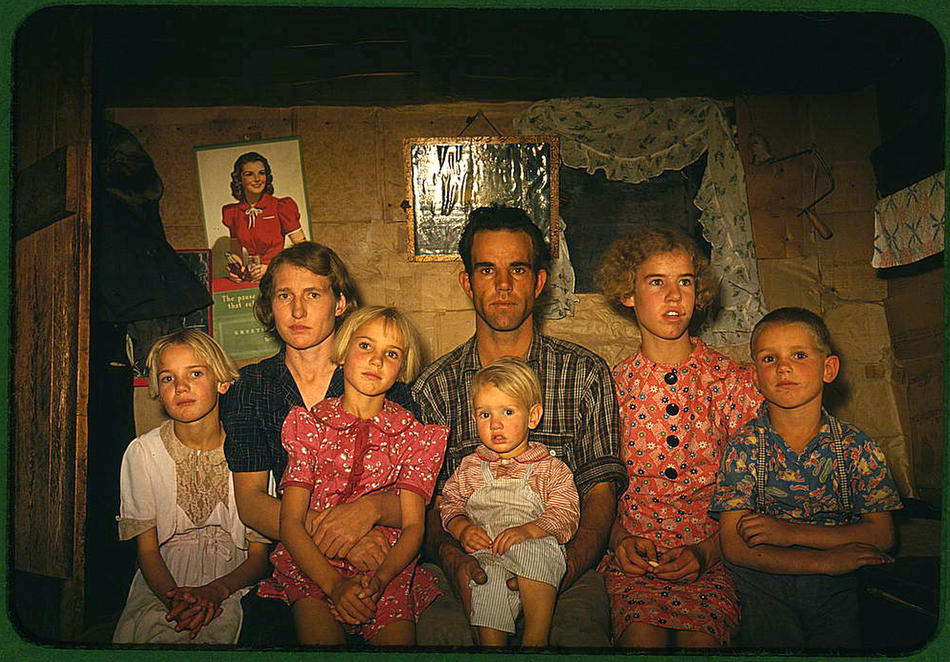
Figure 1 – Russell Lee “Portrait of the Jack Whinery Family, Pie Town, NM 1940” from the Library of Congress and in the public domain.

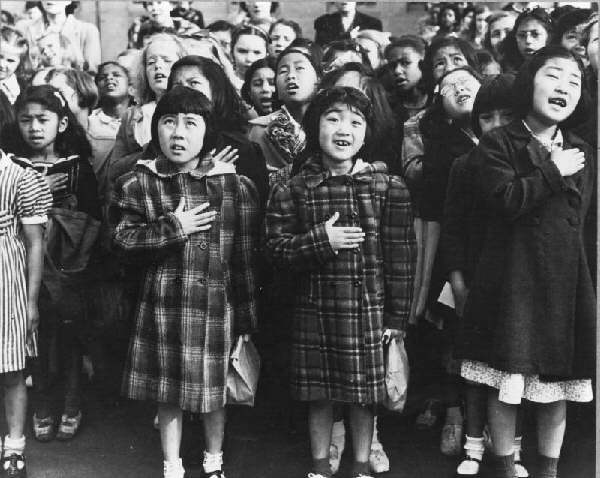
If we look at the image of the children at the Weill school saying the pledge of allegiance, we see what is our standard view of the depression – it is black and white.  The same is true with Ken Burns’ “The Dust Bowl.”  We have a black and white world, and by virtue of its being black and white we are somehow immune to it.

I have also discussed the Autochrome process, which brought images from 1907 – 1937 into a very spectacular and vivid color.  I also described how Kodak introduced Kodachrome in 1937 and a new age of color photography.

A reader has been kind enough to share with me an article in the Denver Post showing FSA photographs taken with the Kodachrome process from the collection of the Library of Congress.  Suddenly that world becomes rendered in the characteristically striking color of Kodachrome film.  It was hard to chose a favorite and representative image.  Finally, I settled upon the image in Figure 1 taken by Russell Lee in 1940.  It is a picture of homesteader Jack Whinery and his family in Pie Town, New Mexico.

I like the Whinery picture because it is so like the many black and whites that we see from these federal projects.  We can no longer hide in the security of monotone.  And, of course, the current recession 2008 – 2013 raises eyebrows and makes us question the fragility of our perceived distance from these souls and immunity from their woes.


Toyo Miyatake and Dorothea Lange – Japanese internment camp photographs

Lange

Figure 1 – Dorothea Lange “Students at the Weill Public School reciting the Pledge of Allegence, 1942” Taken for the FSA, in the LOC, and in the public domain.

Yesterday we spoke about Ansel Adams’ photographs of the Manzanar Relocation Camp.  In that post I mentioned two other photographers Toyo Miyatake (1896-1979)  and Dorothea Lange (1895-1965) and I thought that it would be interesting to do some websearching for the photographs of each of them from these camps.

As it turns out, Toyo Miyatake Studios, originally founded by Toyo in 1926 in Los Angeles, was moved to the San Gabriel Valley in 1985.  It is still run by his family and remains a fluorishing and sought after portrait studio. On their website they have galleries of Toyo Miyatake’s photographs taken at Manzanar and also vintage photographs of the 1932 Los Angeles Olympics as well as vintage photographs of Los Angeles’ historic Little Tokyo District.  All of these can be found at the links I have provided and are really worth visiting.

As I discussed Dorothea Lange visited all of the internment camps.  Her black and white photographs of the Great Depression under the auspices of the Farm Security Administration are legendary.  Her photographs of the camps were also taken as part of her work for the FSA and, as a result, many of them were censored by a government, itself ambiguous about the relocation and internment of American Citizens.  Much of this work was not fully revealled until the early 1970’s.

Since they are in government possession there are currently several valuable archives to consult.  Check out:

As for Figure 1, this is an image by Lange taken on April 1942. and shows first graders at the Weill Elementary School reciting the pledge of allegiance.  Within days all of the students of Japanese descent had been relocated for the duration of the war.


Manzanar Relocation Center – images by Ansel Adams

Manzanar_girl_and_volley_ball

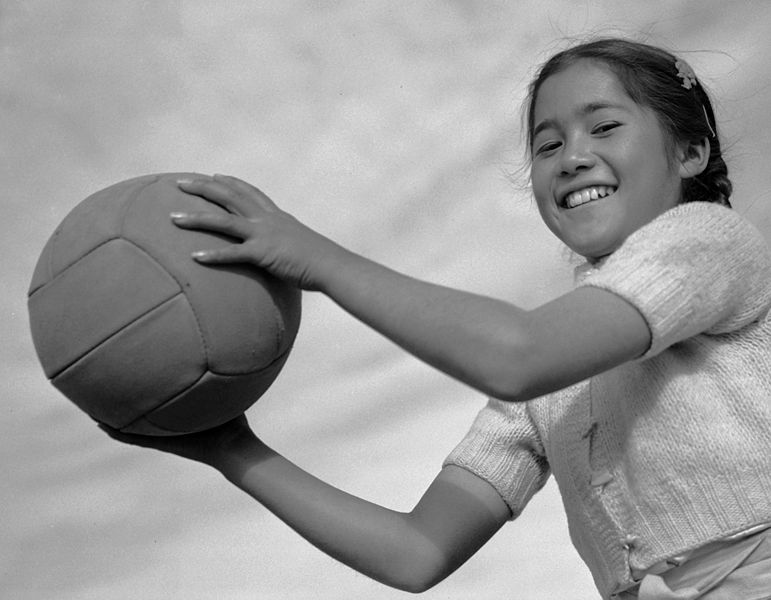
Figure 1 – “Manzanar Girl with Volley Ball, 1943,” Ansel Adams from the Library of Congress.

I’d like to make people aware of a very remarkable collection of photographs at the Library of Congress taken by Ansel Adams in 1943 of the American Citizens of Japanese descent, who were interned in the Manzanar Relocation Center. This work of which Figure 1 is a beautiful example represent a major departure for Ansel Adams from his traditional Monumental Landscape work, being instead intensely intimate portraits and scenes of camp life. It is strikingly interesting how over the last few years the diversity and breadth of Adam’s work is slowly becoming increasing apparent.

These works were originally published in 1944  by US Camera with text by Adams in a book entitled “Born Free and Equal.” and exhibited at the Museum of Modern Art in NYC.   The photographs were donated to the Library of Congress by Adams in 1966.

Ansel Adams’ photographs at Manzanar were the result of an invitation by his friend Ralph Merritt, who had recently been appointed camp director. It is significant that two other contemporary photographers documented Manzanar.  The first was Dorothea Lange, then a staff photographer for the War Relocation Authority.  Lange visited all eleven Japanese-American internment camps. The third photographer was internee Toyo Miyatake.  Miyatake had been a studio photographer in Los Angeles. His first photographs were taken with and improvised camera that he built with smuggled parts.  His activities were discovered, but Merritt allowed him to continue work and even to have his studio equipment shipped to the camp.  Initially he would set up the photograph, but only a camp guard was allowed to press and release the shutter.  This, of course, speaks volumes about the injustices being meted out to loyal American citizens at Manzanar.

In donating these beautiful images and important historical documentation to the Library of Congress Adams wrote:
“The purpose of my work was to show how these people, suffering under a great injustice, and loss of property, businesses and professions, had overcome the sense of defeat and dispair [sic] by building for themselves a vital community in an arid (but magnificent) environment…All in all, I think this Manzanar Collection is an important historical document, and I trust it can be put to good use.”