The Physics of Light Detection – Part 2

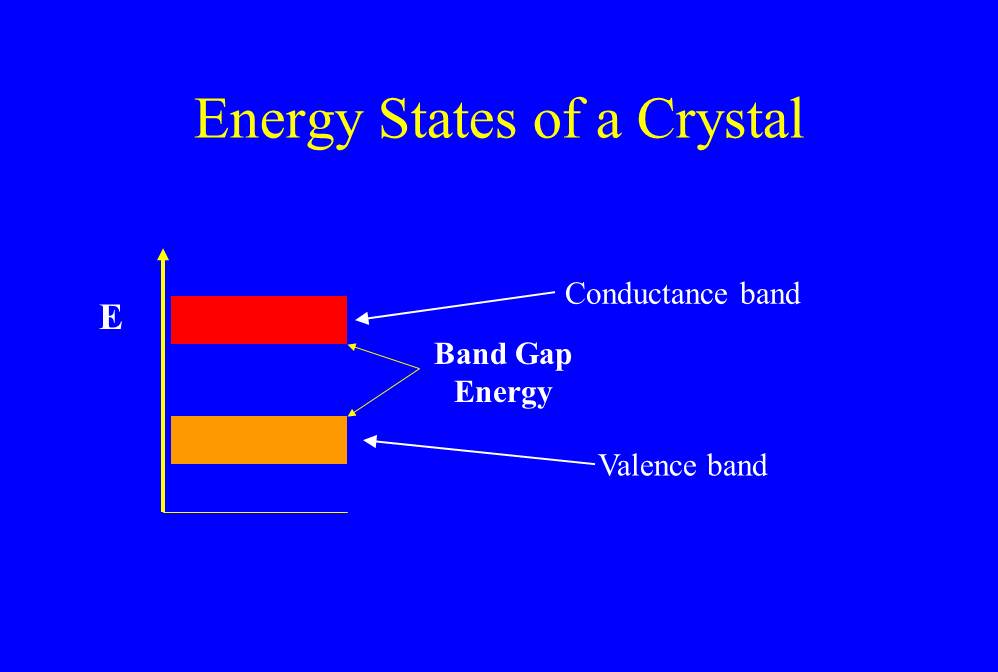
Figure 1 - Valence and conduction energy bands in a crystal

Figure 1 – Valence and conduction energy bands in a crystal (c) 2013 DE Wolf

How do we classify matter?  One of the ways, one that most of us are familiar with, is in terms of “the state of matter.”  Is it a solid, a liquid, or a gas?  If you take some ice cubes, a solid, and stick them inside a bottle they maintain their ice cube form.  They are unperturbed by the fact that they are in the bottle.  If you melt the ice cubes, they become water, a liquid, and take on the shape of the bottle, but remain confined by gravity to the bottom of the bottle.  If you vaporize the water into steam, a gas, the steam fills the entire bottle and conforms to its shape completely.  Actually there is a fourth state of matter to consider.  If you ionize the water by ripping off its valence electrons and maybe even some of the lower energy ones, it become a charged gas, referred to as a plasma.

At an atomic level, the atoms in a gas are largely oblivious of one another.  This is because they seldom come in contact with one another.  Their interactions, with say light, are single atom events and independent of what the other atoms are doing.  In a liquid the atoms start to interact with one another.  In a solid the interaction is complete.  The atoms form well defined structures called crystals.  The crystal now interacts with light as a unit.  As a result, we talk about the energy levels of the crystal, no longer of the individual atoms.

Because of this cooperative effect, the energy states start to blur out and become a continuum.  However, there is still an energy gap between the states of bound valence electrons, called the valence band [of energy levels], and the energies of liberated or free electrons, called the [conductance band].  I’ve illustrated this schematically in Figure 1.

(BTW Figure 1 gives you the opportunity to thumb your nose at your high school or physics college teacher, who always insisted that you label axes of a graph and marked you down if you didn’t.  The y axis is energy, but there is no x axis label.  This diagram is called a Jablonski diagram in physics.)

How does an electron gain the energy to escape from the valence band to the conductance band in a crystal.  It can be done with heat, or electrical energy, or with light.  A photon of light can be absorbed and give the electron enough energy to escape.

You can define three types of solid materials on the basis of how easy it is to liberate the valence electrons.  In conductors, typically metals, the band gap energy is so small that it occurs very easily at room temperature.  Many electrons go into the conductance band, and if you attach the conductor across the terminals of a battery a current readily develops.  In insulators, the band gap is huge and precious few electrons are in the conduction band.  The material does not conduct electrons.  Finally, there are in between materials, called semiconductors, which need a boast to get the valence electrons into conduction band.

One such boast, as we’ve already described, is light.  This kind of semiconductor/ light interaction is the basis of both analogue and digital photography.  As we will see, it explains how silver halide films work, how camera light meters work, and how digital camera sensors work.

In the next few technical blogs, I’d like to explore the inner workings of the silver halide film process.  Breaking it all down, we need to sequentially consider:

  • What is a silver halide?
  • What is a photographic emulsion?
  • How is the latent image formed?
  • How is the latent image developed?
  • How is the developed image fixed or prevented from further interaction with light?
The Physics of Light Detection – Part 1

Today, I’d like to begin a discussion of the physics behind light detection. By light detection I mean both how analogue films work and how digital camera sensors work. Surprisingly, the answers are closely related because both work as a result of semiconductor physics.

In discussing these topics, we are fundamentally talking about how light interacts with matter and we already know the answer. Light interacts with matter in complex, varied, and often beautiful ways. Consider a rainbow, which is the interaction of light with spherical water drops inside clouds. That is a process called refraction and spectral dispersion. Consider the mobius strip photographs in my “Manmade gallery.” Those spectacular colors are created by a process called optical birefringence.

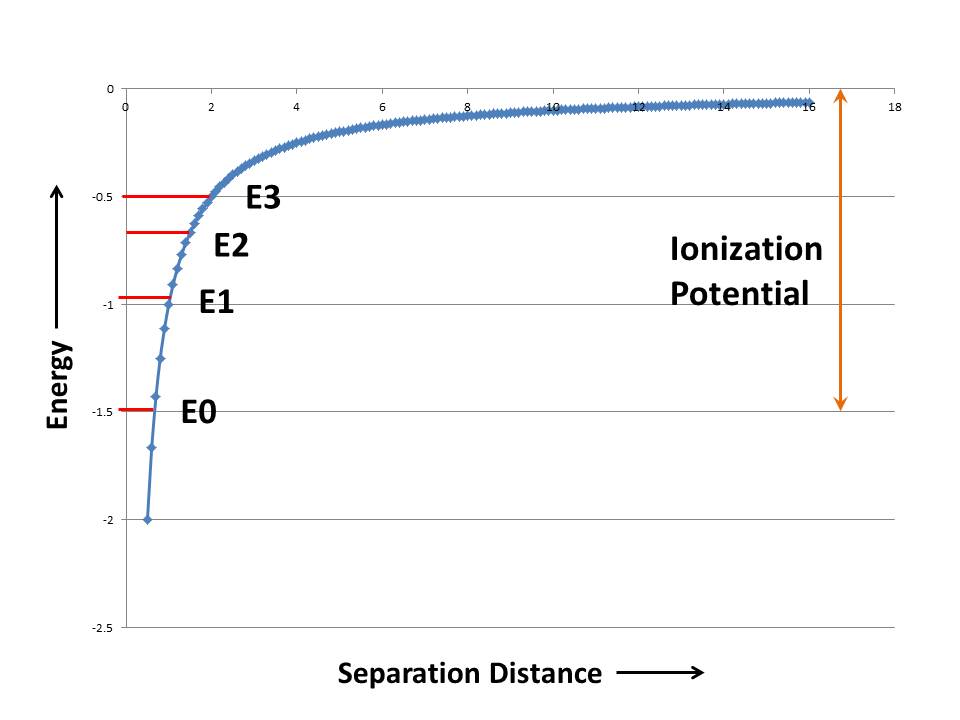
Figure 1 - The potential well or Curve of Binding Energy (c) DEWolf 2013

Figure 1 – The potential well or Curve of Binding Energy (c) DEWolf 2013

But let’s keep things reasonably simple here. We need to understand our subject qualitatively, not quantitatively, which means, yay, no equations!

OK, so we know that atoms are made up of protons, which are positive charges, and electrons, which are negative charges. Opposites attract. So given half a chance an electron will rush towards a proton. That’s how lightening works! Ka-boom!

Now let’s hold an electron some distance away from the proton. You will feel the force of attraction in your fingers. This is referred to as potential energy, because if you let go the electron will move very quickly towards the proton, that is there is the potential for motion, aka kinetic or motion energy. By convention, because of the attractive nature of the force, the energy is said to be negative. We can plot the energy as a function of the distance between the electron and proton. In general the electron will seek the lowest energy. That is, it will try to go to the bottom of the well. The bottom of the well here is at minus infinity, which is a very cozy place for our electron to hide out.

The well of Figure 1 is what the electron sees. An electron can only be at the bottom of the well if it has no kinetic energy. If it has kinetic energy it will be a bit higher in the well. Next, it turns out that the electron cannot have any energy value that it wants. Only very discrete and well defined levels exist. This statement about discrete states is the foundation of the science of quantum mechanics. While it may seem bizarre, it is never-the-less borne out by countless supporting experiments. It is on a very sound theoretical and experimental proof-of-the-pudding foundation.

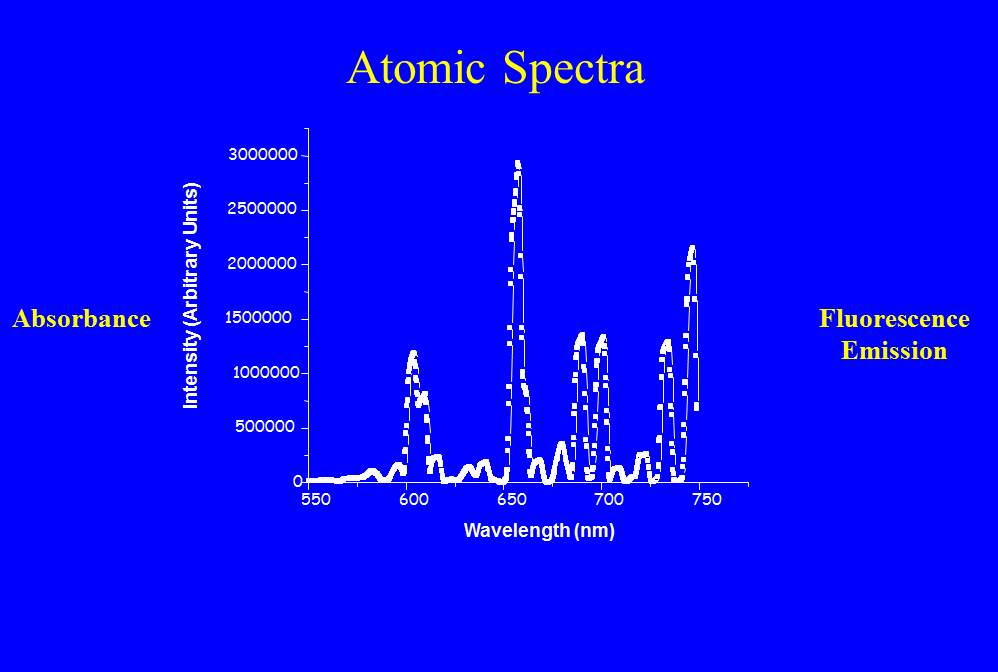
Figure 2 - Atomic spectrum of the plasma glow of a HeNe laser (c) 2013 DEWolf

Figure 2 – Atomic spectrum of the plasma glow of a HeNe laser (c) 2013 DEWolf

In Figure 1 I’ve shown some energy levels where the electron can reside. The electron can move between these states, but only if you give it more energy, because energy has to be conserved in physics. Where does that energy come from? One possibility is light. If the photon of light has exactly the right amount energy, is exactly the right color, it can be absorbed and elevate the electron to the next allowed energy level. You can also accomplish this by heating the system up, or bombarding it with a spray of electrons. Always a precise amount of energy is absorbed, called one quanta. Often the electron falls back to the previous state. To do so it has to emit light of the precise color again. Consider Figure 2, which shows the “plasma glow” of a Helium Neon laser. The plasma glow emission is caused by transitions between lots of states and is created by showering the gas with a beam of electrons. The emitted light is a set of very sharp discrete wavelengths.

The one last critical point is that if you give the electron more than a certain amount of energy, referred to as the ionization potential, it can escape the proton all together. It becomes a free electron!  I’ve shown the ionization potential (change in energy required to take the electron from it’s lowest energy level to the top of the binding curve) in orange.

In atoms that have more than one electron, the electrons sequentially fill up the energy levels.  Two electron cannot exist in the same state.  The term state is not quite the same as the term energy level.  But that doesn’t really matter for our discussion.  What is important is that the electron with the highest energy, the one that is nearest the top is the most active electron.  It is referred to as “the valence” electron and is most likely to become ionized and escape from the atom or, in fact, to interact with neighboring atoms.

The Bottom Line

The important points for our discussion of light detection in photography are:

  • electrons in atoms occupy specific energy levels
  • the most active electrons are those with the highest energy, referred to as valence electrons
  • light can cause electrons to move between energy levels
  • given sufficient energy an electron can be ionized and escape from the atom

The Cottingley Fairies

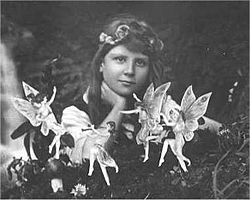
Figure 1 - The first of the five Cottingly Fairies photographs, 1917, from the Wikicommons and in the public domain in the US.

Figure 1 – The first of the five Cottingly Fairies photographs, 1917, from the Wikicommons and in the public domain in the US.

Well, here I am fresh from the season finale of “Downton Abbey,” and my thoughts are with the early twentieth century English countryside.  So what better story is there than the great photographic “fake before Photoshop” known as the “Cottingley Fairies.”  It is a wonderful story about how two young girls duped there elders for over sixty years.

In 1917 ten year old Frances Griffiths was staying with her cousin sixteen year old  Elsie Wright in the village of Cottingley in West Yorkshire.  There were stories that fairies lived beside the stream or “beck,” which was at the bottom of the garden.  Frances and Elsie borrowed Elsie’s father’s camera and went to prove the existence of the fairies by photographing them.

The girls produced two photographs in 1917 of themselves with the fairies.  Elsie’s father thought them pranks, but his wife was convinced that they were real.  The story took off, when in 1919 Elsie’s mother attended a meeting of the Theosophical Society about “Fairy Life” and she showed the photographs to the speaker, Polly Wright.  They were subsequently displayed at the annual meeting of the society and came to the attention of Edward Gardner, who was a leading member of the society.   Gardner had the negatives examined by photography expert Harold Snelling, who declared them genuine.  Perhaps, needless-to-say, Snelling supplied prints for sale at Gardner’s lectures.

The story might have rested there, were it not for the fact that they came to the attention of Sherlock Holmes author and spiritualist Sir Arthur Conan Doyle, who was writing an article on fairies for the Christmas Issue of “The Strand.”   Doyle was initially skeptical and had the photographs examined by experts at Kodak, who again declared them to show no signs of fakery, but pointed out that they could not certify that they were authentic images of fairies. Experts from Ilford , on the other hand saw definite signs of faking.  The photographs were published along with Doyle’s article.

In 1920, Doyle contracted Gardner to confirm or disprove the story of the photographs.  In Gardner’s words:

“I went off, to Cottingley again, taking the two cameras and plates from London, and met the family and explained to the two girls the simple working of the cameras, giving one each to keep. The cameras were loaded, and my final advice was that they need go up to the glen only on fine days as they had been accustomed to do before and tice the fairies, as they called their way of attracting them, and see what they could get. I suggested only the most obvious and easy precautions about lighting and distance, for I knew it was essential they should feel free and unhampered and have no burden of responsibility. If nothing came of it all, I told them, they were not to mind a bit.”

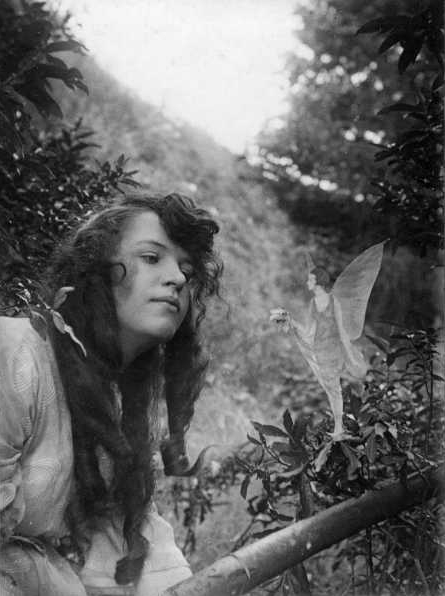
Figure 4 - The fourth photograph of the Cottingley fairies, Fairy Offering Posy of Harebells to Elsie, 1920.  From the Wikicommons and in the public domain in the US.

Figure 4 – The fourth photograph of the Cottingley fairies, Fairy Offering Posy of Harebells to Elsie, 1920. From the Wikicommons and in the public domain in the US.

Of course, the girls insisted that the fairies would not show themselves in the presence of anyone else, and here’s a surprise, they captured three more fairy pictures (or is it pixie pics?).  Thus, began the long and controversial saga of the Cottingley Fairies.

It was not until 1983 that the cousins admitted in an article published in the magazine “The Unexplained” that the photographs had been faked, although both maintained that they really had seen fairies. Elsie had copied illustrations of fairies from a popular children’s book of the time, “Princess Mary’s Gift Book (1914).” They said they had then cut out the cardboard figures and supported them with hatpins, disposing of their props in the beck once the photograph had been taken.  It was an amazing prank, perpetrated on the gullible for sixty-six years.  Frances died in 1986, and Elsie in 1988.

If we look at the pictures today, we are surprised by their crudity and the fact that they could fool people for so long.  It is not so much a study in photographic fakery as it is a lesson in wishful thinking.  Who would not hope that Tinkerbell is real?  The remaining question is what would Lord Grantham, Lady Cora, and Lady Mary think?

Linda Butler and the right touch of sensitivity

Yesterday’s talk about exploitation of native peoples in photography, especially the Chinese raft poler, got me thinking about how this can be done right.  Right here means with a true touch of sensitivity towards the intrinsic nobility of the subject.  So immediately comes to mind, one of my favorite photographers, Linda Butler.

In 2005 I went to see an exhibit of Ms. Butler’s work at the Peabody and Essex Museum in Salem, Massachusetts.  This focused on her work Yangtze Remembered: The River Beneath the Lake.  The exhibit, and its companion book, documents village life in the Three Gorges region of China, before it was completely inundated to provide hydroelectric power for modern China.  As such it is a tale of two China’s: the old and timeless China and the new modern China.

So consider, and contrast to the picture discussed yesterday, Ms. Butler’s “River Fisherman, Shennong Stream, 2000,” which shows a proud fisherman, with his metculously folded net and the basket in which he stores fish,  at the end of a day’s work.  Then look at “Carpenter’s House, Beishi 2001,” showing a carpenter sitting in front of the house that he built by hand for himself.  He built all the furniture himself as well.  The same carpenter is shown two years later in front of the ruins of his house, cleared to make way for the dam.  There is a sign on the hill above the house, top right, that reads 175 m, which is the eventual water level of the man-made lake.  Six months after Linda Butler took this picture the land was under fifteen feet of water, and the indefatigable carpenter had moved a half mile away and was constructing a new home for his family.  Those two photographs taken together define the meaning of  human pride and perseverance.

I cannot talk about Linda Butler’s work without showing my personal favorite of her photographs.  This is “Pig on a Motorcycle, Niehe, 2001.”  A farmer is taking his pig to market and has stopped at a local restaurant.  The pig sleeps “happily” on the back of the motorcycle.  He is in a stupor because he has been fed fermented mash.

Yangtze Remembered: The River Beneath the Lake is just part of Ms. Butler wonderful opus.  She is, perhaps, best known for her work “Inner Light, The Shaker Legacy.”  I highly recommend exploring her website and, in particular, her extraordinary photographs of the aftermath of hurricane Katrina, “Meditations on an Altered World, 2005-6,” and “Death of a Farm, Georgetown, KY, 1986.”  These series are haunting in their lack of people, but just the same the human presence is so palpable.

I love portfolios like those of Linda Butler.  There is so much to be learned from them.  There is the technical, of course, but most significantly there is the lesson of how to tell an intensely compelling story through the power of the image,


More controversy from the fashion industry

Well, the 2013 Sports Illustrated Swimsuit issue is out and, stirred up by a posting by Dodai Stewart on Jezebel, there is new controversy flying about the web and news media concerning the fashion industry .  Well there’s a mighty surprise.  The goal of Sports Illustrated is to tillilate its clientele and to stir up controversy.  Controversy equals kaching, kaching.

Men being titillated by sexy women is nothing new, nor is the saprophytic exploitation of the models.  The question that Stewart raises is one of culture.  SI is taking you to the seven continents, profiling its models against what it sees as characteristic of the cultural location.  Stewart objects to the use of “natives” as “props.”  She tells us that “people are not props.”  To be accurate I looked up the meaning of “prop” on the Free Online Dictionary.  This is definition 2: “a theatrical property.”  The word property applied to people is problematic, but I would argue that props are inanimate and that while people cannot be props they can certainly be background.  It is done all of the time and quite innocuously.

Let’s take a look at some of the pictures that Ms. Stewart is objecting to.  First we have Emily Didonato in the Namibian desert with a spear carrying tribesman, whose rear end is even more exposed than Ms. Didonato’s.  The photograph  by Kayt Jones is truly wonderfully constructed in terms of composition.  The background is out of focus so as not to steal emphasis.  The balance between sand and sky is perfect.  The tribesman is just sufficiently out of focus that there’s no question about what is foreground and what is background.  The juxtaposition of the spears is beautifully done.  And, of course,  Ms. Didonato is is gorgeous and exotic herself.  I see all of that and then I get a kind of lump in my stomach that says to me: “Ooh, how embarrassing!”  What is the man thinking about this strange creature in his world.  He is scantily clad because he’s hot, she because someone’s selling sex (not really bathing suits).  And as Ms. Stewart points out, no matter how much he was paid, does he really understand that his near naked behind is now in glossy print worldwide?

Second let’s consider Derek Kettela’s photograph taken in Guilin, Guangxi Province, China of model Emily V reposing on a raft as she is poled about by a “native” with serious dental issues and complete with “coolie hat.”  Yikes!  I mean somebody please help me.  Why don’t we just bring back the “black-face minstrel shows?”  A white women relaxing as a “native” poles her along or across the river is such a throwback to an imperial age.  I know a lot of modern Chinese, who would go ballistic over this photograph.  It is not the image that they have of their country – even with all its problems.  Yet SI has chosen this image as representative of China.

The issue here is not the right of an industry to take the photographs that they want, exploit whom they want, and to make as much money as they want.  The issue here is the subliminal messages that come across, that the photographs convey.  I am not a supporter of the concept that one must always speak or photograph politically correctly.  To me the question of what you are thinking, what’s in your heart, is much more important than what comes out of your mouth.  However, when your pictures are going out to 3.5 million subscribers, 23 million readers (of whom over 18 million are men BTW) there is a very serious issue of social responsibility.

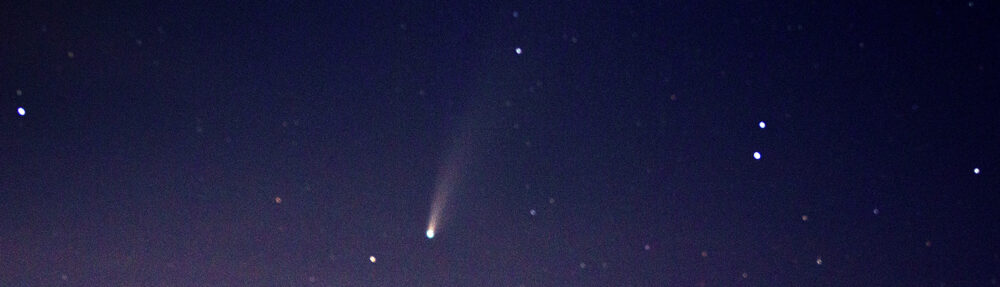
Meteor over Chelyabinsk

My colleague and I were oohing and ahing over the videos of a meteor crashing to Earth in the Chelyabinsk region of the Russian Urals last Friday.  We are told that this is a once in a century event; so certainly worthy of being the “iconic image of the week.”  People will likely still be watching it a hundred years from now..

It got me thinking of meteors and photographs of meteors and meteorites.  Of course, my first thought was a blog on “The first photograph of a meteor.”   I was able to learn that the first meteor photograph was taken on a glass plate negative by Ladislaus Weinek director of the Klementinum observatory in Prague on Nov. 27, 1885However, I was unable to find a copy of this image on the web.

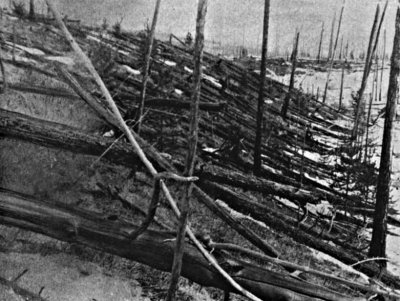
Figure 1 - Tunkuska tree fall, 1908, from the Wikicommons and in the public domain.

Figure 1 – Tunkuska tree fall, 1908, from the Wikicommons and in the public domain.

So I combed the cobwebs of my memory for thoughts and visions of meteors.  The first is obvious.  On June 30, 1908 near the  Podkamennaya Tunguska River in what is now Krasnoyarsk Krai, Russia there was a great meteor fall and blast generally referred to as the “Tunguska event.”  It is now believed that the meteoroid actually exploded in the air rather than striking the ground.  It probably had the force of a ten to fifteen megatons of TNT and  knocked down an estimated 80 million trees over an area covering 2,150 square kilometers (830 sq mi).  That is a circular diameter of 52km.  While there were no “robotic eyes” or surveillance cameras to photograph the event, there are many amazing post blast photographs of the tree fall made by subsequent expeditions.

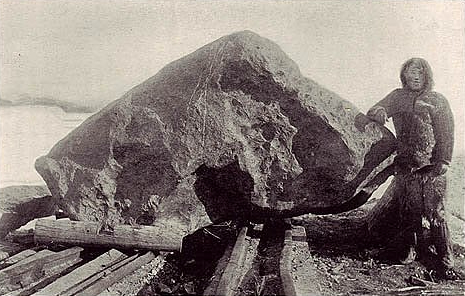
Figure 2 - Robert Peary and tthe Ahnighito Meteorite, 1897, from the Wikicommons and in the public domain.

Figure 2 – Robert Peary and tthe Ahnighito Meteorite, 1897, from the Wikicommons and in the public domain.

My strongest memory association with meteorites is as a child being taken by my father to see the great meteorite collection at the Hayden Planetarium in New York City.  In 1818, British arctic explorer Sir John Ross was astonished to find that a tribe of Eskimos along Greenland’s western coast possessed spear heads of iron.  The Eskimos smartly refused to reveal the source saying only that they came from a mountain of iron, in their language saviksoah.  A number of subsequent explorers tried, but failed to find the saviksoah.

By the the turn of the twentieth century Eskimos were actively trading for iron and no longer had the same need for their magic source.  An Eskimo named Tallakoteah told explorer Robert Peary that there were three irons: “the woman,” “the dog,” and “the tent. The legend was that there once had been a sewing woman and her dog, who lived together in a tent in the sky.  An evil spirit hurled them to the Earth and they landed as great lumps of iron.  Tallakoteah led Peary to these stones and, true to imperialist form, he decided to cart them away to New York. This was a Herculean task which ultimately took him several attempts and years.  As a child I remember looking with amazement at the tent, or Ahnighito, (also referred to as the Cape York meteorite) where Peary brought it for permanent exhibit at the Hayden Planetarium at the American Museum of Natural History in New York City.

There are many classic images of Peary collecting this colossal stone in Greenland, transporting it to New York, and then carting it up from the peer to the American Museum.  Figure 2 is a example of these images.  For a complete telling of the saga of meteorite collection and Peary’s efforts see Douglas Preston’s book, “Dinosaurs in the Attic.”

The blizzard of 2013 – Part 2 Old Burial Ground Sudbury, Massachusetts

Figure 1 - The Old Burial Ground, Sudbury, MA (c) DEWolf 2013

Figure 1 – The Old Burial Ground, Sudbury, MA (c) DEWolf 2013

Sudbury, Massachusetts is one of the great historic Revolutionary War villages in Middlesex County, Massachusetts.  It’s Town Center is marked by the Old Burial Ground and the Congregational and Unitarian Churches.  The blizzard of 2013 dropped over two feet of snow in Sudbury and left the historic town center “picture perfect.

On the 19th of April in 1775 the church bells rang to summon the Sudbury Minutemen to march to neighboring Concord, Massachusetts to defend the gunpowder stores.  This commemorated evry year on the anniversary, when the church bells still ring out to summon the Sudbury Minutemen reenactors.   It is an eight mile march to Concord and on that day in 1775 Sudbury’s militia arrived too late for the initial engagement with British troops on the Old North Bridge.

Figure 2 - Grave markers in the snow, Old Burial Ground, Sudbury, MA (c) DEWolf 2013

Figure 2 – Grave markers in the snow, Old Burial Ground, Sudbury, MA
(c) DEWolf 2013

The old graveyards of New England seem to accentuate our connection with the past.  They remind us of the building of America and our obligation to the ideals of these early Americans.  The denizens of Sudbury’s Old Burial Ground are mostly from the eighteenth and early nineteenth centuries.  Across Concord road from the Old Burial Ground is a newer cemetery and the side of the road is marked by crypts containing the remains of prominent Sudbury citizens of the nineteenth century.  A second nineteenth century graveyard is to be found about a mile South of the town center.

GraveMarkerinSnowSm

Figure 3 – Gravemarker in the Snow, Old Burial Ground, Sudbury, MA (c) DEWolf 2013

A problem in the early days, and up until the nineteenth century, was that the ground became too hard in winter for burials.  The deceased were stored in undertakers’ sheds until spring when the ground softened. In many Massachusetts towns, such as Concord, here The  Burial Ground overlooks Monument Street, may be found built on glacial drumlins because this was the ground first caught the sun and melted first in spring.  Such drumlins are a key geological feature of eastern Massachusetts, Sudbury has recently moved the old undertaker’s storage shed to the burial ground and restored it.

Figure 4 - Undertaker's Shed, Old Burial Ground, Sudbury, MA (c) DEWolf 2013

Figure 4 – Undertaker’s Shed, Old Burial Ground, Sudbury, MA (c) DEWolf 2013

Next to Sudbury’s Old Burial Ground may be found the stonework town pound, where escaped domestic animals were placed until they could be reclaimed by their owners.  The town has rebuilt the gate to this pen, and its authentic coloration provided a marvelous contrast to the stark, pristine whiteness of the snow.

Figure 5 - The gate to the Old Town Pound, Sudbury, Massachusetts, (c) DEWolf 2013.

Figure 5 – The gate to the Old Town Pound, Sudbury, Massachusetts, (c) DEWolf 2013.

When one thinks of New England one thinks of snow.  So there was something right about the blizzard of 2013 in the way that it set off the countryside.  Still there was something quite reassuring to retreating from the cold to a warm cup of coffee.


The blizzard of 2013 – Part 1 Geometrics

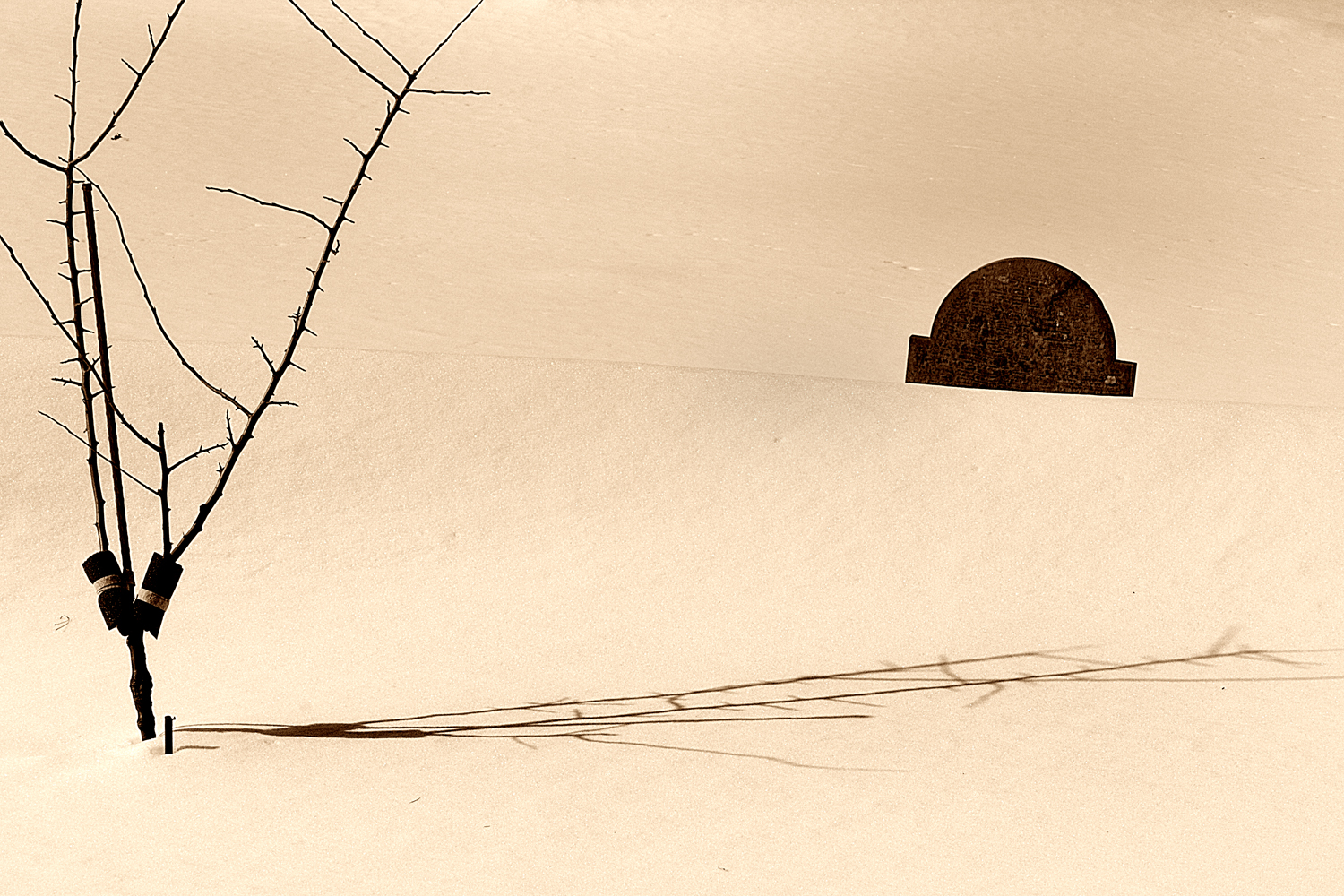
Figure 1 - Slats and Snow, 2013 (c) DEWolf

Figure 1 – Slats and Snow, 2013 (c) DEWolf

The great blizzard of 2013 is fading into memory now.  Within 48 hrs the pristine snow, in Boston at least, had acquired that yucky, sloppy, urban blackness.  Fortunately, I got out early on the first two days and did some photography.  Hopefully, you will find some of it interesting.

Snow is curious and nontrivial to photograph.  I still have a lot to learn and have yet to truly achieve tone on tone.  Rather I wind up defaulting to high contrast in the image, that is letting it range from black to white.  I experimented with plus and minus on the exposure.  In general you wind up with double peaked histograms.  If you photograph the snow alone the dynamic range is tight and the images can become very high contrasty and abstract, if you equalize the histogram.

Today I’d like to focus on what I call geometrics.  The first (Figure 1) is an image of hand-railing slats projecting deep shadows on a pristine alabaster and flat snow bed, whicj is the deck of a front porch.  You tend to think of snow as cold, which would suggest blue/green toning as preferred, but here I chose a deep sepia tone and like the effect.

Figure 2 - Windblown peak on a field of snow, 2013 (c) DEWolf

Figure 2 – Windblown peaks on a field of snow, 2013 (c) DEWolf

The second (Figure 2) is an image of wind blown peaks on a field of snow.  Strong wind defines a blizzard and the effects can be abstract and very pleasing.  I’m really drawn to this kind of subject matter – nature’s abstractions.  Here a subtle and colder blue/green toning seemed best.

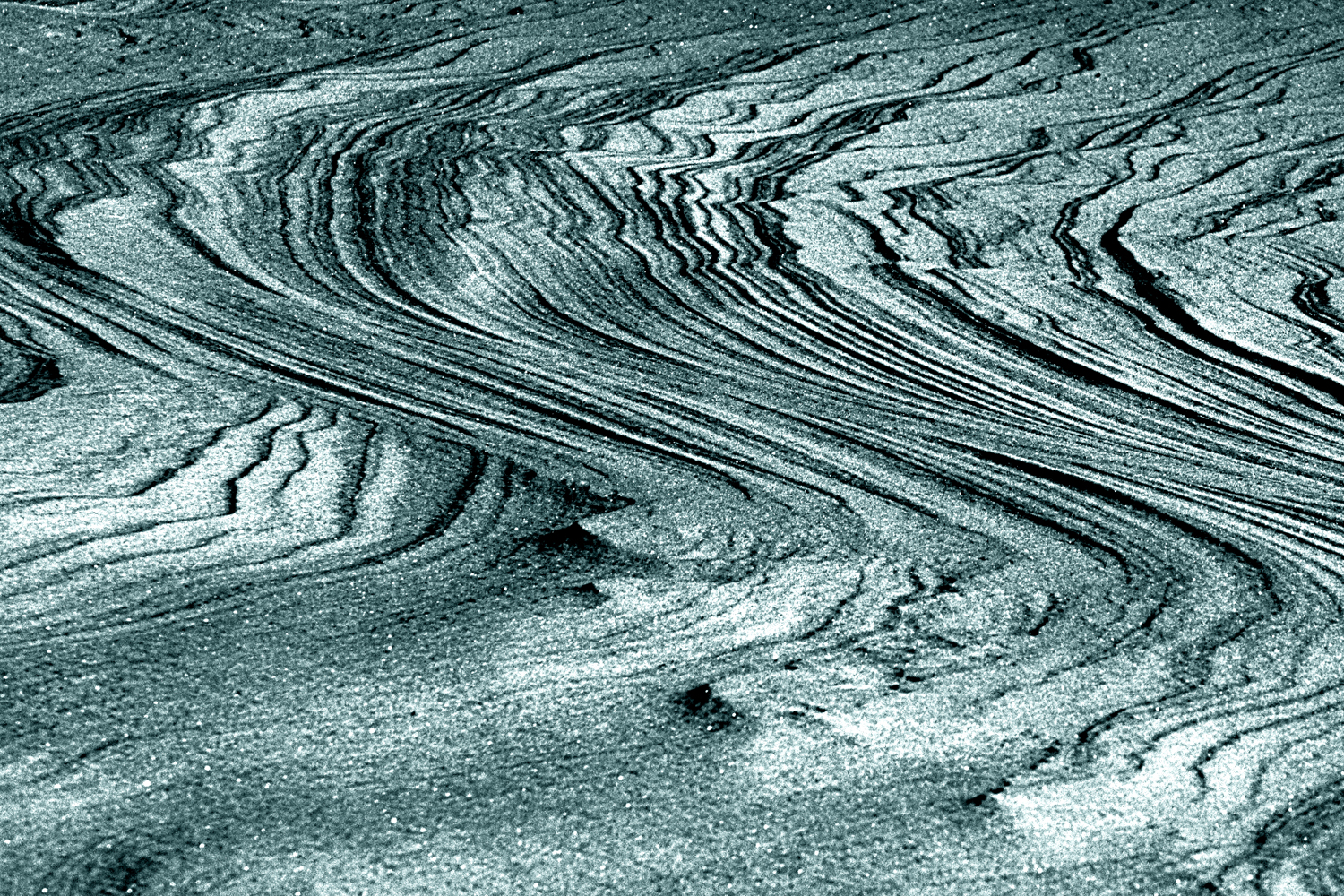
Figure 3 - Windblown ripples in the snow, 2013 (c) DEWolf

Figure 3 – Windblown ripples in the snow, 2013 (c) DEWolf

Another, wind effect are the beautiful undulating waves seen in Figure 3.  Again a cold blue/green tone seemed most appropriate.  The image required a lot of cropping.  The effect seems to me very abstract and mysterious.  Snow would not be what first comes to my mind if asked what I am looking at.  It might as easily be sand or even the surface of a quart of iced cream.

A serious case of Ansel Adams envy

Our discussion of large format analogue photography vs. digital photography had led me to muse about the clinical pathology that may be referred to as “Ansel Adams envy.”  All photographers suffer from this to some extent.  And I suspect that this includes practitioners of large format photography.

When I first encountered the photographs of Adams, I was amazed, envied, their wonderful sharpness – the fineness of the detail.  This, of course, was the unobtainable ideal, unless I was prepared to purchase and lug an 8″ x 10″ or larger view camera around the Sierras.  The Sierras part is required and, as I was a New Yorker then and didn’t drive, seriously outside my reach.  What to do about that?

Well the answer is not much.  The sharpness of film is on the order of 50 to 10 lp/mm and the best lenses 100 to 200 lp/mm.  But an 8″ x 10″ contact print is going to be five or six times sharper than an enlargement from a 35 mm camera.  It’s simple physics and geometry.

Then I started to realize that while sharpness was one factor, the other was dynamic range as well as the artistry that Adams used as a master print maker.  So I studied all of Adams’ books on photography, learning as much as I could about the zone system  The problem then was two fold.  First, 35 mm photography does not easily lend itself to the kind of one off negative development that the zone system requires.  Second, it was all very costly.  Photographic chemicals and paper were quite expensive and the arduous, albeit quite worthwhile, experimenting that is required of fine analogue printing burned through a lot of photographic paper and chemicals.  Some of my best work in this analogue world still hang on my walls, and I continue to love them.

Being environmentally aware, and who isn’t who secretively believes that he should be wandering around the Sierra’s in quest of natures beauty, I was starting to get concerned about the ill effects of my darkroom materials.  I was toning with selenium, leaving me with both that and nasty silver waste to deal with and I was using massive amounts of water to achieve the ideal “archival quality.”

It is in this regard that digital photography has been liberating for me.  Using raw 14 to 16 bit file format and good metering the zone system can be applied frame by frame.   ISO can also be changed frame by frame.  You can even switch between color and black and white frame by frame.  You start off with a linear look up table and then can mimic the response of any film, real or imagined that you like.  You can dodge and burn at a level of detail that would be maddening in analogue photography.

So I am free at last to be Ansel Adams.  One problem remains.  Only Ansel Adams was Ansel Adams and he was a photographic genius!