The magic of daguerreotypes

All of this talk about daguerreotypes may leave you wondering about what the big deal is.  So I just thought that I should pause for a few moments and reflect on the sheer magic of these little silvered copper plates.  They are truly magical, or at least as magical as things get in this age of science and high technology.  And, of course, part of their mystery resides in the way that they, as the original photographic medium, blend science, art, and seeming sorcery.

If you haven’t already done so, you really should experience them first hand.  They are still “affordable” at antique stores.  A lot of what are labeled to be daguerreotypes are, in fact, tin types.  There’s a simple way to recognize them.  The image seems to hang in space.  You cannot quite place it as being on the surface.  If you move your head slowly over a daguerreotype, you will see that just when you view it head on, it disappears, replaced by a shiny silver mirror like reflection.  Indeed, in the day of daguerreotypes special boxes were constructed for viewing them.

Many of the people who made daguerreotypes were truly artists.  As a result many of these images are beautifully and delicately hand-colored.  The cases are special in and of themselves.  These, often referred to as being made of gutta percha, a natural latex product, are in fact mislabeled.  While manufactured in the nineteenth century they are created of the world’s first true thermoplastic.
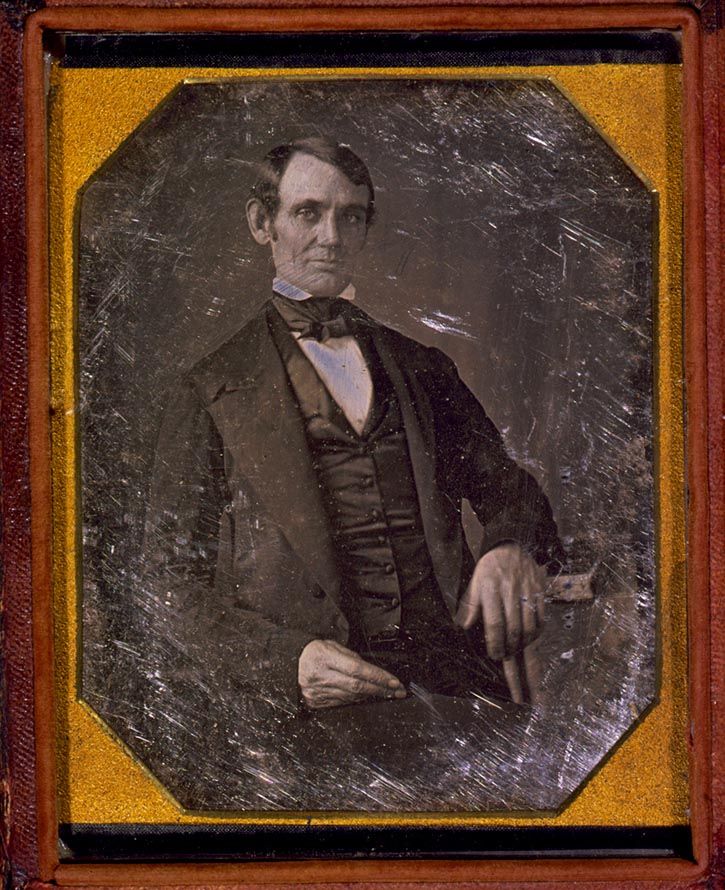
Figure 1 – Daguerreotype of Abraham Lincoln in 1846 attributed to Nicholas H. Shepherd.  In the LOC and in the  public domain.

As I have said before, part of the charm is that captured in that ethereal daguerreotype image is a person from the mid nineteenth century.  Often these are famous people, whom you never expected to see in a photograph.  But more often, they are just everyday people, now long gone.  There are even post mortem images, where the photographer was called upon to capture a last memory of a loved one.

I have categorized today’s blog both as “Reviews and Critiques”  and “Personal Photographic Wanderings.”  This is because viewing a daguerreotype is a highly intimate and personal experience.  You have to experience them for yourself.  They can affect you in so many different ways.

And finally, I know that many of you, including myself, have flocked or plan to flock to see Daniel Day-Lewis, as Lincoln, in Steven Spielberg’s new movie by that name.  So if you have wondered what Lincoln actually looked like, I offer you the image of Figure 1, a daguerreotype taken in 1846 by the great American daguerreotypist Nicholas H. Shepherd.

The Airy disk of an airplane

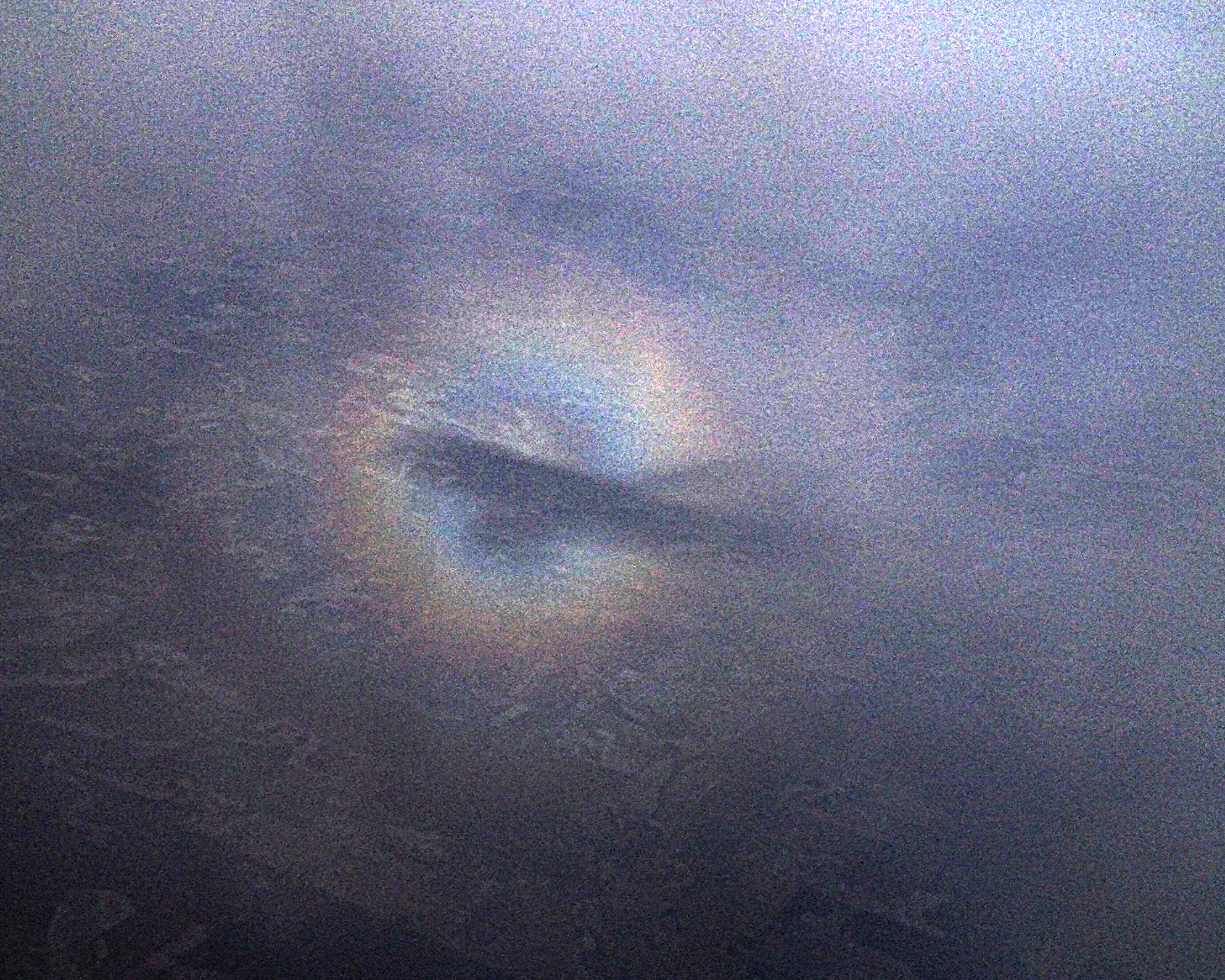
Figure 1 – Airy disk of an airplane projected on the distant clouds

In our discussion of camera resolution, we described how a point source appears, not as a point, but as an Airy disk in the camera.This phenomenon is, in fact, fairly ubiquitous.  An interesting variation is to see the Airy disk projected by the sun illuminating an airplane and projected onto the clouds below.  I am not sure that I fully understand the mechanism here.  But I thought

Figure 2 – Airy disk of an airplane with shadow of plane projected on closer clouds

that I would show some examples that we took while flying into Minneapolis/Saint Paul for a recent experimetal trip to the Mayo Clinic in Rochester, MN.  Figure 1 shows the disk itself, a bright central region and a ring progressively blue to red.  In some cases you can see a second ring.  Also note that the central peak is fairly weak, presumably because we are looking at a dark hole rather than a bright spot.  I have also noted that, when the clouds get close, you often see the shadow of the plane centered in the ring (see Figure 2).

So I put it out for readers’ comments on the exact physical mechanism at work here.  Judging by the angles involved and the order of the colors it is pretty clearly a diffraction phenomenon and not a water droplet or ice crystal phenomenon like rainbows and solar halos.

Whether or not you are interested in the physics, keep an eye out for this next time you fly.  The can be very dramatic and cool. In the meantime, I am going to do some furtehr research and see if I can come up with a more complete explanation.

A Thanksgiving hike in the Massachusetts wetlands

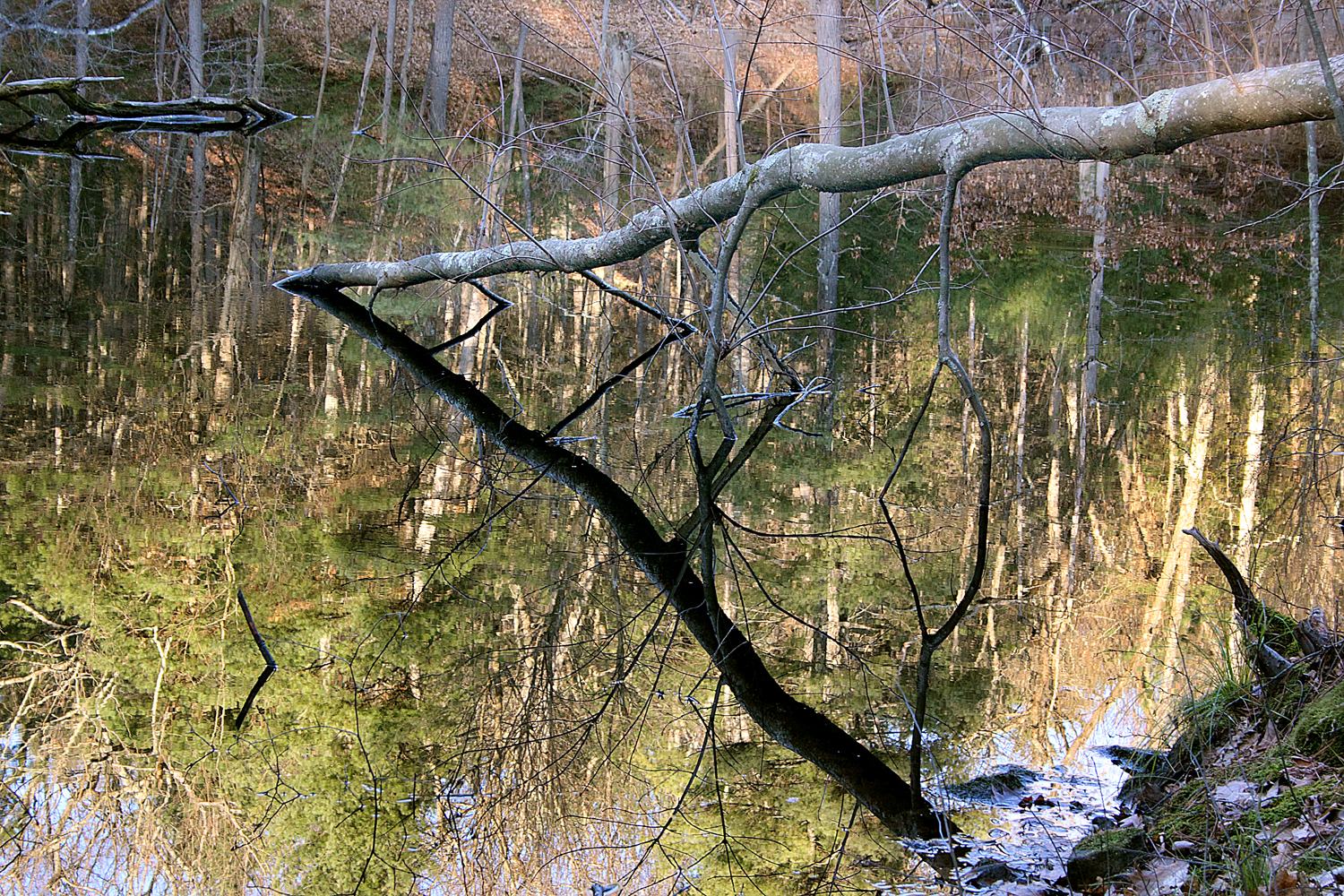
Figure 1 – Broken tree in Pond

The weather on Thanksgiving this year was “Picture Perfect” in Massachusetts – high forties, clear, and crisp.  We took the time to explore the late fall wetlands in Lincoln.  The Massachusetts landscape is dominated by glacial topography: drumlins and kettle ponds.

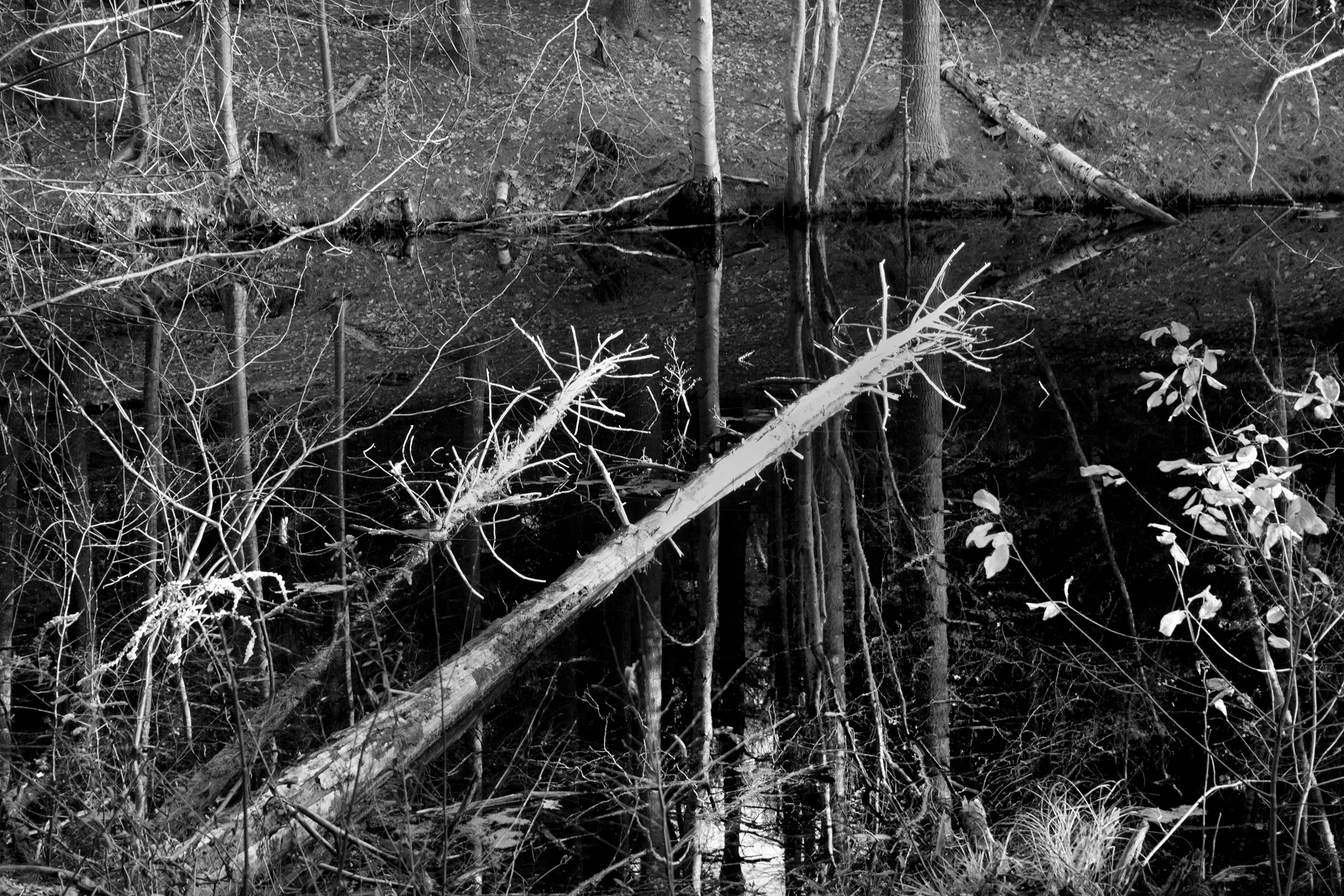
Figure 2 – Fallen trees in pond

The autumn has lingered, with the color persisting into late November.  Even now there are a few trees, mostly oaks, showing leaves.  This combines with jet black and highly reflective ponds, powder blue skies, and lichen coated bark to project delicate pastel shades wherever you look.  The after effects of hurricane Sandy are twisted, snapped, and fallen trees limbs.

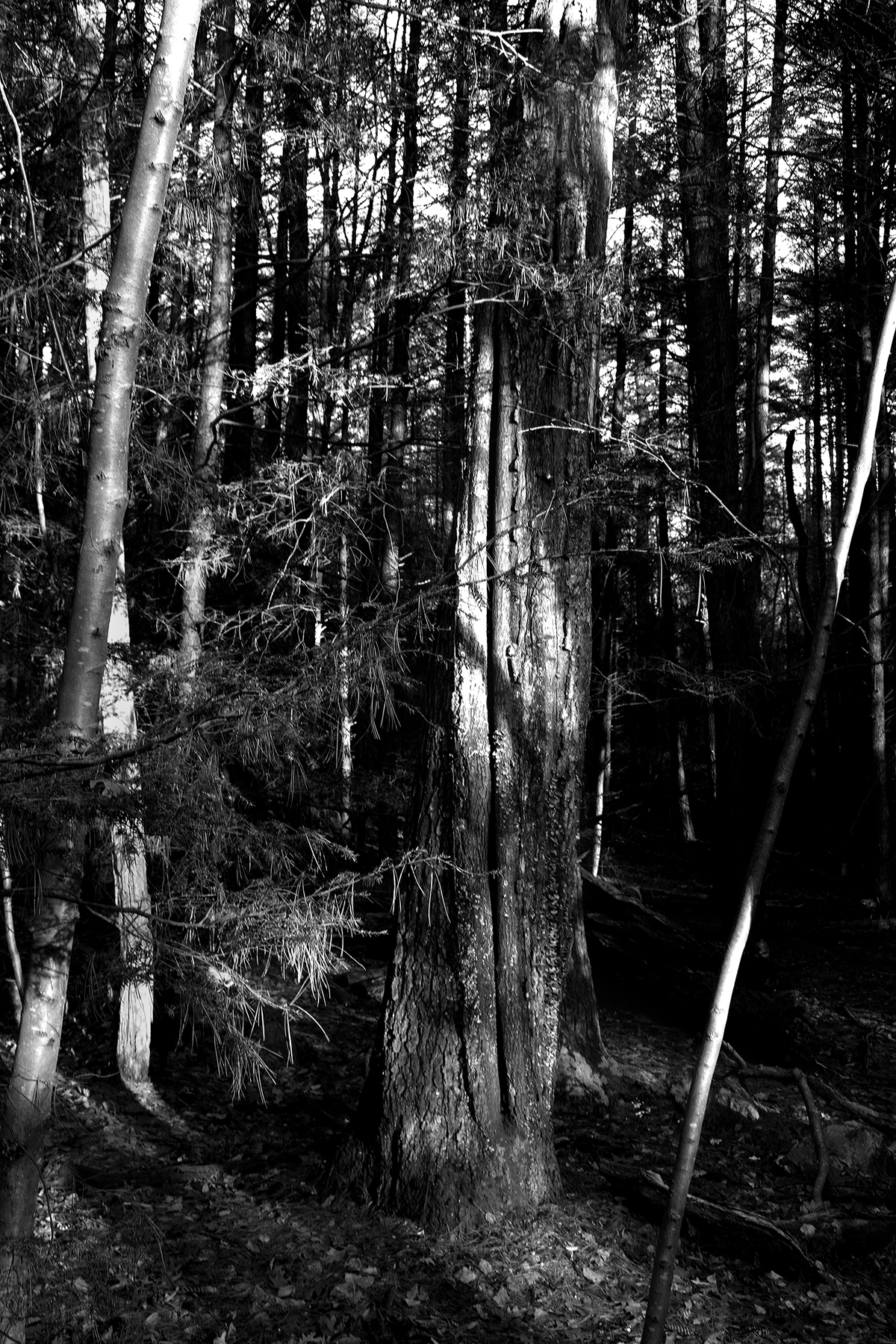
Figure 3 – Tree lit by November sun

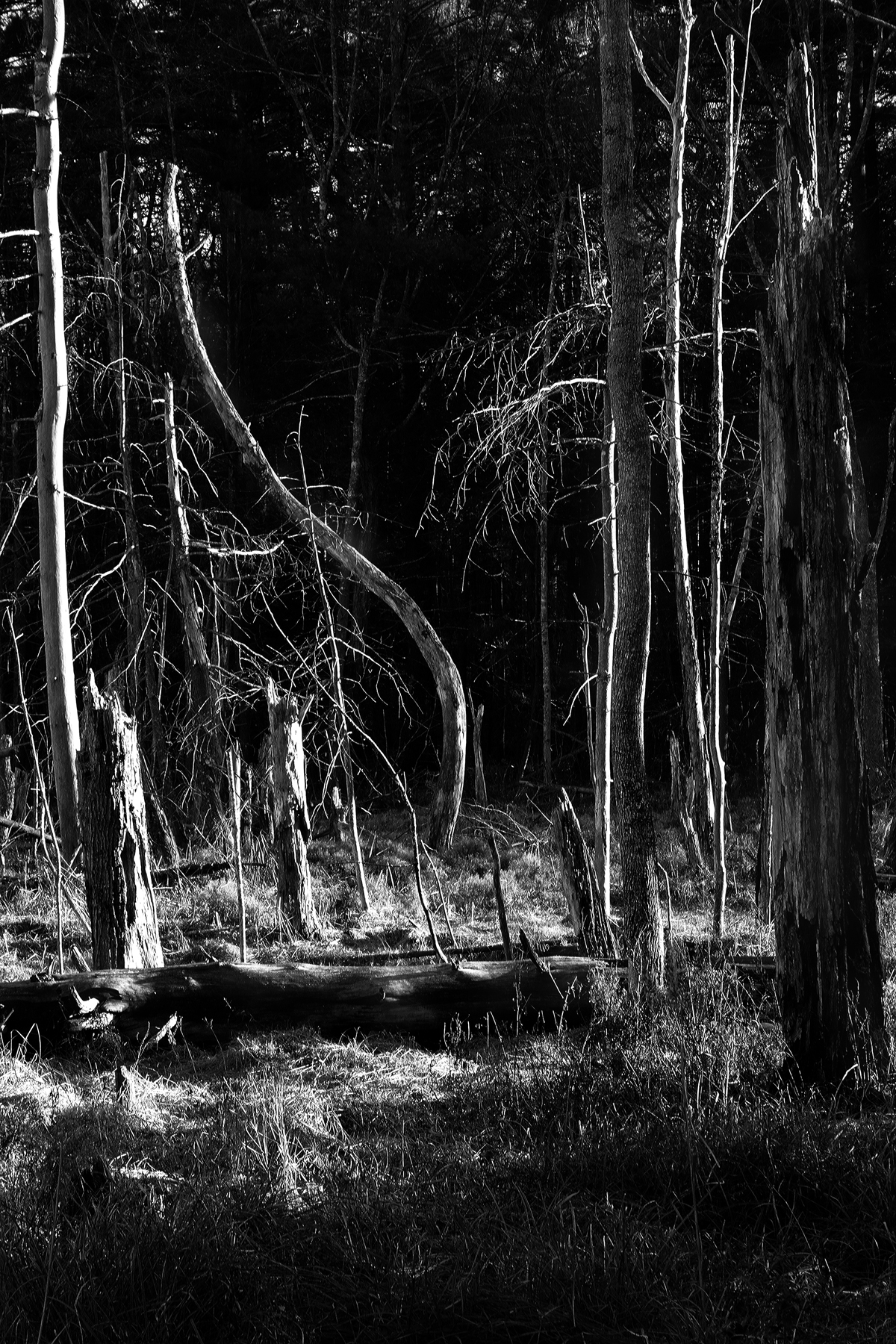
We emerged at one point into a massive sunlit meadow, now used for community farming, then followed a ridge line back into the woods only to find a marsh with strangely twisted trees lit gloriously by the late afternoon sunshine.  Such places always remind me of a famous, now known to be inaccurate, mural at the American Museum of Natural History, showing the then imagine Jurassic Swamp with giant brontosaurus grazing on lush vegetation.

It was a glorious afternoon and I took at least one photograph that I was happy with.

Figure 4 – Sunlit marsh


Yellow Journalism – image use and abuse*

We have talked a lot about the power of images and how, in the wrong hands, they can be abused.  And isn’t everybody just about sick of the current election cycle and all of the misinformation and out of context imagery?  The latest is the Romney ad purporting to show President Obama “bowing” to Chairman Hu of China (I’m not going to perpetrate that here, but do check out the video clips by the Fact Checker at the Washington Post).

The point is that this kind of manipulation, beside, as it is meant to, diverting us from the real issues, is pandemic in our sound-bite, screen-flash world.  Which is not to say that it hasn’t been around for a long time or that it wasn’t just as insidious in quieter and “more reflective?” times.

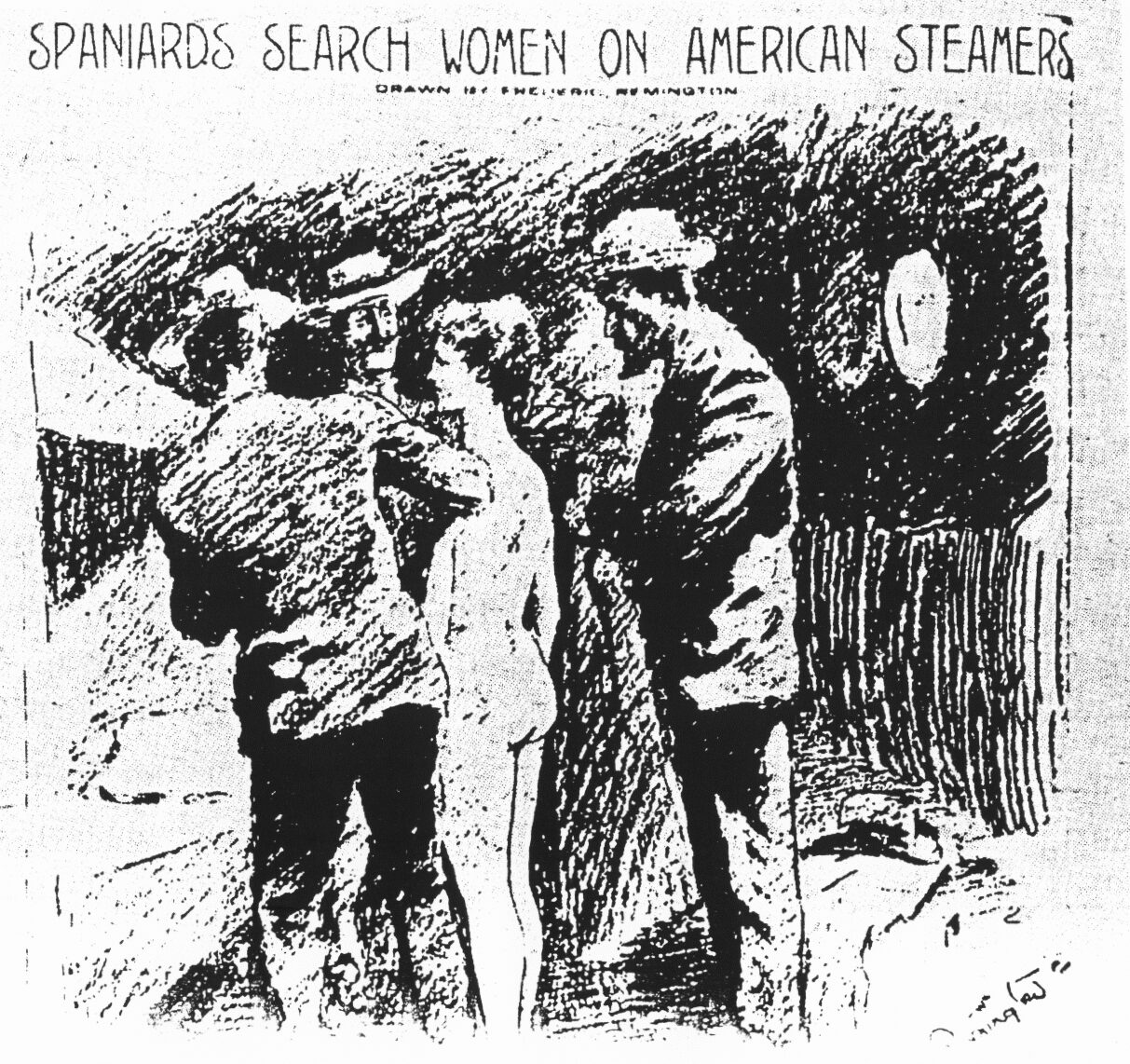
Figure 1 – Frederick Remington’s famous illustration in the New York Journal

So I was musing the other day about the great iconic image of yellow journalism (see Figure 1) of a woman being strip searched by leering Spanish officials on the American ship Olivette in Havana harbor in 1897.  There is some controversy now about the role played by yellow journalism in the instigation of the Spanish American War.  That aside, this picture by Frederick Reemington was published as an illustration to an article by journalist Richard Harding Davis Does our Flag Shield Women?,” in William Randolph Hearst’s  New York Journal on  Feb. 12, 1897. Reemington had left Cuba  weeks before the incident occured.

Not surprisingly the circulation of the New York Journal soared, and,  as a result of the article, public furor frothed to hydrophobic proportions.  The United States Congress demanded an explanation from the Spanish.  The truth, needless-to-say, was left
behind.  The truth was that three Cuban women had been searched, but that these searches were carried out by matrons. 

An enraged Davis exposed this truth in a letter to Joseph Pulitzer’s New York World saying:

“For the benefit of people with unruly imaginations, of whom there seem to be a larger proportion in this country than I had supposed, I will state again that the search of these women was conducted by women and not by men, as I was reported to have said, and as I did not say in my original report of the incident.”

In the end, the New York Journal and Hearst were forced to publish a retraction.  But lesson learned?  Of course not!

*For background see “War and Response, a Spanish American War Centennial,” and Evan Thomas’ “The War Lovers, Roosevelt, Lodge, Hearst, and the Rush to Empire, 1898,” Little Brown, New Yor, 2010.

Picturing hurricane Sandy

It feels impossible to blog on without acknowledging the terrible effects of hurricane Sandy.  It would be like Nero fiddling while Rome burned.  There are people living in the cold and dark without food, or water, or means of getting to work.

At first, it all seems impersonal and abstract.   And then the images start to come in.  Today these are as often little video clips as they are still pictures.  At first they seem unreal and impossible to process.  Then, as reality sets in, they evoke empathy.  Finally our minds sort through the barrage of images and our collective consciousness coalesces around as set of iconic images.  This is where we are now. The iconic is emerging.

If you think about it, all of the major historical events of our lives are crystalized in our minds around iconic images.  Consider Alfred Eisenstaedt’s VJ Day photograph of a sailor kissing a nurse (see also Chris Wilkins’ blog) or John John Kennedy’s famous salute at his father’s funeral or all the nightmare images from 9/11.

Today, of course, the immediacy of images and the speed with which they barrage us is intense.  What remains most important is that we do not allow them to be abstracting.  They involve real people, often suffering people, that could be us.  The positive role of photography is its ability to rally collective conscience and empathy.  The fact that we can still look at WPA pictures from the depression, or even pictures from the American Civil War and still feel the pain of those people is a testimony to the power of the image.

Photographing in low light

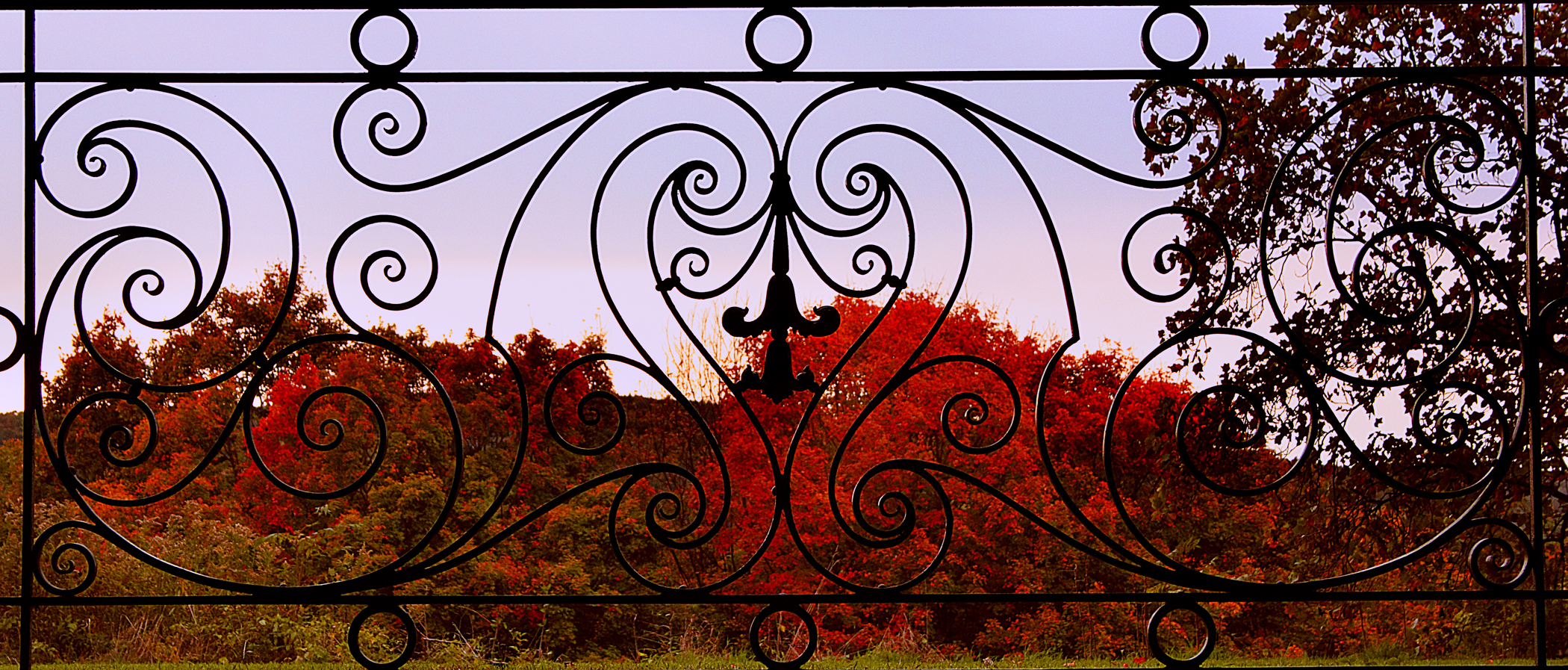
Figure 1 – Gate framing the fall colors at the Vanderbilt Mansion at Hyde Park, NY

There is no better time to vacation in New England than October as the fall colors peak. This was my plan, and successfully executed. It has been a pretty good fall, except that because of the lack of summer rain the maples have failed to exhibit stunning reds. This past Thursday, camera in hand, we visited Chesterwood, the summer home and studio of sculptor Daniel Chester French, most famous for his Minuteman Memorial on the Concord Bridge, in Concord, MA, and his colossal Lincoln Memorial in Washington, DC. On Friday, we visited architect Phillip Johnson’s Glass House in New Canaan, CT, and then on Saturday the Roosevelt and Vanderbilt historic sites in Hyde Park, NY.

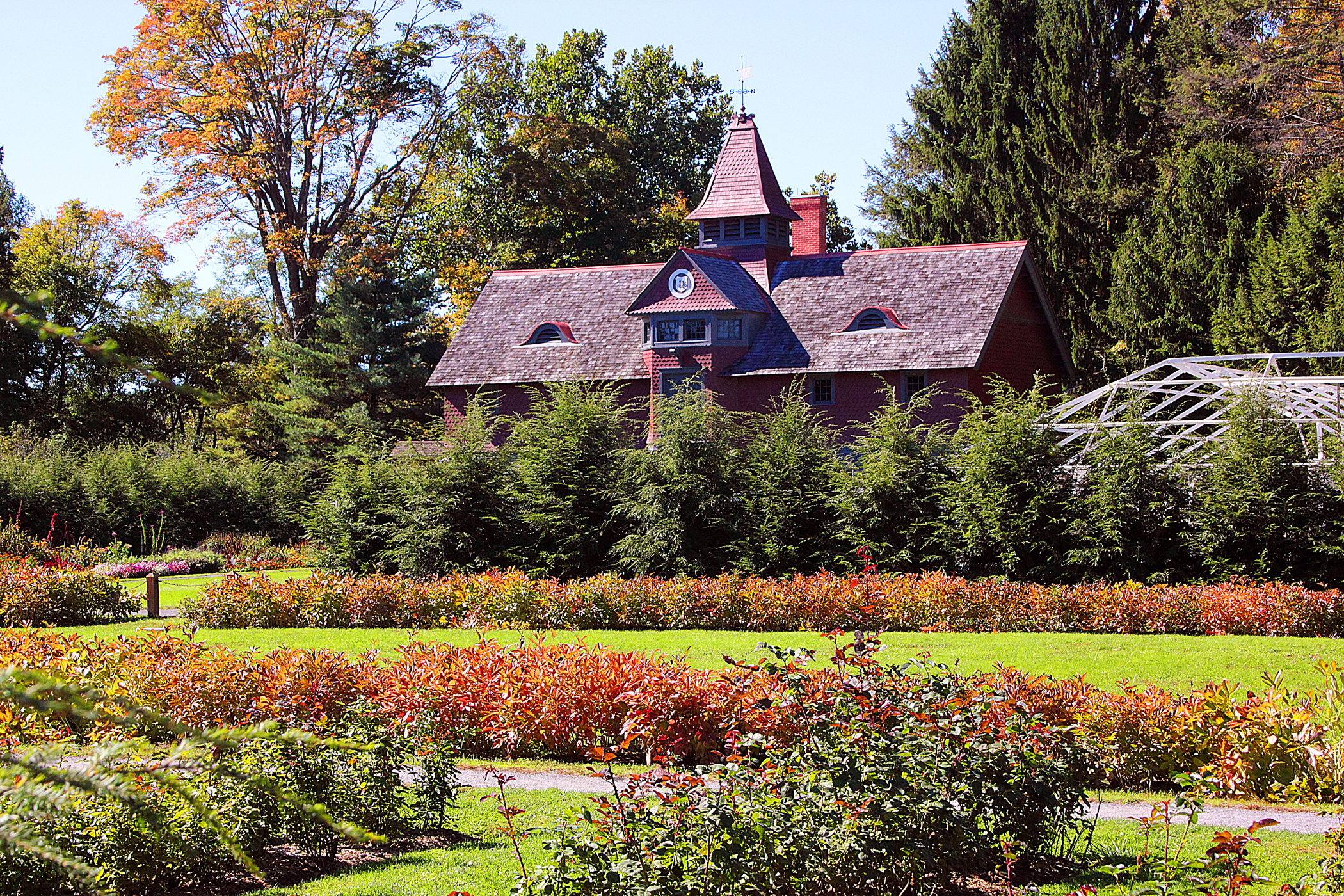
Figure 2 – Stables and rose garden at the Franklin Roosevelt National Histor site at Hyde Park, NY

I took some images that I am really happy with at the Glass House. Unfortunately, I cannot show these here. This is because the site’s photography policy allows photographing for personal use and not for publication (like putting it here) or sale.

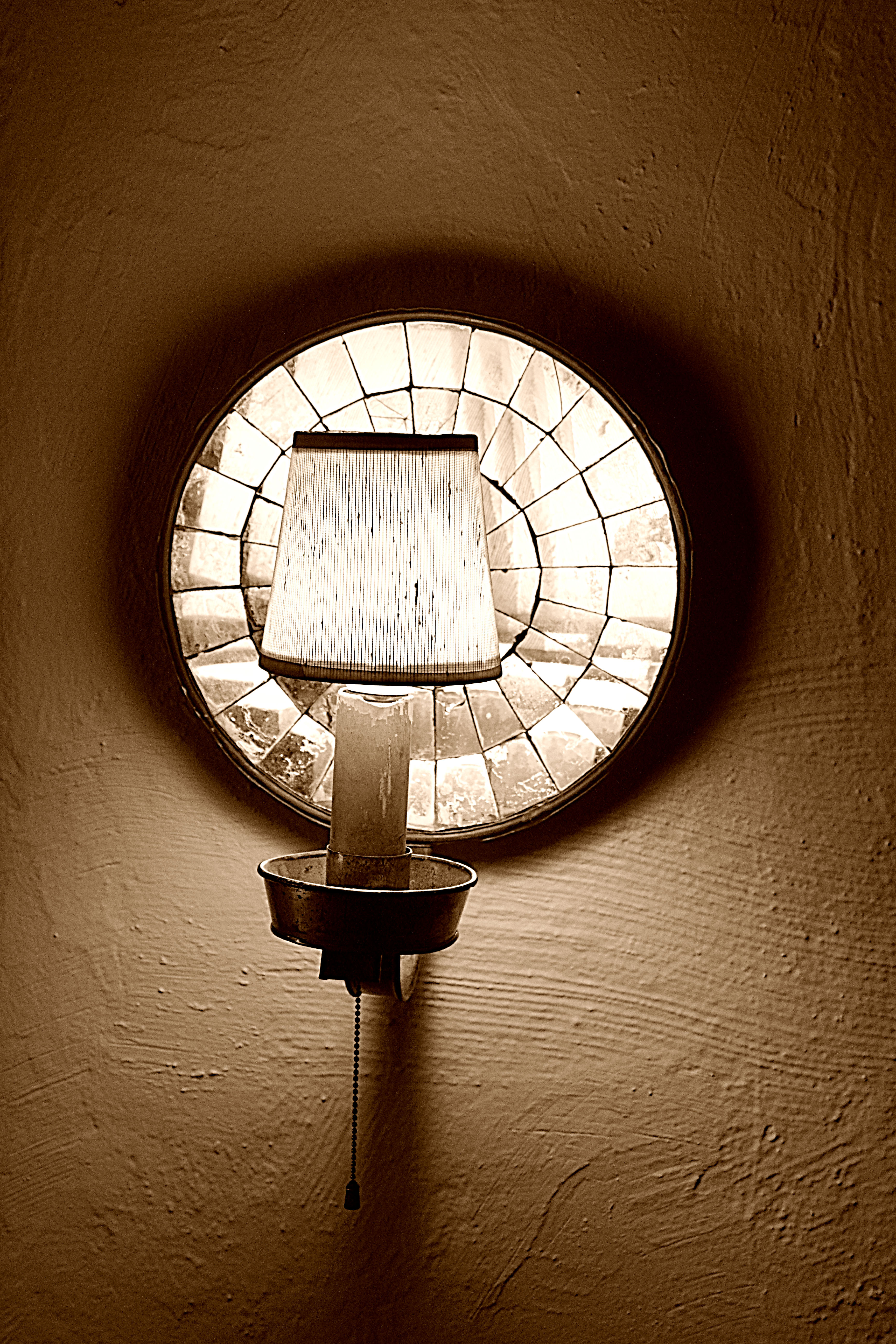
Figure 3 – Wall lamp Vallkill National Historic site.

The good news is that the National Historic sites, run by the United States Parks Service, now allow photography, as long as you don’t use flash, and they don’t specify private use only. I don’t know whether this is an admission that everyone now carries a cell phone, making it impossible to prevent pictures being taken or whether it is a tilt to a more democratic egalitarian sense of these objects belonging to the people; so let the people photograph them. In any event, the effect is that photographic life is good!

The bad news is that they’ve turned off the lights to protect artifacts from the damaging effects of light. So the whole affair becomes an exercise in how to take photographs in the dark. Oh yes, did I mention no tripods allowed? And if you lean against the wrong wall or door to steady your camera you might set off an alarm.

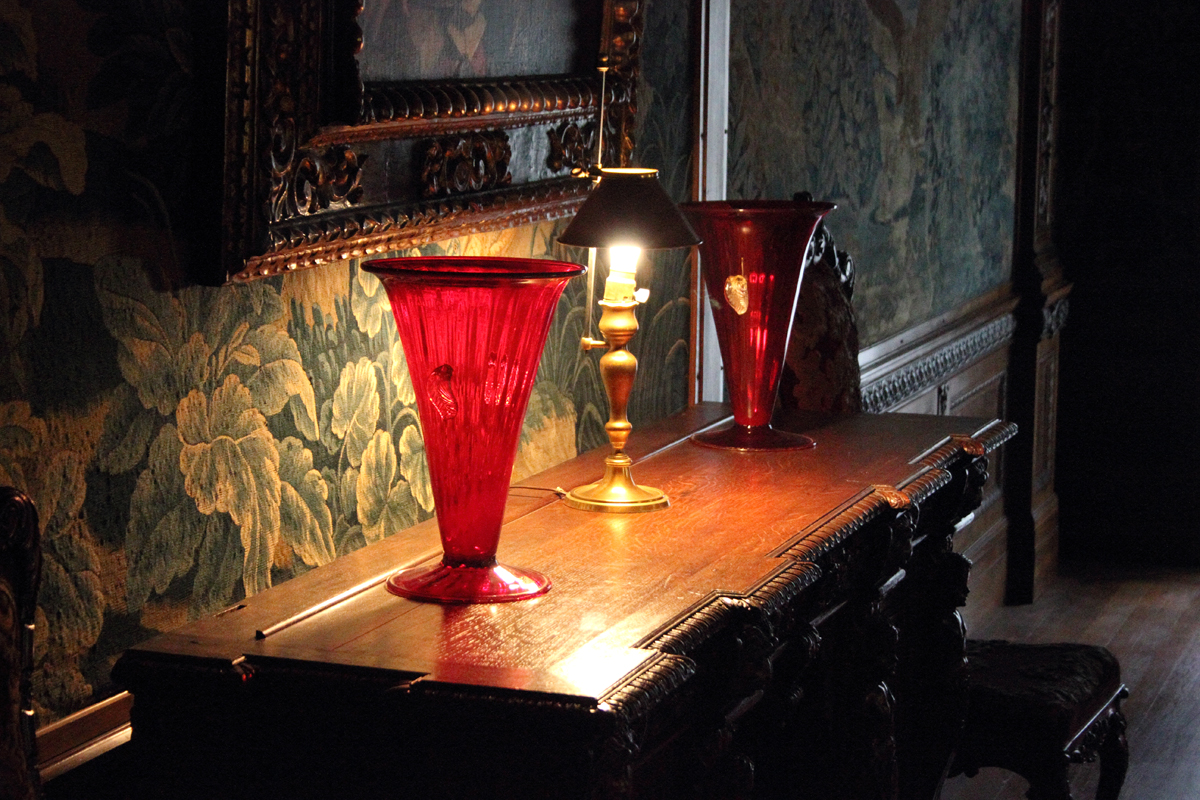
Figure 4 – Red vases on bureau at the Vanderbilt Mansion National Historic site at Hyde Park, NY

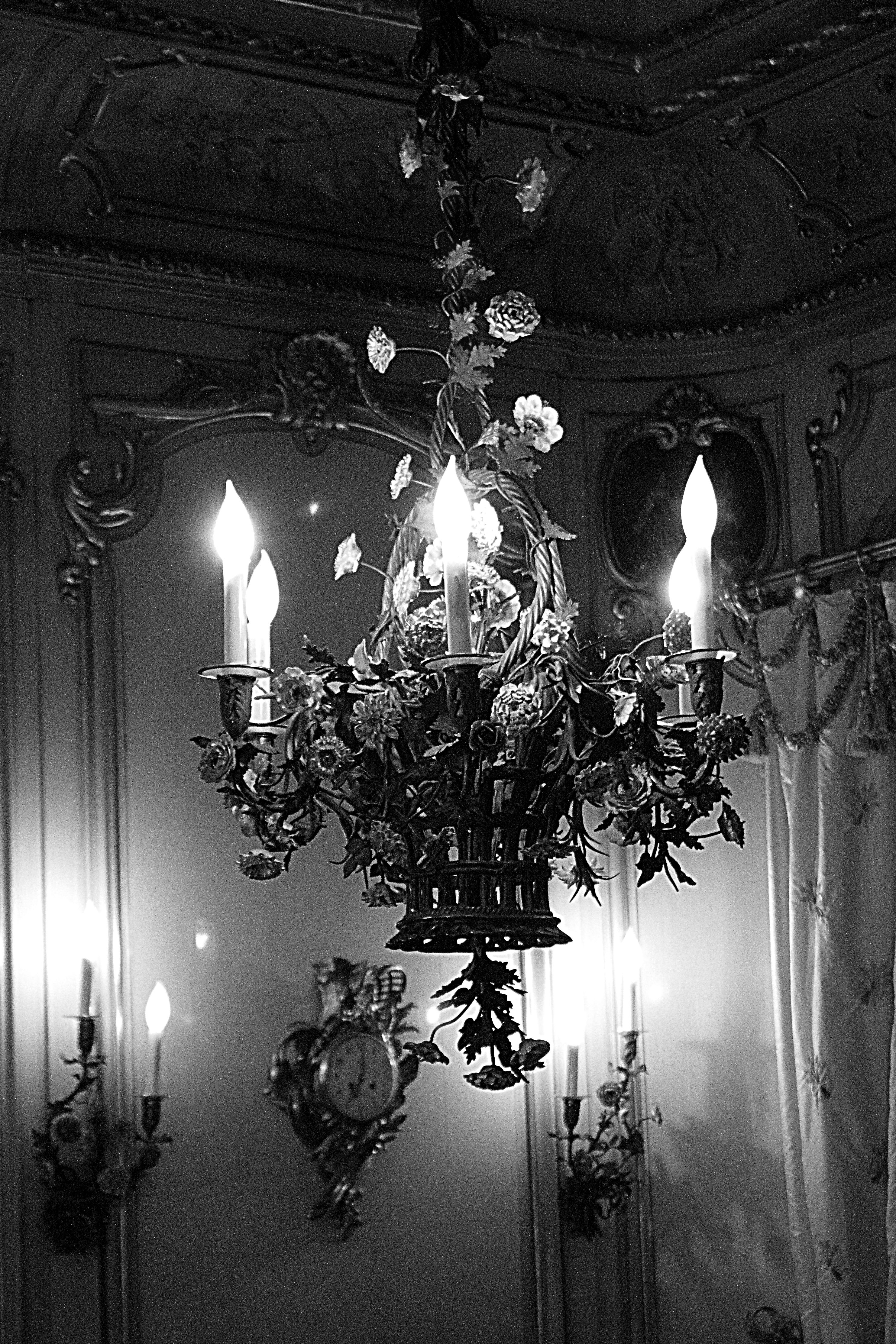
I suddenly found myself obsessed with photographing chandeliers and candelabras. This is all fine until you realize that you are photographing, well, light fixtures! Still, you can get some very pleasing range of light images, and it is challenging to strike the dynamic range just right so that you get both shades of shadow at the low end and shades of white at the high end. There is nothing more annoying, like fingernails on a blackboard, than a screaming white, seeming to burn a hole in your picture.

Figure 5 – Chandelier Vanderbilt National Historic site at Hyde Park, NY

Another point that I have learned is that these modern digital SLRs really do enable shooting at ISOs as high as 6400 without introducing too much graininess (sometimes). This really helps you to overcome defocusing caused by hand shake.  However, you can pretty clearly see this graininess when you blow up these pictures (here) to full size.

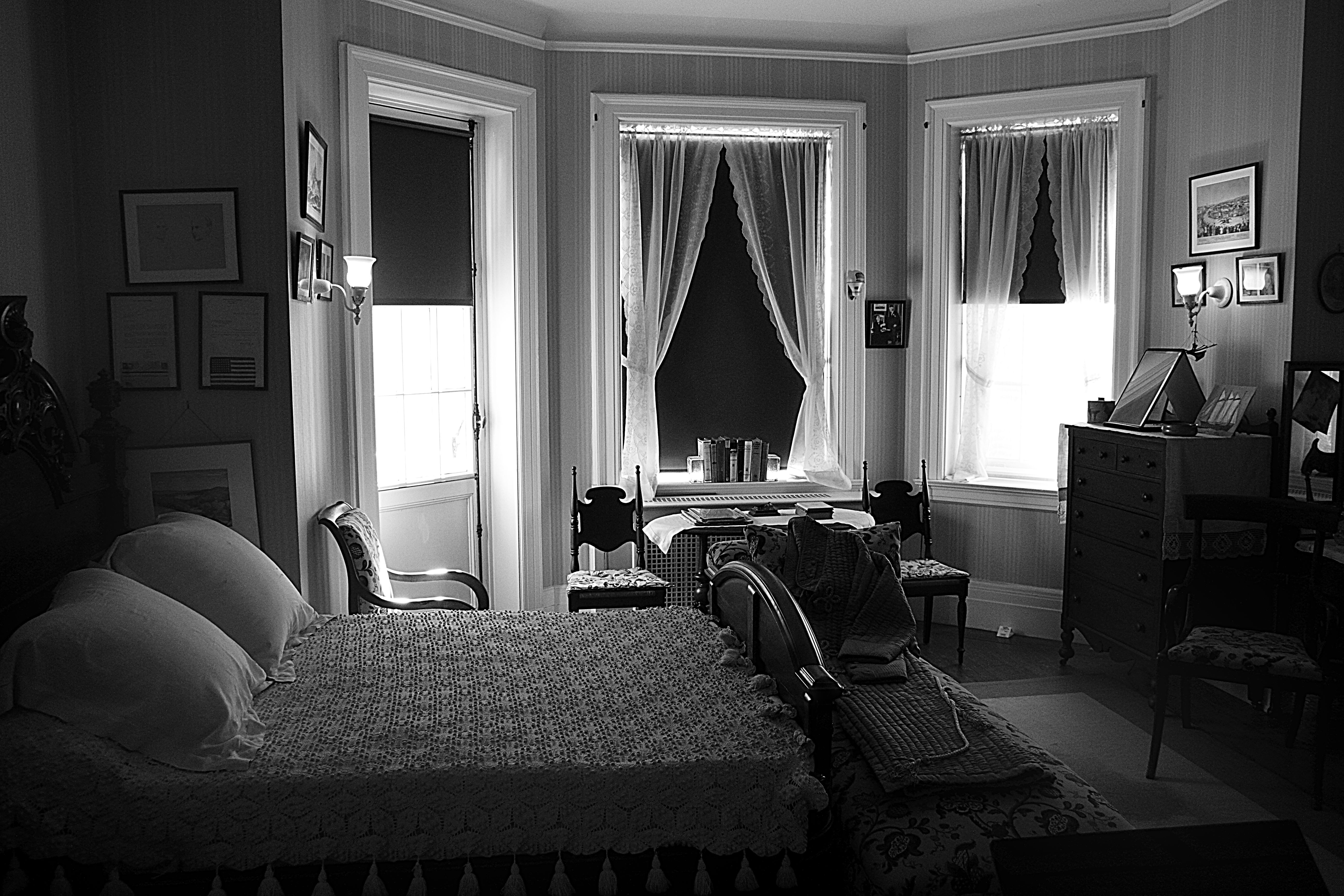
Figure 6 – FDR’s bedroom Hyde Park, NY

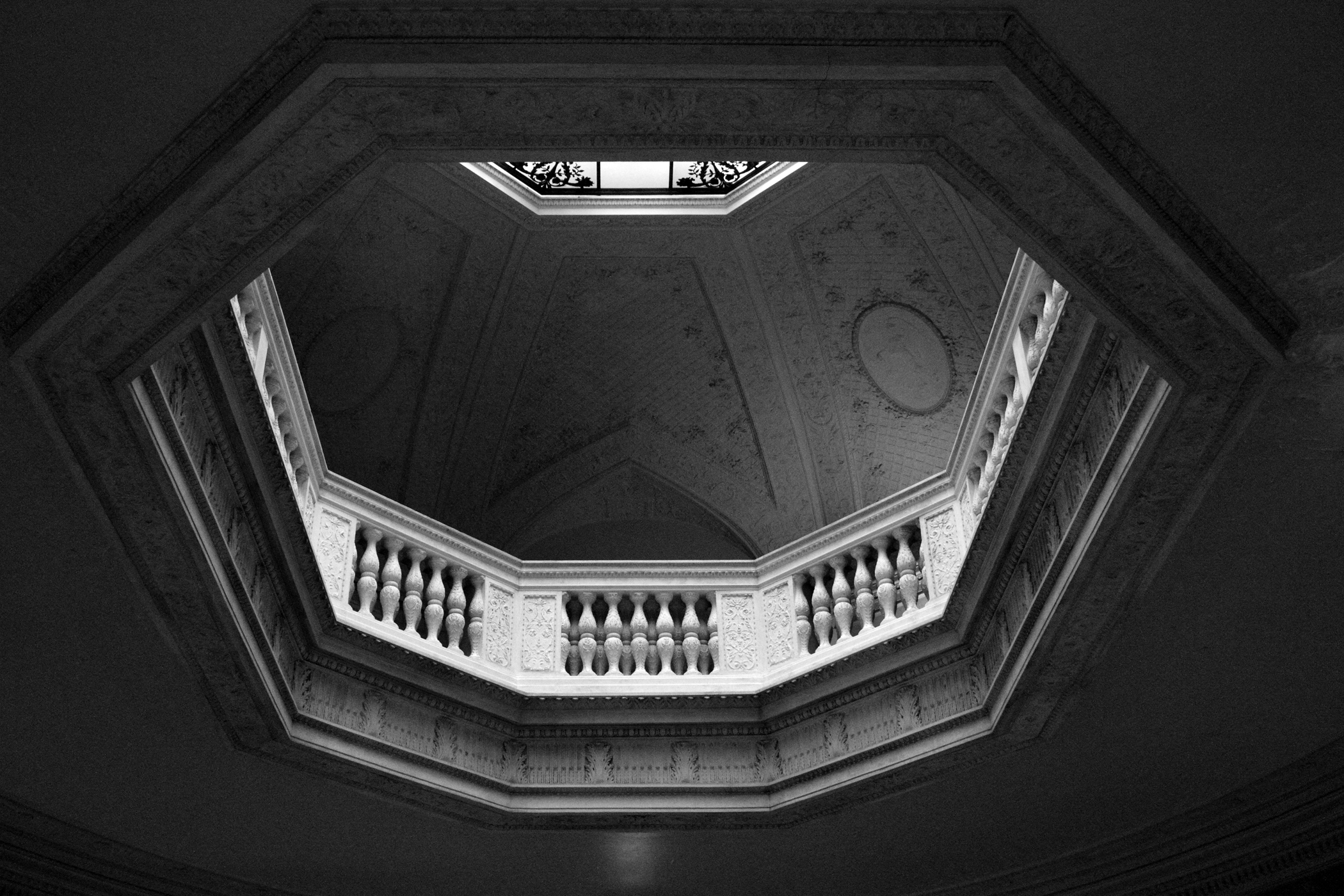
A type of scene that I really like to photograph is illustrated in Figure 6. This is Franklin Roosevelt’s bedroom at Hyde Park. Note the small bed where his valet slept.. The room was flooding by a delicate diffuse sunlight and again the challenge was pulling subtlety out of both the blacks and the whites. The danger of burning a hole is again present. A similar image and challenge is posed by Figure 7, which shows the skylight and balcony at the Vanderbilt’s Hyde Park mansion. All of these images are really helped by having 14-bits of dynamic range. This is how you go from black to white and get everything in between.

Figure 7 – Skylight at the Vanderbilt Mansion National Historic site, Hyde Park, NY

So in the end it was an education, if not terrific, picture taking day. It is always good to have the practice of anticipating the light and overcoming the challenges that the light offers. Like Pooh-Bear you’ve got to have a good think about the problems lighting presents and think about how to overcome them. That way when you’ve really got an opportunity to grab an image under adverse conditions you’re ready.

Figure 8 – The last leaves of summer

Rain can drive one to kitsch and finally good food in Brunswick, ME

The first two days of my four day Southern Maine vacation were plagued by rain – intense rain, the kind that makes you not want to take your camera equipment outside.  Inspired by the L. L. Bean centennial boot (see previous post), I went in search of some of the kitsch that makes Southern Maine, around Route 1 famous.

Lobster Door Handles at L. L. Bean

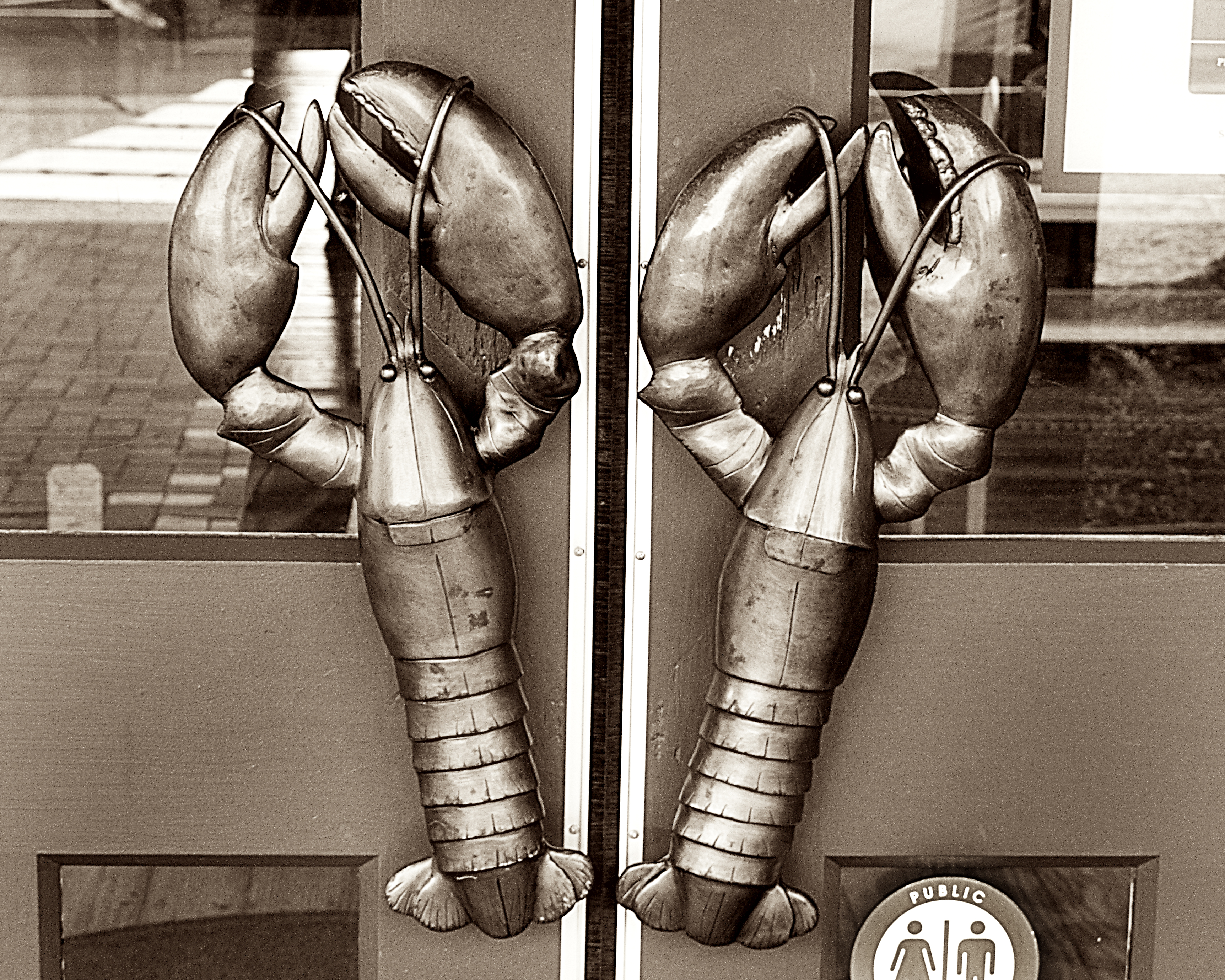
L. L. Bean is itself a kitsch hunter’s playground.  And for the most place this now sprawling facility is mostly indoors.I apologize, but I took no moose pictures, despite several models available both at Bean’s and elsewhere – shades of Teddy Roosevelt to be sure.  But following the wildlife theme, I did photograph the giant lobster door handles of the Home Store.  Even the biggest of Lobstah fan’s would find it difficult to place these gigantic metal crustaceans.  I mean who has a big enough door for startahs?

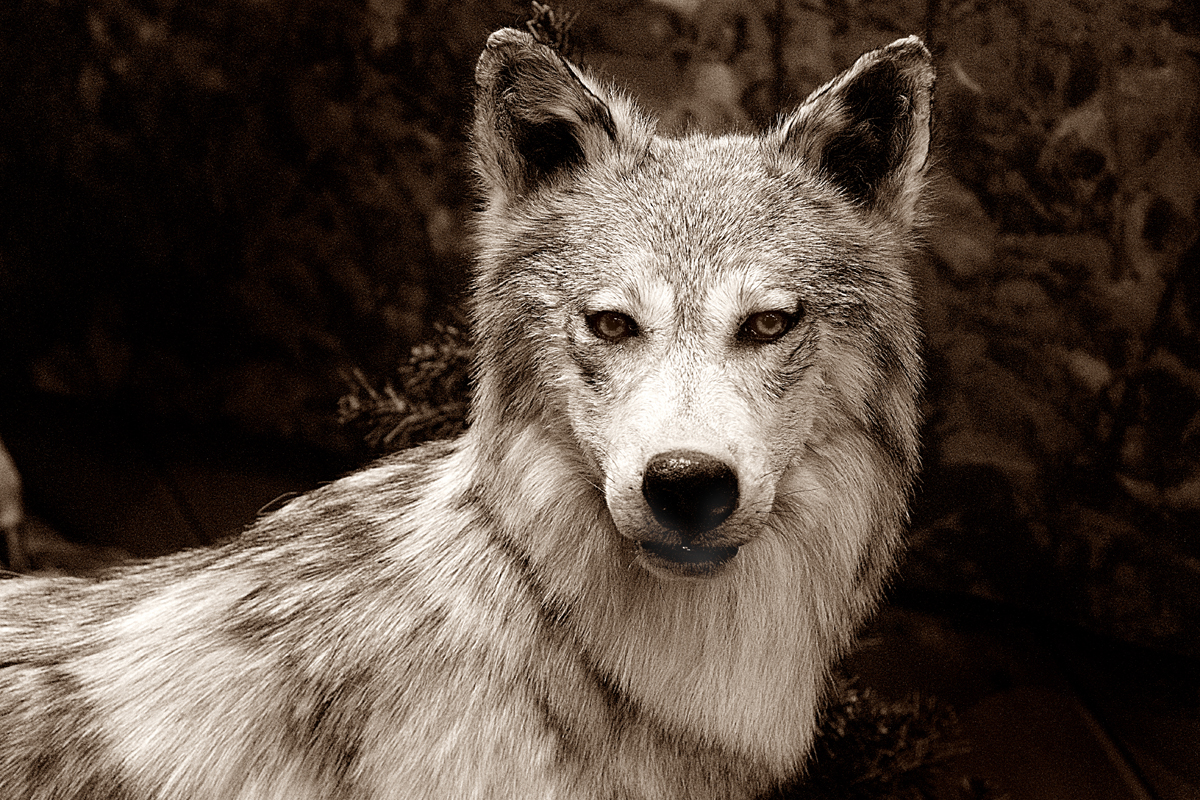
L. L. Bean Wolf Taxidermy Specimen

Then it was over to the Main(e) store to photograph my namesake, in this case stuffed, Wolf.  The store is filled with taxidermy specimens.  Besides my Wolf and the requisite moose, are deer, bobcat, coyote, and mink – indeed, just about all of the Main(e) mammalian species are represented. Again nature lover Teddy Roosevelt’s single handed efforts to eradicate North American wildlife comes to mind – times were different, an important lesson to remember.

Sista’s BBQ in Brunswick, ME

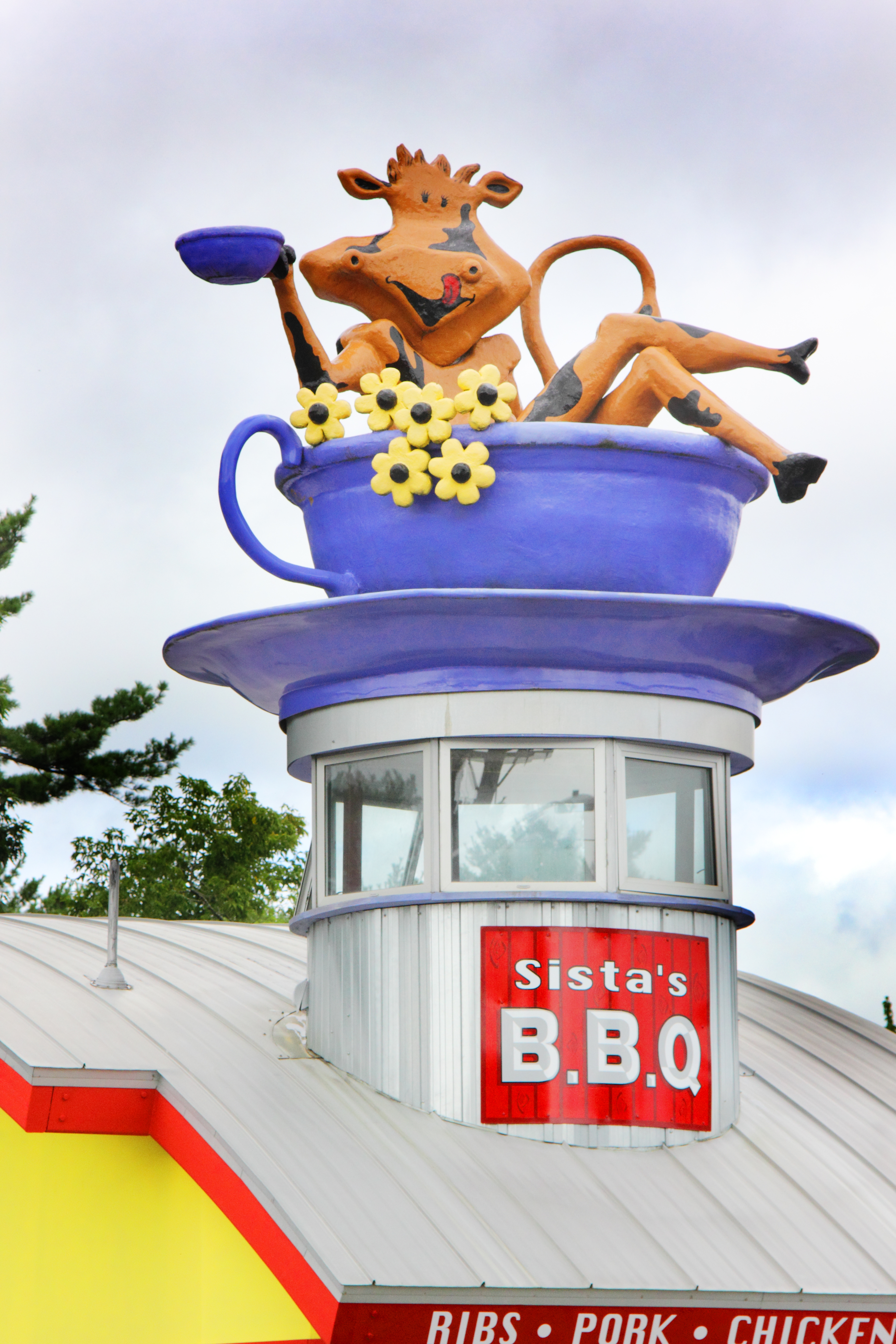
But for the ultimate of kitsch décor, we journeyed to Brunswick Maine and Sista’s BBQ adorned with its marvelous cow in coffee cup – the whole place in amazing Technicolor.  Sista’s was closed when we were there, except for the photographing.  And in truth, more to our taste, we went to the Scarlet Begonia, where I had the most amazing best in a lifetime shrimp Caesar Salad.  And despite being stuffed, we stopped on the way out of town at The Gelato Fiasco.  The name struck us as odd until, and after a cup of the most wonderful gelato ever, we realized that the fiasco was that The Gelato Fiasco wasn’t close to home.  The good news is that their website contains a list of other New England sites, including our local Whole Foods in Wellesley, MA and Crosby’s Market in Concord, MA where pints are available.  Phew, we dodged one there!

Cell phone photos as a record of a generation

We headed off at 6AM Tuesday morning for a short post-Labor Day vacation in Maine.  This is the way to do it. Crowds are light, save the busloads of tourists from the cruise ships.  Days are warm.  Nights are cool; and there is just a hint of autumn color.

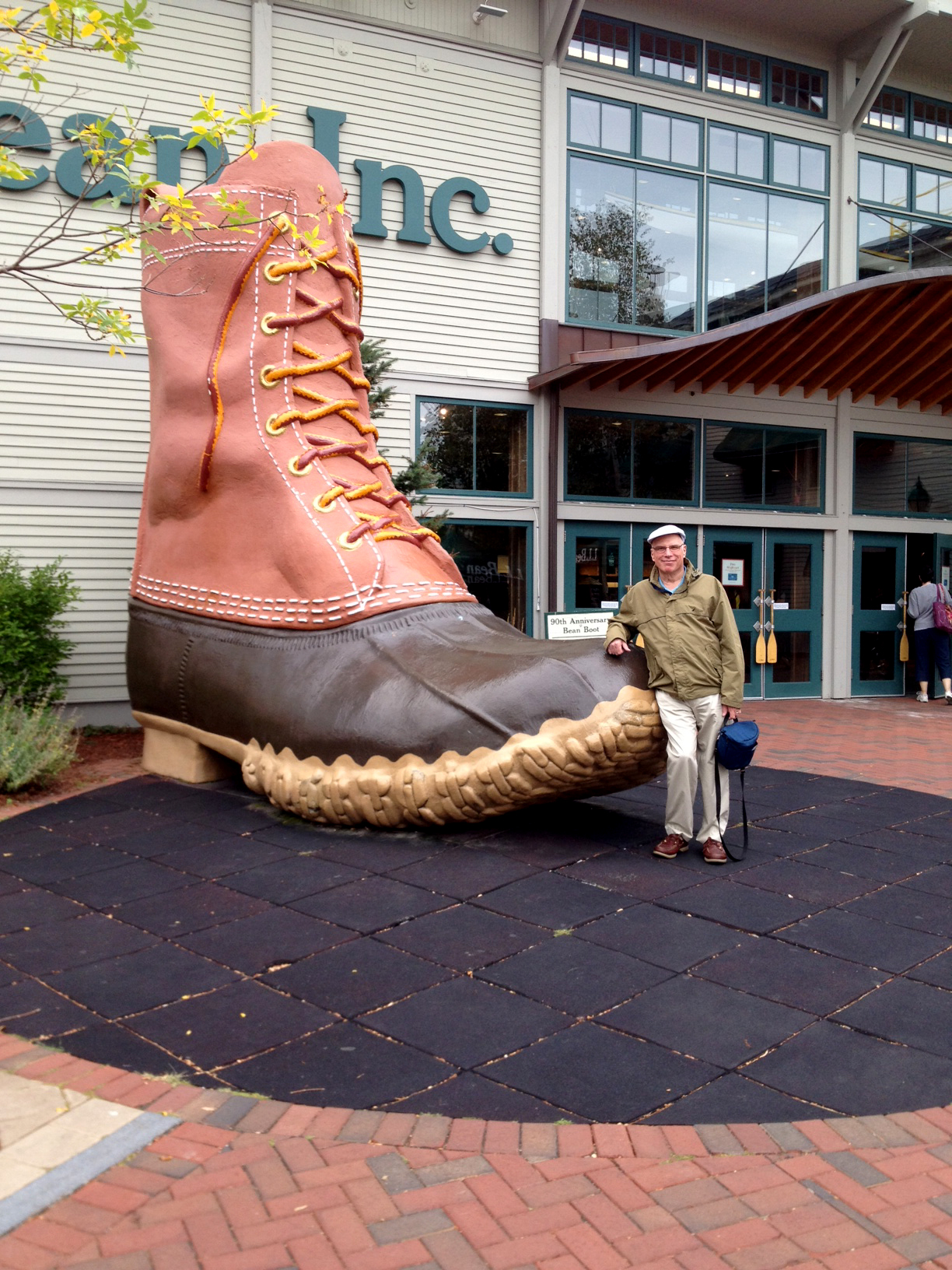
Yours truly with the L. L. Bean Boot

6AM is also the time to do it.  Two and a half hours later we were having coffee at L. L. Bean’s in Freeport, ME, and then I paused to have my picture snapped in front of the giant centennial Bean’s Classic Boot.  It was the epitomizing tourist shot.  In days gone by, these were taken with Kodak Instamatics or Polaroid Instant Cameras.  The cell phone, IPhone, and Android have opened up a whole new world here.  The pictures are of much higher quality, thanks to some very cool and sophisticated technology and can be sent worldwide because of the internet and social media like Facebook and text messaging.

Historically these are going to prove to be the records of a generation and it is ultimately the very real problem for archivists to figure out how to preserve this important record.  This is reminiscent of the collection of Letters of a Century that was all the rage during Y2K. I heard a talk once about imaging technologies from a Smithsonian Archivist, and preserving this record poses no small task.  Technology changes so fast that what is “readable” with ease today will be quaint non interpretable artifact ten or twenty years from now.  In my early scientific career, we made the important transition from paper to digital data storage.  Anybody got an eight inch floppy disk drive that can read my Technico Computer files?

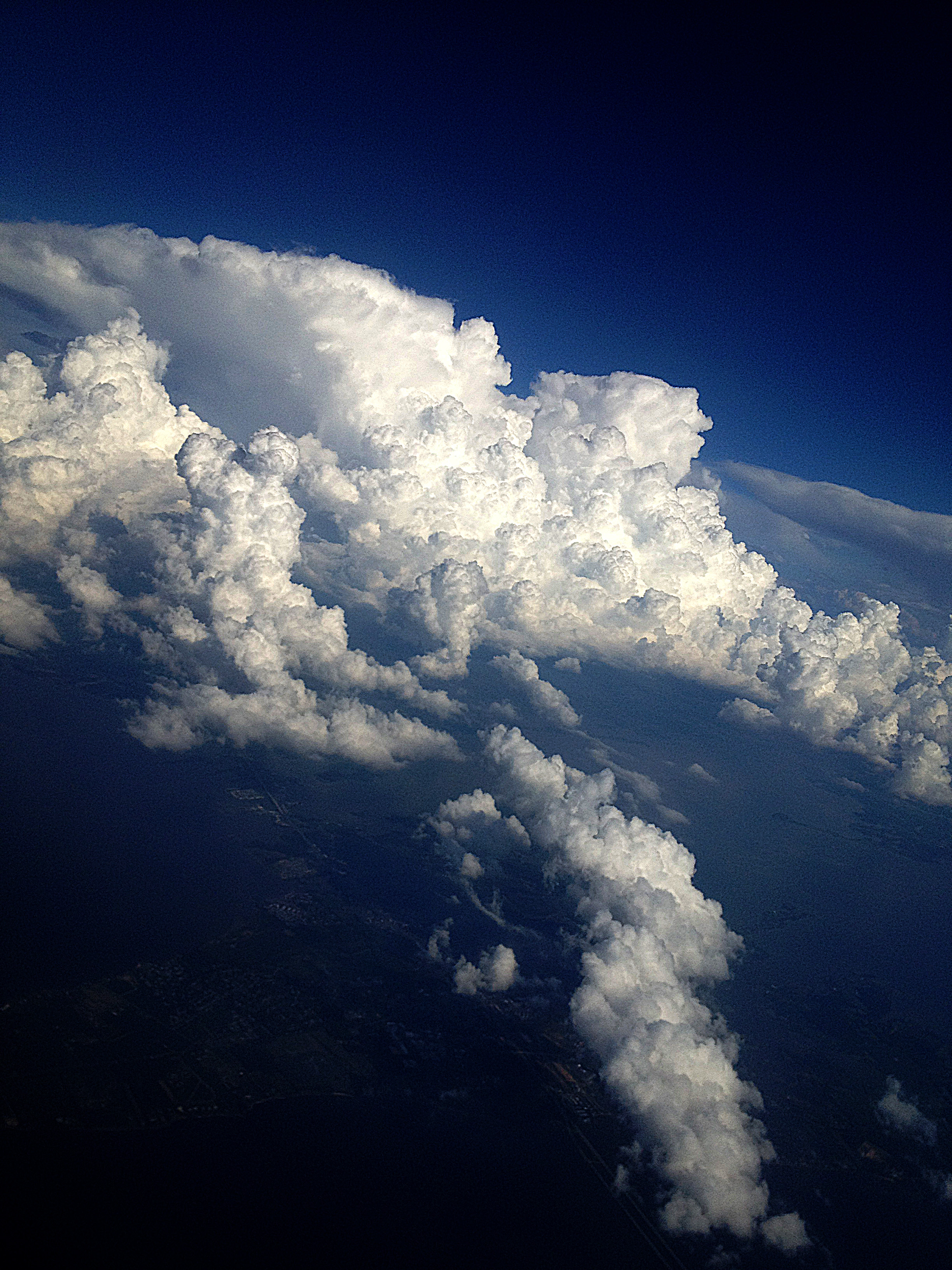
Storm clouds over the Chesapeake

Still I encourage everyone to make a point out of creating a folder on your Facebook or other pages of “Uploads from My Cell Phone.”  It serves the purpose of your camera’s always read for that “Kodak moment.” You can even get some pretty good pictures with these devices.  There is instant review and the pixel densities are now quite reasonable.  Images are just as accessible for post processing with Photoshop or your favorite image processing software.  I offer an image I took from my airplane window of Storm Clouds Gathering Over the Chesapeake. We have reached a high level of technical prowess for these personal life recording devices.  So friends record!

Photographer’s Mecca in the Twin Cities

I spent this past Sunday visiting Minneapolis with a close friend, who lives there.  First, let me say that having seen Liv Ullmann and Max von Sydow in “The Emmigrants” (1971) and “The New Land” (1972), there is something very intriguing and appealing about Minnesota in general and Minneapolis, in particular. Second, this has got to be a favorite city for photography.

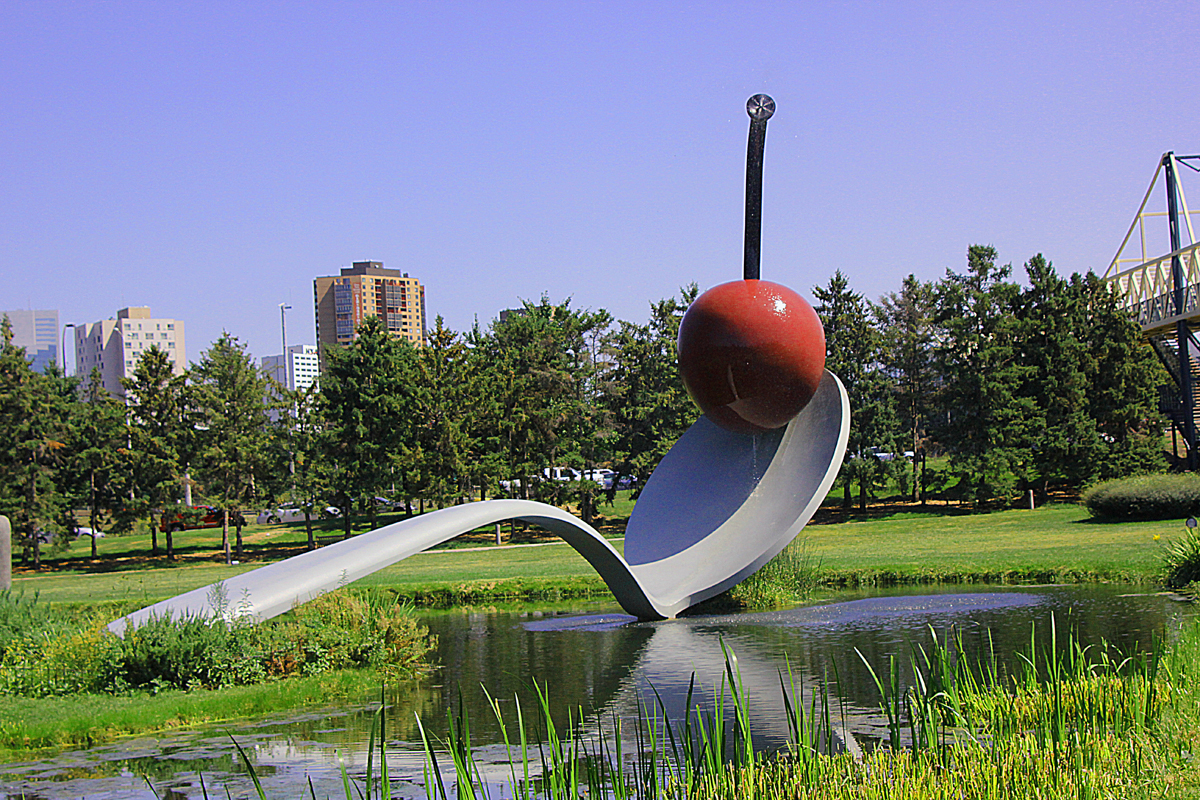
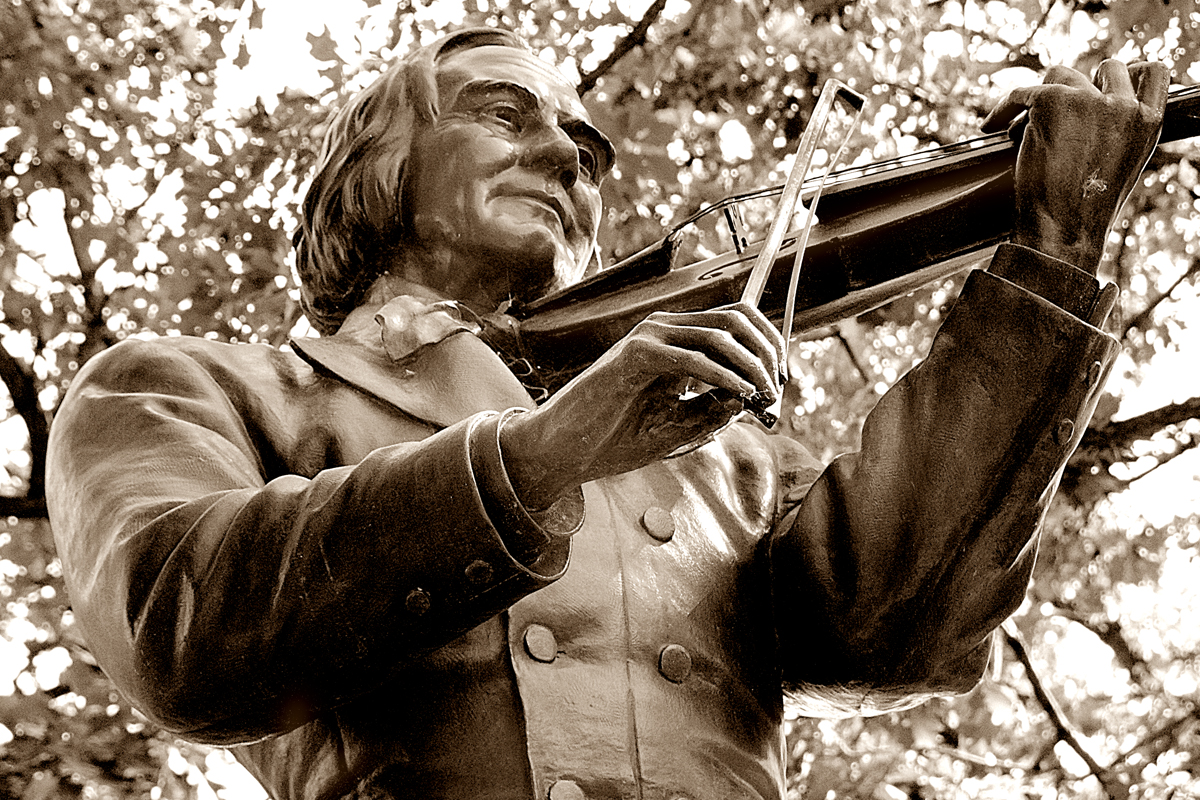
So I thought that I would post a couple of pictures that I took – not great works, even possibly failures – but you get the point.  The first is of the Spoonbridge and Cherry, 1985-1988 a marvelous aluminum, steel, and paint sculpture by Claes Oldenburg and Coosje van Bruggen in the Minneapolis Sculpture Garden.  This sculpture is the iconic Minneapolis snapshot – so obligatory for all tourists.  The second is the memorial bronze statue of Ole Bull (1810-1880), the nineteenth century Norwegian violinist, in Loring Park.  This sculpture was a creation in 1896 of the Norwegian American sculptor Jacob H. Fjelde (1855 – 1896).  I have been for a number of years doing a photoessay on American Sculptors of this period, some of which appear in my galleries.  So this will be an addition to that collection.

My day in Minneapolis was followed by a glorious sunset trip through cornfields to Rochester, MNto do some experiments at the Mayo Clinic.  For art lovers the Mayo is a hidden gem.  There is an extensive collection of art donated by benefactors and they even offer guided tours.