
Pennywise

Figure 1 – Pennywise the Clown, Salem, MA October 2019. (c) DE Wolf 2019.

As we get closer and closer to Halloween, the creatures that you run into on the streets of Salem, MA getting scarier and scarier. So not surprising, I today took the image of Figure1, which I am pretty sure is going to be my creepiest photograph of Halloween 2019. It is Pennywise the Clown.

Nothing is more terrifying than a clown! And for those, who have read the Stephen King novel or seen one of its movie dramatization, the chills run up your spine and you are left wondering whether this is someone dressed as Pennywise to collect tourist tips for the privilege of taking a photo with the clown or … While it is just possible that this is the true child murderer of the centuries. You really cannot be sure, as it is said that he has been found in sketches of ancient carnivals, often seen with a red balloon.

Stephen King is such a master of the macabre that you are left wondering whether IT, or Pennywise, is some mythic character, long whispered about on chilly October nights. Pennywise, according to King, is based upon serial killer John Wayne Gacy who performed at children’s parties as Pogo the Clown. He was responsible for a string of murders of 30 young men and boys in the Chicago area in the 1970s,

Perhaps, I should leave it at that. Leave it for you to stare at the blood red colors of Pennywise’s costume – the blood on his face and the carnivorous teeth. He is something unworldly, something evil, of evil. And whether he is real or merely a creation of the depths of a primordial terror in our minds, may not truly make a difference.

Canon T2i with EF70-200 mm f/4 USM lens at 159 mm, ISO 400, Aperture Priority AE mode 1/125th sec at f/6.3, pattern focusing with no exposure compensation.
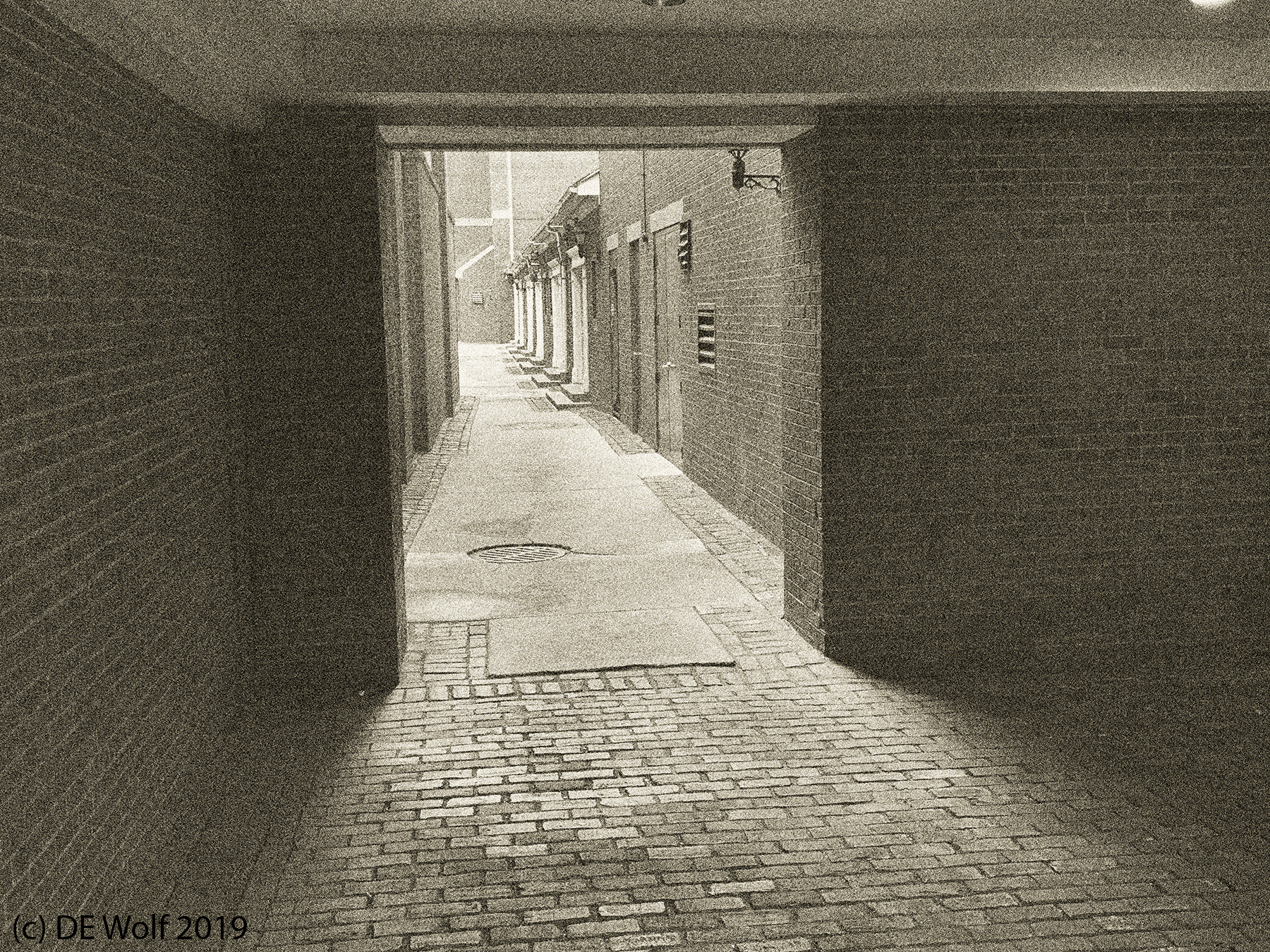

 

Photopictorialism Study #18 – Salem Courtyard

Figure 1 – Photopictorialist Study #18 – Courtyard off Salem, MA’s Essex Street. (c) DE Wolf 2019.

The other personal transition for me this week is my migration of Hati and Skoll Gallery to a new iMac and the Adobe Creative Cloud. My old system was getting just too cumbersome and slow in the “modern era.” So Figure 1 is my first full attempt. The photograph of a brick courtyard, off Salem, MA’s Essex Street, was taken with my iPhone XS and then convert to black and white using Adobe Photoshop CC. As you can see I gave it a subtle selenium tone and then added noise so as to create a grainy photopictorialism effect. This creates a pseudo mist in the image, which the brightness of outside seems to penetrate creating the optical sense of being in a tunnel.

Revisiting Animal Faces – #6 – Carly

Figure 1 – Border Collie Carly. (c) DE Wolf 2018.

In revisiting Animal Faces I have been trying to sneak in a few one ones. So for today I wanted to share a new photograph, which shows my newest canine friend Carly. Carly is a Border Collie, and as her eyes express, Carly has the gentlest and warmest of canine souls. Here she seeks just a bit of love.

Dogs interact with photographers. Carly is, in fact, leery of the IPhone camera’s click! But do they interact with photographs? First, we should answer the age old question of whether they perceive television, and the answer is yes. Their expressed indifference is the result of the fact that they, a lot faster than we, have determined that it is all just a bit BORING! As for photographs studies based on eye movement definitively show that dogs can recognize their owners in photographs.

But it is important to recognize that smell is the predominant sense in canines. Their world of perception is dominated by the smell map. This is because while humans might have 5 million olfactory receptors in our noses, a more typical number for dogs is 200 Million.

We took Carly and her partner in all things canine, Jack, to Heard Farm, which meanders around giant fields and finally circles back on itself. When the two dogs got out of the car, Carly saw the scent trail immediately as plain as we see light and headed clockwise along the path. Jack saw the trail and headed counter clockwise. Both were correct!

Which brings us back to the television and the photograph. Neither offer up a scent-based map. They are indeed BORING!

Early October on the pond

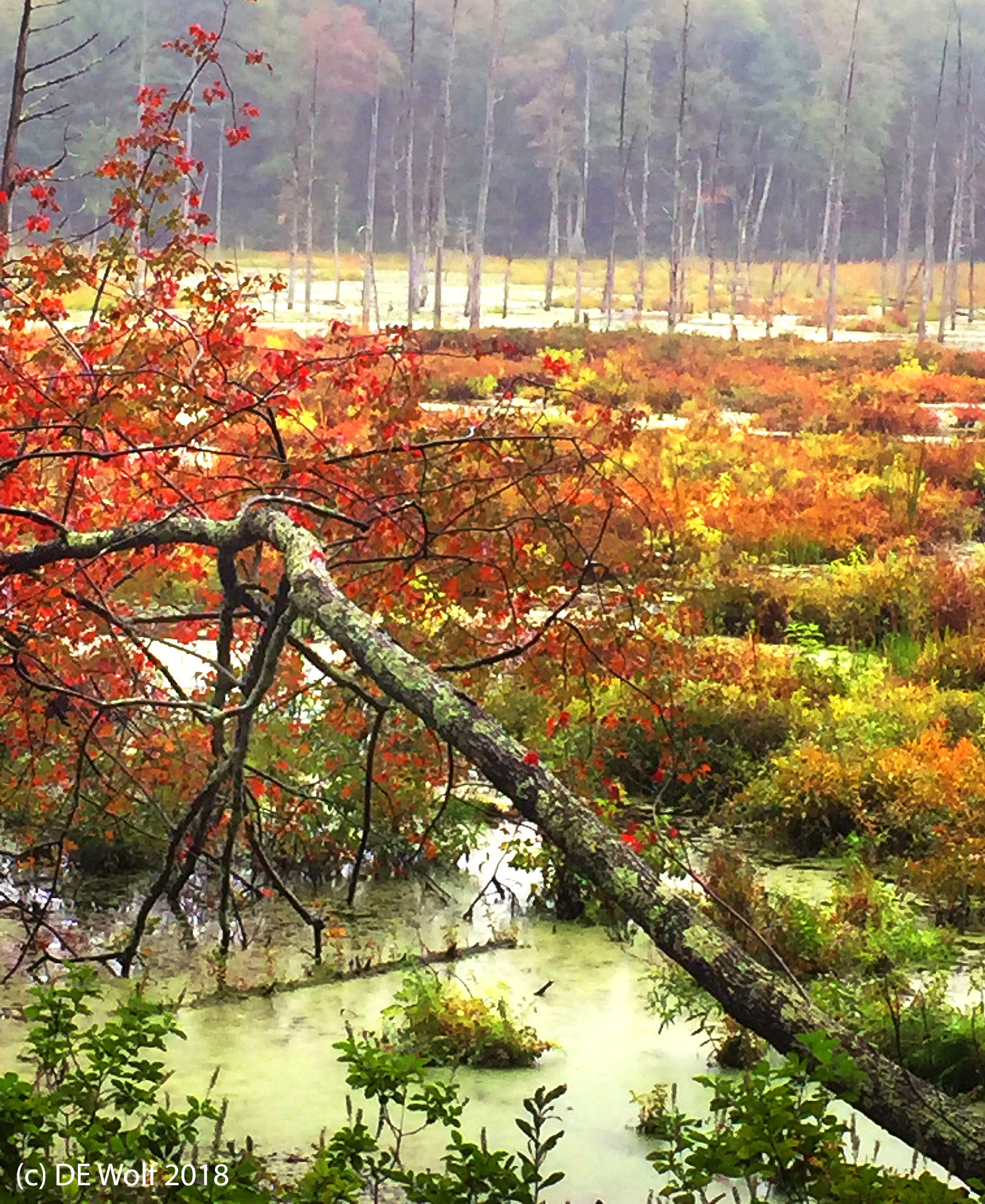
Figure 1 – Early October on the pond (c) DE Wolf 2018.

It is October. So, despite the rain and fog my friend and I ventured to the Wildlife Refuge to walk about the pond and take in the early color and the mud. It was singularly cold, wet, grey and spectacular – a world cast for the most part in subdued pastels. Because of the rain, I chose to only bring my IPhone and otherwise just enjoy our solitude. Figure 1 captures a fallen and decaying tree partly submerged and ultimately merging with the pond. The grasses have turned and there is the subtle hint of color in the foggy draped background.

The white rose

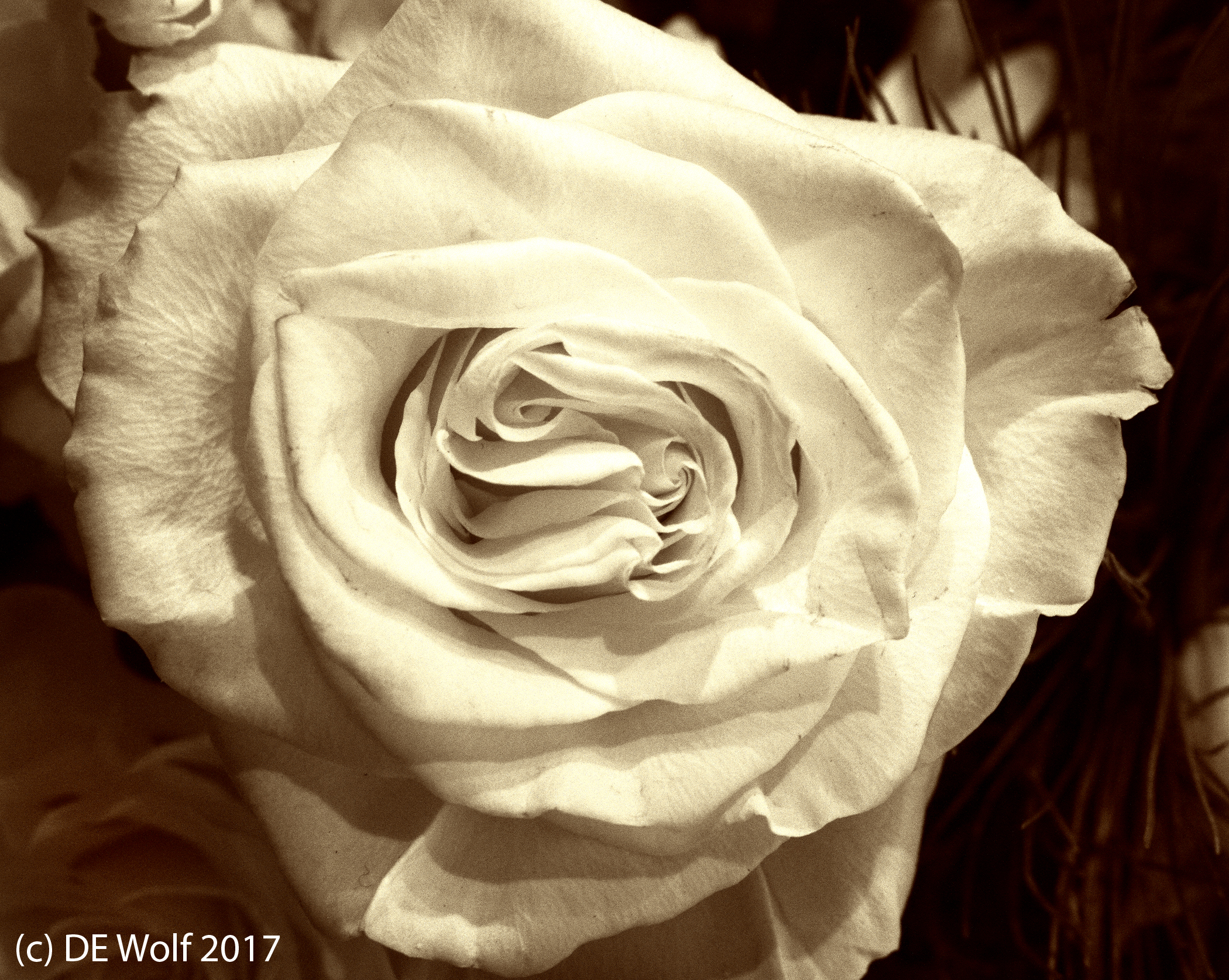
Figure 1 – The white rose, Concord, MA, (c) DE Wolf 2017.

Christmas is, of course, a colorful time of year and is meant to challenge the grey December bleakness. The traditional colors are red and green, silver and gold. To be different, I thought I would offer something different today – a pure white rose.  I have tried this type of image before and am invariably unhappy at some level with the results. Ah well! I will point out that a white rose while complementing winter on one hand is like the colors of Christmas diametrically opposed to it on the other hand. The white rose speaks to spring and summer – to purity and rebirth. In winter it remains the symbol of Persephone still trapped in the underworld.

The relationship of the albino rose to its carmine relatives it but a matter of … Well, perhaps Shakespeare said it best in Henry VI.

“Prick not your finger as you pluck it off,
Lest bleeding you do paint the white rose red
And fall on my side so, against your will.”

Canon T2i with EF-S18-55mm f/3.5-5.6 IS STM lens at 55 mm, ISO 1600, Aperture Priority AE Mode, 1/50 th sec f/9.0 with -1 exposure compensation.

Tufted titmouse

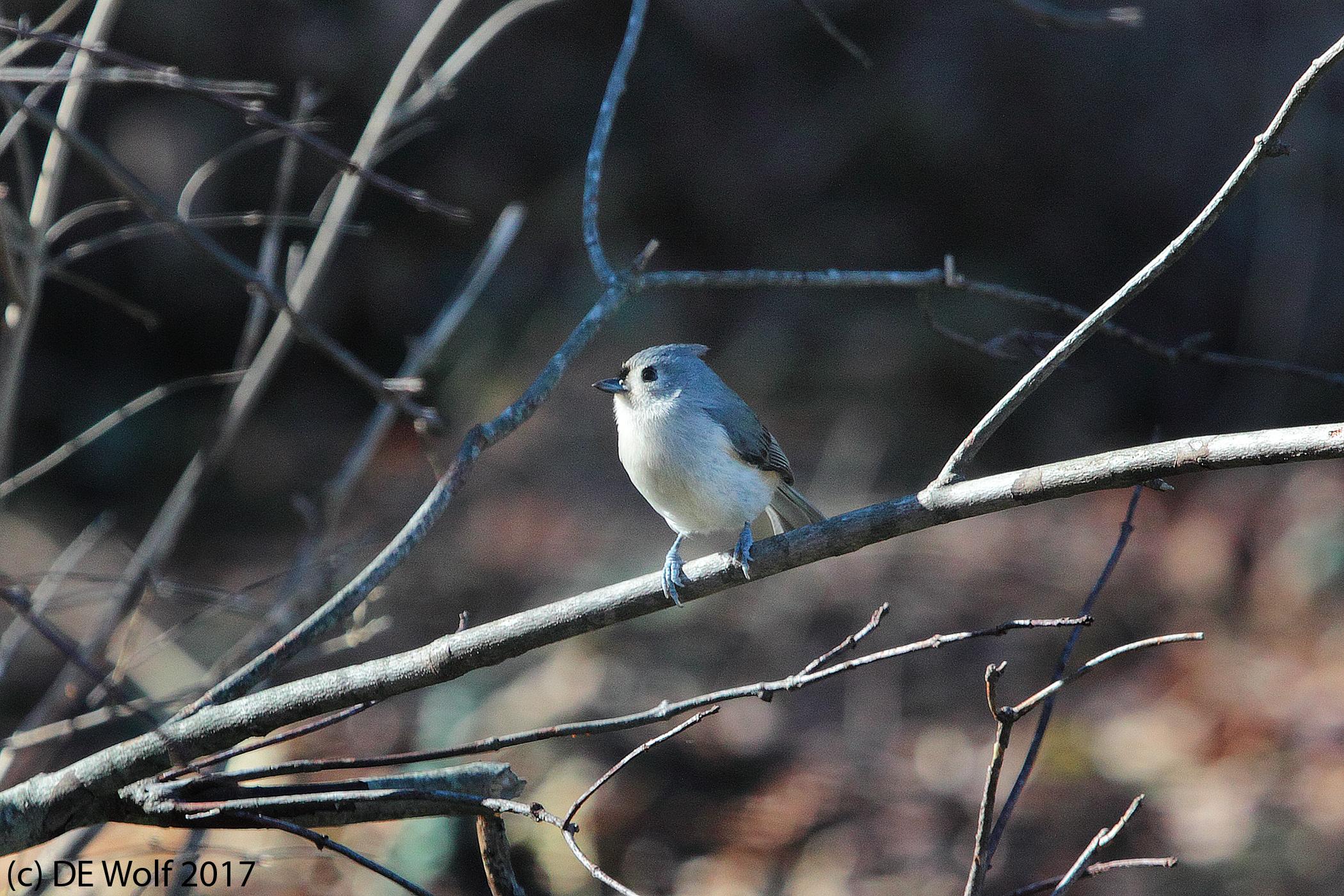
Figure 1 – Tufted titmous, Sudbury, MA. (c) DE Wolf 2017.

Before we get too far into winter, I wanted to post the photograph of Figure 1. Just after Thanksgiving I put up mu bird-feeder for the winter and literally within minutes it was swarming with birds. One of my favorite feeder birds is the little greyish blue tufted titmouse, Baeolophus bicolor, shown in the photo. I can, of course not resist reference here to Gilbert and Sulivan’s Mikado.

“On a tree by a river a little tom-tit
Sang “Willow, titwillow, titwillow”
And I said to him, “Dicky-bird, why do you sit
Singing ‘Willow, titwillow, titwillow'”
“Is it weakness of intellect, birdie?” I cried
“Or a rather tough worm in your little inside”
With a shake of his poor little head, he replied
“Oh, willow, titwillow, titwillow!”

Well, yesterday we had our first snowfall of the season and the titmice (or mouses) (I will not go into that argument again) are scurrying about very busily. Their size make them very hard to photograph well. But you have to love the little Elvis bouffant and the jet black eyes, that speak so well to their reptilian origin.

They will be outside my window all winter now flit to and from the feeder and foraging for fallen seeds in the snow. One cannot help but admire their ability to endure the vicious Northern winter.

Pine needles shed

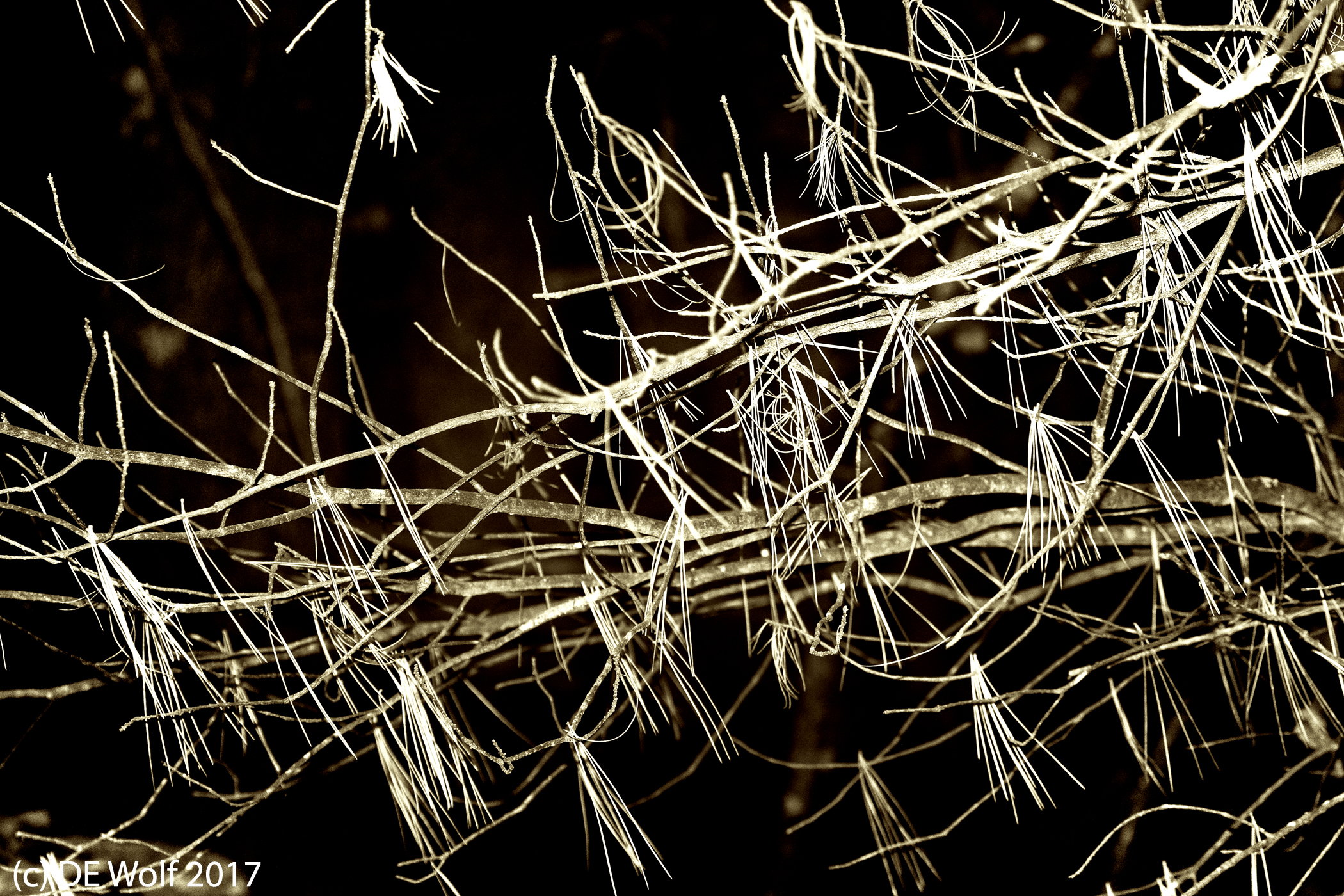
Figure 1 – Pine needles shed, Stow, MA. (c) DE Wolf 2017.

First, a reminder to all of you in the Boston area who can make my show Thursday night, it will be great to see you all.

You can always learn from nature – and “things are not always as they seem.” I came upon this little bush in the woods the other day and was intrigued photographically by the little dried pine needles glistening in the light. I thought that I was looking at a dying pine tree. But in fact, on closer examination, I realized that what I was seeing were needles being shed from the canopy and getting caught upon the twigs of a leafless shrub. The result is Figure 1.

It is, in fact, the case that pines and other evergreens do participate in the annual shed. It is just that they hold onto a particular crop of needles for several years before dropping them. This autumnal release is part of the forest’s life cycle. I remember the comparative mythologist Joseph Campbell talking about how when you reach the end of your life, it is time to give in to the shedding of leaves. So the pine needles falling to the ground, here caught for a few moments, as forests and trees measure time, is a symbol of the recuring mythic trilogy of birth, death, and resurrection.

There are few places more calming than a pine forest. No better place to walk silently than on the needle carpet. It is certainly the case that there in a pine barren the world is both simple and explained. There we may be closest to the ambiguity of mortality and immortality.Henry David Thoreau remarked that “Ever little pine needle expanded and swelled with sympathy and befriended me.

Canon T2i with EF100-400mm f/4.5-5.6L IS USM at 100 mm, ISO 800 Aperture Priority AE Mode 1/100th sec at f/7.1 with -2 exposure compensation.

More light in the forest

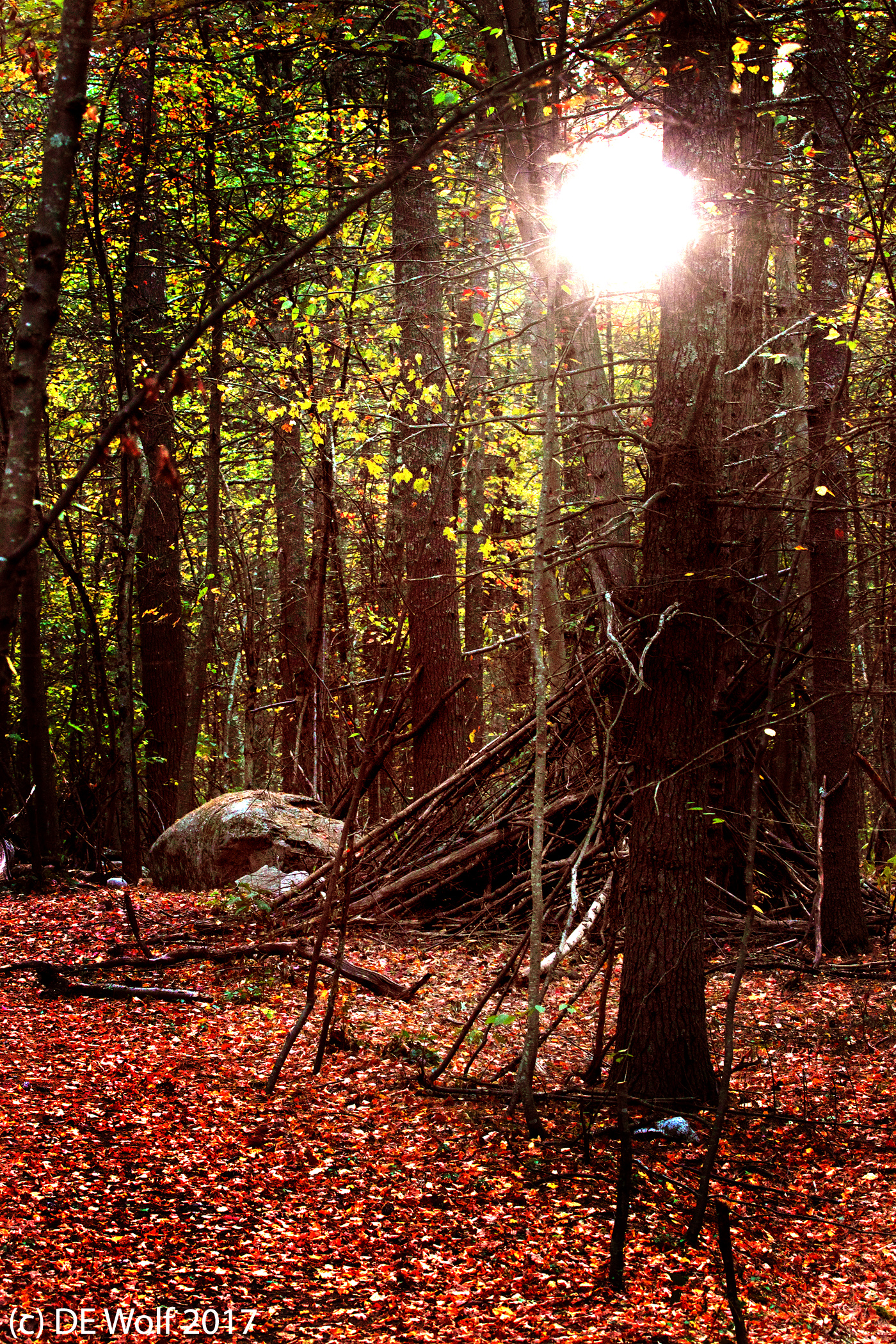
Figure 1 – The sun breaks into the Pine Barren. (c) DE Wolf, 2017, Stow, MA.

I posted last week about Light in the Forest, but I’d like to pick up the theme again with today’s Figure 1. It captures that moment when the sun suddenly floods the pine barren, and you witness it like a mini-Stonehenge as if caught between two giant limbs. It is, needless-to-say, a photographic challenge in terms of dynamic range. In the moment you squint at it, and all the grey tones seem to collapse into nothingness. There is the sensation of fuzzy darkness. And most curiously there is the sense of silence. How is it that the suppression and collapse of tonality tricks the senses into feeling that you are sound deprived as well.

My mind immediately raced to images of the so-called Manhattan henge effect. I never expect less than magic in these particular woods. For some reason there are very few birds on this side of the forest. It is as if they defer to this fundamental magicality. Magic exists, expresses itself most strongly, where nature and our minds resonate.

Killdeer

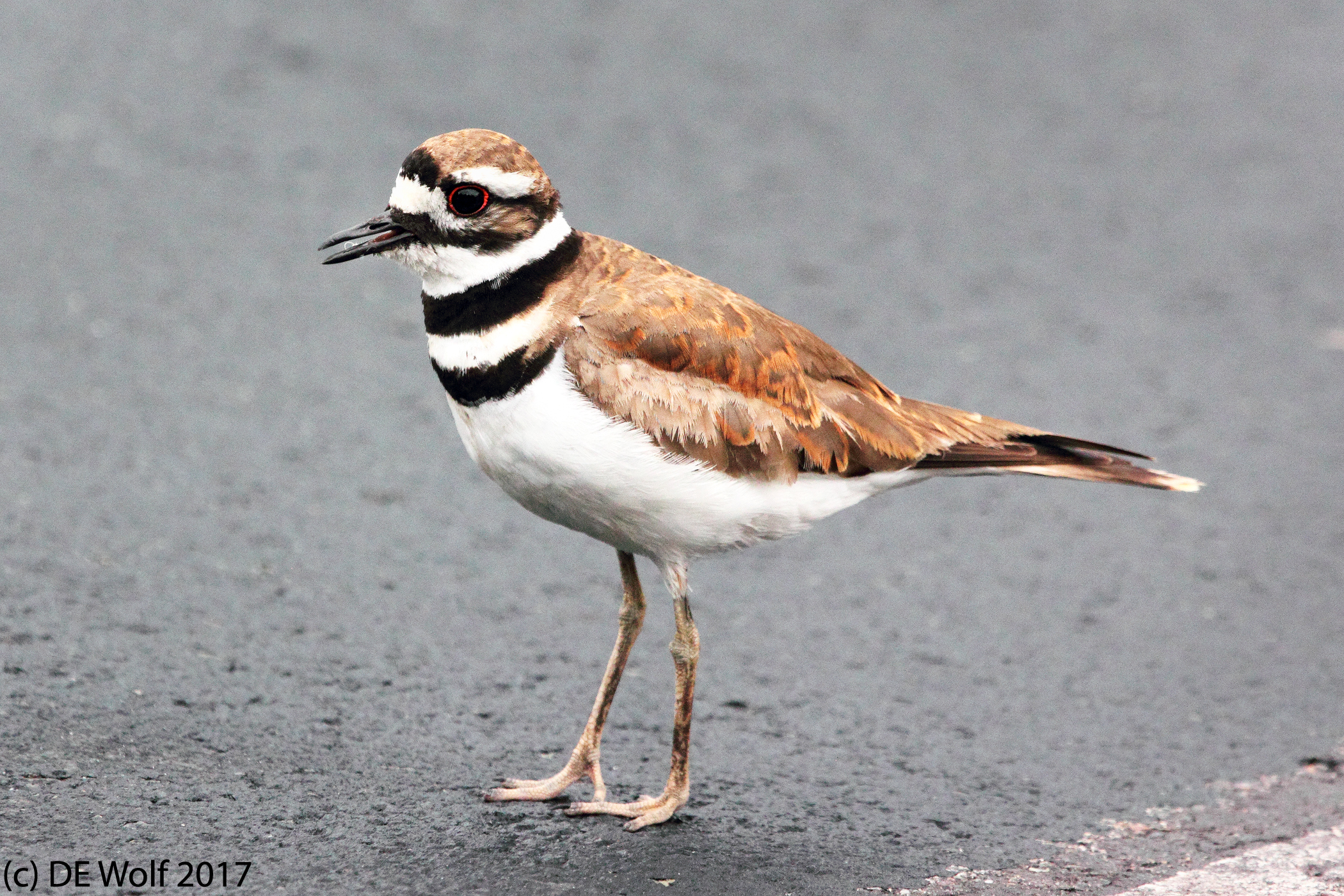
Figure 1 – Adult killdeer, June 2017, Wilmington, MA. (c) DE Wolf 2017.

I was driving home from work yesterday and was passing an abandoned section of the parking lot. Abandoned here means a section never used that has in part surrendered to grass and weeds. I noticed two killdeers (Charadrius vociferus) and so decided to bring my bird lens in today to see if I could find them again.

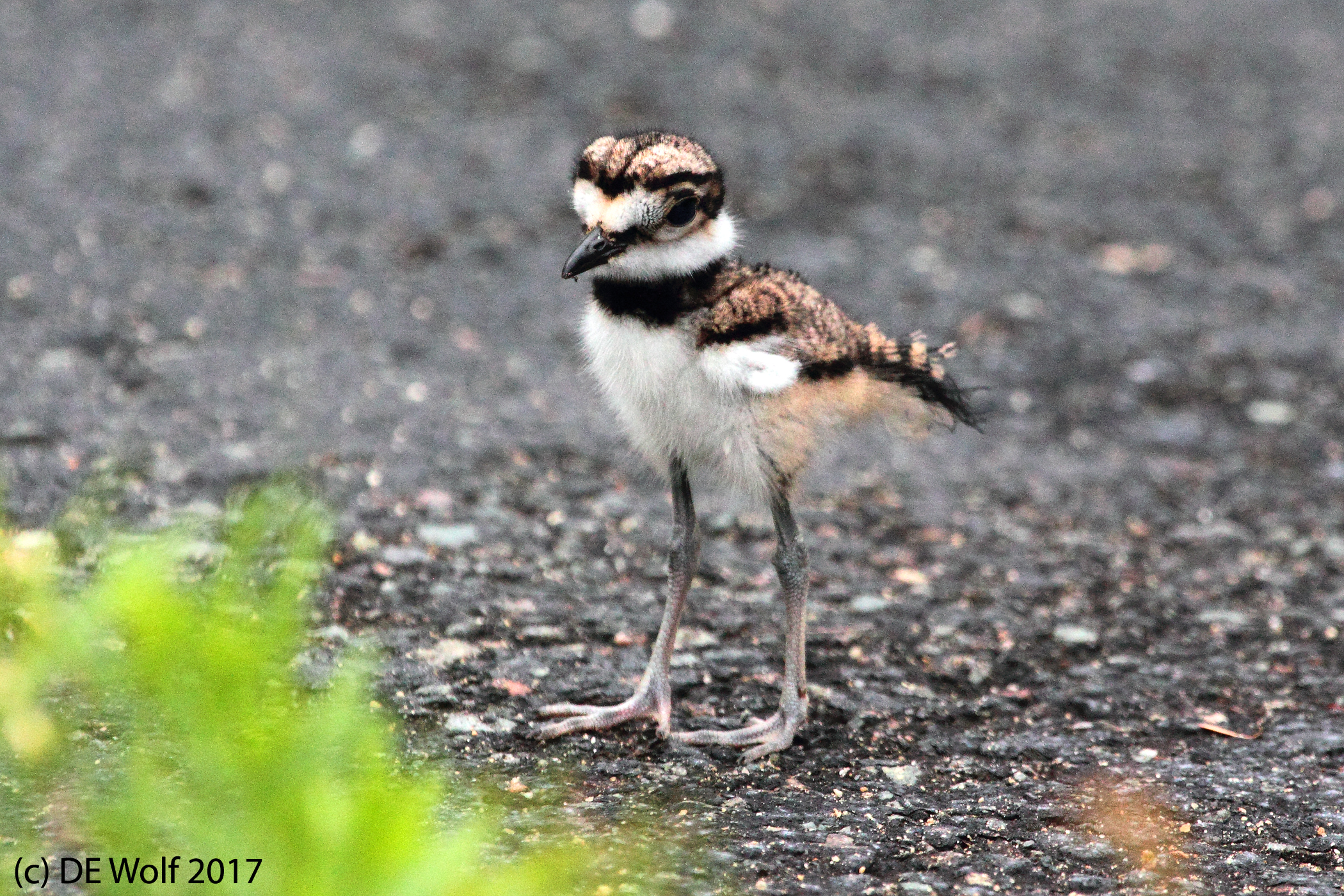
I also decided to bring my car. I had heard that birds run or fly away from humans but not from automobiles. They seem to see cars as part of the landscape; so they are the perfect birding blind. Well, I can now say “true enough.” I immediately found the killdeers and the fuss. They had their fledge with them, and this little bird was darting about but staying close to its parent’s cry. With the car I was able to get remarkably close. And they didn’t seem to be particularly bothered by my slowly driving into a more advantageous position.

The Cornell Laboratory of Ornithology’s website makes the interesting point that with the inland killdeer, you don’t have to go to the beach to find this close relative of the semipalmated plover. The killdeer is another one of those birds whose name derives onomatopoeically from its call – here a distinctive “Kill-Deer.” Their most dramatic behavior is the broken wing act that they use to distract predators away from the nest.

Figure 2 – Fledgling killdeer, June 2017, Wilmington, MA. (c) DE Wolf 2017.

Figure 1 – Canon T2i with EF100-400mm f/4.5-5.6L IS USM lens at 310 mm, ISO 800, Aperture Priority AE Mode,1/2000 sec at f/7.1 with -1 exposure compensation.

Figure 2 – Canon T2i with EF100-400mm f/4.5-5.6L IS USM lens at 400 mm, ISO 1600, Aperture Priority AE Mode,1/4000 sec at f/7.1 with -1 exposure compensation.