The meme of Schrödinger’s cat

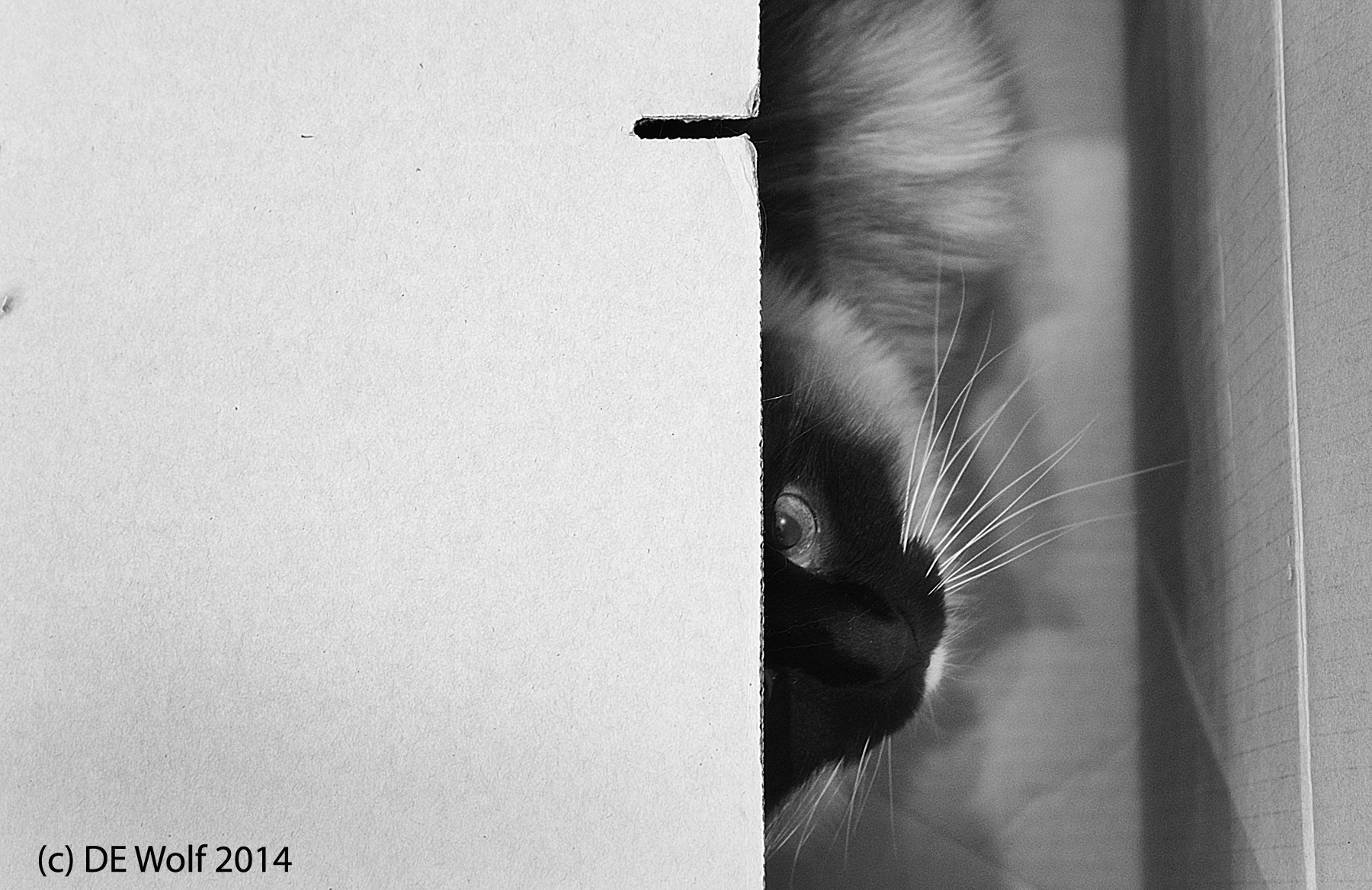
Figure 1 - Schrodinger's cat, (c) DE Wolf 2014.

Figure 1 – Schrodinger’s cat, (c) DE Wolf 2014.

Figure 1 is a photograph of a cat in a cardboard box.  It is meant to evoke the meme of Schrödinger’s cat. Schrödinger’s cat is a curious kind of meme that is illustrative of an important fact, namely, that knowing the meme is not necessarily to know what it means, or at least what it refers to.  Most people have little understanding (this is not a value judgement) of what the Schrödinger’s cat paradox is all about.  Indeed, they have little reason or need to understand it.  They know that it has something to do with a cat and a bottle of cyanide inside a box and perhaps that the paradox implies that physicists are stupid.  Such is the life of the meme.  It has very little to do with the science behind Schrödinger’s original description.  It is a lot like E = mc^2.  Very few people know what that means either.

Inevitably, and I apologize, I have to tell you just a little bit about what Schrödinger’s cat is all about.  Quantum mechanics is the set of physical laws that small systems (like atoms) obey.  They’re slightly different than the physical laws that big objects like you and I or the planet Saturn obey.  This isn’t so difficult to understand.  One is the extrapolation of the other when things get big.  It’s a lot like the planet Earth being round but for the most part, as we move about it, we can treat it as if it were flat.  I mean it doesn’t look round.

But since our common experience doesn’t deal with objects that are really small, we tend to get confused when we have to think about them  Artificial paradoxes arise. The most commonly held interpretation of quantum mechanics is the so called Copenhagen interpretation.   Guess where the meeting that the Copenhagen interpretation was developed occurred.  Brilliant! In the Copenhagen interpretation, we suppose that we have say an atom, which can be in one of two states: a ground state or an excited state.  We covered this about a year ago.Throw that atom in the box and close it.  Which state is the atom in?  You don’t really know until you open the box and look.  Quantum mechanically you can consider the atom to be in a combination of the two states until you look and measure it.  Then the system of states collapses and there is only one or the other.  The key to quantum mechanics is the inseparability of the observer and the observed.  It’s totally counter intuitive, and totally bizarre, and we know from certain experiments where the states interfere like the waves they are with one another that it is absolutely true.

But how do you make the measurement?  Suppose you use an electronic circuit inside the box that lights up when the atomic gets excited.  The Copenhagen interpretation makes apparent the fact that the nature of measurement, or observation, is not well-defined if you think about it in this way. The experiment can be interpreted to mean that while the box is closed, the system simultaneously exists in a superposition of the states.  The light is both on and off, until you look.  The whole thing becomes ludicrous when you add a living element to the measurement, namely a cat.  Let’s consider Schrödinger’s own description and please ignore what he says about the  Psi function.  It’s not important to get the gist.

“One can even set up quite ridiculous cases. A cat is penned up in a steel chamber, along with the following device (which must be secured against direct interference by the cat): in a Geiger counter, there is a tiny bit of radioactive substance, so small, that perhaps in the course of the hour one of the atoms decays, but also, with equal probability, perhaps none; if it happens, the counter tube discharges and through a relay releases a hammer that shatters a small flask of hydrocyanic acid. If one has left this entire system to itself for an hour, one would say that the cat still lives if meanwhile no atom has decayed. The psi-function of the entire system would express this by having in it the living and dead cat (pardon the expression) mixed or smeared out in equal parts.”*

Hmm!  It goes very much against thee commonly held view that the cat is either (A) alive or (B) dead, not both at the same time.  You might well ask, what this has to do with photography?  And I sheepishly must admit very little, except for the recurrent theme of memes in our discussion and the luscious point that they do not necessarily require true understanding of the underlying phenomenon.  They acquire a life of their own in the common culture and that after  all is really the point of both words and images as memes.  They metamorphose and evolve.  I will, however, point out that in his discussion Schrödinger does go on to describe the paradox in photographic terms.

“It is typical of these cases that an indeterminacy originally restricted to the atomic domain becomes transformed into macroscopic indeterminacy, which can then be resolved by direct observation. That prevents us from so naively accepting as valid a “blurred model” for representing reality. In itself, it would not embody anything unclear or contradictory. There is a difference between a shaky or out-of-focus photograph and a snapshot of clouds and fog banks.”*

There is, of course, also the cat’s view in all of this.  You will note that Schrödinger apologizes for his hypothetical cat murder.  This is because physicist’s tend to love cats, because cats, like physicist’s, are patiently seeking truth and understanding.  The cat is much more patient than the physicist.  Cats love boxes and may be termed claustrophiles. (S)He knows that she is alive, even though the physicist has, for the moment, disappeared.  The cat will wait endlessly, if necessary, for the physicist to return to the box.  But all that the ailurophile physicist really needs to do is stick his finger inside the box to find out if kitty is still alive.

*Erwin Schrödinger, Die gegenwärtige Situation in der Quantenmechanik (The present situation in quantum mechanics), Naturwissenschaften
(translated by John D. Trimmer in Proceedings of the American Philosophical Society)
Photographic first #12 – First digital image

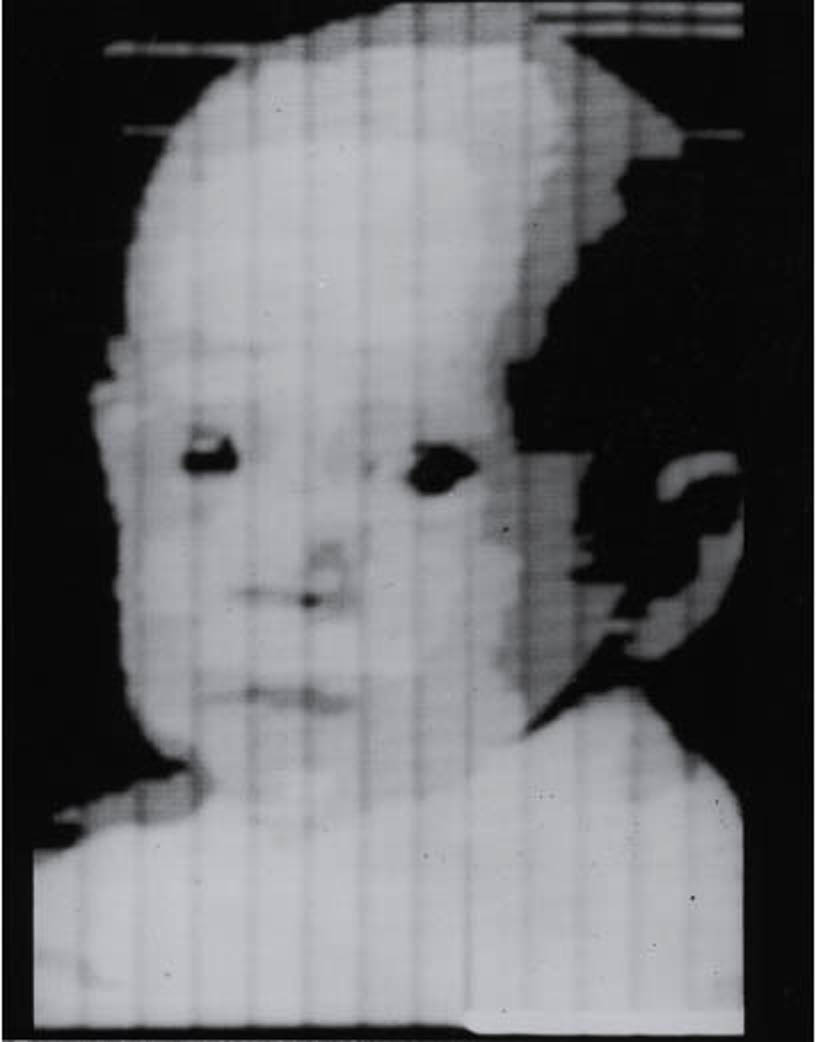
Figure 1 - The first digital image made on a computer in 1957 showed researcher Russell Kirsch's baby son.  From NIST and in the public domain.

Figure 1 – The first digital image made on a computer in 1957 showed researcher Russell Kirsch’s baby son.
From NIST and in the public domain.

In researching yesterday’s blog about the first underwater photograph I came across another photographic first, which is shown in Figure 1 and is the first digital image ever taken.  It was taken in 1956 at the then National Bureau of Standards (NBS), today the National Institute of Standards (NIST) by NBS scientist and computer pioneer Russel Kirsch, and is a black and white scan of a photograph of Kirsch’s son, Walden.  Significantly, in 2003  the editors of Life magazine honored Kirsch’s image by naming it one of “the 100 photographs that changed the world.”

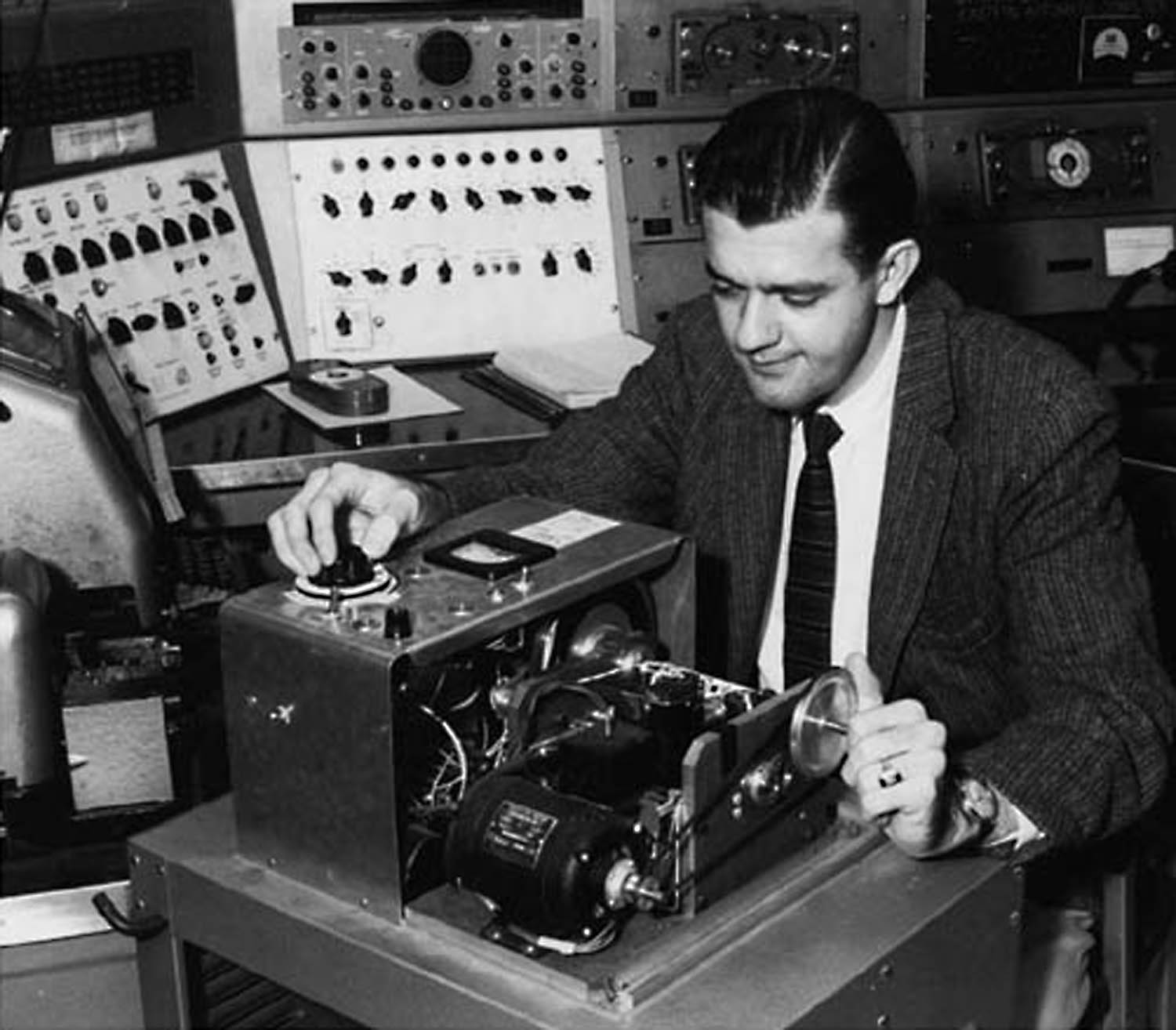
Figure 2 - National Bureau of Standards (NBS) researcher R.B. Thomas shown operating the SEAC scanner (the control console is in the background). From NIST and in the public domain.

Figure 2 – National Bureau of Standards (NBS) researcher R.B. Thomas shown operating the SEAC scanner (the control console is in the background). From NIST and in the public domain.

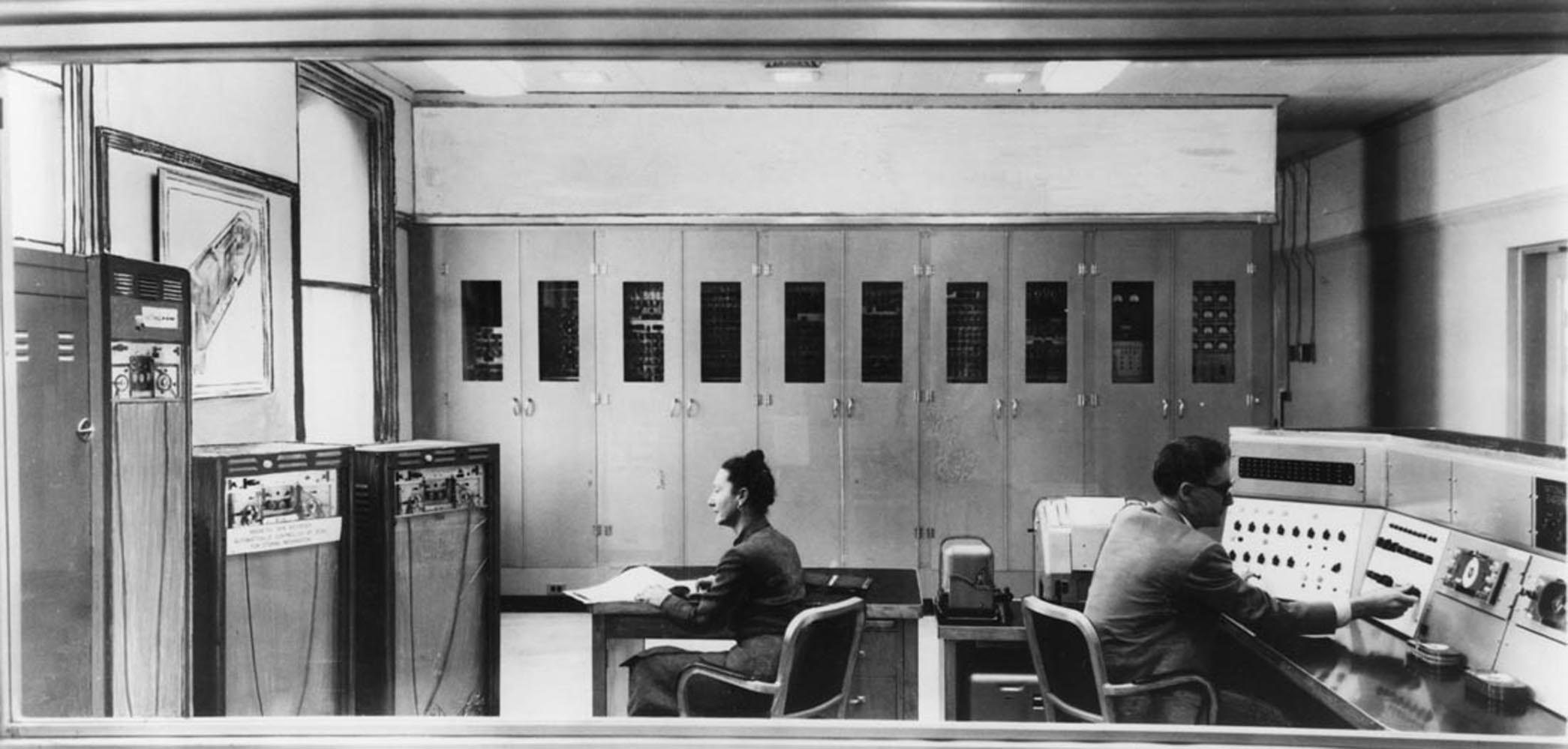
By today’s standards it is a mere 176 pixels on a side.  Kirsch and his colleagues developed the nation’s first programmable computer, the Standards Eastern Automatic Computer (SEAC) and additionally created a rotating drum scanner for image scanner.  NBS researcher R.B. Thompson is shown at the extensive controls of the scanner in Figure 2.  Before you read any further take a look at your digital camera.  It contains a miniature microprocessor which is more powerful than the 1956 NBS computer used to control the scanner and for the image processing.  This room size NBS computer is shown in Figure 3.

It truly gives one pause.  Last year I discussed the first photograph ever put up on the internet.  Amazingly, this was in 1992 almost forty years after this first digital photographic image. Kirsch’s image and the work of him and his colleagues is truly a tribute to geek power and inventiveness.  It gives you a glimpse of why I love going into the lab every day.  There is nothing better than sitting down with one’s colleagues and figuring out how to do the impossible. It is truly life’s greatest privilege!

Figure 3 - The room-sized Standards Eastern Automatic Computer (SEAC) was used to create the first scanned image.  From the NIST and in the public domain.

Figure 3 – The room-sized Standards Eastern Automatic Computer (SEAC) was used to create the first scanned image. From the NIST and in the public domain.

First underwater photograph

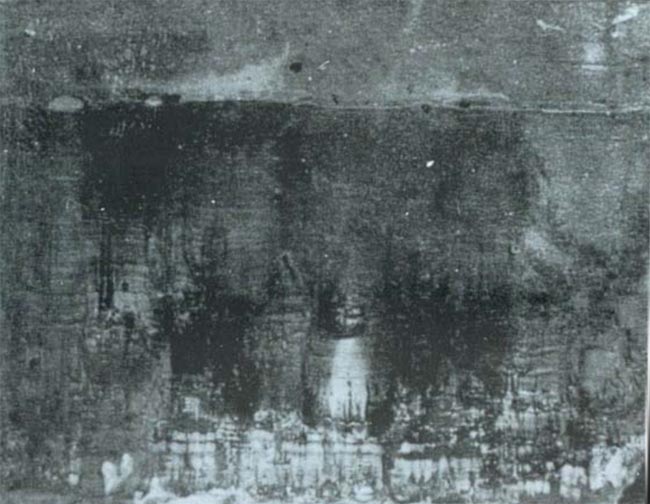
Figure 1 - First underwater photograph taken on a wet colloidion plate in 1856 by William Thompson.  In the puclic domain by virtue of its age.

Figure 1 – First underwater photograph taken on a wet colloidion plate in 1856 by William Thompson. In the public domain by virtue of its age.

Our recent discussion of Zena Holloway’s underwater fashion photography got me wondering about what the very first underwater photographs were.  As you might expect these entailed a major tour de force on the part of the photographer.  The first underwater photograph was taken by William Thompson in Dorset in the UK in 1856.

Thompson had a carpenter make him a waterproof, wooden box inside of which could be plaved a 4″ x 5″, wet colloidion  glass plate camera.  You will see the problem immediately.  This required a darkroom tent on shore to prepare and develop the plates all within the space of an hour.  The box had a heavily weighted shutter to which Thompson attached a string to activate the shutter from a row boat.

Along with a friend Thompson rowed out into Weymouth Bay and then lowered his camera until its tripod settled securely on a rock ledge.  This was about eighteen feet below the surface.  His exposures were about ten minutes long.  I include as Figure 1 this first underwater photograph.  One of the most appealing aspects, to me, about this photograph is that I have no idea what I am looking at.  Hopefully, it was clearer in 1856 when the picture was taken.

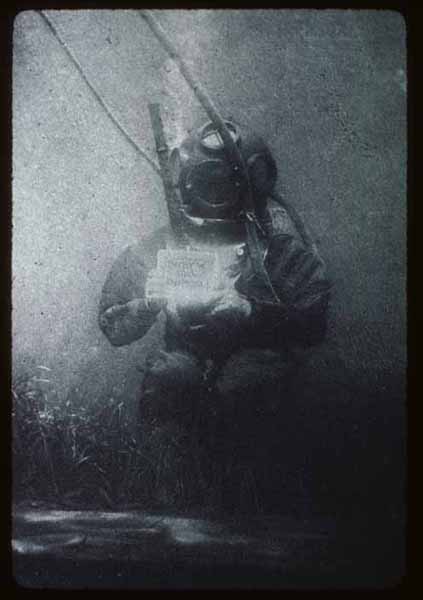
What you will more often see listed as the world’s first underwater photograph is the image by French zoologist Louis Boutan taken in 1893.  This image is shown as Figure 2.  It was a first both in terms of being the first underwater photograph, where both the camera and the photographer were underwater, and because it was taken with a magnesium powder flash.  Also it was the first published underwater photograph.

Figure 1 - Louis Boutan's underwater image taken with magnesium flash in 1893.  In the public domain because of its age.

Figure 1 – Louis Boutan’s underwater image taken with magnesium flash in 1893. In the public domain because of its age.

Northern Woods at Sunset

Figure 1 - Northern Woods at Sunset, Winter, (c) DE Wolf 2014.

Figure 1 – Northern Woods at Sunset, Winter, (c) DE Wolf 2014.

We can complain all that we want about the snow and cold of winter in the Northeast.  But in its own way it is a photographer’s paradise.  There is a very special pastel quality to the sky, when it is crisp and cold.  This past weekend we have had temperatures in the 50’s F on both days.  I made it my task to clear my driveway of the ice block that forms in front of the garage because of the snow melting off the roof.  Miraculously, I succeeded and just at sunset I went out to admire my own handiwork – thinking of Shackleton’s men trying to free the endeavour.  The cloudiness of the afternoon was just beginning to break up, and there were wonderful petite billowing red and magenta clouds in a blue-violet sky that silhouetted the bare trees.  It was a short lived moment, but I grabbed my camera and took one image, before the light darkened and changed.

The street photographers of Afghanistan

Figure 1 - An Afghan Street Photographer in 2001.  From the Wikipedia Commons, picture by User bluuurgh and in placed in the public domain by the photographer under creative commons license.

Figure 1 – An Afghan Street Photographer in 2001. From the Wikipedia Commons, picture by User bluuurgh and in placed in the public domain by the photographer under creative commons license.

There was a time when you could walk down the street and photographers with large box cameras would offer to take your photograph. This was most prevalent at heavily trafficked tourist sites.  And I guess that the modern equivalent is going to an amusement park like Disney World and getting your family’s picture snapped as you plummet terrified in the dark confines of a roller coaster ride. But in most, probably all, places on Earth the large box camera is yielding to the digital world and a rapidly vanishing anachronism.

Afghanistan is one of the few places on Earth where these street photographers remaining – even there we must ask for how long.  The Afghan street photographers use a simple type of instant camera, which they call a kamra-e-faoree.  What is most fascinating is that these hand-built contractions serve as both camera and darkroom.  After taking your picture the photographer places a black cloth over the camera, opens a side door, and develops the image.  One of these Afghan photographer is shown in Figure 1.

It is all really fascinating. And it is the aim of the Afghan Box Camera Project  to create a lasting record of the methods and the work of these dedicated photographers.  On the Afghan Box Camera website you can find instructions on building and  using a kamra-e-faoree, as well as background on the history of Afghan street photographer, and most significantly extensive examples of the work of these street photographers.  If you think that large format photography is difficult to practice when you have all the advantages of modern cameras and materials visit this site.

Majestic elms

I’ve spoken about the beauty of trees, of their appeal to a mythic chord within us, and of some of the great photographers, like Beth Moon and Ansel Adams, who have excelled in capturing this special subject.  So not surprisingly I was taken this past Sunday by Guy Trebay’s column in the New York Times Sunday Review about the majestic, vaulting row of elm trees that stretches from 110th to 59th Streets in New York’s Central Park.  Central Park was meant to be a gift top the people of the city and these trees are there for anyone, who pauses long enough from the brutal bustle of the city in winter and looks or photographs.  Indeed the column is accompanied by a beautiful image of the snow covered elms along Poet’s Walk in Central Park by New York Times photographer Craig Blankenhorn. And this image demonstrates that there is beauty even on the gloomiest of winter days – ready to be captured by the camera.

Photographers, of course, are always looking.  And in this sense they really do pause to smell the roses.  If you do a simple Google or Bing search of “Poet’s Walk,” you will find a century’s worth of some really beautiful and wonderful images of Olmstead’s gift to New Yorker’s.  It is spectacular in all seasons.

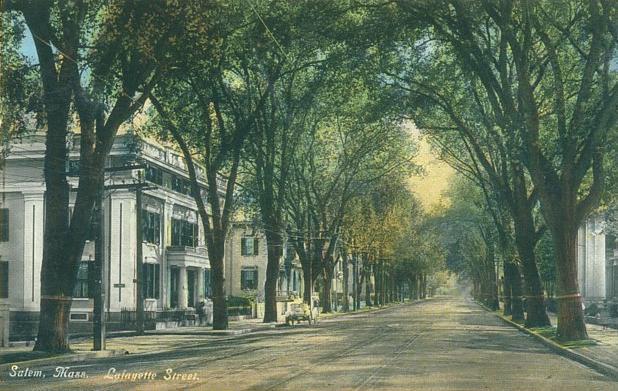
Figure 1 - Vaulting elms lining Lafayette Street in Salem, Massachusetts in 1910.  From the Wikipedia and reproduced from an original postcard published by the Hugh C. Leighton Company, Portland, Maine In the public domain because of age.

Figure 1 – Vaulting elms lining Lafayette Street in Salem, Massachusetts in 1910. From the Wikipedia and reproduced from an original postcard published by the Hugh C. Leighton Company, Portland, Maine In the public domain because of age.

Great vaulting rows of elms used to line and shade the Main Streets (and Elm Streets) of many American towns.  I include as illustration Figure 1, which show’s Lafayette Street in Salem, Massachusetts in 1910. But most have fallen victim to Dutch Elm Disease.  I remember, as a graduate student at Cornell University in the 1970’s watch the last fight by these glorious trees that once lined the center of the campus.

Winter is ripe with photographic guilt.  There is great beauty outside, but it is also very cold.  So I have to say that Mr. Trebay’s column and Mr. Blankenhorn’s photograph have inspired me anew to venture out in the New England winter to record the glory of trees in snow.

Zena Holloway’s magical underwater world

I promised you some really gorgeous photographic “shtick” today and I am going to deliver.  Someone posted a link to this on one of the Facebook Photo Groups and I was truly amazed and well, bewitched by the imagery. So I’d like to introduce you to the spectacular and truly magical photographs of fashion photographer, Zena Holloway. Ms. Holloway is both a highly talented photographer and an experienced diver.  Her “shtick” is to photograph her models floating under water, usually with equally spectacular clothing floating like ethereal gossamer.  All of this combines to titillate our sense of wonder, of dreaming of merpeople, of defying both gravity, and the need for oxygen.  I for one am totally captivated.

And in directing you to some of her photographs, I am at a loss as to where to begin or which to chose.  For pure magic let’s begin with the image of a woman swimming and entwined with the light of a jelly fish – certainly a hugely difficult picture to construct.  Then there is this wonderful picture of an encounter between a  child and a seal, a touching interspecies moment.  And finally basic, but really intriguing, is this picture of a swimmer with a horse in “Open Water.”. There is a huge amount of work and talented in setting up this kind of shot and elaborate reworking and combining in the light room. The more of Ms. Holloway’s pictures I look at the more I am enchanted.

Photographic shtick and gimmickry

Figure 1 - "I wait" by Julia Margaret Cameron  Wait. The model was Rachel Gurney. From the Wikipedia Commons and the Getty Museum.  In the public domain because it is more than a hundred years old.

Figure 1 – “I wait” by Julia Margaret Cameron Wait. The model was Rachel Gurney.This kind of Christian allegorical image was one of Cameron’s shtick. the Wikipedia Commons and the Getty Museum. In the public domain because it is more than a hundred years old.

I wanted to talk today a little about shtick and gimmickry in photography. According to the Wikipedia, “shtick,” which can also be spelled “schtick,” is derived from the Yiddish word shtik (שטיק), meaning “piece”; the closely related German word Stück has the same meaning.  But that’s really not what it means.  Shtick is often used in the context of comedy – Henny Youngman’s shtick was his violin.  I can just see most of my readers, Henny Who?  Henny Youngman was a comedian who played the violin, it was his shtick or trademark.  Ah, now we are getting somewhere.  The word shtick kind of means trademark, or what sets that person apart from the crowd by creating instant recognition. Alfred Hitchcock and M. Night Shyamalan share a shtick.  They both make cameo appearances in their movies.

If you see a glorious western vista, you immediately think of Ansell Adams, that was his shtick regardless of whether he actually took the photograph.  A great example of photographic shtick is Murad Osmann’s photographic Instagram series/blog “Follow me,” where the photographer and consequently the viewer is led around the world by the back reached hand of his beautiful girlfriend, Nataly Zakharova.  This is what Osman does, you immediately recognize a photograph as being his, and he has attained, well, viral internet recognition.  Similarly we have Diane Arbus, who is famous for her photographs of “deviant and marginal people.”. (I am not sure that I am happy with that phrase, but it is what the wiki on Arbus uses.” But again, such a photograph brings immediate recognition as being either by Arbus or derivative of her.

But then we move into a grayer territory.  Consider, for instance, the mirror distortion photographs that we have previously discussed by Andre Kertesz.  Once again such an image of a nude woman distorted in a circus mirror is immediately associated with Kertesz, but because Kertesz did so many different types of images in his lifetime  his distortion photographs are more a series or a study set, then true persistent shtick.  Likewise, Edward Weston’s salad photographs.

It is a marvelous fact that everyone, who takes and practices photography seriously, brings a unique and recognizable fingerprint to their craft.  One of the best ways to discover yours is to do a theme set of pictures – that is give yourself an assignment to take a series of connected photographs of some particular subject.  You know boats, other photographers taking pictures, hummingbirds, whatever.  Look for the similarities in your vision.  What is it that you always do?

And developing a shtick can be a short cut to achieving ephemeral fame.  This is finding your photographic voice and then adding just a bit of predictable spontaneity, and you’ve got shtick.

My reason for bringing this up, is that I’d like to add the word “shtick” to the Haiti and Skoll vocabulary.  And, by the way, there is nothing wrong with shtick.  It can be really fun, really unique, and truly beautiful. Tomorrow, I’m going to show you some absolutely gorgeous shtick from a contemporary photographer.  But, and for today, I’d like to share one of the little angel photographs of Julia Margaret Cameron, whom we have spoken a lot about.  This kind of Christian allegory was, well you know, one of her shticks!


The artist at work

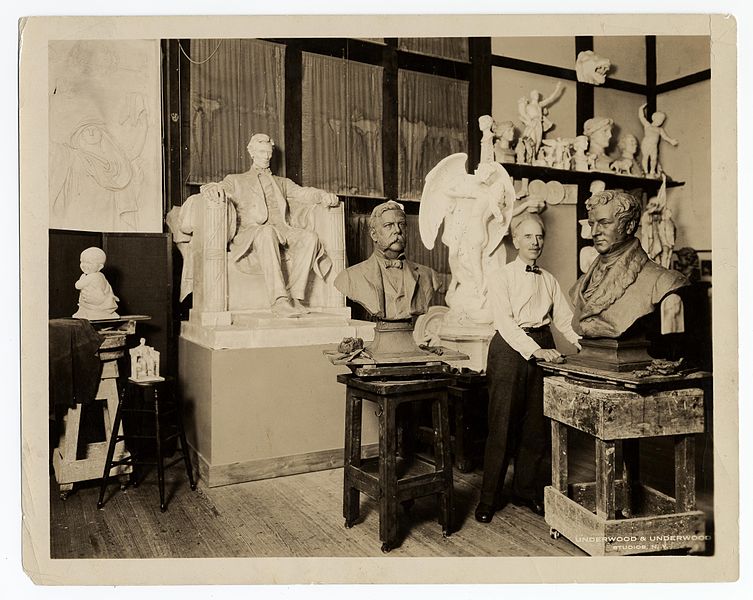
Figure 1 - Daniel Chester French, American Sculptor, in his studio in 1920.  Image from the Smithsonian Institution vis the Wikimedia Commons and has no known copyright restrictions.

Figure 1 – Daniel Chester French, American Sculptor, in his studio in 1920. Image from the Smithsonian Institution vis the Wikimedia Commons and has no known copyright restrictions.

I know that I use the word wonderful a lot.  Still there is a wonderful set of images on MSN showing artists and writers in their studios at work.  It is absolutely delightful! So I felt that I had to share it with all of you.  And apropos of our discussion of how the photographs gives you admittance to another time and place, where you feel at some level to be interacting with the artist, here you feel like you are meeting these people in the flesh – despite the fact that many of them are long gone to us.  Such is the magic of photography. (Psst! I say that a lot too!) I’ve got several favorites among these.  First is a portrait of Ansel Adams working in his studio on a print in 1968.  Second, is an intensely personal picture of David Hockney painting on the floor of his studio in 1967.  And finally, out of deference to a  certain reader Hunter S. Thompson in his studio in 1996.

We learn that these geniuses are just like us.  Some are neat-niks and some are slob-niks.  In some cases the studio is austere and nearly empty.  In other cases it is cluttered and reminiscent of what Joseph Campbell referred to as mythic ruins.  I have included as Figure 1 a similar type of picture of American Sculptor Daniel Chester French in his studio in 1920.  This image is more posed than the images in the series, but still presents and intimacy with the artist and places him among the relics of his own creation – relics that mimic the monumental and the classic.