Double selfie in a store window

Figure 1 - Double selfie in a store window, Kennebunkport, Maine. (c) DE Wolf 2015.

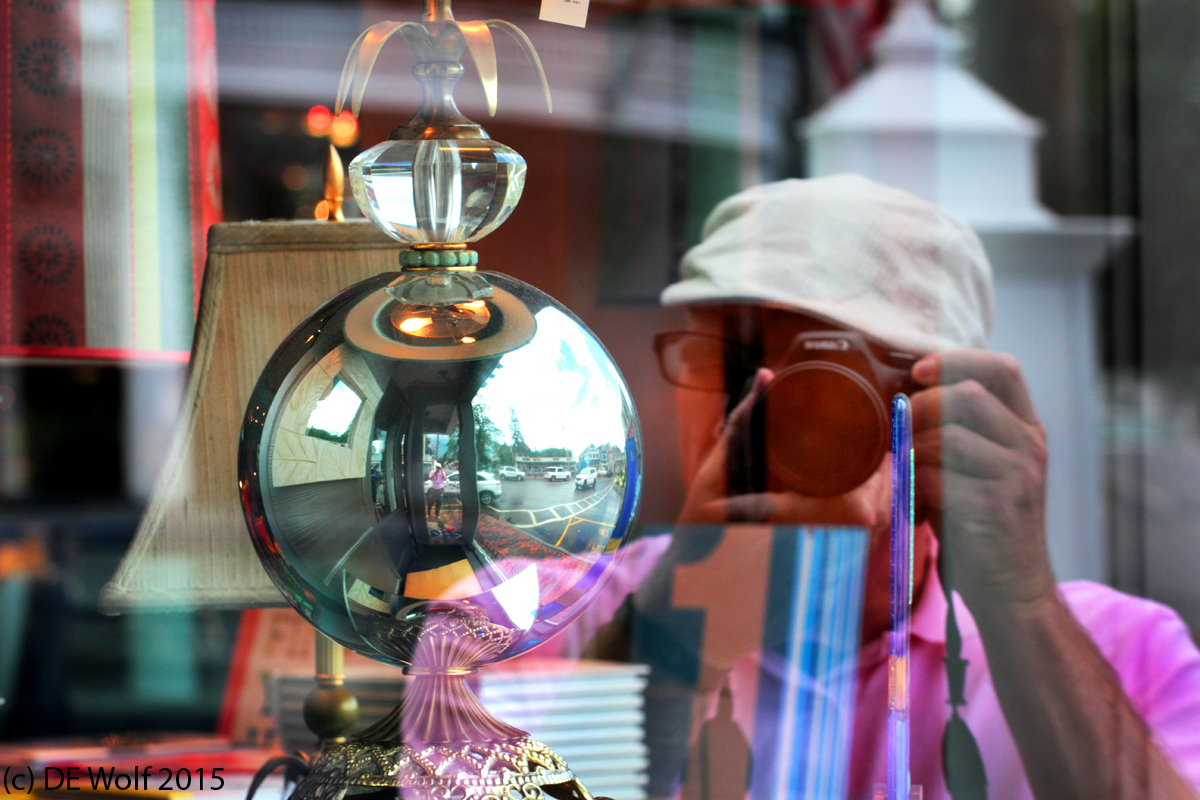
Figure 1 – Double selfie in a store window, Kennebunkport, Maine. (c) DE Wolf 2015.

The great mythologist Joseph Campbell spoke of the hero’s journey and how everyone’s life is  a quest for the meaning of self.  Is it possible that the now ubiquitous selfie is not merely narcissism but an expression of that inward journey that takes you outward? That is kind of how I see the image that I took on Friday at Kennebunkport’s Dock Square, which I have simply entitled, “Double selfie in a store window.” There I am as a reflection both in the window and in held in the magic of the convex mirrors. I have been coming to the spot where I took this photograph for close to thirty years, and it does not take much to push me into Twilight Zone mode, where I wonder if the person down the tunnel of the convex mirror is me toady or me 25 years ago. There are so many conflicting reflections and there are so many sources of light, from inward light of the sun to the incandescent light of the lamp. I use the word conflicting because with the exception of the lamp base itself it is hard to sort out what is what, just as our lives are composed of a myriad of thoughts, memories, and events.

Look around you. Everyone is on their cell phone. Campbell has taught us that”

“Computers are like Old Testament gods; lots of rules and no mercy.”

“We’re so engaged in doing things to achieve purposes of outer value that we forget the inner value, the rapture that is associated with being alive, is what it is all about.”

Black Cohosh

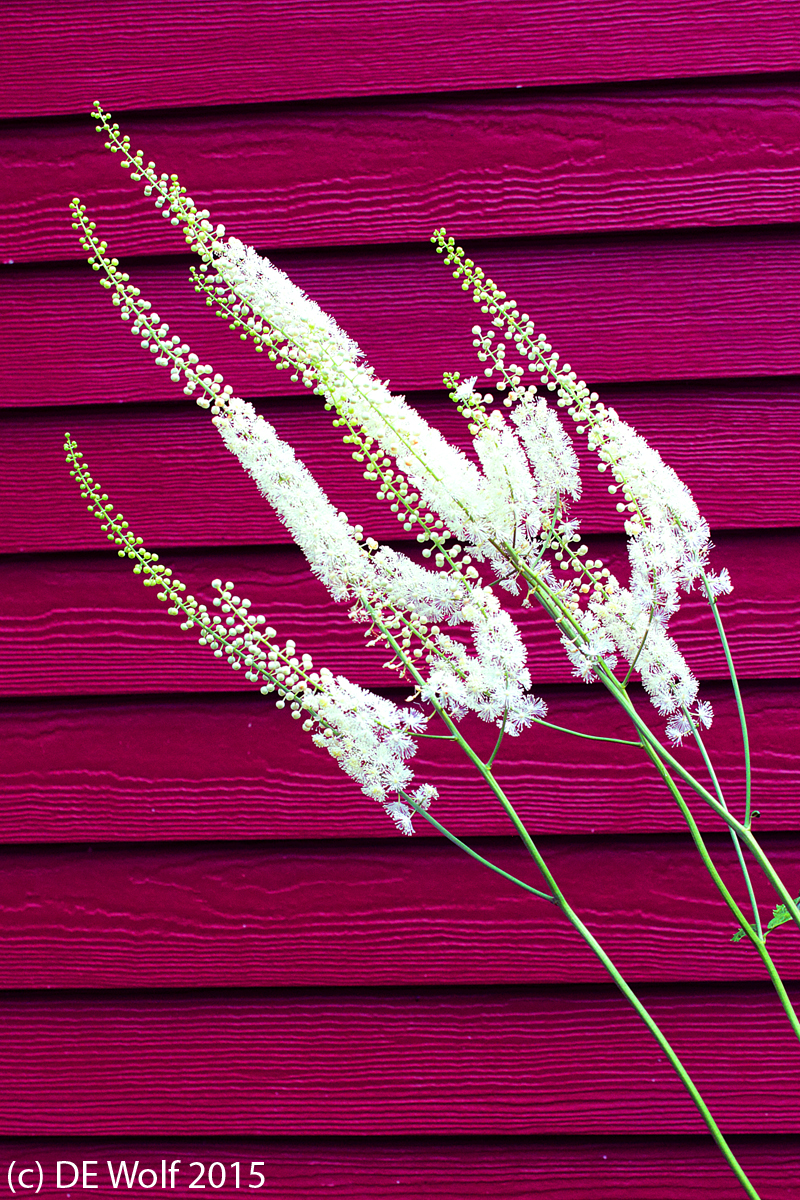
Figure 1 - Black cohosh at the Assabet Valley Wildlife Refuge, July 2015. (c) DE Wolf 2015.

Figure 1 – Black cohosh at the Assabet Valley Wildlife Refuge, July 2015. (c) DE Wolf 2015.

OK, so it is the middle of July and time to get out in the woods.  My son and I when on a hike Wednesday through the Assabet Valley Wildlife Refuge. Straight off, at the Rangers’ Station I spotted the striking white flower of Figure 1 set off against the siding of the station. It is rare that I photograph flowers, but this was so gorgeous that I made an exception.

I am pretty sure that it is black cohosh (all you botanists out there, please correct me if I am wrong) – Actaea racemosa aslo referred to as black bugbane (the bugs were a bane to me on Wednesday maybe I should have swatted them with one of these stalks), black snakeroot, or fairy candle. It is on the endangered species list.

The roots and rhizomes have long been used medicinally by Native Americans to treat gynecological and other disorders, including sore throats, kidney problems, and depression.  Black cohosh is used today mainly as a dietary supplement marketed to women as remedies for the symptoms of premenstrual tension, menopause and other gynecological problems. It was originally thought to contain estrogenic compounds, but this now does not appear to be the case. And I just thought that it was a beautiful white flower. Go figure!

Canon T2i with EF70-200mm f/4L USM lens at 70 mm, ISO 400, Aperture Priority AE mode, 1/160th sec at f/7.1 with no exposure compensation.


What’s wrong with this picture?

Figure 1 - By a Cretacious sea - IPhone image. (c) DE Wolf 2015.

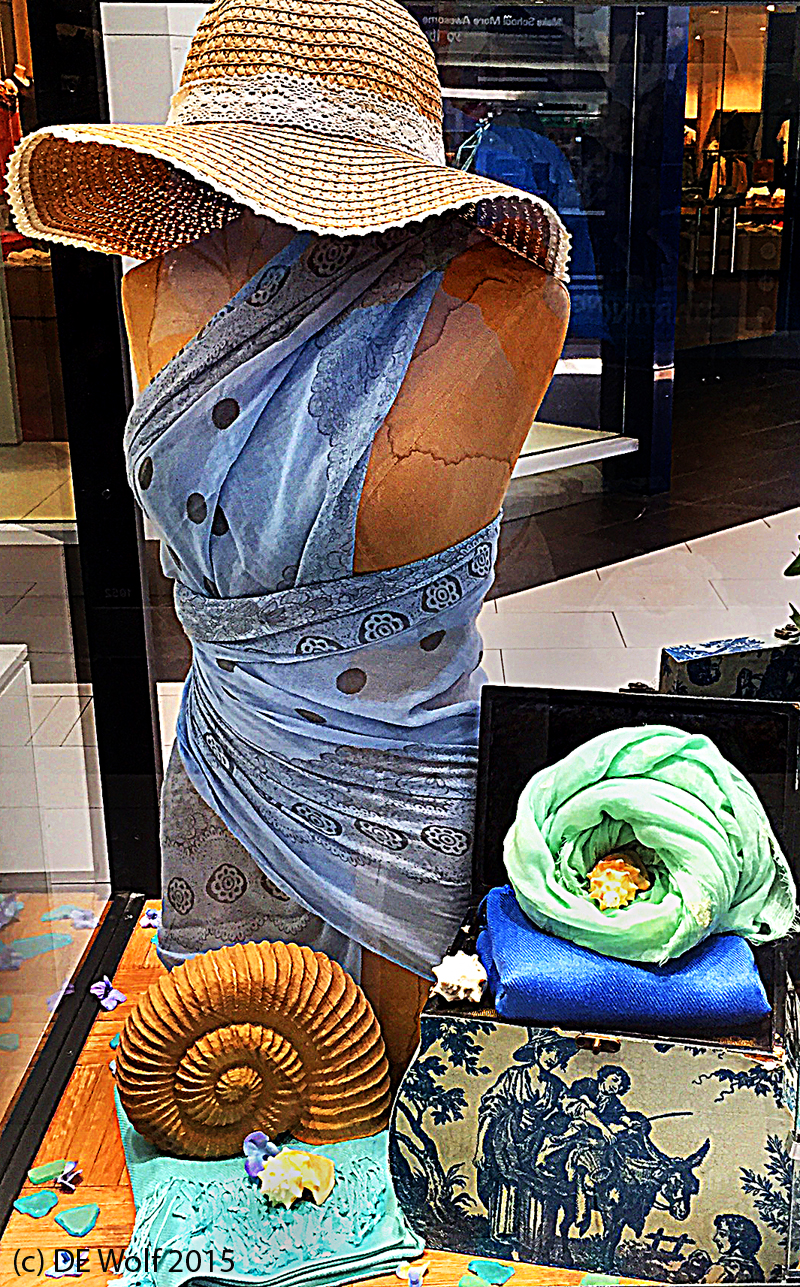
Figure 1 – By a Cretacious sea – IPhone image. (c) DE Wolf 2015.

As the song goes: “By the sea, by the sea, by the beautiful sea…” So it is summer here in New England, and on a hot muggy Sunday I was walking around the local mall, mercifully air conditioned, and came across a display case, where I took the IPhone snap of Figure 1. It is not of great photographic interest to be sure. The display is meant to convey the sense of a summer’s outing to the beach. Great! But what’s wrong with this picture? What beach where? Or more importantly what beach when?

That curly sea shell is actually a fossil ammonite. The ammonoid cephalopods first appeared 400 million years ago in the Devonian and became extinct at the close of the Cretaceous about 66 million years ago. The Shakespeare 1500 year anachronism of a clock in Julius Caesar pales by comparison to this scene off by 66 million years at least. The fact is that for much of their time, ammonites ruled the sea as fearsome predators. Recognize that some species were enormous, much bigger than us. I once saw a National Geographic documentary where a diver went down at night to photograph giant Humboldt red squid and almost got eaten alive.  So have a little respect. But fortunately this summer, you do not need to worry about aggressive cephalopods, and if you are swimming along the US east coast need only concern yourself with great white sharks. Or you could just stay out of the water, people!

Of recurrent nightmares and solar eclipses

Figure 1 - Solar Eclipse totality March 7, 1970, Virginia Beach, VA. (c) DE Wolf 2015.

Figure 1 – Solar Eclipse totality March 7, 1970, Virginia Beach, VA. (c) DE Wolf 2015.

Our discussion yesterday about the Mariner IV journey to Mars, in July 1965, led my mind back to the troublesome sixties. During the summers of 1960 – 1963 the impotence of childhood forced me to endure “dreaded summer camp.” It was not that there is anything wrong with cool lakes and beautiful mountains, it was just that “camp” in those days meant one thing, sports. We have since become more enlightened. And while I was not particularly bad a sports, I had no interest in them. I was already a budding scientist. Anyway, I so dreaded “camp” each year that when I got there I would immediately start counting down the days to that merciful day in August when it would be over. Not important, in 1964, I entered the very special world of New York’s Stuyvesant High School – for science brains like me – and the world became very different. The rest, as they say is history.

My point in telling this is that for years later I would have recurrent nightmares that I was back in “camp” and trapped for another summer.  This was until one night, maybe fifteen years later, when I realized in my dream that I was an adult and if I didn’t like it I could just leave. I was in control. I’ve never had that dream since.  And it is an important lesson, because I believe that much of the conflicts in life relate to the fundamental issue of control. Teenage rebellion is about expressing control. Raising children is about keeping your child safe but at the same time slowly allowing them independence. I think that this issue of control extends to religions, social groups, and even nations. It is a fundamental element of human conflict.

But back to July 1963. I had contracted the mumps and was in quarantine. There was to be a solar eclipse, but our camp was sequestering all the campers in the rec hall to watch a movie and protect their eyes from the sun. These people were idiots! My father rescued me and on July 20 1963, fifty-two years ago today I saw my first partial eclipse of the sun.

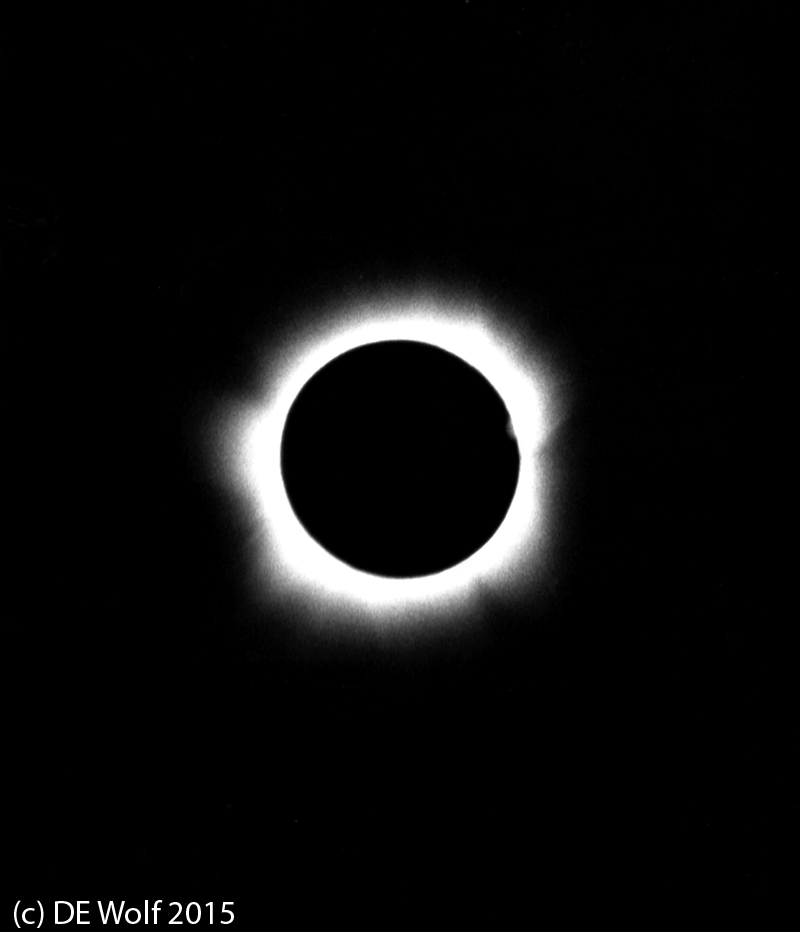
Fast forward seven years to March 7, 1970. A lot changes in seven years and you gain some amount of control. My friend Ed Grupsmith, my sister, her friend Caroline, and I went to Virginia Beach to see and photograph a total solar eclipse. Ed and I had our equipment and the whole thing worked out and practiced in detail. We had concocted a clever scheme of using direct positive copy film for black and white. If I remember correctly I shot black and white. Ed shot color.

It may sound strange and geeky, but seeing a total eclipse is life changing. The sun slowly became occluded. We captured the beauty of Baily’s beads, when the rough landscape of the moon causes glorious bright beads to ring the sun. And then suddenly alternating bands of light and dark traversed the beach. These are called shadow bands. The wind picked up, there was darkness, and the stars came out. All the startled seabirds began to squawk at the unexpected night. We could see the fiery trail of a rock launched from near-by Wallop’s Island NASA Launch Facility to photograph the eclipse from high altitude.

And as for the eclipse itself, Figure 1 shows a photograph that I took of totality on that day. It is like so many images of eclipses through the years. These inevitably fail to capture the intrinsic wonder. There is a marvelous three dimensionality to the actual event. The magnet field lines of the Sun pierce the nebulous solar corona.  You feel the fear of primitive people and you feel the power of modern understanding. Like I said, it is a life changing experience.
The tree of love and remembrance

Figure 1 - The tree of love and remembrance, Fresh Pond Reservation, Cambridge, MA. (c) DE Wolf 2015.

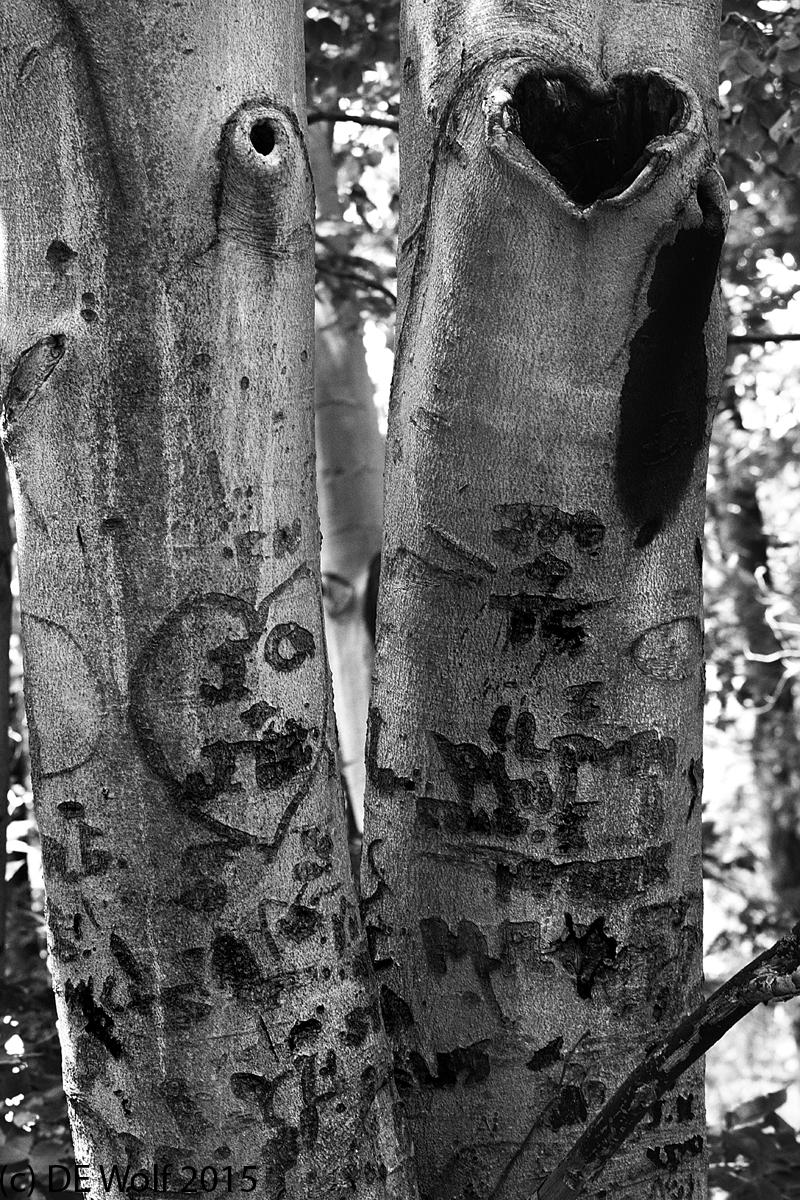
Figure 1 – The tree of love and remembrance, Fresh Pond Reservation, Cambridge, MA. (c) DE Wolf 2015.

The true wilderness is one thing but in suburbia it becomes a matter of closing your ears and eyes a bit – well more than a bit. You’ve got to learn to ignore the sights and sounds of man, to shut  your eyes to fences and the periodic human spore lying about. Years ago in Ithaca, I would go into the gorges and position myself so that I couldn’t see the bridges or any human signs. I would let the roar of the waterfalls drown out the sounds of mankind – the street noises. Then I could marvel and imagine an unspoiled world.

The other afternoon I went into the woods – a sudden refuge of darkness in a brilliantly lit world. You can feel the coolness instantly and this frees you to let your mind wander. You shut your eyes to any intruding images of human habitation. Then I spotted this two-trunked black birch with graffiti all over it. I was dismayed at first. But then I realized that it was covered in little declarations of love. Judging, from the size of the trunks I would guess that this tree dated back at least to the 1960’s. What of these lovers. Their writings are now all stretched out – scars to the tree, but testimonials nonetheless. You wonder what has happened to all of these people. Have their “dreams lost grandeur coming true?”

The tree itself has been meticulously cared for by the stewards of the forest. There is a gouge covered in tar. And most remarkably, where a limb has broken off and the balm of creosote also applied, the scar remaining is itself heart shaped.  I shall call this the tree of love and remembrance.

Hat trick

Figure 1 - IPhone Selfie in a top-hat. (c) DE Wolf 2015

Figure 1 – IPhone Selfie in a top-hat. (c) DE Wolf 2015

As Figure 1 attests, I found myself this past Sunday mugging in a top-hat for a selfie at the Peabody and Essex Museum in Salem, Massachusetts. What is it about hats, masks, and costumes that transform the self, that take us into worlds imagined? I suspect that it all begins with the masque, a thing that truly metamorphoses us into another dimension. This dimension in prehistoric times took our ancestors into that higher and spiritual plane. It is the same reason that priests wear robes – to transcend.

We have several times discussed how photography enables us to revisit the 19th century to see those people frozen in time, across time. But here is a real, or imagined, possibility to actually transform oneself back, to become one of these people ourselves. I remember a television movie where it is the completeness of the costume that ultimately breaks the bonds of time that unsticks, thank you Kurt Vonnegut, the protagonist. In Figure 1, my Lands End knit shirt protects me from unexpected time warps. The picture works in color, but looks rather stunted when I changed it to black and white. It is of this not that century. So again, the transformation was less than complete.

Your face in a mirror is oh so familiar. The hat transforms it. It hides the hair, or in my case the lack there of. But still the features are strong and recognizable. They are tangible evidence that we have not truly crossed a lamina of time and are just playing with a little magic. Is this a second definition to the phrase “hat trick?”

Aspiration and the texture of weathered wood

Figure 1 - Aspirations and the texture of weathered wood, Glacken Slope, Fresh Pond Reservation, Cambridge, MA. (c) DE Wolf 2015.

Figure 1 – Aspirations and the texture of weathered wood, Glacken Slope, Fresh Pond Reservation, Cambridge, MA. (c) DE Wolf 2015.

It is probably time to take a break from bird photographs. So I thought that today I would share an image that I took it a few weeks ago along the Glacken Slope. It is simply a picture of weathered wood, a study in texture and dynamic range. For photographers of my generation, it represents the aspiration, usually unfulfilled, to produce a photograph worthy of the Group f/64. Ah well…

“Hope springs eternal in the human breast;

Man never is but always to be blest.”

Alexander Pope (1688-1744)An Essay on Man

Canon T2i with EF70-200mm f/4L USM lens at 149 mm, ISO 1600, Aperture Priority AE Mode 1/400th sec at f/11.0 with -1 exposure compensation

Gadwall duck – Anas strepera

Figure 1 - Gadwall ducks, Fresh Pond Reservation, Cambridge, MA. (c) DE Wolf 2015.

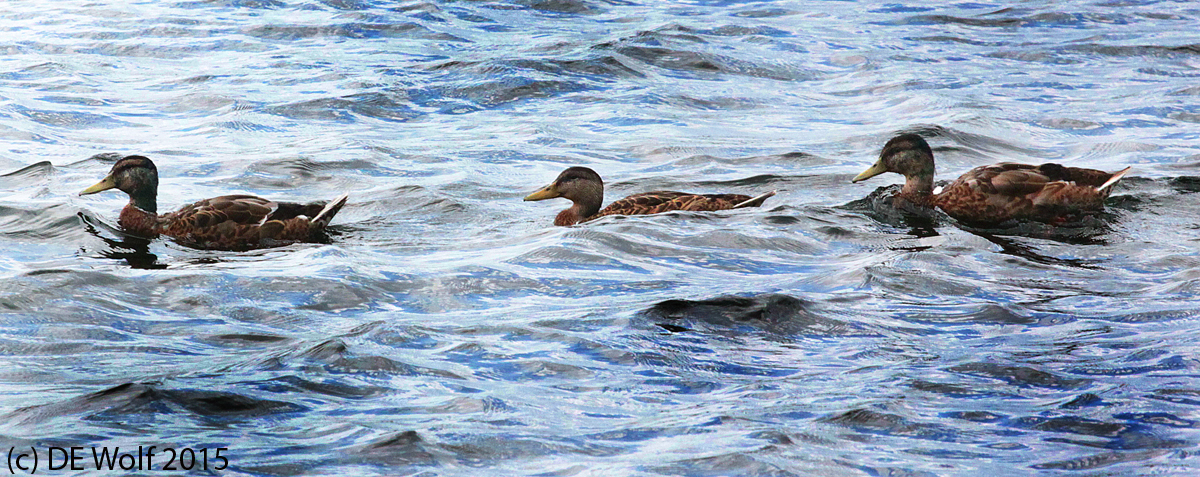
Figure 1 – Gadwall ducks, Fresh Pond Reservation, Cambridge, MA. (c) DE Wolf 2015.

Slowly, the ducks are returning to Fresh Pond.  So far this summer there have been mostly Canada geese (Branta Canadensis). But then last week there was the beautiful black duck (Anas rubripes) that I photographed and then this past Tuesday I was walking along the path and spotted a group of Gadwall ducks (Anas strepera) swimming against an active pond with great determination.  The Gadwall is not that common in Massachusetts. So I guess that I should be cautious about my identification. And I welcome correction from readers. What the guide books do say, is that if you see a group of “mallards” (Anas platyrhynchos) without any green heads (characteristic of males) then they are probably gadwalls as opposed to a group of female mallards. Figure 1 is an attempt to photograph them.  The image does not meet my usual standards of sharpness, although the middle duck, the one I was focusing on, came out reasonable sharply.  But the back-lighting of a cloudy sky just didn’t give me what I wanted.

I have been pondering this image quite a bit. While sacrificed in sharpness, I really like the stop action.  There is to my eye a real sense of motion against both wave and a strong head wind. The image seems almost to be a watercolor with subtle pastels, and that is in its own right very pleasing. So I’ll leave it as an experiment and let you decide.


Canon T2i with EF70-200mm f/4L USM lens at 184 mm, ISO 1600, Aperture Priority AE Mode, 1/3200th sec at f/7.1 with +1 exposure compensation

The vernal pool

Figure 1 - The vernal pool by Black's Nook, Fresh Pond Reservation, Cambridge, MA. (c) DE Wolf 2015.

Figure 1 – The vernal pool by Black’s Nook, Fresh Pond Reservation, Cambridge, MA. (c) DE Wolf 2015.

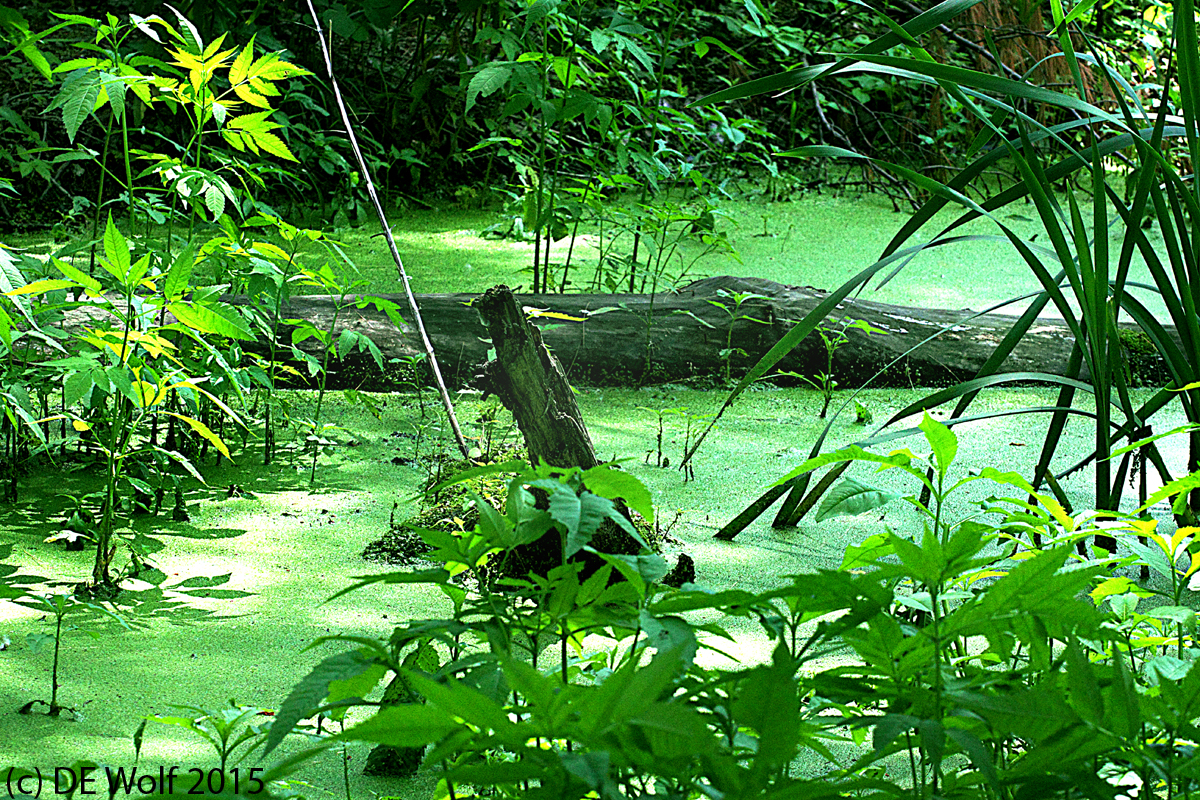
Off of Black’s Nook there is a vernal pool. Vernal pools are little wet spots that teem with life but whose depth and degree of inundation change over the course of the seasons. Most vernal pools will dry up completely periodically.  This one I have yet to see completely dry, but am convinced that the right summer drought would do it. What makes vernal pools unique is the variability of nutrients, salts, and acidity as the pool has more or less water. The term “vernal” comes from the assumption that it is at its highest water level in spring and summer..

That is a very technical definition. In another sense these are mysterious secretive places that require a bit of focus and concentration to see all of the life they contain.  In the case of Black Nook’s pool that is hard because it is in a protected part of the forest and you can only view from a respectable distance.I have observed it through the seasons: frozen in winter, surrounded by melting snow in spring, and now intensely green with vegetation in the heart of summer – shades of Vivaldi for sure. It was the greenness that brought it to my attention on this particular day. It was a verdant celebration, a microenvironment of rich emerald color that was tricky in its own way to photograph. I am drawn to this kind of lush greenness, I think because it reminds me of a panorama in the American Museum of Natural History of my youth depecting the Jurassic era. I am sure that the depiction does not meet modern interpretation, but it is engrained. So “Welcome to Jurassic Park!”

Canon T2i with EF70-200mm f/4L USM lens at 98 mm, ISO 1600, Aperture Priority AE Mode, 1/500 sec at f/10 with -1 exposure compensation. My camera is usually set forr bird photograph f/7.1 and central spot metering.  Here I went to f/10.0 and multispot metering to increase the depth of field.  These carpets of algae and plant matter I find overwhelm the exposure and it is necessary to cut back a stop if you want green instead of saturated white.