
Lollipop

Figure 1- Lollipops." IPhone photograph. (c) DE Wolf 2016.

Figure 1- Lollipops.” IPhone photograph. (c) DE Wolf 2016.

Sometimes it’s just fun to take photographs, and that’s where the cell-phone comes in as a major source of entertainment. So today I want to offer up confectionery delight with Figure 1 – Lollipops. The word “lollipop” in and of itself is wonderful, especially when you onomatopoetically emphasize the syllable “pop,” as in “lol-lee-POP.”

I headed to the Wikipedia to learn about the world of lollipops, and the first thing that I found out is that the ones pictured in my photograph are referred to as “large, rainbow-swirl lollipops.” The first lollipops date back to medieval times when the nobility would eat boiled sugar with sticks as handles. The word ‘lollipop’ was first recorded by English lexicographer Francis Grose in 1796. The term may have derived from the word “lolly” (tongue) and “pop” (slap). The story gets confusing when it comes to lollies in the Americas. Many people believe that they were invented around the time of the US Civil War. George Smith claimed the invention of the modern style lollipop in 1908 and trademarked the lollipop name in 1931.

As for the lollipops of Figure 1. These are reminiscent to me of what were variously called, depending upon size, as “eight hour,”” twelve hour,” and “all day” suckers when I was a child. I, myself, could not make them last, as I was an “inevitable cruncher” of lollipops, indeed of all “sucking candies.” My grandmother referred to these as “hard candies” and always had a supply of “sour balls” on hand when my sister and I came over. Still there were those with the endurance to lick away for hours – and worse to store them by their bedsides overnight as their teeth and pancreata rotted away at a tender age. It is hard to recall, but I suspect that these were the same children who would disgustingly lick out the centers of their Oreo cookies.


Happy Valentine’s Day from Hati and Skoll

Figure 1 - The meat of Valentine's Day. (c) DE Wolf 2016.

Figure 1 – The meat of Valentine’s Day. (c) DE Wolf 2016.

Happy Valentine’s Day from Hati and Skoll to all lovers young and old. I was settling in on a pretty cold New England afternoon to my usual thoughts of Valentine’s Day and its relationship to the Roman Wolf Festival, The Lupercalia, when I was struck by a display of heart shaped cuts of beef at the local grocery store.  This is captured in Figure 1. Shut your eyes and apologies, vegetarian and vegan readers. This is pretty gross stuff and likely to make vegans of us all – especially since I have a friend on Facebook who keeps posting the most amazing vegan recipes.

There may be a connection yet with Roman rituals. I learned this afternoon from an NPR article called the “The Dark Origins of Valentine’s Day,” that some pretty unsavory things happened on that day in the Roman past. It seems that during the feast of the Lupercalia. the men would sacrifice a goat and a dog. After seeing the movie Jurassic Park and hearing phrases like “scapegoat” and “Judas goat,” I have come to the realization that the world is not always kind to goats. But poor cuddly puppies are another thing! What the heck? And the real kicker is that the men would then whip the women with the hides of these victim animals. Most weirdly, the women were delighted because the ritual was thought to promote fertility.  So I am left with an image in my mind that is much like that of Figure 1 and with the realization that women have certainly changed since Roman times.

But I cannot leave you, dear reader, with this image burned onto your retinas on Valentines Day. So let us enjoy instead the postcard image of Figure 2, “The Big Pink Heart” from the early twentieth century around 1910, which is when my grandmother and grandfather met and became Valentines. Don’t think about the expression “when in Rome do as the Romans do.”* Think love everyone, not cuts of beef, and then share it. The world could use a lot more than it has.

*”si fueris Rōmae, Rōmānō vīvitō mōre; si fueris alibī, vīvitō sicut ibi” ‎(if you should be in Rome, live in the Roman manner; if you should be elsewhere, live as they do there). Attributed to St Ambrose.

Figure 2 - The Big Pink Heart - postcard from c. 1910 and in the public domain.

Figure 2 – The Big Pink Heart – postcard from c. 1910 and in the public domain.


One more

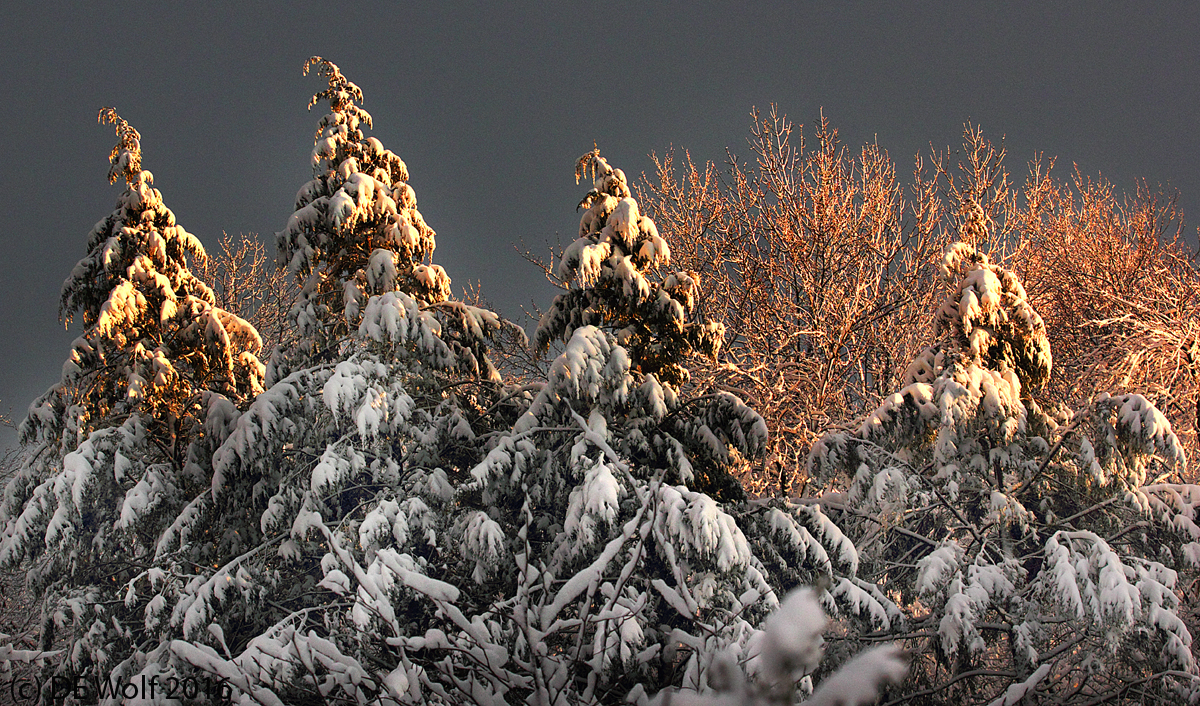
Snow covered pines at sunset, Sudbury, MA. (c) DE Wolf 2016.

Snow covered pines at sunset, Sudbury, MA. (c) DE Wolf 2016.

Well, one day before the work week and the next February snow storm; so I had better get my last image from the decisive sunset moment from Friday.  This is Figure 1 and it shows the tops of four snow covered towering pines illuminated by a golden setting sun.  This might be deep in the woods but was, in fact, taken from the small park across from my house. Again I like the drama the color and the dynamic range. I think the composition could be better, somehow adhering to the Golden Rule of Thirds. However, I do like the sense of motion created by the treetops leaning to the left in the picture. All and all I am pretty happy with it and was very happy that my camera was on hand for nature’s fireworks.

Canon T2i with EF70-200mm f/4L USM lens at 70 mm, ISO 800, Aperture Prioty AE mode, 1/1000-th sec at f/7.1 with -1 exposure compensation.

Golden treetops

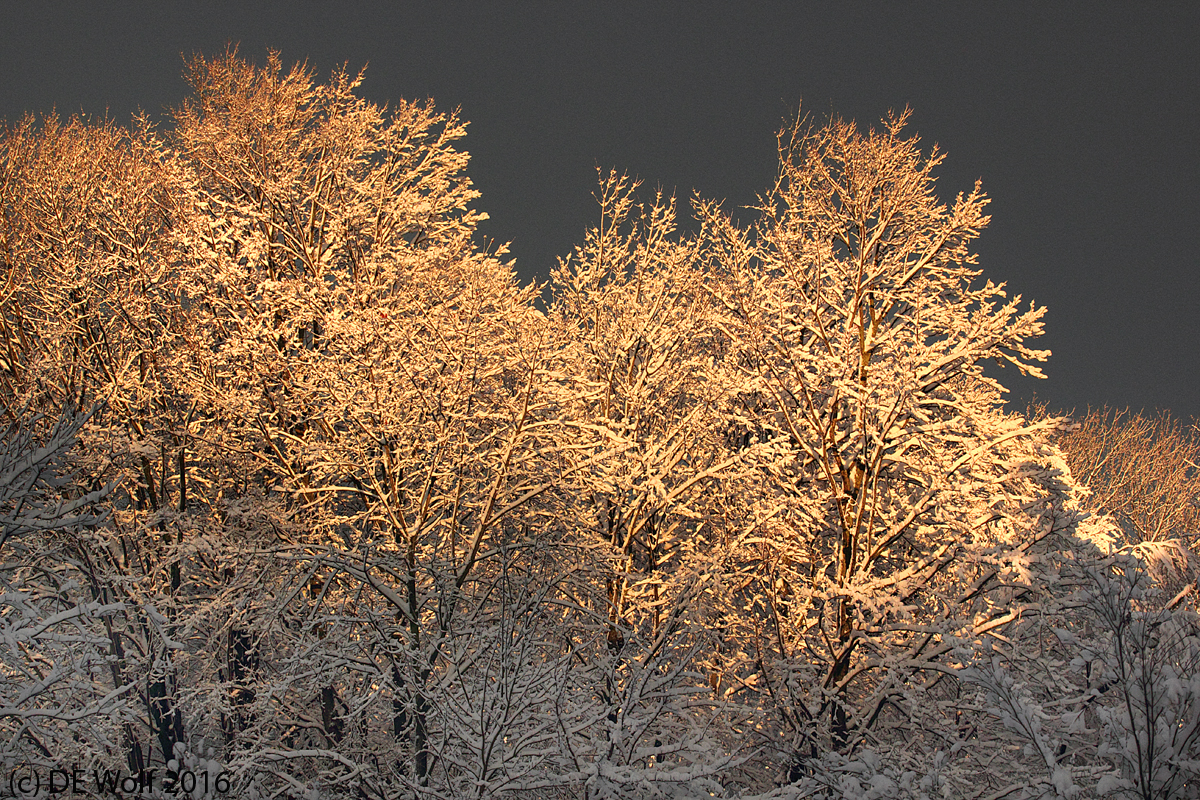
Figure 1 - Snow covered treetops illuminated at sunset, Sudbury, MA. (c) DE Wolf 2016.

Figure 1 – Snow covered treetops illuminated at sunset, Sudbury, MA. (c) DE Wolf 2016.

The decisive light that I spoke about yesterday illuminated the tree tops against a dark, looming, almost night-like sky. The second image from this short but gorgeous moment is shown in Figure 1.  What really appeals to me, beyond the drama, is the dynamic range – that is how the eye pulls out the features of the trees and snow in shadow. It is unusual for snow photographs to have a golden tone. The blue tone of Rayleigh scattering is much more common.  And in this context it is unusual to compensate down in exposure, so as not to saturate, as opposed to up in exposure to drive the dynamic range towards saturation.

Canon T2i with EF70-200mm f/4L USM lens at 70 mm , ISO 800, Aperture priority AE mode, 1/1600 th sec at f/7.1 with -1 exposure compensation.

Why I live in New England

Figure 1 - Sunset after the snow historic center of Sudbury, Massachusetts. (c) DE Wolf 2016.

Figure 1 – Sunset after the snow historic center of Sudbury, Massachusetts. (c) DE Wolf 2016.

El Niño has given New Englanders a welcome respite from snow and cold this winter. But today we had our first real snow storm at least in Boston and it’s western suburbs. Still the signature of El Niño was there, in that it was a heavy wet slushy snow, the kind that sticks to every tree limb and power-line. So it was all pretty magical,

and the there was “the decisive moment” actually about ten minutes fo decisive moments. The sky was dense and dark when the sunset broke through from the west bathing the snowy treetops in a golden light. I have a few pictures to share with you from the decisive moment. Today I’ll start with Figure 1 that shows the historic center of Sudbury, Massachusetts.

Why do I live in New England?  ’nuff said?

Canon T2i with EF70-200mm f/4L USM lens at 70 mm, ISO 800, Aperture Priority AE mode, 1/2000th sec at f/7.1 with -1 exposure compensation.

Close and very close: Contrasting pairs #3

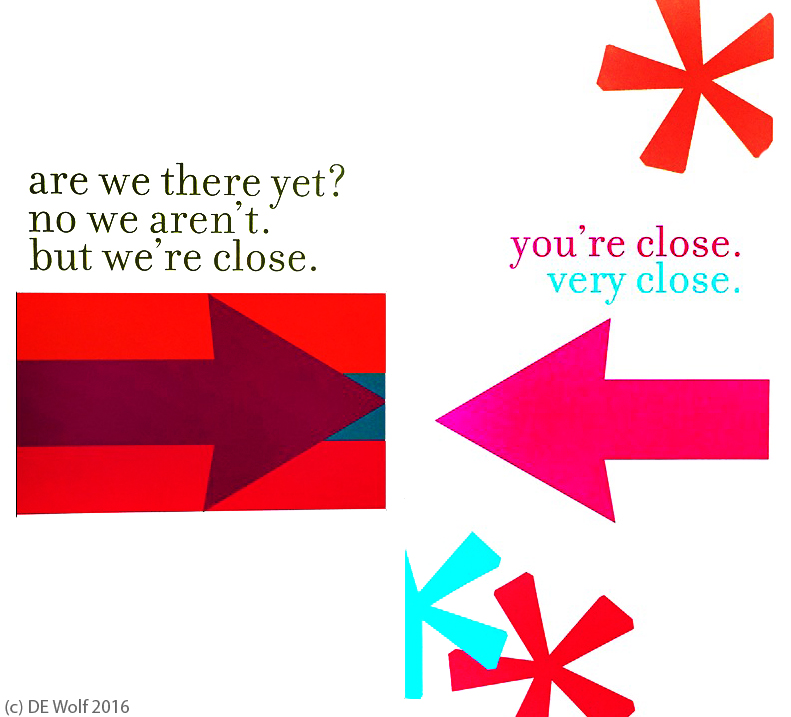
Figure 1 - Close and very close: contrasting pair #3. (c) DE Wolf 2016.

Figure 1 – Close and very close: contrasting pair #3. (c) DE Wolf 2016.

Last Sunday as I was walking down a corridor into the local mall I came upon a sign on the wall that promised that I was close. It’s arrow pointed right. I walked a little further and there was a second sign with even greater promise. I was very close. It’s arrow pointed left. They form a contrasting pair and also together form a minimalist tribute to the great American pop artist Robert Indiana.

Mannequins: Contrasting pairs #2

Figure 1 - Mannequins: Contrasting pairs #2. (c) DE Wolf 2016.

Figure 1 – Mannequins: Contrasting pairs #2. IPhone photograph.  (c) DE Wolf 2016.

We have spoken before about this trend in retail for mannequins to lose all facial features and even to become headless. So I wanted to post, as the second in a series of contrasting pairs, photographs of two mannequins, one faceless one with appealing visage and even painted-in catch-light. Interestingly, these were taken at the same store. One window had the fully anthropomorphic mannequins and the other the faceless ones. I am even wondering if I Photoshopped out the arm to shoulder joint whether she could be mistaken for human. So what is the point? At one junture in their history mannequins were meant to be human like in their appearance. Now the opposite is true. And maybe a part of this is the political correctness of not assuming racial, ethnic, or national type. Still it gives you a little emotional jab to see them dismembered, stripped of clothing, and then rudely dressed – with no concern for possible humanity. Perhaps this is a metaphor for how we treat each other.

Hand-drying: Contrasting pair #1

Figure 1 - Hand-dryers: Contrasting Pair # 1. (c) DE Wolf 2016

Figure 1 – Hand-drying: Contrasting Pair # 1. IPhone photograph. (c) DE Wolf 2016

Despite an unseasonably warm winter, extenuating circumstances have driven me indoors and out of nature. So this poses the question of where to find photographic amusement. I am starting a project that I call “contrasting pairs,” and launched this project this morning during a walk at the local mall. Just to prove that there are amusing photographic subjects to be found everywhere, I took this first “contrasting pair” of hand-drying devices. The top shows the good old standby – a paper towel dispenser, while the bottom shows the new-fangled electric stream dryer – advertised as both more sanitary and more eco-friendly. The eco-friendly part I question as it takes a certain amount of electrical energy to dry one’s hand. I have yet to do the calculation. I am also suspicious that these machines are designed to rip peoples rings off – well not really. I will also point out that the top photo may well fall into the category of photographs of things soon to be obsolete. Of course, one may also wonder why such gadgets are necessary at all. What’s wrong with drying your hands on your pants?

Spike in the snow

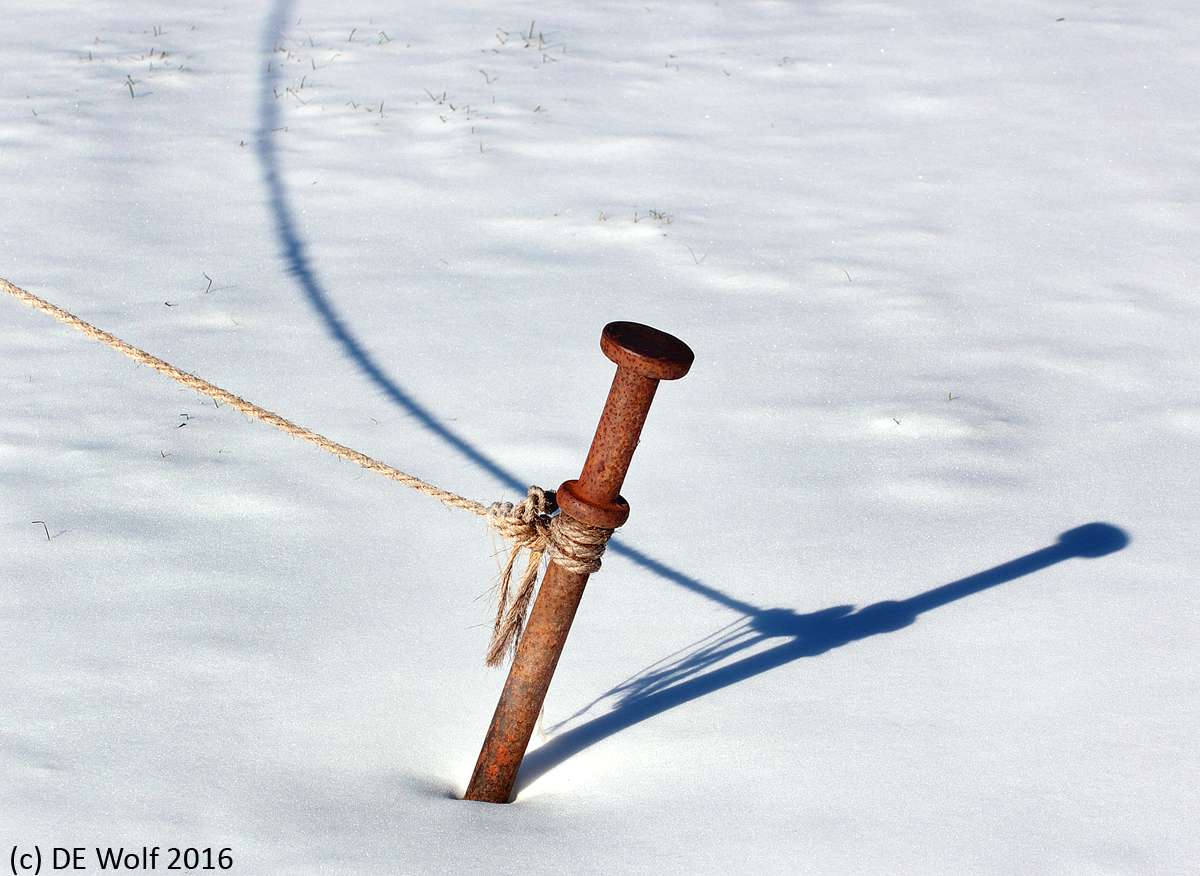
Figure 1 - Spike in the snow, Nine Acres, Concord, MA. (c) DE Wolf 2016.

Figure 1 – Spike in the snow, Nine Acres, Concord, MA. (c) DE Wolf 2016.

It is always fun after a fresh snow to poke around and see what kind of interesting geometrics you can find. I especially love the patterns that blowing wind makes on fresh pliable snow.The key is the intense contrasts broken by little bits of plants poking free. On Sunday I came upon the spike in the snow shown in Figure1. The spike was there to hold cords that helped a young specimen sapling survive the relentless onslaught of wind. I was intrigued by the starkness of the white contrasted with the red of the rusty spike as well as the perfectly straight line of the cord contrasted with the curve of its shadow. And, of course, the fundamental minimalism of the composition appeals to me.

There is always the question with soundscapes in color as to how to deal with the blue. It is a real physical phenomenon but your eye tends to correct for it. Here I decided to leave it. Surprisingly, my preferred exposure called for no exposure compensation. Usually you have to over expose to get the snow properly white.

Canon T2i with EF70-200mm f/4L USM lens at 94 mm, ISO 200, Aperture priority AE Mode 1/800th sec at f/10 with no exposure compensation.