Reassuring moments in physics #3 – Cat bowl caustic

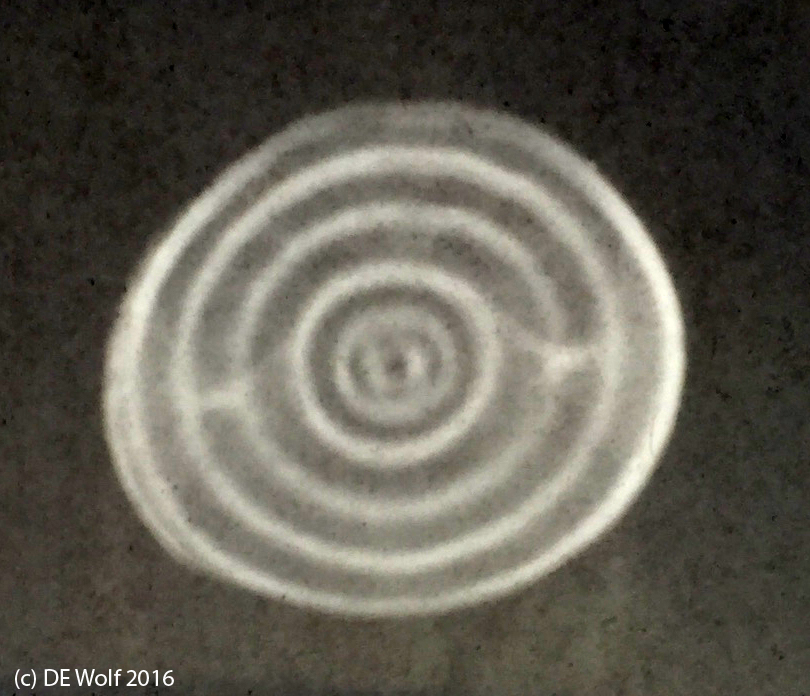
Figure 1 - Cat bowl caustic, (c) DE Wolf 2016.

Figure 1 – Cat bowl caustic, (c) DE Wolf 2016.

It’s been a while since I posted about “Reassuring Moments in Physics,” that is reflects on a photographic encounter of something that requires a little physics to explain it. Such is the case with the image of Figure 1.

The other morning I went to give my cat a bowl of fresh water and I discovered that a beam of sunlight was reflecting off the surface of the bowl and casting a circular disk of light on the wall. Okay, that makes sense. Then I discovered that if I tapped my foot on the floor it created a shadow pattern on the wall that captured the structure of the vibrational modes of the surface. You may recall the scene of the vibrations on the surface of a glass of water in the movie Jurassic Park when Mr. T-Rex makes his first appearance.

The physical phenomenon at play here is actually pretty simple. If you create a concave depression on the surface of the water it’s going to act like a concave mirror and focus the light at the center. On the other hand, if you create a convex hill, it will act like a convex mirror and diverge the light thus creating a shadow. This is very much akin, indeed complementary, to the light patterns on the bottom of a swimming pool caused by wave distortions on the pool’s surface, which in that case act as lenses. These patterns are referred as caustics. The term caustic means to burn and appears to derive from the ability of lenses to focus the sun and to ignite fire.

In the image of Figure 1, taken with my IPhone, we see two types of caustics. The first are the circular waves radiating outward from the center due to the vibration induced by stomping my foot. The second the two v’s on the right and left hand sides caused by the sides of the bowl. I think that there may be some interesting variations of these images, but this is my first try at it.
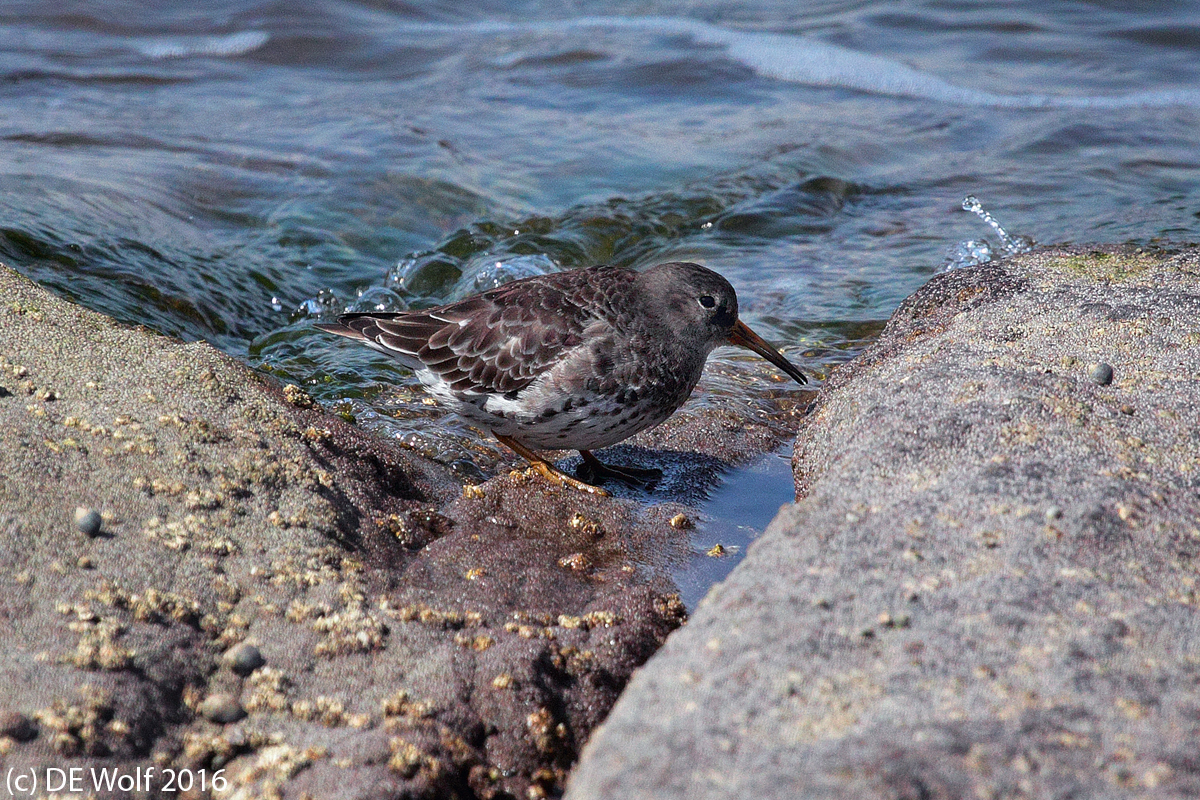

Purple sandpiper – Calidris maritima

Figure 1 - Purple sandpiper, Madison, CT, March 27, 2016.

Figure 1 – Purple sandpiper, Madison, CT, March 27, 2016.

It is officially spring, and time to get back out and photograph some birds. I found myself this chilly but sunny Sunday morning along the beach at Madison, Connecticut. That is an interesting spot, because the first birds that grab your attention are the herring gulls, and you get the impression that that’s all there is. But then you focus, calm down, and look around. There is a duck or two bobbing in the waves near shore and further out are the cormorants. Then I noticed a little bird hopping around on one of the small rock outcrops and started shooting with my camera as I approached. He was quite accommodating and in the end allowed me to get close enough to get sharp images with my 70-200 mm lens.

I love to photograph the shore birds and was very happy with the results here, shown as Figure 1. Identifying the bird proved more difficult than usual. The Merlin Bird Identifier App on my cell phone failed me for really the first time. I consider this to be an essential tool for bird photography and also I think that a test of the photograph’s quality lies in containing sufficient characteristic marks to make an identification. I am pretty sure that it is a Purple Sandpiper (Calidris maritima), here having Sunday brunch along the rocks. You will note as do some of the ornithology guide that it is a stretch to call it purple.

Canon T2i with EF 70-200 mm f/4L USM lens at 200 mm, ISO 1600, Aperture Priority AE Mode, 1/4000th sec at f/7.1 with no exposure compensation.

Easter bunnies

Figure 1 - Happy Easter from Hati and Skoll, (c) DE Wolf 2016.

Figure 1 – Happy Easter from Hati and Skoll, (c) DE Wolf 2016.

It has been a pretty sad week; so I thought that we could use a happy image today – without fuss or profundity or even religious symbolism. So here are a couple of Easter Bunnies. That is the Easter of children – of egg hunts, jelly beans, and chocolates. And we could all use to be children once in a while.

The black-hole that is the center of the universe

Figure 1 - The black-hole that is the center of the universe, (c) DE Wolf 2016, IPhone photograph.

Figure 1 – The black-hole that is the center of the universe, (c) DE Wolf 2016, IPhone photograph.

It was very grey today, and I found myself looking for the sort of quirky images you find by looking with heightened perception at ordinary things. So I came upon a modern basket in a shop and fell in love with the evident spiral and deep three-dimensionality. It is a spiral or a vortex, and for me these little whorl-winds conjure up two associations. The first is the warp of a black-hole in the fabric of the universe, the gravitational field of its space-time. And the second is more intimate. Some of the native American of the American Southwest believe that your soul enters and leaves your body at the finger tips, where it forms the little spirals that we mundanely call fingerprints. This, of course, is ultimately the image of God reaching out to Adam in Michelangelo’s “Sistine Chapel,” the scene of the creation of Adam. Such is the universality of human myth.

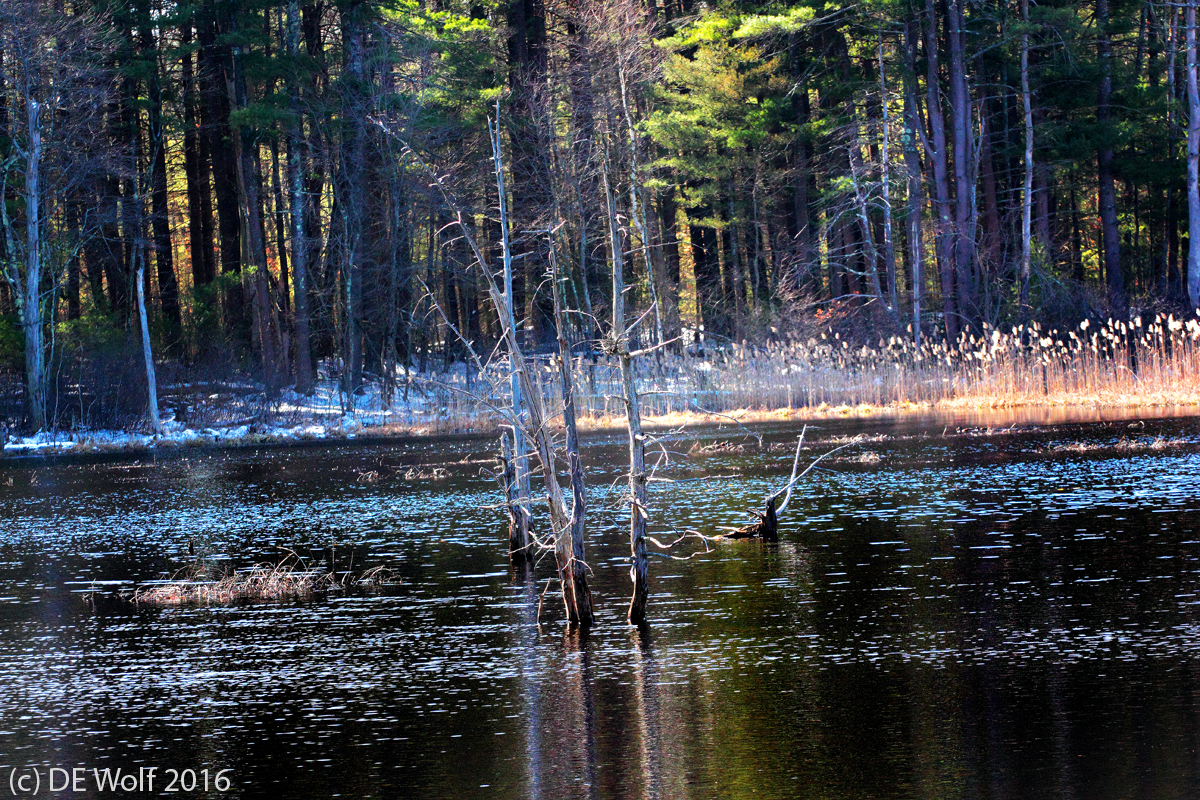
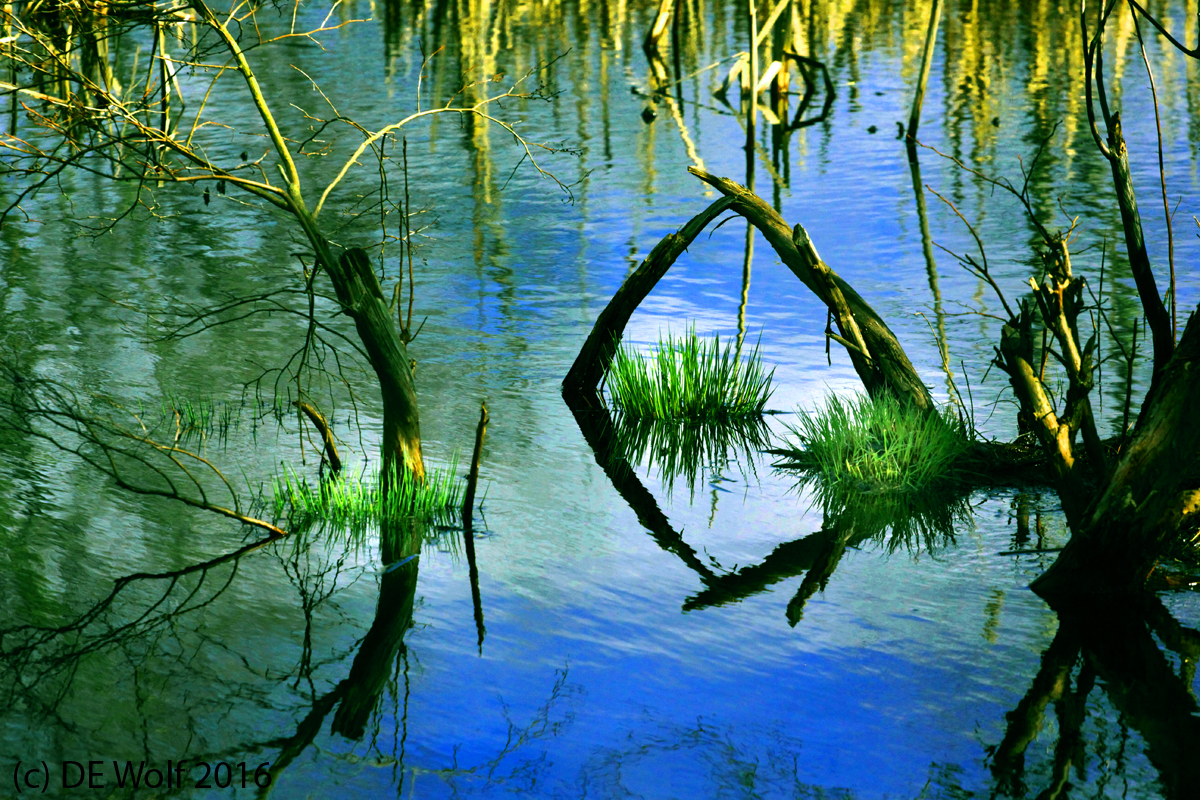
The last of the winter’s snow?

Figure 1 - The pond from Otter Trail March 22, 2016. (c) DE Wolf 2016.

Figure 1 – The pond from Otter Trail March 22, 2016. (c) DE Wolf 2016.

We have had what is in all likelihood the last of the winter, or early spring, snow, here in Massachusetts. Yes, I suppose that I am tempting fate. A couple of days later I went for a bit of a treacherous walk at the Assabet River Wildlife refuge. The snow at that point had both melted and refrozen and had a very crunchy texture to it. As a result, my presence was broadcast loudly to all of the wood’s creatures, who the dutifully head from me and my lens.  But I was still pleased to see a huge number of tree swallows (Tachycineta bicolor) freshly arrived from Mexico, gorging themselves on insects over the pond. The presence of the insects was invisible to me, which speaks even more profoundly of the keenness of avian senses. There was also a fine crop of very noisy blue jays (Cyanocitta cristata) squawking loudly among the pines.

As always what was most beautiful was the coolness of the morning and the reflection of the sunlight off the surface of the pond. The surface periodically erupted into sparkles as the wind blew across it. Here these colors and glimmers complement the lifelessness of the snow and dried grasses and contrast with both the emerald greenness of the pines and the hints of chartreuse that spell the beginning of a new season. I tried to capture this in Figure 1, which was taken along the Otter Trail and captures some trees growing out of the pond in shallow water.

Canon T2i with EF70-200mm f/4L USM lens at 113 mm, ISO 1600, Aperture Priority AE Mode, 1/800th sec at f/7.2 with no exposure compensation.

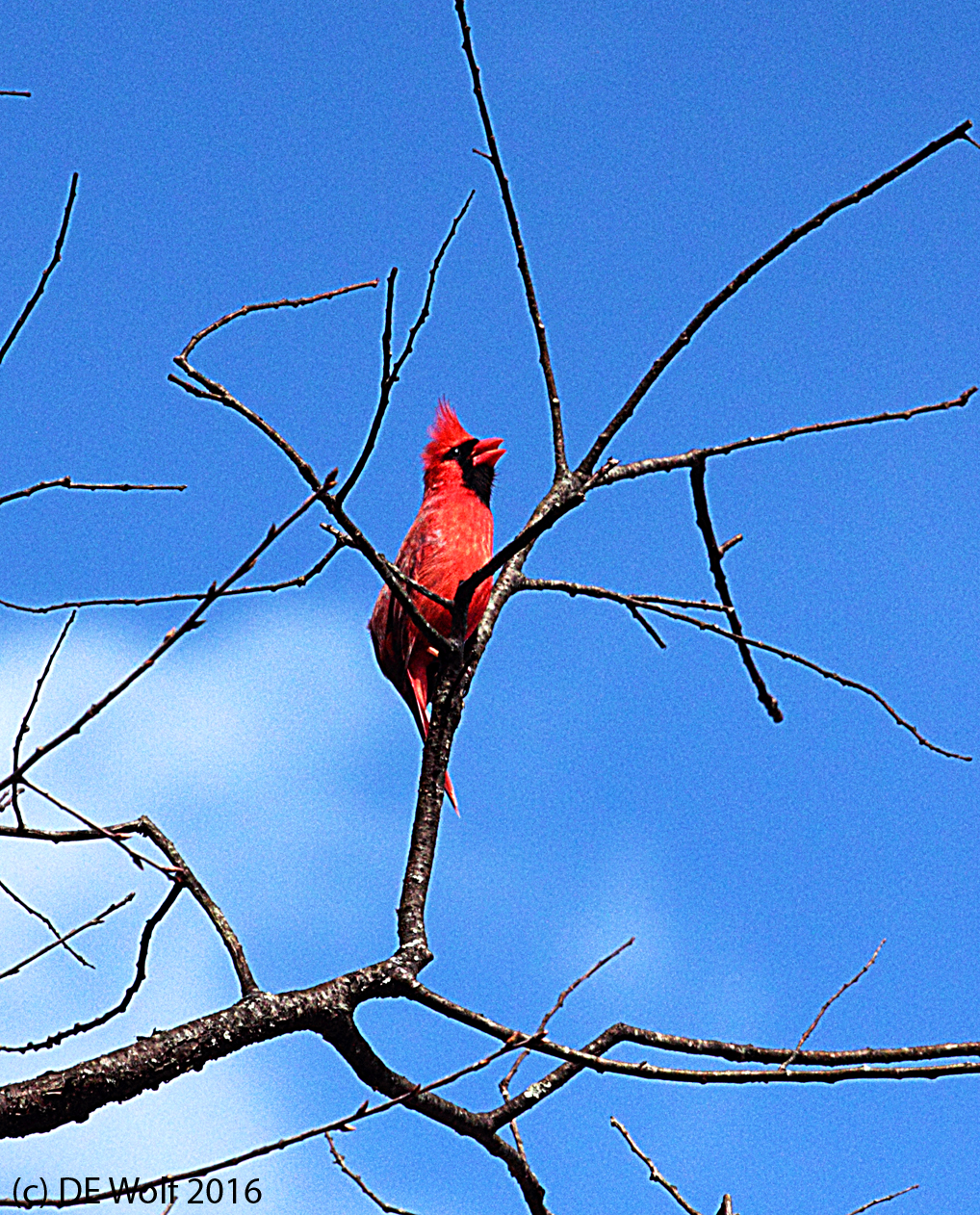
Cardinal’s mating call from high in a tree

Northern Cardinal trumpeting his spring mating call, Assabet River Wildlife Refuge, Maynard, MA. © DE Wolf 2016.

Northern Cardinal trumpeting his spring mating call, Assabet River Wildlife Refuge, Maynard, MA. © DE Wolf 2016.

We had a late spring snowstorm last night and, as expected, it didn’t amount to much – only about five inches and it is melting fast. So I can return to the view that since it is day one of spring it, actually is spring. And nothing is more representative of spring in New England than the mating call of the Northern Cardinal (Cardinalis cardinalis). It is distinctive, and once you hear it your eyes automatically search for the crimson bird at the highest point in the highest tree.

I remember this so vividly from when I was a graduate student in Ithaca, N.Y. I used to devilishly record the male cardinals and then play them back, which invariably led to a war of song. Perhaps we should have called it a birdsong selfie.

With all of this in mind, I took the photograph of Figure 1 of a particularly plump and scarlet male high in a tree and singing his heart out at the Assabet River Wildlife Reserve last weekend. Calling all lady birds and you guys stay out of my territory. The cardinals are such a treat! All I had was my 70 to 200 mm zoom, yet still managed a pretty acceptable image.

Canon T2i with EF70-200mm f/4L USM lens at 200 mm, ISO 1600, Aperture Priority AE Mode, 1/4000th sec at f/7.1. with no exposure compensation.

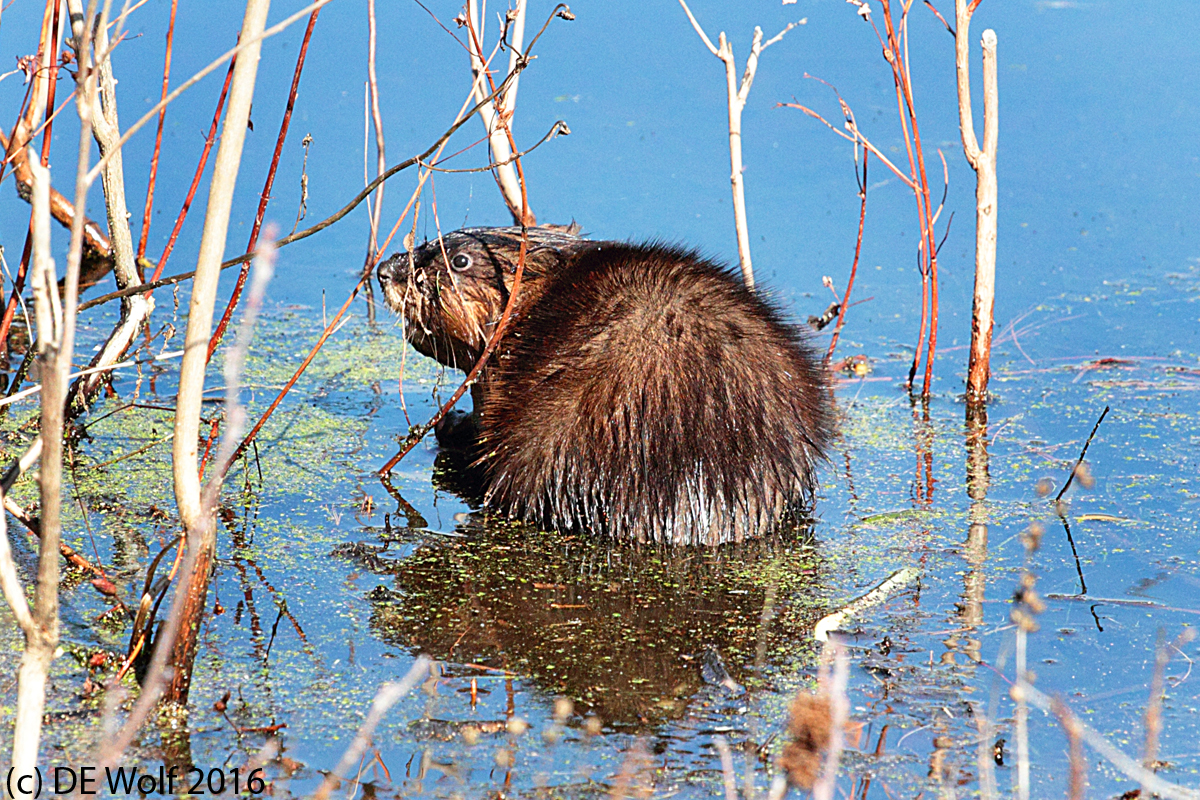
Muskrat – Ondatra zibethicus

Figure 1 - Muskrat at the Assabet River Wildlife Refuge. (c) DE Wolf 2016.

Figure 1 – Muskrat at the Assabet River Wildlife Refuge. (c) DE Wolf 2016.

If you visit the Assabet River Wildlife Refuge’s webpage, they inform you that if you want to see wildlife, go there near dawn or dusk. Well, the other morning I made it out early, but not that early, even though dawn is now driven forward by the hour of daylight savings time. It was obvious that the pond and the forest were coming alive.  Everywhere Blanding Turtles had crawled out on logs and tufts of Earth, usually in large groups, to soak in the precious sunlight. As I was walking the trail, I saw a fuzzy mass sitting on a stump that emerged from the pond and started taking photographs as I approached. I thought at first that it was a little beaver, and he was terrified or at least very nervous about my presence, I came withing five meters of him and took the picture of Figure 1. Yes, it is a face that only a mother could love.

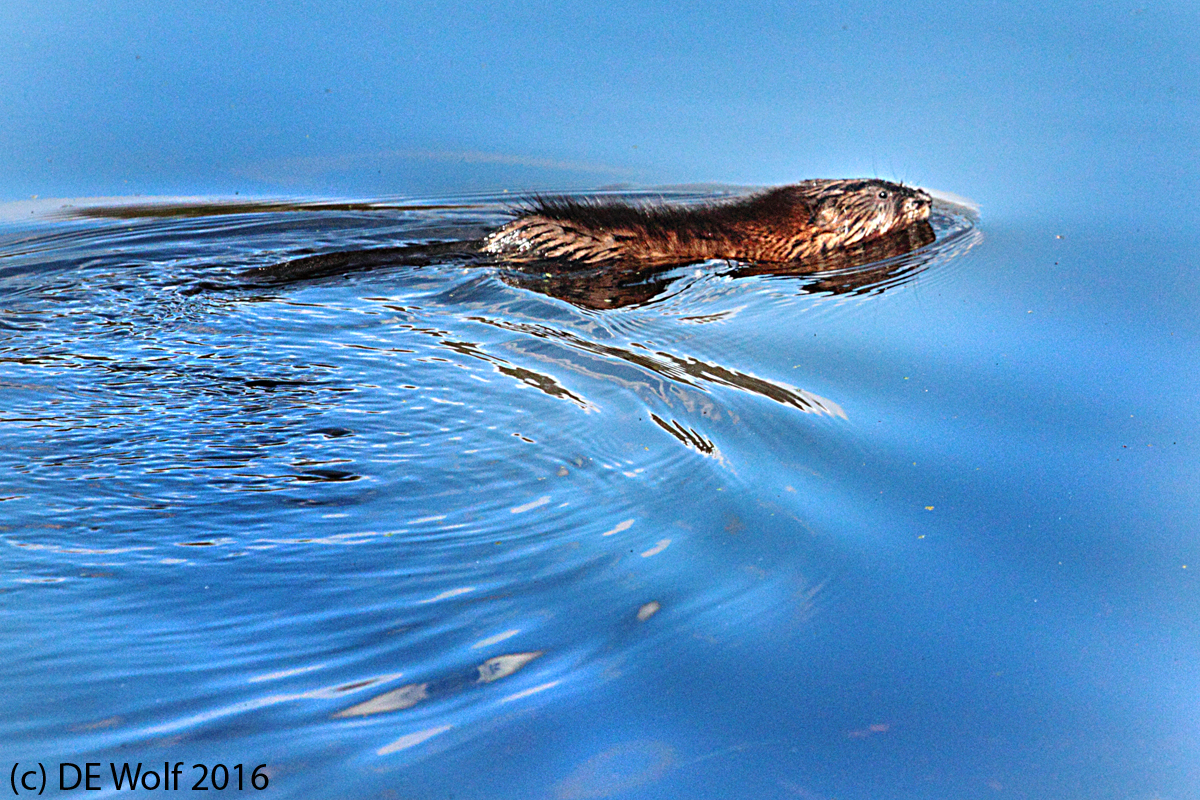
I was troubled by the twigs in front of him but could not get around them. So after I knew that I had the image that I wanted I took a few steps forward. This immediately drove him into the water and his long round tail revealed that he was not a beaver, after all, but rather a muskrat – Ondatra zibethicus. I managed then to capture a decent image of him as he swam off, and you can see from the interesting wake that he is headed left, like a rower with one paddle in the water. Success in animal and bird photography is almost always in the sharpness of the eye.  At that point the muskrat dove only to reemerge among some reeds a distance off. Wildlife can be difficult to photograph because of its elusiveness. This only adds to its appeal. But it is not the elusiveness that intrigues us. Rather it is the reminder of a place that we ourselves came from, indeed that we have never truly escaped.

Figure 1 – Canon T2i with EF70-200mm f/4L USM lens at 180 mm, ISO 1600, Aperture Priority AE Mode, 1/2000th sec at f/7.1 with no exposure compensation.

Figure 2 – Canon T2i with EF70-200mm f/4L USM lens at 200 mm, ISO 1600, Aperture Priority AE Mode, 1/4000th sec at f/7.1 with no exposure compensation.

Muskrat swimming at the Assabet River Wildlife Refuge, (c) DE Wolf 2016.

Muskrat swimming at the Assabet River Wildlife Refuge, (c) DE Wolf 2016.


Early spring along the marsh

Figure 1 - Early spring along the marsh, Saint Patrick's Day 2016, Assabet River Wildlife Refuge, Maynard, MA. (c) DE Wolf 2016.

Figure 1 – Early spring along the marsh, Saint Patrick’s Day 2016, Assabet River Wildlife Refuge, Maynard, MA. (c) DE Wolf 2016.

I went walking again yesterday at the Assabet River Wildlife Refuge. I got there early, and it was a weekday; so for a change I actually saw more wildlife than the occasional goose. But what was most striking to me was the impending sense of spring. Spring is tenuous in New England. March is famous for spring snow storms, and we are all warily watching the weather predictions for next Monday. But the good thing is that if it comes it will melt quickly – and of course it represents a photo-op in its own right.

Anyway, I took the photograph of Figure 1 along what is known as the Otter Trail. I was struck by the brightly illuminated verdant tufts of grass and the clear water. Soon it will all be overgrown.I was able to get exactly what I was looking for in the image. You may argue that the color is a bit over saturated and intense. But it is, in fact, the way my eye saw it – which is the whole point of photography.

Canon T2i with EF70-200mm f/4L USM lens at 154 mm, ISO 1600, Aperture Priority AE Mode 1/4000th sec at f/7.1 with no exposure compensation.

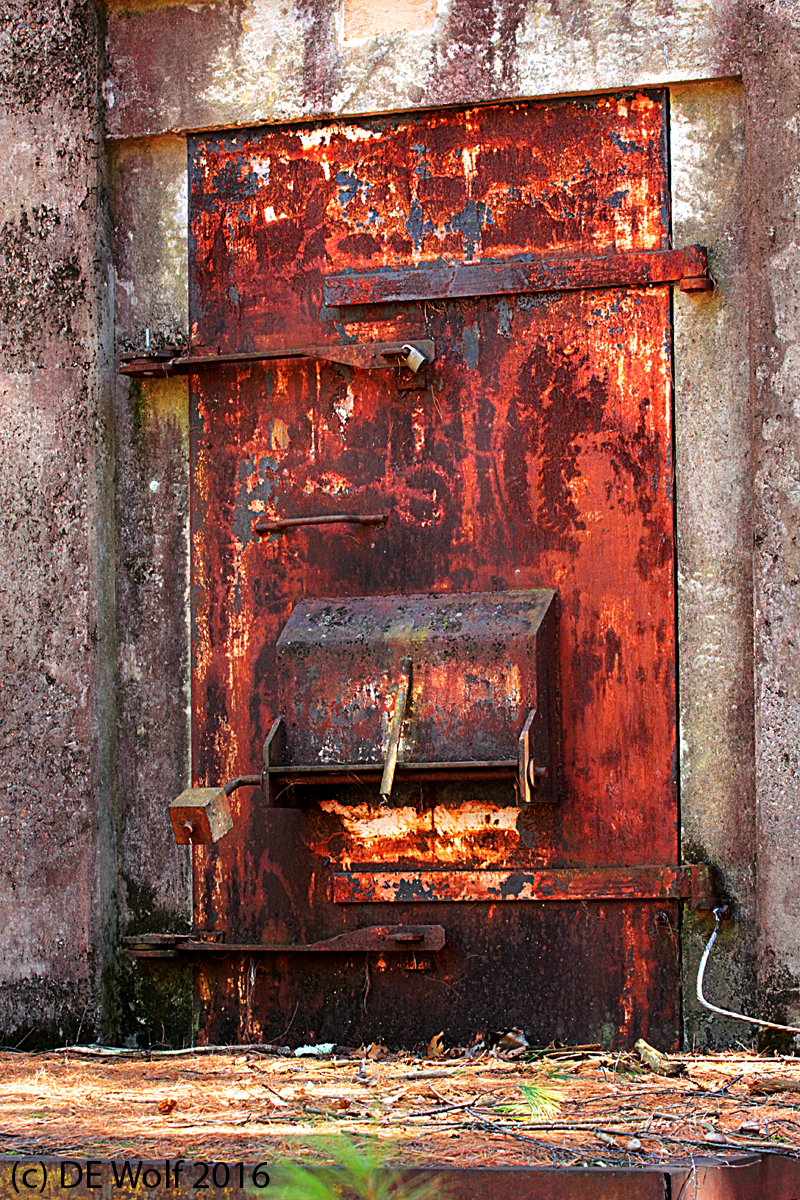
Abandoned World War II Ammunition Bunker

Figure 1- Abandoned World War II Ammunition Bunker, Assabet River Wildlife Refuge, Maynard, MA. (c) DE Wolf 2016.

Figure 1- Abandoned World War II Ammunition Bunker, Assabet River Wildlife Refuge, Maynard, MA. (c) DE Wolf 2016.

March 12, 2016 and I am off into the woods at the Assabet River Wildlife Refugee. This is a spectacular wetland with a very strange history. In 1942 the Federal Government seized the of land, which spans the towns of Maynard, Sudbury, Hudson and Stow, Massachusetts, by eminent domain. Residents were given about ten days to pack up and leave, and claimed that they were given only ten cents on the dollar for their homes. This explains why as you walk the paths you come upon remnants of habitat, a fire hydrant or an old gas line. The purpose of all of this was to create a military for ammunition storage that was convenient to railroad lines that enabled shipping to the Boston Navy Yard.

The ammunition was stored in bunkers called “igloos”that had inside dimensions of 81x26x12 feet with a curved roofs. The sides and roofs were mounded with dirt to provide further protection and to disquiet the igloos from aerial view. The location was chosen so as to be out of the range of bombardment by enemy battle ships in Boston harbor.

Now the forest has grown back out of these bunkers and they offer a very dark and Gothic aspect that shatters the tranquil beauty of the woods.I have captured the great iron door to one of these bunkers in Figure 1. I find the place foreboding and mysterious. You almost expect to see the words “lasciate ogni speranza, voi ch’entrate.” The words that Dante tells us adorn the gates of hell, “Abandon all hope ye that enter here.”

Canon T2i with EF70-200mm f/4L USM lens at 73 mm, ISO 1600, Aperture Priority AE Mode 1/50th sec at f/7.6 with no exposure compensation.