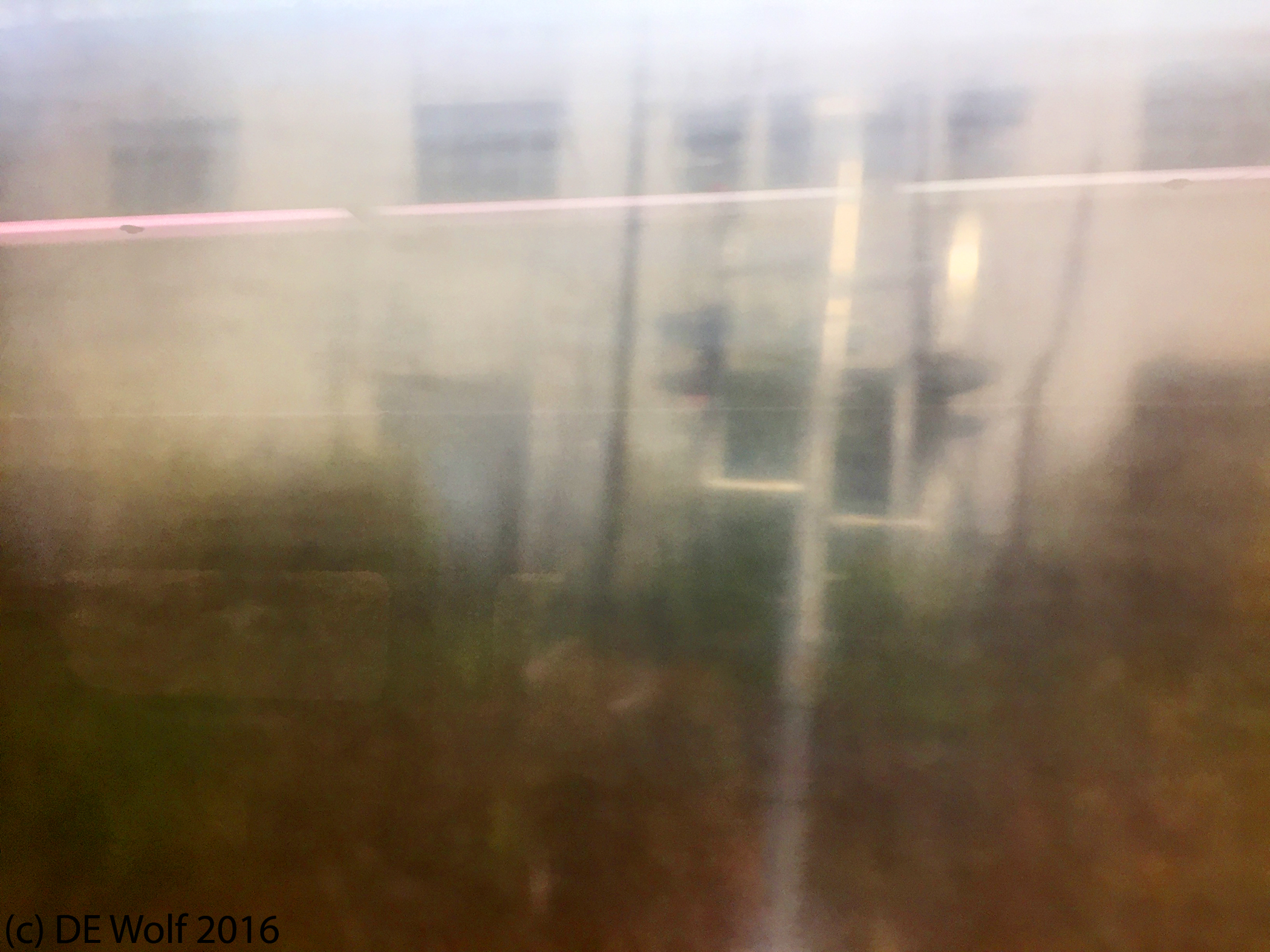
Photograph through a dirty window on a moving train

Figure 1 – Photograph through a dirty window on a moving train. IPhone photograph, (c) DE Wolf 2016.

Today I went in to Cambridge, MA for a lunch meeting. The sun is still shining in the Athens of America. There is a lot of anger, but it still shines. On my way back I noticed the view through a very dirty window. It created a very surrealistic sensation and wonderful pictorialist images. It also made me think of all those wonderful old movies that have train scenes. There are several lists of such movies. But my favorite is Silver Streak with Gene Wilder, Richard Pryor, and Jill Clayburgh. I am also reminded of a magical train trip that I took years ago from the Munich Airport to Tutzing. It was winter, atmospheric, and hazy. Great memories!

Anyway, since there is little time to compose I just started snapping images with my IPhone. One of the best results, in my view, is Figure 1, which shows a rail signal, a building, some trees, and a powerline.
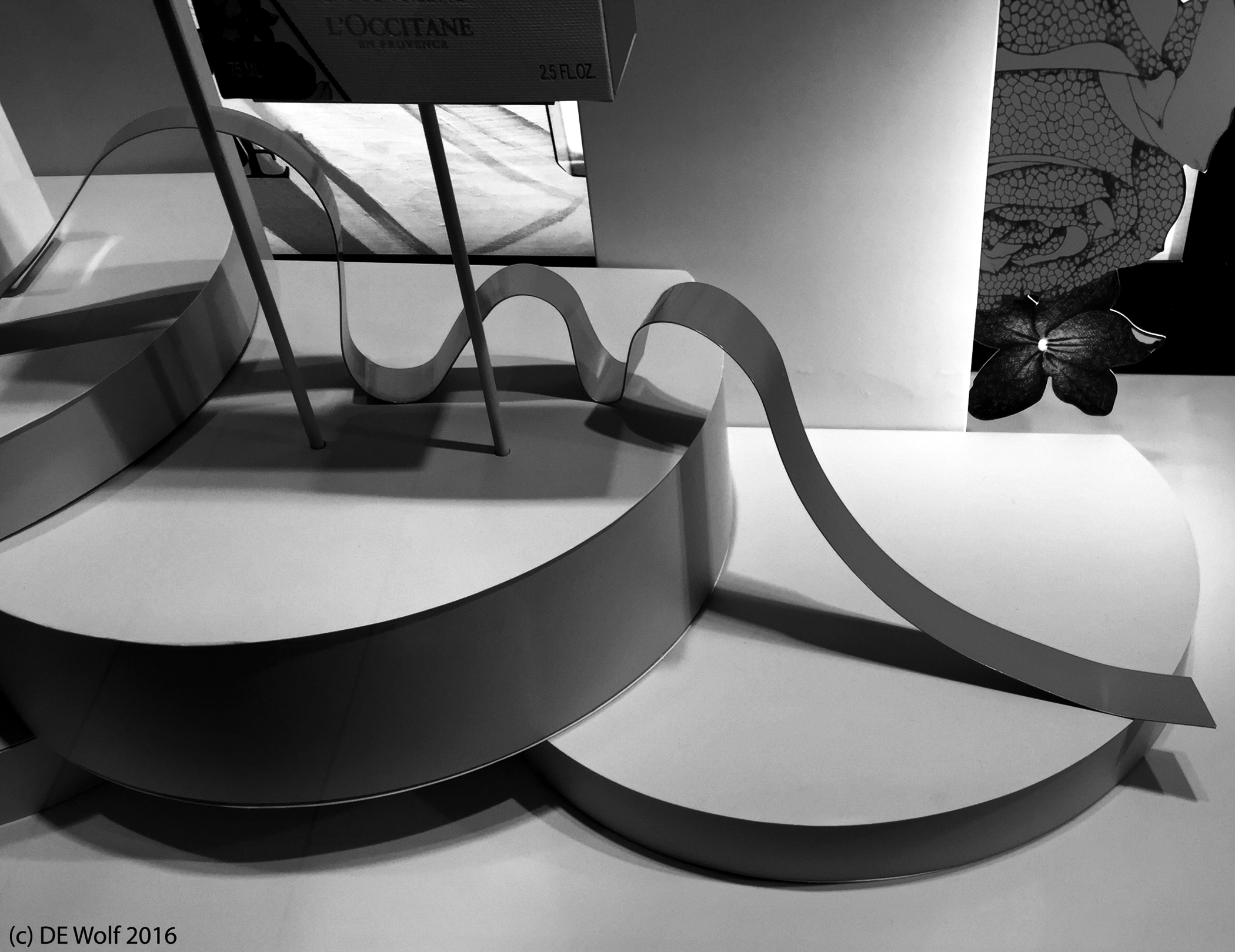
The ribbon as world-line

Figure 1 - The ribbon as world-line, IPhone photograph. (c) DE Wolf 2016.

Figure 1 – The ribbon as world-line, IPhone photograph. (c) DE Wolf 2016.

I took the IPhone photograph of a ribbon of Figure 1 a while back, and my thought at the time was of a very simple geometric pattern. That is to say, I thought of it as a picture of a ribbon. But the constraints of taking the Image brought in all the extraneous background objects. When I “did up” the image, I realized that the extraneous was, for good or bad, part of the composition and I wasn’t really sure which way the scale tipped. Having achieved a pleasing dynamic range in pure black and white,it has been sitting on my computer for a week or so. Finally, I have decided that there is some merit to it. You can agree or disagree. I decided in the end that some of the background images particularly the pedestals added geometric merit. The combination of ribbon and pedestals creates a sense of cascade without, I hope, being too contrived and dramatic, I see a metaphor of the ribbon as world-line (there’s Minkowski again) guiding the eye, in this case, through complexity.

On “putting away childish things”

Figure 1 - Folded-fan, IPhone photograph. (c) DE Wolf 2016.

Figure 1 – Folded-fan, IPhone photograph. (c) DE Wolf 2016.

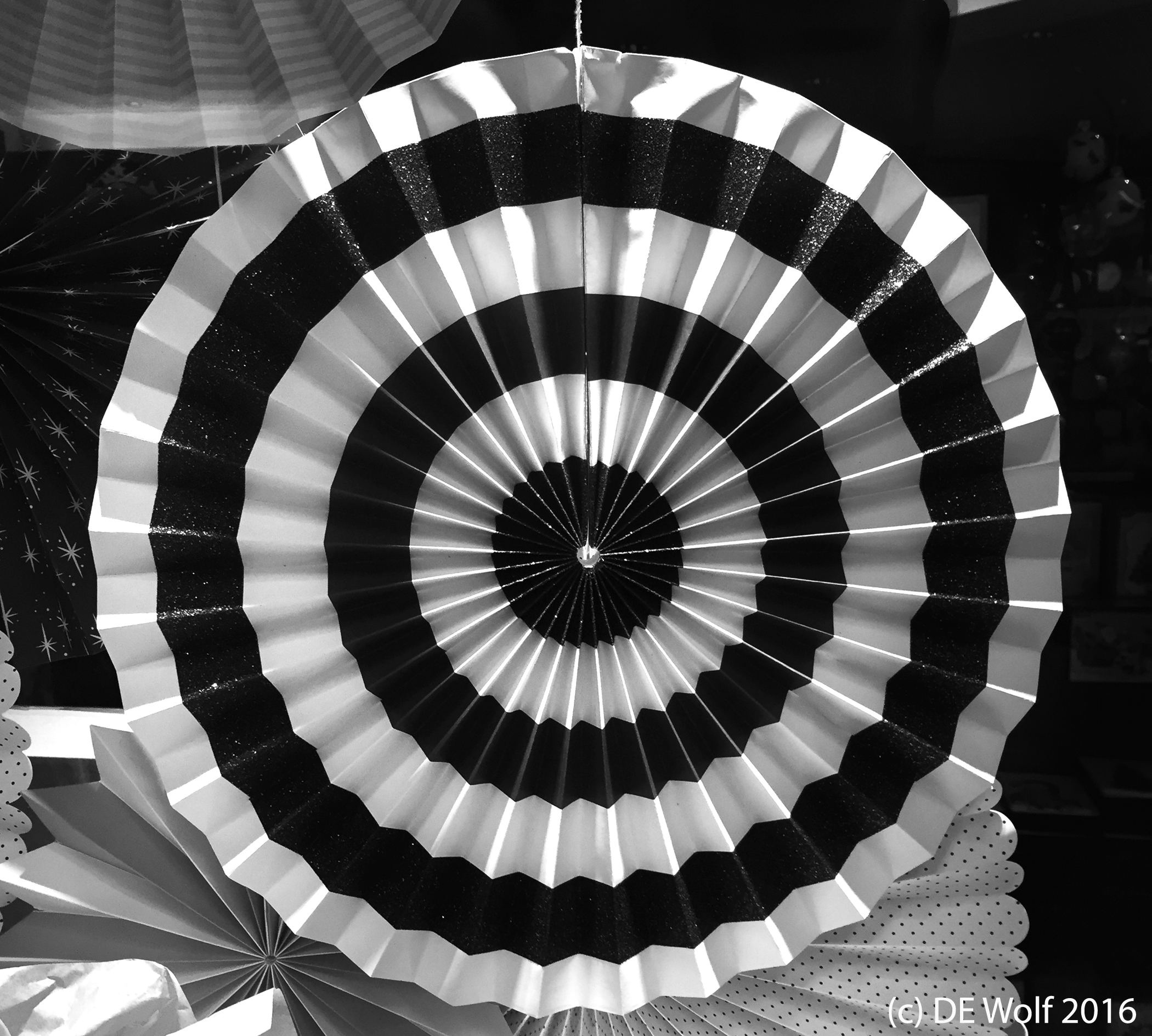
The other day at the mall, I came upon the unfolded paper fan of Figure 1, and it really took me back to my youth in the fifties and sixties. Life was simpler then, at least as I remember it. But memory can, indeed, be fickle. The reminder here was of the toy folding-fans of those days. We delighted in simple objects like folding-fans, and sparking wheels, and, of course, yo-yos. Life was, in general, simpler back then, well with the exception of nuclear annihilation. I heard recently that we are closer today to nuclear annihilation today than we have been since the Cuban Missile Crisis. Of all the things to bring back! What moron did that? Ooh, I guess that I kinda know…

But there were no cell phones or computer games, and really there were only three channels on American TV. We did not know that we needed these things. I delighted once in the thought of 200 channels. But what has come of it, just a lot more pablum.

We are told in 1 Corinthians 11: “When I was a child, I spoke as a child, I understood as a child, I thought as a child; but when I became a man, I put away childish things.” I remember very vividly sitting in my room and wanting to play a game, but thinking, “no you are too old for that!” Well, let me tell you that, right now, I am very sorely tempted to step back and search EBay for either a folding-fan or a sparking wheel. I could sit happily in the dark, ignore the election and the fear of nuclear annihilation, and delight in the retro whir and colorful sparks. And these themselves would spark a reminiscence of childhood and perhaps the realization that the virtue of adulthood lies in the power to make one’s own choices.

It is, dear friends, as Eeyore taught us:

“A little consideration, a little thought for others, makes all the difference.”

No need to smile

Figure 1 - The photographer (note camera in hand) dressed as Cthulhu at the office Halloween party, 2016.

Figure 1 – The photographer (note camera in hand) dressed as Cthulhu at the office Halloween party, 2016.

Well, I make no bones about the fact that Halloween is my favorite holiday. I won’t go on again about why. But, tomorrow is the fun night; so I thought that I would post today a picture of me at my office’s Halloween Party. As long time watchers of “The Big Bang Theory” will recognize, scientists certainly know how to have fun, even if some of the humor and costumes require explanations that use the Calculus. I am here dressed as the god Cthulhu. To really know Cthulhu is to know how to spell it. Good luck with that!

As for the drawing on my chest – here comes the Calculus. It is a Minkowski diagram that depicts Einstein’s vision of a four dimensional universe. That is how Lovecraft tells us the ancient ones traveled to the Earth. They truly dwell, not in our three dimensional world, but in a four dimensional universe. And just as it would be hard to explain a three dimensional object to a flatlander – one who dwells in a two dimensional world, so too is it hard to explain to us dwellers in a three dimensional space the meaning of four dimensional objects and deities.

I did learn that when you wear a Cthulhu mask, you do not need to smile underneath. Of course, smiling for the camera is kind of instinctive, and you do feel a bit embarrassed underneath.

But Cthulhu himself is nothing to smile at, or to trifle with. He is described as a massive hybrid of human, octopus, and dragon. He is usually depicted as being hundreds of meters tall, with webbed, humanoid arms and legs, tentacled face, and a pair of rudimentary wings on his back. Gulp! So it is best to be cautious. And if you find yourself being a bit silly this Halloween, it is best to remember that whatever you say, you must never say:

Ph’nglui mglw’nafh Cthulhu R’lyeh wgah’nagl fhtagn

(“In his house at R’lyeh, dead Cthulhu waits dreaming.”)

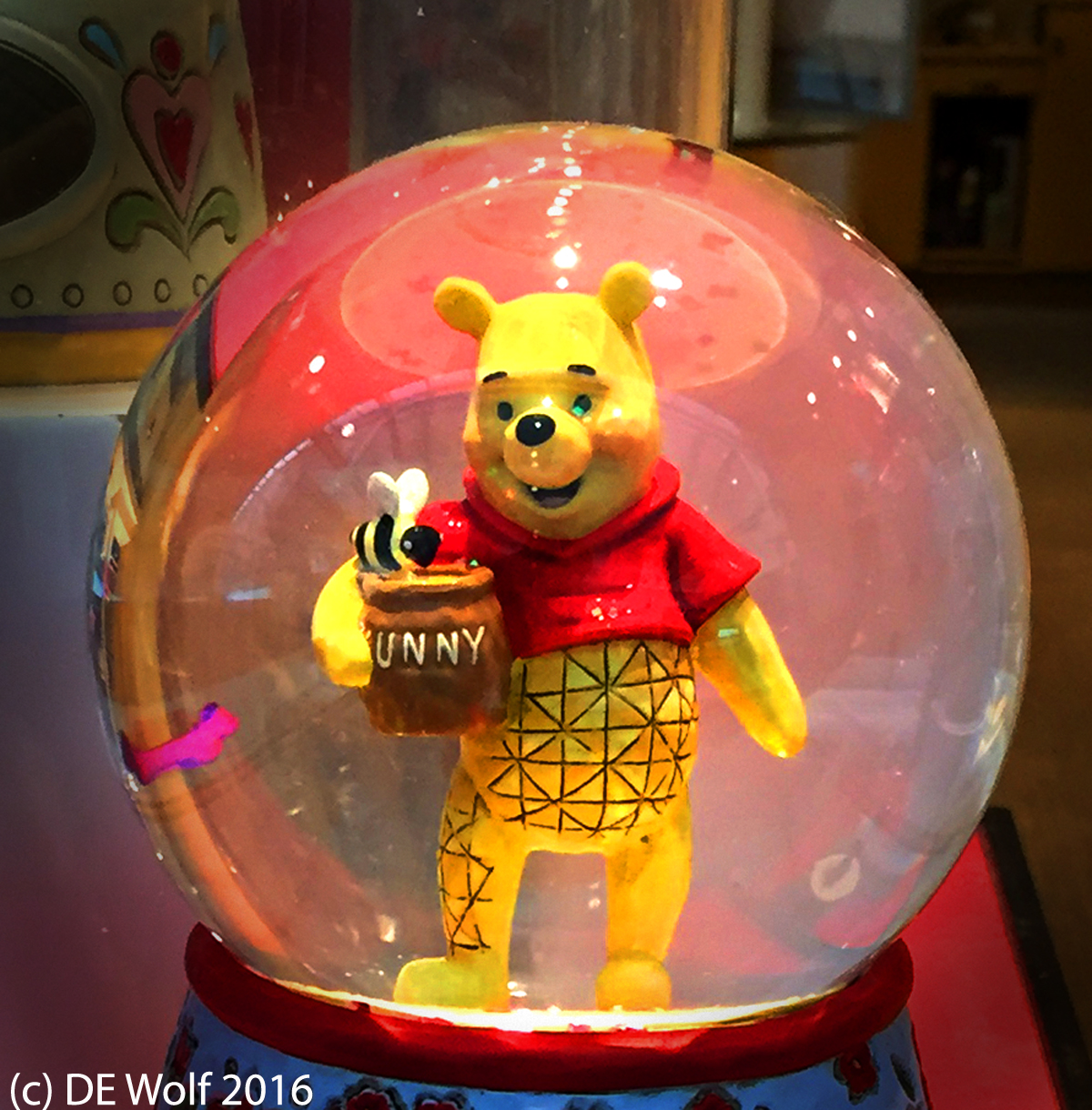
“What’s for breakfast?” said Pooh.

Figure 1 - Pooh in a snow dome. (c) DE Wolf 2016

Figure 1 – Pooh in a snow dome. IPhone photograph. (c) DE Wolf 2016

“When you wake up in the morning, Pooh,” said Piglet at last, “what’s the first thing you say to yourself?”
“What’s for breakfast?” said Pooh. “What do you say, Piglet?”
“I say, I wonder what’s going to happen exciting today?” said Piglet.
Pooh nodded thoughtfully. “It’s the same thing,” he said.

A light in the October Forest

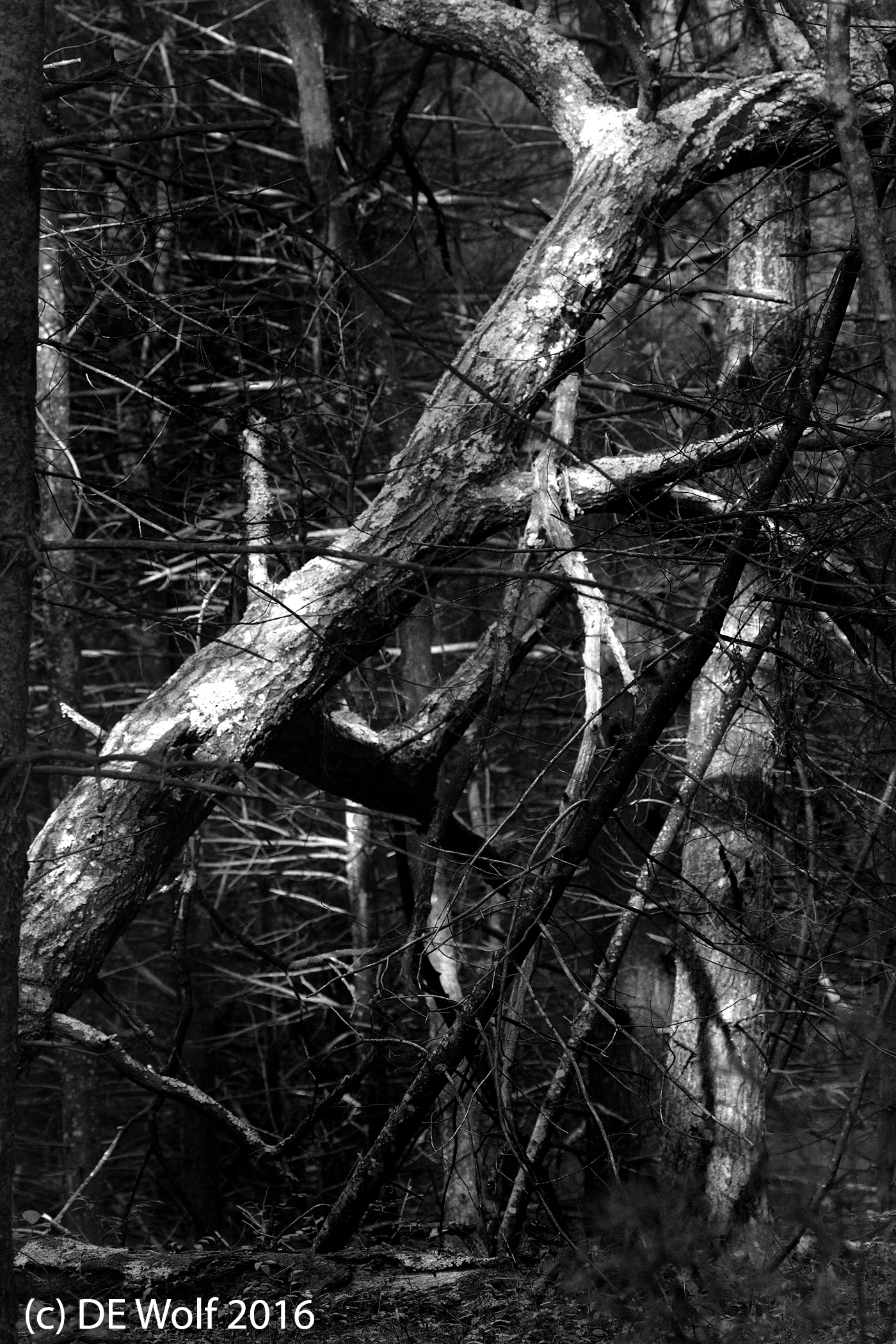
fallentreefbFollowing up on yesterday’s “light in the October forest them,” I wanted to post another image that I took of the forest at the Assabet River National Wildlife Refuge that shows a fallen tree in the woods illuminated by some of those mid-autumn sunbeams.

On a windy day scenes, such as this, are a great reminder of why you need to stay on the path.  If a tree falls in the forest and there is no one there to see it happen, did it really happen. Of course, it did.  But it soes speak eloquently to the ephemeral nature of our world. Also there is the important point that in nature sameness is an illusion. There seems to be a clockwork going on, but there are always small variations. The forest evolve toward climax and on a longer time-scale the plants and creatures that we see evolve as well.

It is not so very long ago, perhaps 10,000 years,  that these lands were flooded by glacial lakes Assabet and Sudbury.  And before that it was covered with a mile thick ice sheet. And all of that is merely pittance in the geological history of the world. When I walk in the woods, I think about these forces. It is ironic that the very systematic periodicities that seem to defy change, in fact, accentuate it in our imaginations.

Canon T2i with EF100-400mm f/4.5-5.6L IS USM at 105 mm, ISO 1600, Aperture Priority AE Mode, 1/500th sec at f/7.1, with -1 Exposure Compensation.

The range of light on an October morning in the woods

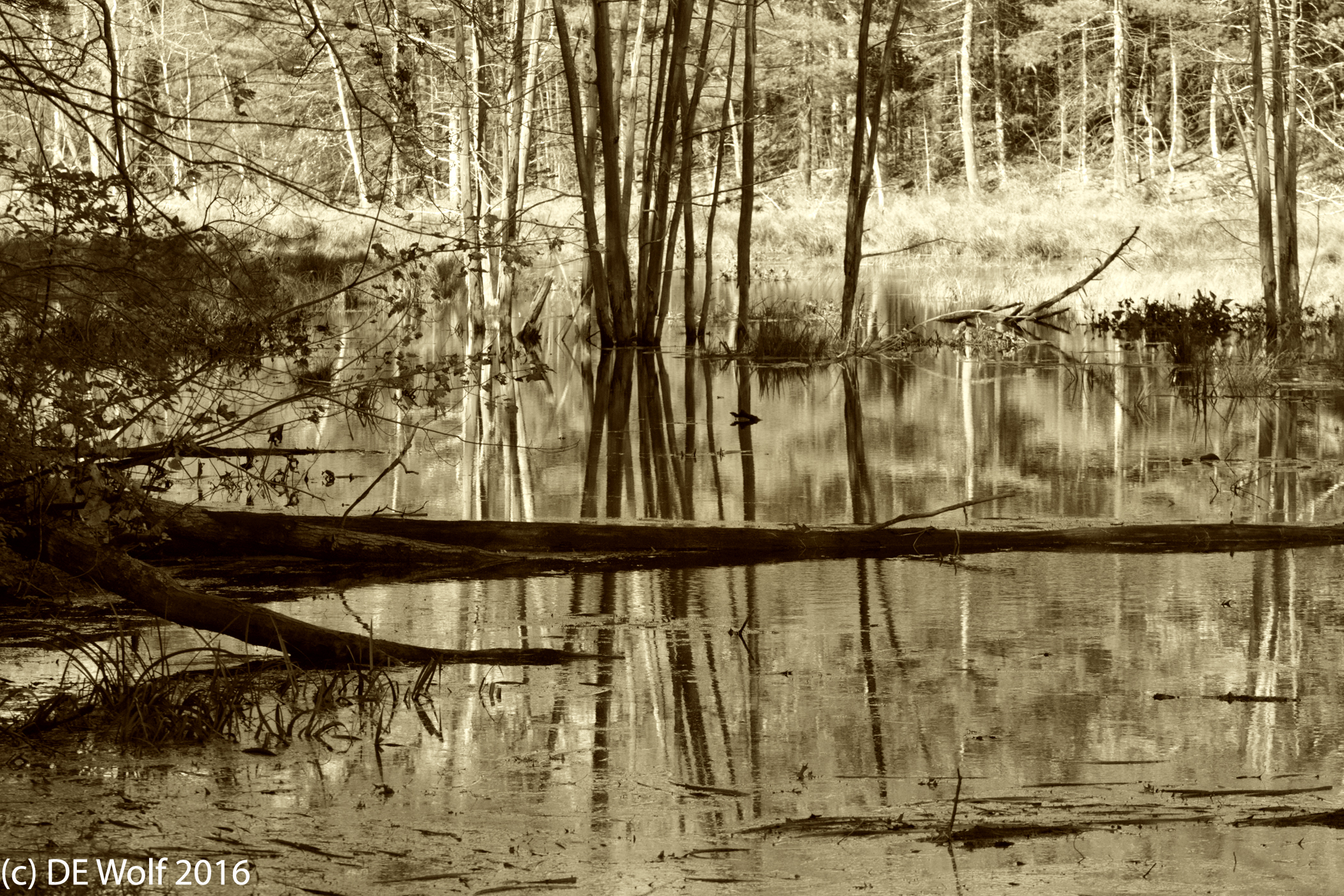
Figure 1 - October on the marsh, Mynard, MA. (c) DE Wolf 2016.

Figure 1 – October on the marsh, Maynard, MA. (c) DE Wolf 2016.

October foliage time has always seemed to be a time for color photography. And this is even more true than ever in an age of digital photography, when you can get just the color, hue, and saturation that you want. But as the unstoppable progression towards winter progresses, the light in the forest opens up and has this wonderful way of illuminating the woods. And this is especially the case when forest meets water.

I find myself drawn more and more back towards black and white. I say back because that was my beginning – a first love. So now as October draws to a close, I find myself rejoicing in subjects like that of Figure 1, where the whole effect lies in form, structure, lines, reflections, and, of course, the wonderful “range of light” as Ansel Adams called it.

And I have to say that I only rarely resort to an increase in contrast either by cranking up a photograph’s contrast or by changing its gamma with “curves.” All of that tends to squash the dynamic range, I guess by definition, and that is the glory of black and white photography.

But here is the important part. There is the experience of seeing a landscape and being part of it. In the same manner you may experience a photograph of a landscape. With a good photograph, when you see it, you experience that as well. But there is something truly extraordinary in seeing a landscape, envisioning it as a photograph, and then accomplishing that goal. It is the act of photographing, It is the meaning of being a photographer,

Canon T2i with EF70-200mm f/4L USM lens at 87 mm, ISO 1600, Aperture Priority AE Mode, 1/1250th sec at f/7.1 with no exposure compensation.

Cranberries

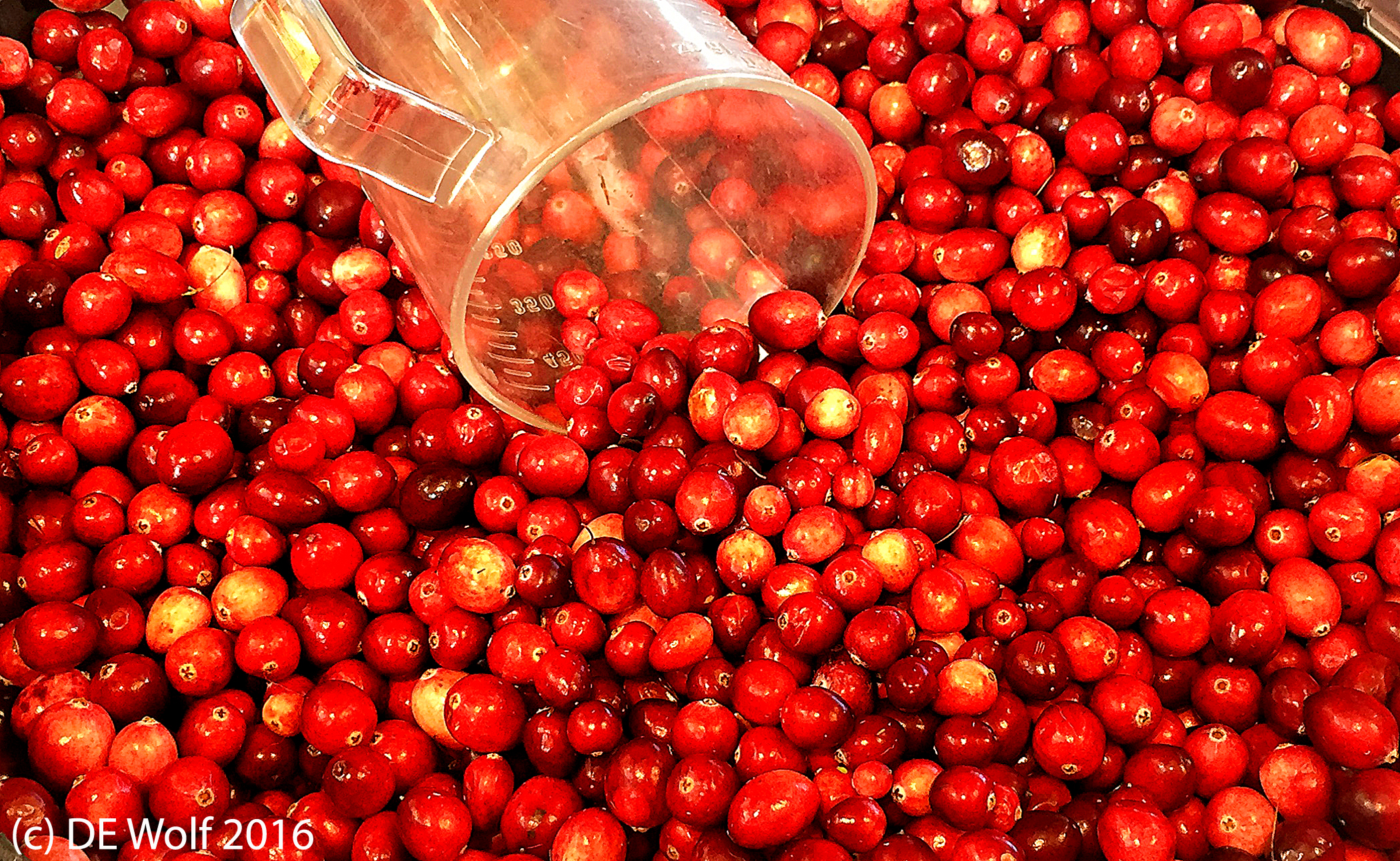
A basket of cranberries, Concord, MA. Iphone photograph. (c) DE Wolf 2016.

A basket of cranberries, Concord, MA. Iphone photograph. (c) DE Wolf 2016.

Well under the assumption that poisoned mushroom tea is not your thing. I thought that I would post something a bit more appetizing today. Here is a basket of New England cranberries, lusciously red. Like everything else this year of the El Niño drought, the cranberry crop is suffering here in New England. Water levels are low and there is not enough water to flood the bogs around Cape Cod. Some growers are dry-picking their berries and some have even resorted to handpicking.

Still the cranberry remains as a great icon – a symbol – of the fall harvest, cranberry sauce, cranberry juice, and cranberry stuffing. And of course all of these herald the coming Thanksgiving feast. Nothing speaks to Massachusetts like the cranberry.

Photographically I was so taken by the shiny redness. Despite having my Canon T2i with me, I opted for taking the close-up with my IPhone and then deep cropped the image so that there was no distractions from the field of crimson.

Amanita muscaria – Breakfast of Berzerkers

Figure 1 - ggggg

Figure 1 – Amanita muscaria, Assabet River National Wildlife Refuge, Sudbury, MA. (c) DE Wolf 2016.

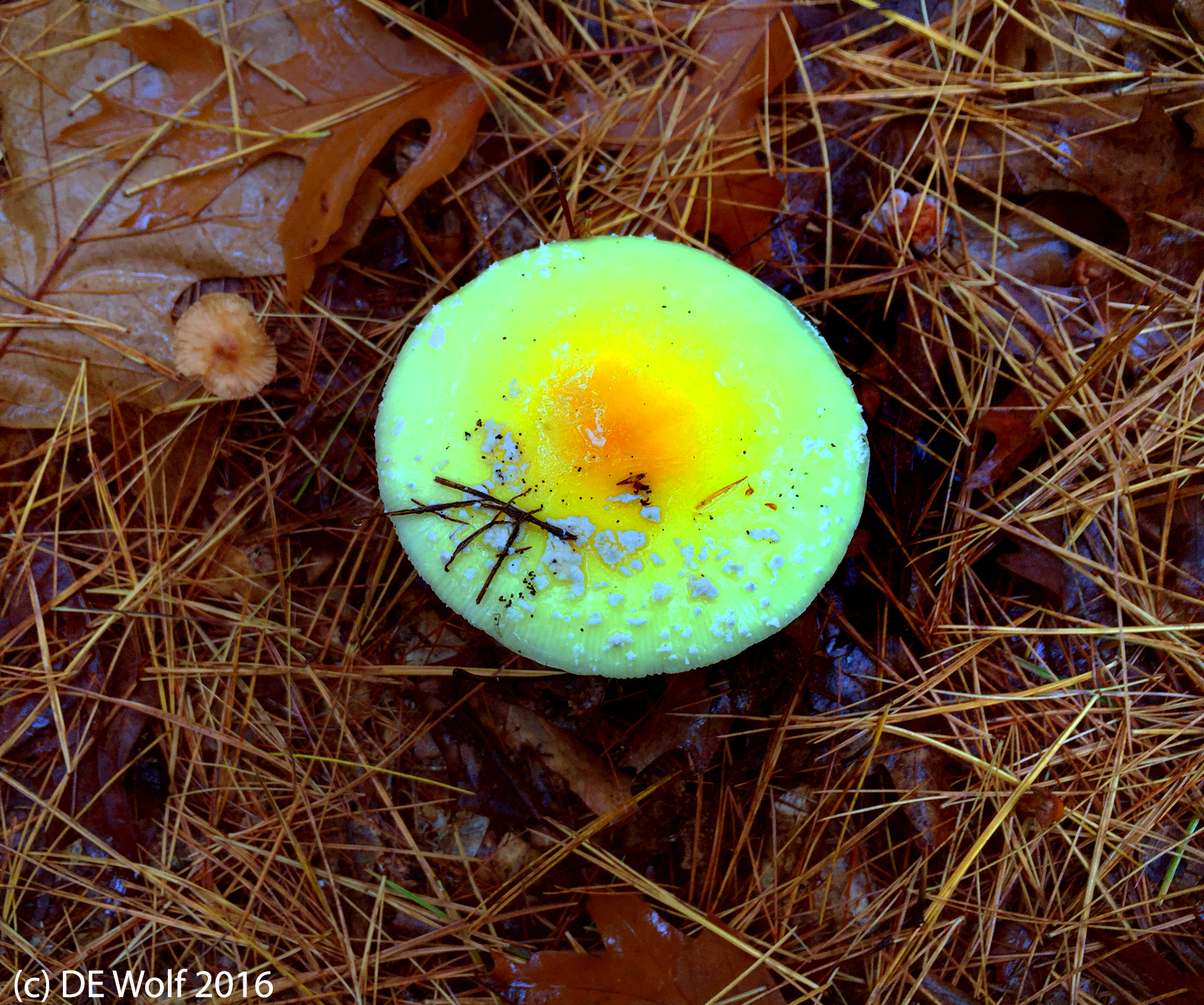
Mid October is fungus time in the woods. As I walk about I am intrigued by the mushrooms which take so many forms. Particularly beautiful are the lemon yellow Amanita muscaria, the Fly Agaric, of Figure 1. The photograph is meant to be more of a record than a work of art. I have tried most to capture its appealing color and the little warts on its surface. This is a highly poisonous mushroom. It is referred to as a Fly Agaric because people would cut pieces into a bowl of milk to attract and kill flies – hence the muscaria.

But it’s history is even more interesting than the mere killing of insect pests. We are told that in Siberia it was used to make a hallucinogenic tea. Here is where it gets even more bizarre, some people would actually drink the urine of those who drank the tea. Yum!

But let’s talk about the Viking Berzerkers. These were warriors who were so taken by the blood-lust that they would kill uncontrollably in battle. I have read that sometimes the only way to stop them was to kill them. But what does that have to do with Amanita muscaria? Well, apparently there is evidence that berzerkers also made use of the mushroom’s halucinogenic properties to induce a state of trance and blood-lust.

I’ll ask of the berserks, you tasters of blood,
Those intrepid heroes, how are they treated,
Those who wade out into battle?
Wolf-skinned they are called. In battle
They bear bloody shields.
Red with blood are their spears when they come to fight.
They form a closed group.
The prince in his wisdom puts trust in such men
Who hack through enemy shields.

The Hrafnsmál Ninth Century Norweigen skaldic Poem