Weather-vane

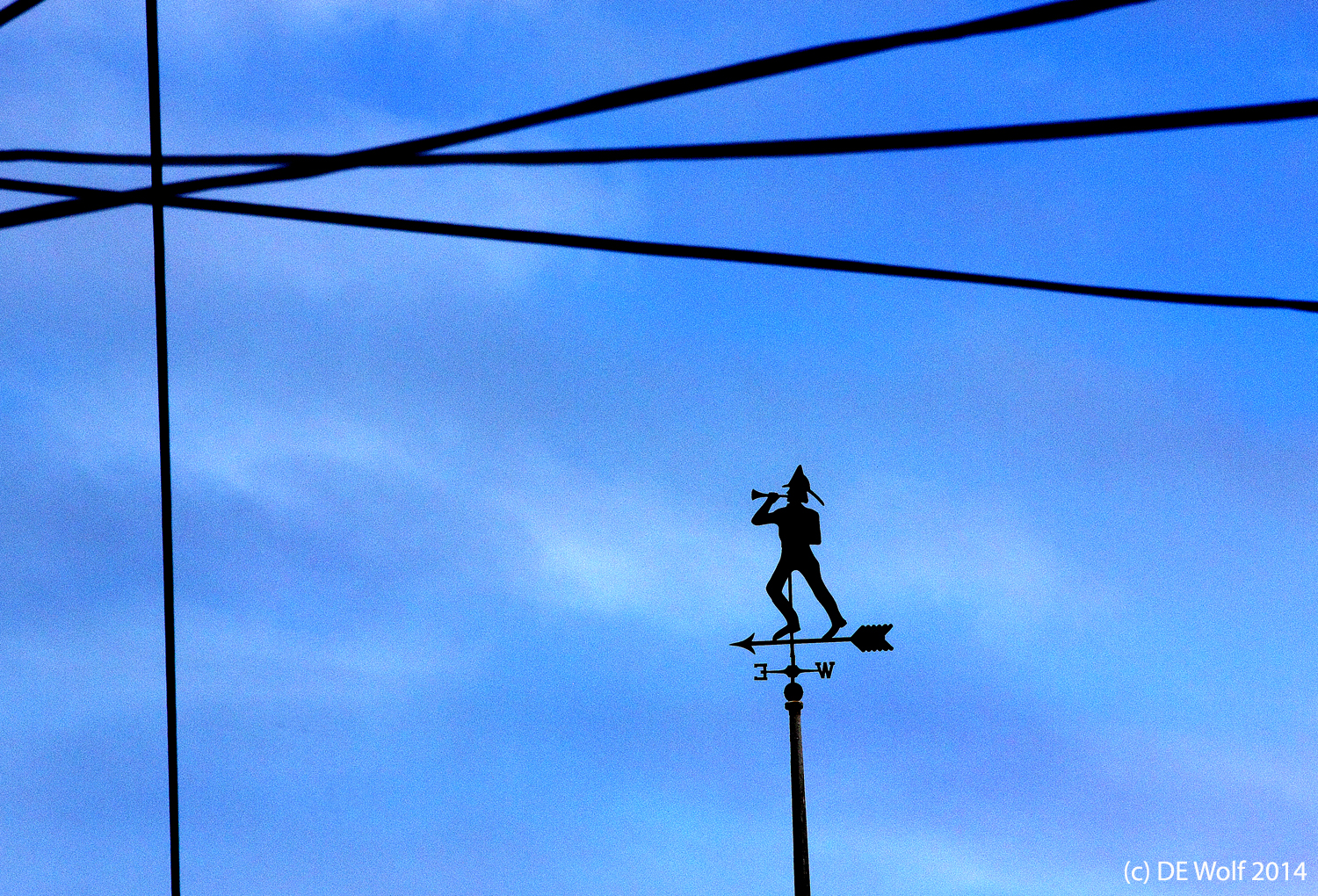
Figure 1 - Weathervane, Dock Square, Kennebunkport. ME. (c) DE Wolf 2014.

Figure 1 – Weathervane, Dock Square, Kennebunkport. ME. (c) DE Wolf 2014.

I’ve actually been surprised at just how difficult photographing, ground up, a weather-vane can be. The obvious choice is to go silhouette.  Well, maybe not a choice.  Then you probably want a long telephoto.  In this case 200 mm.  The very real danger, other than incurring a stiff neck, is a really boring bleached out background sky, unless of course you’ve got interesting clouds.  Well, when I took Figure 1 of this cool bugle blower, the clouds were slight and rather wispy.  I chose to shoot in color for interest and I had to dig really deep to get my clouds.  This in turn created grain, which I think also adds interest.  And finally, I took advantage of power-lines, which usually destroy a photograph – we almost don’t see them until we try to take a picture and voila there they are destroying our sense of the rural landscape.  We’ll here they serve to frame and accentuate, to create a dominant sense of the golden rule of thirds.

EF70-200mm f/4L USM at 200 mm (monopod mounted). ISO 400, Aperture Priority- AE, 1/1600th sec at f/8.0 no exposure compensation.

John Dillwyn Llewelyn, the photographer of Penllergare


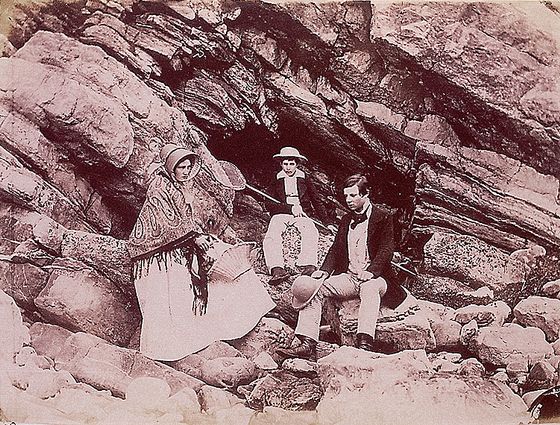
Figure 1 - John Dillwyn Llewelyn, Theresa, John, and Willie at Caswell, 1853, from the Wikimedia Copmmons and in the public domain.

Figure 1 – John Dillwyn Llewelyn, Theresa, John, and Willie at Caswell, 1853, from the Wikimedia Copmmons and in the public domain.

Last week I was reading about a man in Wales, who was cleaning out his garage in 1973 and came upon a box of old daguerreotypes. His brother-in-law sought the advice of Noel Chanan, a photographer and filmmaker.  The rest, as they say, is history.  The box contained upwards of forty family images by the great-great grandfather of the man, John Dillwyn Llewelyn (1810-1882).  Llewelyn was a British amateur scientist and photographer.  He was married to a cousin of Henry Fox Talbot.

Llewelyn’s earliest attempts at photography were not, in his opinion, all that successful.  He experimented both with Talbot’s process and with daugerreotypes.  After a few years he abandoned photography, but picked it up again in the 1850′ s by which time the processes had advanced considerably.  He invented what he called the “oxymel process,” which combined honey and vinegar to produce a dry plate.  This was important because the wet colloidal process, then in use, was cumbersome in that it required the photographer to immediately develop his/her negatives.  With the “oxymel process” the glass negative could be held for a few days before developing.  He is also credited with the invention of an instantaneous shutter – enabling for instance the photgraphs of breaking waves and moving water.

Many of Llewellyn’s photographs can be seen on Noel Chanan’s website.  He has also recently released a biography of John Dillwyn Llewelyn, “The Photographer of Penllergare,” which is available through the website.

Figure 1 is an excellent example of Llewellyn’s work. It shows his family (Theresa, John, and Willie at Caswell in 1853).  This is precisely the kind of intimate glimpse of nineteenth century life that we have been talking about.  There is a sharp freshness to the scene, and we almost imagine that we are there with them.  They do not stare back at us, but rather appear to be involved with each other.  They seem however, as I have suggested before, not oblivious to us, but rather seem to know that we are out there (here).

Both the book and Mr. Chanan’s website are filled with this kind of familial image. But there are other outstanding gems as well.  I particularly like “The Stag, 1856,” which appeals to a sense of English mythology and was taken using a taxidermy specimen because a real stag could not be counted upon to stand still long enough for proper composition and exposure.  I also think that “St. Catherine’s Island, Tenby, 1854″  is as fine a piece of landscape photography as I have ever seen.  As is always the case we can learn a lot from these early photographic pioneers.  Their compositions a classical sense of what a picture should be.


Sochi from the ISS

Figure 1 - The Sochi Olympic Village photographed at night from the USS.  Zoom in on the stadium and you can see the Olympic Torch.  Photograph from NASA and in the public domain.

Figure 1 – The Sochi Olympic Village photographed at night from the USS. Zoom in on the stadium and you can see the Olympic Torch. Photograph from NASA and in the public domain.

I know that I have been posting a lot about space pictures, and I have been trying to cut back despite there appeal both as examples of two favorite themes: robotic eyes and the magic of photographic.  However just as I was on a roll of abstinence, I say this amazing picture taken by an astronaut onboard the ISS and showing a night view of the Sochi Olympic Village.

The image becomes really amazing when you zoom in on the Olympic Stadium and suddenly realize that you can easily make out the Olympic Flame, which you may recall actually visited the USS.  The Russians have really outdone themselves with the Olympic Torch.  This is the largest and most powerful torch ever – burning enough gas, I think, to supply a decent size city with heat this winter.  Well maybe that’s an exaggeration.  But wow you can actually see it from space!

A crazy quilt from space

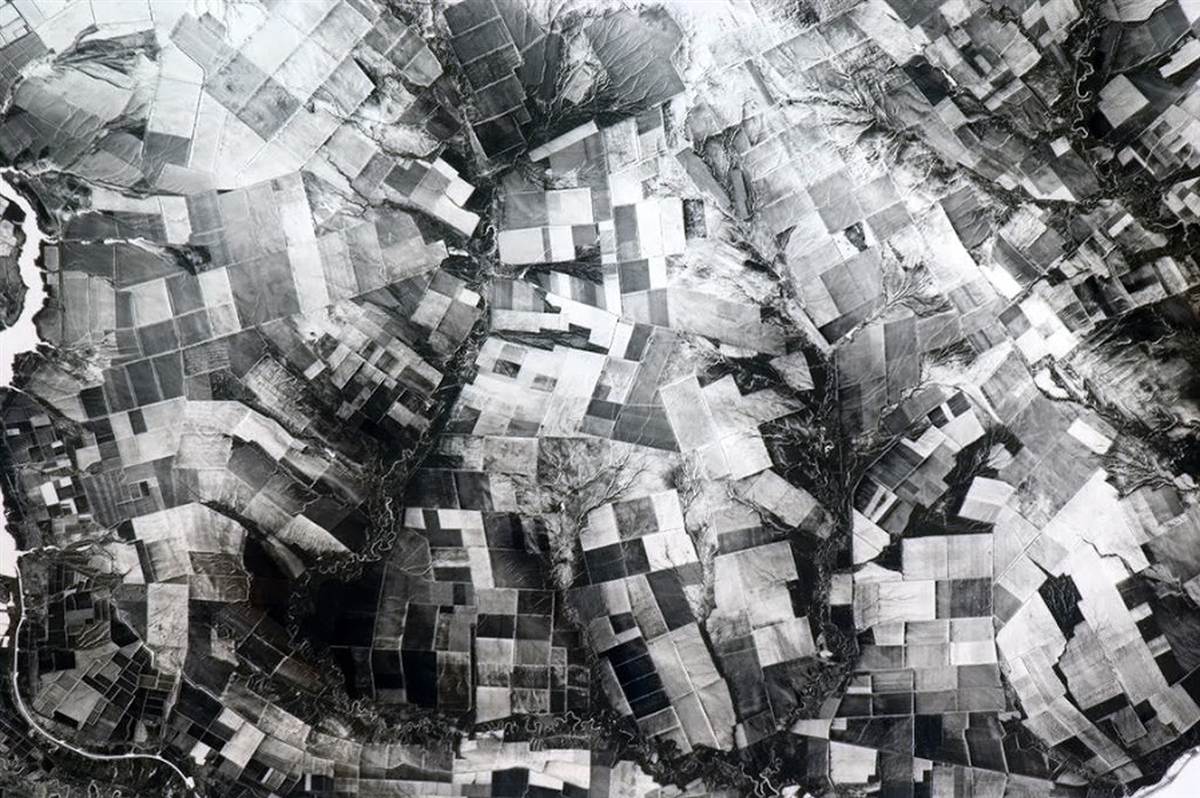
Figure 1 - Central Russia in winter from the International Space Station, image by Cmdr. Harkings, from NASA and in the public domain.

Figure 1 – Central Russia in winter from the International Space Station, image by Cmdr. Chris Hadfield, from NASA and in the public domain.

I often visit the galleries on the NASA website for the pure beauty that they offer and the site really never disappoints.  So today I’d like to share with you the image of Figure 1 showing snow-covered farmland in Central Asia looking like a wonderful and complex patchwork, perhaps a blanket.  It was taken last winter on February 25 from the International Space Station by Canadian astronaut Chris Hadfield, who calls it “a monochromatic 3-D hallucination in the snow.”

I think that part of the charm here is that it is a black and white photograph.  As a result it connects and is very reminiscent of the first areal photograph taken from a hot air balloon over Boston by John Black in 1858. We seem to never tire of photographs from above, where we essentially watch ourselves.  Perhaps it is an anser to the age old desire to soar like and eagle and look down at the strange inhabitants below , who are forced to cling precariously to the Earth.

Social Media: Twitter Embed

This post tests WordPress’ Twitter Embeds feature.

Example of Post Markup and HTML

Headings

Header one

Header two

Header three

Header four

Header five
Header six

Blockquotes

Single line blockquote:

Stay hungry. Stay foolish.

Multi line blockquote with a cite reference:

People think focus means saying yes to the thing you’ve got to focus on. But that’s not what it means at all. It means saying no to the hundred other good ideas that there are. You have to pick carefully. I’m actually as proud of the things we haven’t done as the things I have done. Innovation is saying no to 1,000 things. Steve Jobs – Apple Worldwide Developers’ Conference, 1997

Tables

Employee Salary
John Saddington $1 Because that’s all Steve Job’ needed for a salary.
Tom McFarlin $100K For all the blogging he does.
Jared Erickson $100M Pictures are worth a thousand words, right? So Tom x 1,000.
Chris Ames $100B With hair like that?! Enough said…

Definition Lists

Definition List Title
Definition list division.
Startup
A startup company or startup is a company or temporary organization designed to search for a repeatable and scalable business model.
#dowork
Coined by Rob Dyrdek and his personal body guard Christopher “Big Black” Boykins, “Do Work” works as a self motivator, to motivating your friends.
Do It Live
I’ll let Bill O’Reilly will explain this one.

Unordered Lists (Nested)

  • List item one
    • List item one
      • List item one
      • List item two
      • List item three
      • List item four
    • List item two
    • List item three
    • List item four
  • List item two
  • List item three
  • List item four

Ordered List (Nested)

  1. List item one
    1. List item one
      1. List item one
      2. List item two
      3. List item three
      4. List item four
    2. List item two
    3. List item three
    4. List item four
  2. List item two
  3. List item three
  4. List item four

HTML Tags

These supported tags come from the WordPress.com code FAQ.

Address Tag

1 Infinite Loop
Cupertino, CA 95014
United States

Anchor Tag (aka. Link)

This is an example of a link.

Abbreviation Tag

The abbreviation srsly stands for “seriously”.

Acronym Tag (deprecated in HTML5)

The acronym ftw stands for “for the win”.

Big Tag (deprecated in HTML5)

These tests are a big deal, but this tag is no longer supported in HTML5.

Cite Tag

“Code is poetry.” —Automattic

Code Tag

You will learn later on in these tests that word-wrap: break-word; will be your best friend.

Delete Tag

This tag will let you strikeout text, but this tag is no longer supported in HTML5 (use the <strike> instead).

Emphasize Tag

The emphasize tag should italicize text.

Insert Tag

This tag should denote inserted text.

Keyboard Tag

This scarsly known tag emulates keyboard text, which is usually styled like the <code> tag.

Preformatted Tag

This tag styles large blocks of code.

.post-title {
	margin: 0 0 5px;
	font-weight: bold;
	font-size: 38px;
	line-height: 1.2;
	and here's a line of some really, really, really, really long text, just to see how the PRE tag handles it and to find out how it overflows;
}

Quote Tag

Developers, developers, developers… –Steve Ballmer

Strike Tag (deprecated in HTML5)

This tag shows strike-through text

Strong Tag

This tag shows bold text.

Subscript Tag

Getting our science styling on with H2O, which should push the “2” down.

Superscript Tag

Still sticking with science and Isaac Newton’s E = MC2, which should lift the 2 up.

Teletype Tag (deprecated in HTML5)

This rarely used tag emulates teletype text, which is usually styled like the <code> tag.

Variable Tag

This allows you to denote variables.