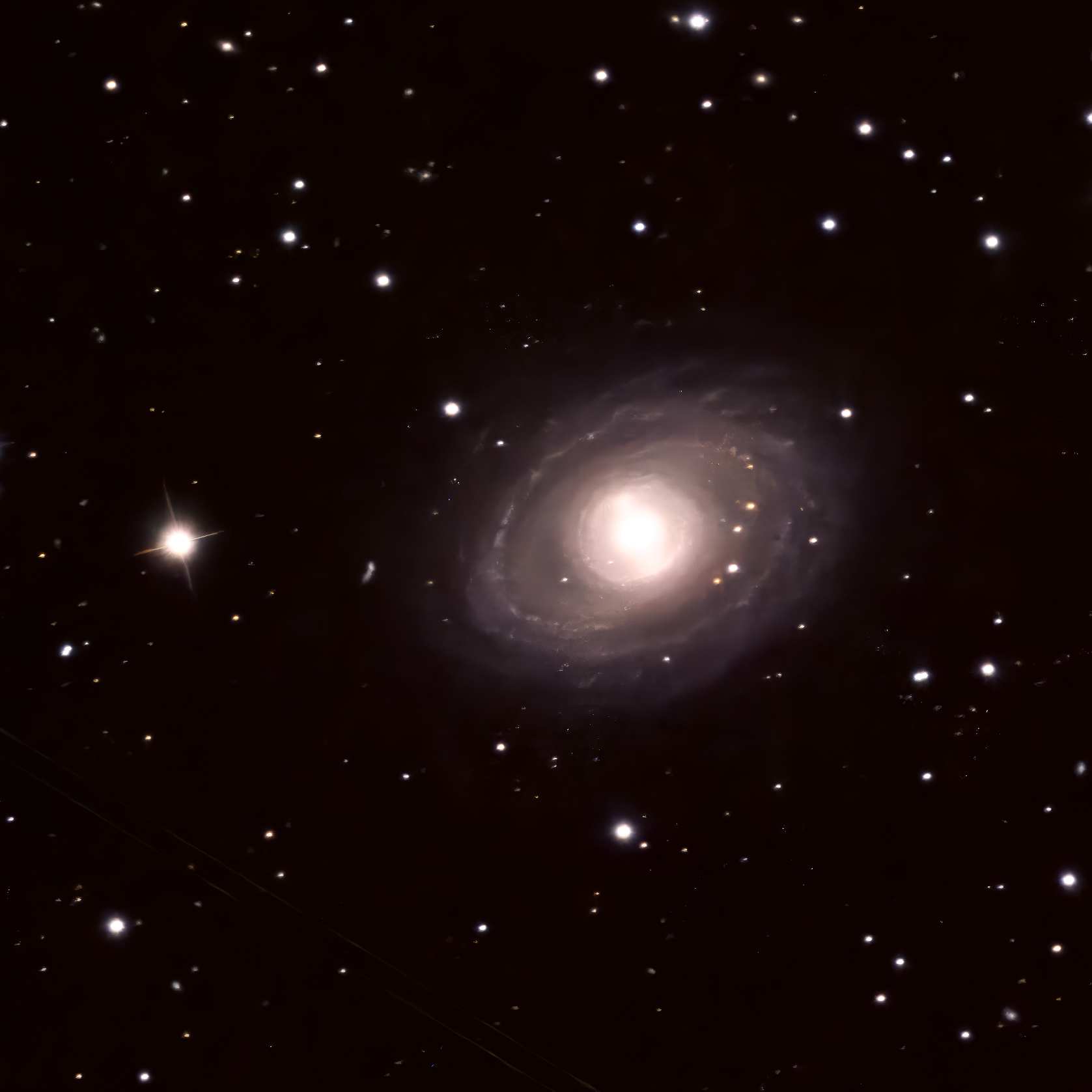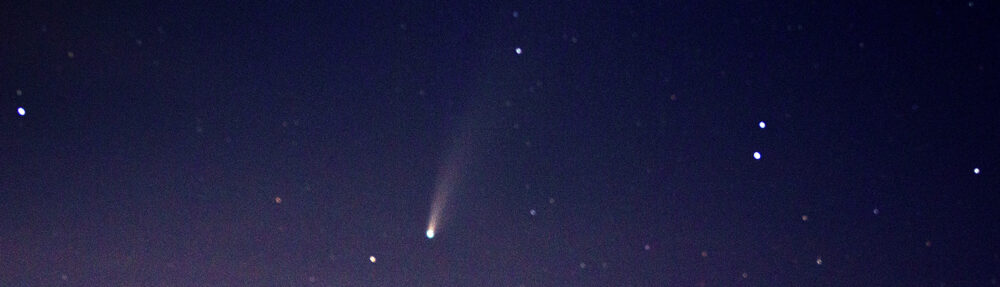
From the Observacar – the Owl’s Head Nebula Messier 97

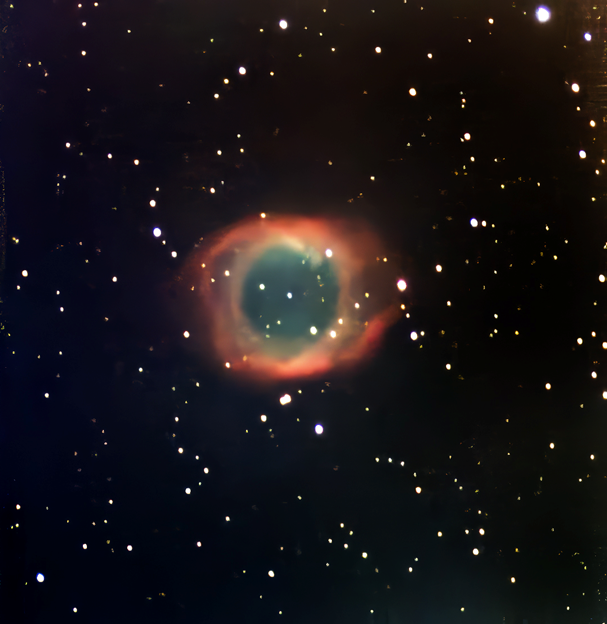
Messier 97 the Owl’s Head Nebula, Celestron Origen ~ 20 min exposure (c) DE Wolf 2025

Among the most hauntingly beautiful of the night sky’s cosmic clouds is the Owl Nebula, officially known as Messier 97 (M97). It is located about 2,030 light-years away in the constellation Ursa Major. This celestial wonder offers a glimpse into the future of stars like our Sun—and looks remarkably like a ghostly pair of eyes staring back at us.

Discovered by Pierre Méchain in 1781 and cataloged by Charles Messier shortly after, M97 earned its nickname thanks to its peculiar appearance. Through a telescope, especially in photographs with long exposures, the nebula reveals two dark, circular patches that resemble the eyes of an owl. These “eyes” are actually regions of lower gas density in the otherwise round shell of glowing gas. It’s a poetic name for an object that looks like a silent sentinel perched in space. In contrast, the Owl’s Head Cluster (NGC 497) stares back at us with a pair of bright stellar eyes.

The Owl Nebula is a planetary nebula, which—despite the name—has nothing to do with planets. The term was coined in the 18th century when such objects appeared planet-like through early telescopes. In reality, planetary nebulae are the remnants of dying stars.

The story of M97 began when a Sun-like star exhausted its nuclear fuel. As it ran out of hydrogen and helium to burn, it expanded into a red giant, shedding its outer layers into space. The hot, exposed core left behind emits ultraviolet radiation, lighting up the surrounding gas and creating the colorful glow we see today.

At the heart of the Owl Nebula lies this dying star’s white dwarf core—a dense, Earth-sized stellar remnant that will slowly cool over billions of years. This white dwarf core emits huge amounts of X-ray and Cosmic energy radiation. This radiation excites the gaseous cloud that surrounds the core, causing colorful fluorescence, much like the aurora borealis. M97 typically exhibits a blueish color with patches of red. Long-exposure images, such as the twenty minutes here, bring out shades of blue-green and red, caused by ionized oxygen and hydrogen.

While not the brightest nebula in the sky, M97 is one of the more complex. It has an almost spherical shape with subtle variations in brightness and gas density. Astronomers believe it is between 6,000 and 8,000 years old, and its structure has helped researchers better understand the late stages of stellar evolution.

The Owl Nebula is more than a striking image—it’s a window into the lifecycle of stars and a reminder that even in death, stars can leave behind beauty and mystery. It’s a cosmic memento mori, gazing back at us from across the galaxy, reminding us that everything—even stars—must eventually change.

The Bat that flits at close of Eve
Has left the Brain that won’t believe.
The Owl that calls upon the Night
Speaks the Unbeliever’s fright.

William Blake

Auguries of Innocence
From the Observacar – Messier 104 the Sombrero Nebula

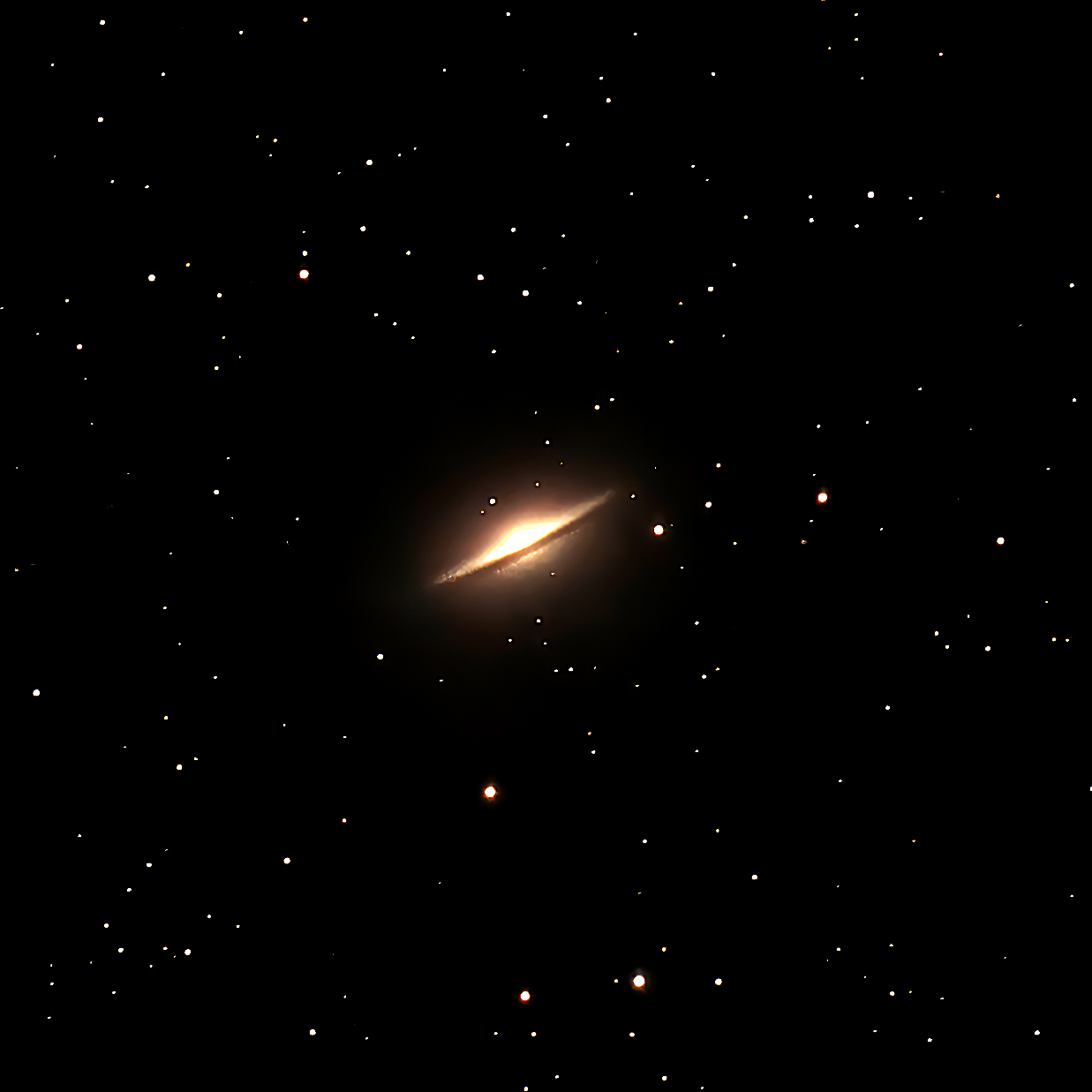
Figure 1 – Messier 104 the Sombrero Nebula, Celestron Origin Image (c) DE Wolf 2025

Attempts to recollimate my Nexstar 8 SE have been a nightmare – more on that when the problem is solved. So, rather than wasting all the clear nights I decided last week to spend a beautiful clear-sky session with my Celestron Origin 8 SE. Even then, I ran into problems, due to clouds drifting into the field of view and crashing the acquisition. Nevertheless, Figure 1 is an approximately 20 min image of Messier 104, the Sombrero Galaxy – named, I think for obvious reasons.

Messier 104 is like a glowing hat floating in space. It’s located about 31 million light-years away in the constellation Virgo. Not that I ever took my own astrophotograph of it back then. But, it was certainly a time for youthful favorites and M104 was clearly one of these. and it’s one of those deep-sky objects that just sticks with you once you’ve seen it.

When viewed through a telescope, M104 looks like a broad, flat disk with a bright central bulge—and a dark dust lane cutting across it. That dust lane gives it the appearance of a Mexican sombrero, especially when viewed edge-on. Note the “boiling” of this edge. I think with a significantly longer exposure great detail can be obtained with the Origin and now that is one of my summer observing goals.

Even with a mid-sized telescope, you can catch that shape under decent sky conditions. It appears as a bright core with a dark line running through it—a visual treat that makes it a favorite among amateur astronomers.

Technically, it is an unbarred spiral galaxy (SA(s)a), about 50,000 light-years across. That is half the size of our Milky Way. It has an apparent magnitude a round 8.0, making it just beyond naked-eye visibility. It has a central black hole: Estimated at 1 billion solar masses! That’s enormous, even for a galaxy this size.

A great mystery centers around M104’s huge central bulge. What is causing this? The bulge is made up mostly of older, red stars — similar to what we see in elliptical galaxies. This suggests the bulge formed early in the galaxy’s history, possibly through rapid star formation or a series of mergers with smaller galaxies. These events would have funneled gas into the center, creating a dense, star-rich core.

As a result some astronomers believe M104 might be a hybrid between a spiral and an elliptical galaxy. Its large bulge hints at a past merger—perhaps it collided with or absorbed a smaller elliptical galaxy long ago. These kinds of interactions can puff up the central region and leave behind a thick, spherical structure.

M104 hosts a supermassive black hole that’s a billion times the mass of the Sun—one of the most massive known in a galaxy of this size. Its gravitational influence likely helped shape and maintain the dense bulge around it, pulling in stars and gas over time.

Additionally there is low star formation in the bulge. Unlike the disk (where you find spiral arms and lots of young, blue stars), the bulge is quieter. It’s dominated by older stars and has relatively little gas and dust, which means fewer new stars are forming. This makes the bulge appear more pronounced, especially when viewed edge-on like in M104.

It is the bulge, of course, that intrigues us most about Messier 104. Back in the day when I was newbie amateur astronomer, it was one of my favorite deep-sky objects. This was way before I ever saw it myself let alone photographed it. That was in the day of tedious star-hopping, no computers, and strictly unguided alt-azimuth mounts. It reminds me that about a month ago I watched a wonderful an ancient BBC production of the Shakespeare’s The Tempest. Newly aware of a world filled with people, Miranda says:

“Oh what a brave new world this is that has such people in it!”

It is, I think, a poetic irony that it is AI, a kind of non-being person that is leading us into such a brave new world. And again, we are led to Hamlet’s assertion that “There are more things in heaven and Earth, Horatio, than are dreamt of in your philosophy.” Hamlet must deal with ghost-like ethereal spectres, while Miranda’s ghosts are more corporeal.

I suppose that I really should end here with a quote from Aldous Huxley’s novel “Brave New World.”

“Facts do not cease to exist because they are ignored.”


From the Observacar – Alice and Relativity

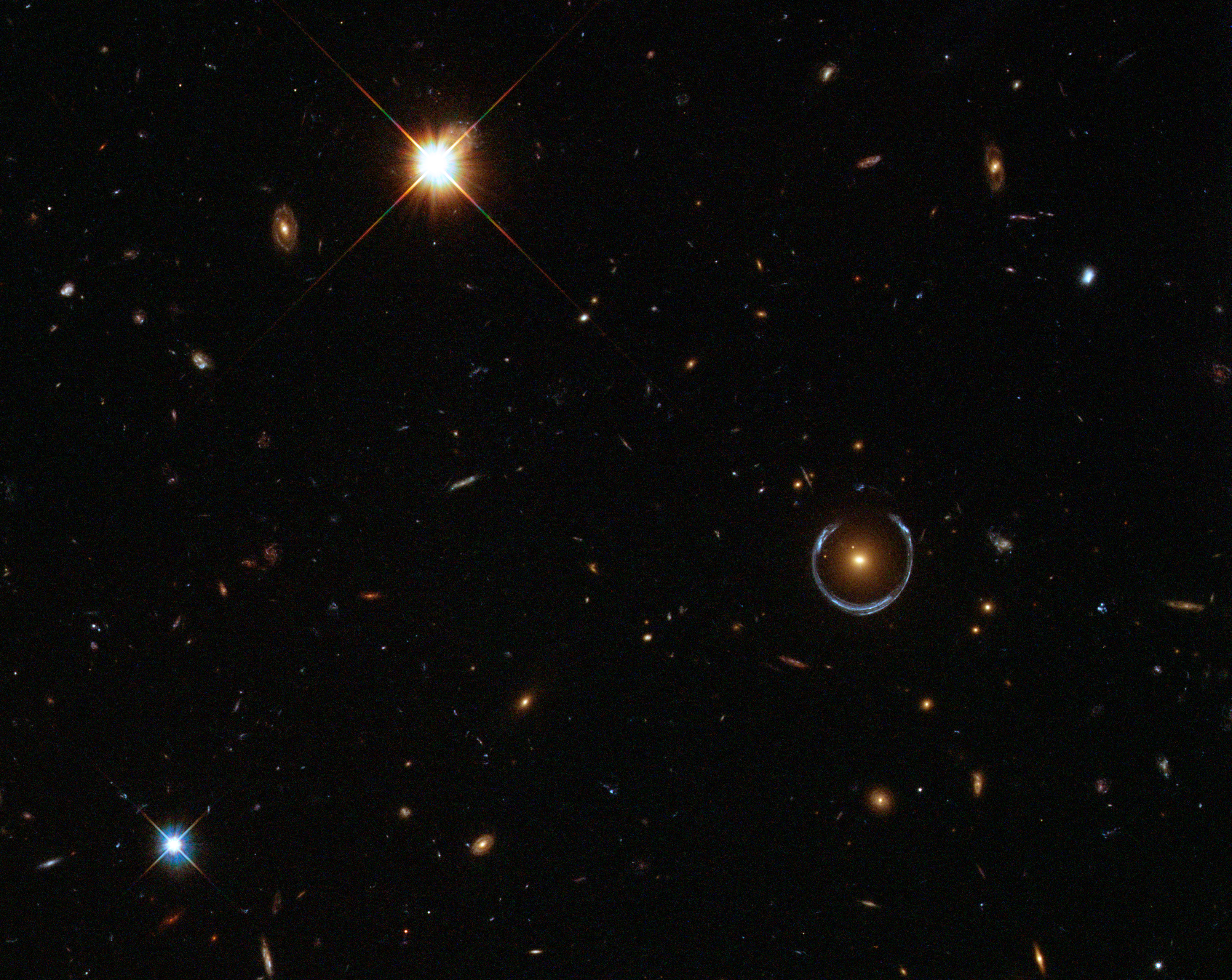
Figure 1 Gravitational lensing as imaged by the Hubble Space Telescope and in the public domain because it was taken by a government agency, NASA. Here a Luminous Red Galaxy is lensing the light from a blue galaxy behind it.

Apologies for disappearing. I have been visiting Bortle 4.7 skies! But I did want to pick up where we left off about reference frames and explore how this connects with Alice and the Rabbit hole.

Remember being on a train and not being able to figure out whether the train or the station is moving. This is the case of trains with constant speed or velocity. That is nothing is accelerating, and such is the realm of what is referred to as special relativity. We, well Einstein actually, recognized, perhaps intuitively, that there is no absolute rest frame which doesn’t move compared to all other possible reference frames. For this to be so, it must be that the laws of physics are the same in all reference frames. One particular law was outstanding, the law for propagating an electromagnetic wave. Fundamental to that law is the fact, verified by the famous Michaelson and Morley Experiment. that the speed of light must be the same in all reference frames. This conclusion leads to some mighty strange or counter-intuitive things;

  1. If you measure a distance in one frame, you get a different distance in another – so called Lorentz contraction.
  2. If you measure a time interval in one frame, it is different in another – the so called twin paradox.
  3. If two events are simultaneous in one frame, they may not be simultaneous in another.

As strange as these may seem they have none-the-less been demonstrated experimentally! As Hamlet famously said, “There are more things in heaven and earth, Horatio, than are dreamt of in your philosophy.” These are the ghosts that we must deal with.

Well. I kind of meant to recount not further confound. So just remember that in a world where trains move at different speeds, if you measure the speed of light it will always be the same namely 299,792,458 m/sec if you’re measuring in a vacuum. “I try to be precise, Captain,” said Mr. Spock. Physicists like Vulcans are pesky about being precise.

Moving on! We were told as undergraduates that the situation, where reference frames are accelerating relative to each other, is hard conceptually. Well, really not so! And here is where we return to Alice. Alice falling down the rabbit hole is reminiscent of a overwrought trope in relativity theory, namely of you or often a little Einstein figure inside a rocket ship moving through space, or not, since everything is relative. So here’s Alice in the rocket ready to take off. When she was in Wonderland she had left her kitten Dinah at home but worried whether she was being properly cared for. So this time Dinah is with her in the rocket. Alice perhaps maliciously, but definitely as a true Victorian experimentalist, keeps dropping Dinah upside down pondering the issue of why she always lands on her feet. But that part is a different story. The important point here is that Dinah keeps accelerating towards the floor at 9.8 m/sec squared under gravity. Alice yawns widely, ignoring the fact that it is impolite for Victorian ladies to yawn without covering their mouths. Bored she looks out the window and is surprised to discover that she is no longer on the launch pad but accelerating through space at 9.8 m/sec squared. Well, this certainly puts a different light on it!

This experiment with poor little Dinah, who has now gone off hunting for mice, illustrates an important point. Everything is relative! You nor Alice can distinguish between being at rest on the Earth and subject to a gravitational force with acceleration 9.8 m/sec squared in a rocket moving through space and subject to inertia at 9.8 m/sec squared.

Now here’s the important point or pointer. Alice pulls out of her pocket her handy-dandy, anachronistic, laser pointer and fires it at the opposite wall of the rocket. Since the rocket is accelerating upwards through space at 9.8 m/sec squared the light beam hits the wall along a ballistic path slightly lower than the point on the wall directly across from Alice. Remember that light is moving at a finite speed of 299,792,458 m/sec. No biggie there. But remember that Alice can’t really distinguish between acceleration due to inertia of gravity. All is relative and it becomes a matter of point of view. Soooooo it must be that despite the fact that photons or light particles have no mass that they are bent by gravity. Wow, that is really the fundamental conclusion of general relativity.

This bending of light was triumphantly demonstrated by Arthur EddingtonFrank Watson Dyson, and their collaborators during the total solar eclipse on May 29, 1919. The Sun measurably bent the light path of stars behind it. Indeed, if a star is behind the Sun it can be bent by the Sun’s gravitational force to produce multiple images of the star in front of the sun during an eclipse. Reading about this as an undergraduate I was in awe.

But now we have something more amazing, images from the Hubble Space Telescope and now the Jack Webb Space Telescope. Figure 1 shows one of the best and most impressive of these. Here a Luminous Red Galaxy is lensing the light from a blue galaxy behind it. Here the alignment of the two galaxies is so perfect that a so-called Einstein’s Ring rather than a set of multi image points is produced.

Dinah has now tired of hunting and is curled up on Alice’s lap giving herself a bath and pondering whether an observer outside the rocket would really know if she was alive or dead.

From the Observacar – who’s moving

Figure 1 – NGC 7293 the Helix Nebula, SeeStar 30 min Image (c) DE Wolf 2024.

I wanted to talk a bit about relativity. You know what they say. “It’s all relative.” It has nothing to do with uncles, and cousins, and aunts. It has to do with the fundamental nature of the universe and the dominant force, when our perspective gets big, namely the force of gravity.

But let’s start with so-called reference frames, and this ultimately connects with Alice in the rabbit hole again – but I get ahead of myself. So let’s begin by imagining that its a sunny day in 1898 and you are sitting in London’s Piccadilly Station waiting for your train to depart the station. You are in the train, and it is motionless. As a Victorian you tend to be pretty confident in your assertions and beliefs. Suddenly you see and feel the station move backwards or perhaps better the train sitting next to yours, but then you realize that this is not the case. Actually, you are moving forward. Well that’s a relief. I mean how could that station be moving?

What is so disconcerting about the station moving? It is because we believe that stations are too massive to move. Hmm! Isn’t the station on the Earth rotating at about 1,670 km per hour? It’s time to grow up people and use the metric system! And isn’t the Earth revolving around the Sun at about 30 km per second? Yikes? And isn’t the Sun and Earth revolving around our Milky Way galaxy at about 200 km per second? Double yikes? And it goes on from there. The station and the Earth and the Sun are certainly moving and moving incredibly fast!

I will avoid mathematics here, but the thing is that to you, sitting in the train, from your perspective the station is moving. That is until you reject that conclusion on a faulty logic basis. From the perspective of someone on the train platform or on the neighboring train you and your train are moving. These perspectives are what are referred to as frames of reference.

Who is really moving? Which frame of reference is actually at rest? We don’t know. It’s all relative! I’d like to say that Einstein invented this concept. But he didn’t. It goes way back. Hence we have for instance Galilean (the Leaning Tower of Pisa guy) reference frames. We have a strong and prejudiced belief that there is an ultimate rest reference frame. There is not. It is all relative.

In Einstein’s view things do however get more interesting. Imagine that you see a little child in the front of the train and you throw a ball to him with a speed v. That’s how you see it at “rest” in your trains. What does a person at “rest” on the platform see? They see the ball move through space with the added speed of the train, call that V. So they see the ball moving at speed v+V. Pretty straight forward! That’s what’s referred to as a Galilean transformation. But the problem is that it was shown at the beginning of the twentieth century that the same is not true with light. If you shine a flashlight at the child it advances at the speed of light c. Same is true for what is measured by the person on the platform not V+c but just c. WTF?

This was Einstein’s great contribution and lies in the statement that it is all relative, that there is no preferred reference frame. If there is no preferred reference frame then the laws of physics must be the same in all reference frames. Suppose you have a laboratory and are at “rest” doing physical experiments. The laws of physics apply both in the laboratory and as seen by an observer, who thinks of himself at “rest” either walking past the laboratory or walking around it. Put that way the inviolability of the laws of physics is both intuitive and obvious.

But at the end of the nineteenth century the great achievement of physics was the unification of the theories of electricity and magnetism and optics. Those laws must be the same in all reference frames too. You might have on the train a small antenna with a current moving up and down. This generates an electromagnetic wave. And the velocity of that wave is the speed of light. But since no reference frame is preferred, there is no absolute rest reference frame, the wave as seen from the platform must have the same speed c. Wow! This as we shall see has enormous potential.

I hope that I have not given you a headache! And I think for our efforts we deserve a nice astrophotograph taken by yours truly on August 13, 2024 of the Helix Nebula NGC 7213 with my Seestar 50s. This image of a glorious planetary nebula is one of my best Seestar images and shows just what this little telescope is capable of. This last sentence is in honor of the cocky Victorians who believed that prepositions were not words to end sentences with. Such is not the case!

From the Observacar – Centaurus A

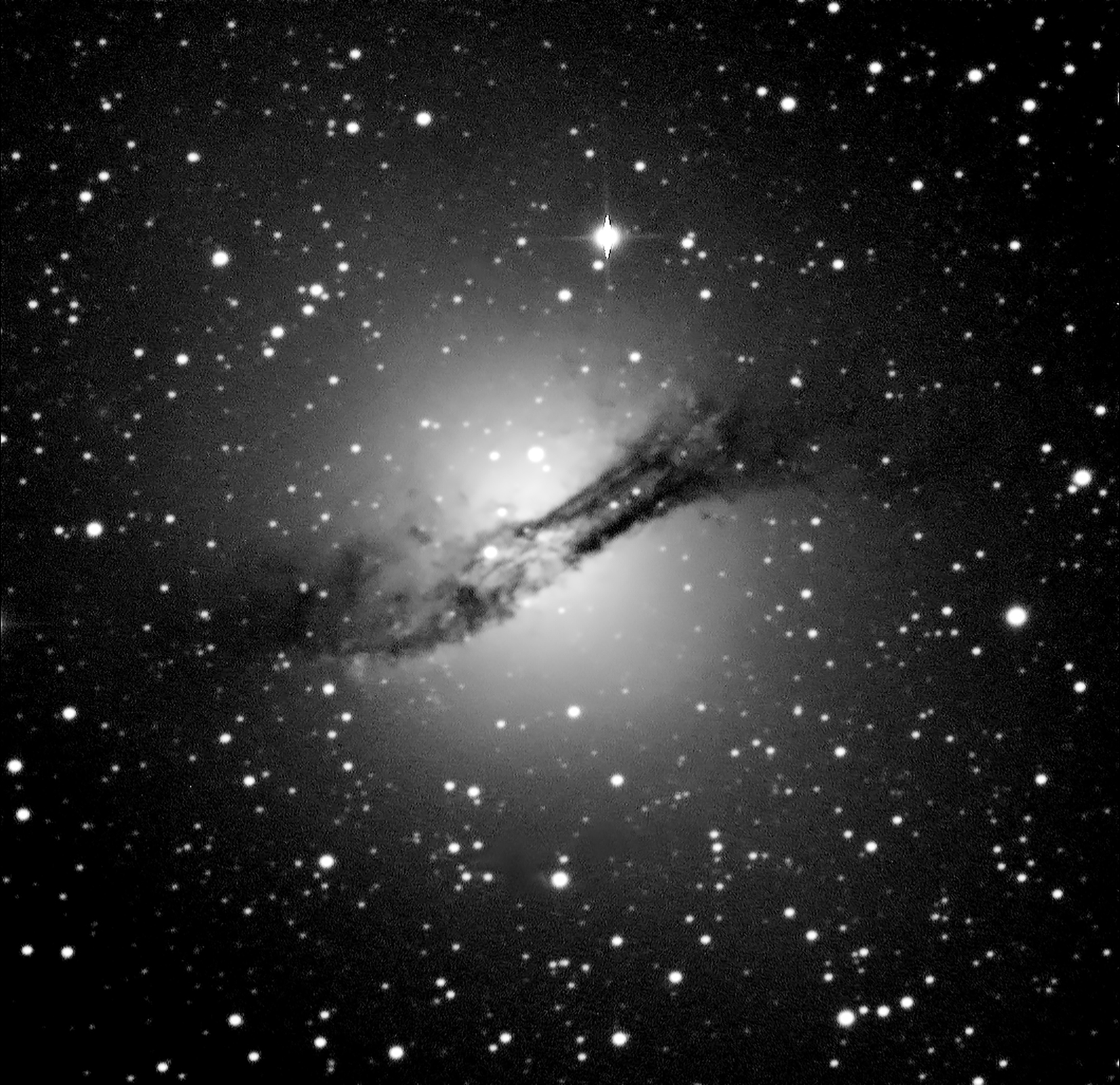
Figure 1 – Centaurus A taken in black and white at the iTelescope.net Sliding Spring Observatory in Australia. (c) DE WOLF 2024.

One of the cool facts about the Observacar is that you can drive it in your minds eye to Australia and Chile and image all sorts of southern sky celestial objects using the itelescope network. One of the most intriguing of these is Centaurus A. In the vastness of the universe, there are a few objects that capture the imagination of astronomers and space enthusiasts alike.

Centaurus A is also known as NGC 5128. It is located approximately 13 million light-years away in the Centaurus constellation. Despite this seemingly gigantic distance, Centaurus A is in fact our closest active galactic nucleus. It is classified as an elliptical galaxy, but with a twist: it also has a distinct dust lane that cuts through its center at an angle, giving it a unique appearance.

Centaurus A contains an estimated 100 billion stars, but what makes it particularly unique is its combination of a massive elliptical galaxy and an active core, all wrapped up in a dusty, star-forming region. The dust lane visible in images gives the galaxy a fascinating and almost ominous look when viewed through a telescope.

Perhaps needless-to-say, its core contains a supermassive black hole. This black hole is incredibly powerful and actively feeds on surrounding gas and dust. The energy released from this endocytotic process (to borrow a term from biology) results in intense radiation, which is what makes Centaurus A such an enormous radio source.

As a result, Centaurus A’s core is extremely active and is spewing out huge jets of energy and matter in the forms of radio waves, X-rays, and optical light.These jets can extend for hundreds of thousands of light-years into space, which is enough to influence star formation and the environment in the surrounding galaxy.

The dark dust lane that bisects the galaxy is made of cold gas and dust, which is believed to be a remnant of an ancient collision with a smaller spiral galaxy. This galactic collision likely occurred several billion years ago, and it’s a key factor in the galaxy’s current shape and structure.

In fact, the formation of the dust lane suggests that Centaurus A underwent a galactic merger, a common phenomenon in the universe. When galaxies collide, they often merge to form a new and larger galaxy. These interactions also fuel the activity of the central black hole, which grows as it consumes more material from the surrounding environment.

Centaurus A is a favorite target for many of the world’s most advanced telescopes, including the Hubble Space Telescope, Chandra X-ray Observatory, and the Atacama Large Millimeter Array (ALMA). Each of these observatories has provided unique insights into the structure and behavior of the galaxy because they each observe in different spectral regions.

Should I go out with my observacar?

Figure 1 – Norman Rockwell – cover of the May 1, 1920 issue of The Saturday Evening Post, showing a Ouija board in use. Image in the public domain in the United States because of its age.

Today is March 27 and the last clear night that I had with my telescope was March 11 – getting rather annoying! Following up on my blog yesterday about the Bortle Scale, I’d like to ask today, how can one predict “Clear Skies?” I have used a number of proverbial apps to try to accomplish this.

The first was the ten day forecast from The Weather Channel with its hourly prediction. I find that it works pretty well, but doesn’t really give you the insight that you need at the level that you need it. I think the obvious reason is that they’re goal is not astronomical.

Next I tried SkyLive. This I found has beautiful graphics but wasn’t very useful for me,

Then I tried Astrospheric which actually was of quite reasonable usefulness.

Then I was driven to pay the reasonable price for GoodtoStargaze. This is my GOTO app and the one I recommend. I use it all the time, and augmented with The Weather Channel and sometimes Astrospheric, I find that I can usually do quite well at predicting the sky conditions. This is not to say that I have not had the experience of going out on a “clear” night only to be confronted with a mass of cumulus clouds. As a physicist I respect the fact that predicting massive weather systems with what I am told are unstable differential equations is iffy at best and you are easily off by ten miles or so.

Originally I would record the sunset or sunrise and moon conditions and leave it at that. Slowly my observing notebook is morphing into true scientific notebook, and as far as sky conditions beyond Bortle Number, I record a lot of parameters with the hope/plan of someday using my imaging successes and failures predictively. I may even create an AI app to scrape my notebooks for best conditions for what.

The parameters that I record are:

Sunset/sunrise – since you usually need at least 45 min into darkness befor you can align scopes
Moonrise – the moon is a major and variable source of light pollution
Moonset – when will this annoyance go away. TC is always saying to me, “Just look at how beautiful the full moon is tonight!” And I’m like, “eh……”
Moon Phase – note that percent lunar illumination is a bit different and you can use that instead
Temperature range – obvious point too cold, even with the observacar and I’m not going out
Windchill – this for the same reason
Dew point – is kind of a predictor when you need your lens heater
Relative Humidity – this for the same reason
Wind conditions – this comes in two flavors steady wind. I set a limit of about 25mph and gusts 30 mph. Don’t want my telescope falling over or vibrating too much for imaging
Cloud cover – I really like this below 25 %
Seeing – this is the discernable star resolution with the naked eye. As I’ve gotten older my naked eye has gotten more and more modest. But the basic point here is that the smaller this number is the finer detail you can see.
Transparency – this is a tough one but basically is the magnitude loss of a star going through the air mass of the atmosphere
Visibility – this is the usual how far you can see. I number of 10 miles or better is what you are looking for.
Light pollution – this is our favorite the old Bortle Number, which usually doesn’t change much day-to-day
Notes – whatever else you want to record.

Every entry in my observing notebook begins with these numbers.

A lot of times when my apps are predicting clear skies and cumulus clouds or worse rains abound, I start to wonder if there isn’t a device that would be at least as good at predicting sky conditions. Such a device is shown in Figure 1 and is called a Ouija Board!

An Observacar in a Bortle

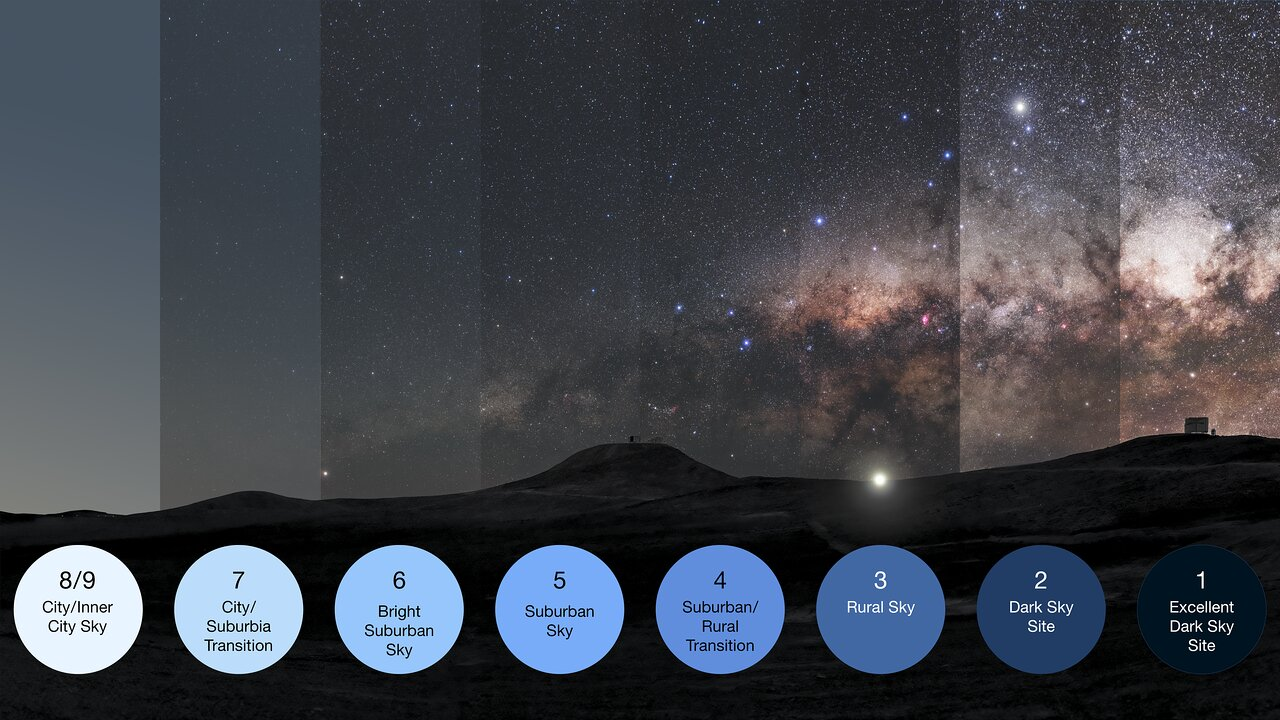
Figure 1 – The Bortle Scale Credit: ESO/P. Horálek, M. Wallner

Many things seem better in our remembrance of them. I used to observe with my 60 mm Unitron Refractor in NYC, doing everything wrong (like looking through my apartment window with my telescope). But, and in any event, I was always limited by the light pollution presented by the big city. But in summer I would go to “Upstate NY” and “wow” the skies were spectacular and the beauty of the Milky Way could bring one to tears. I’m a romantic.

Today we struggle in most places to catch a glimpse of the Milky Way. Indeed, in most places you stand no chance of seeing it. Light pollution is the bugaboo of amateur astronomy.

The Bortle Light Pollution Scale is a nine-level system used to measure the quality of the night sky based on light pollution. It was developed by John E. Bortle in 2001. This scale helps both casual observers and serious astronomers assess the level of light pollution in a particular location. It was designed to aid in comparing different locations and providing a better understanding of how much artificial light interferes with stargazing. You can chose a site based on it and putting the Bortle Number in your observing notes makes you feel really in the know, even though you have no control over it.

The scale is inverse, meaning the lower the number the better, Bortle 1 (Excellent Dark-Sky Site) to Bortle 9 (Inner-City Sky), with each class offering a description of what can be observed and the degree of light pollution in the area. It is akin to the magnitude scale, where smaller means brighter.

Breakdown of the Bortle Scale

Bortle 1 – Excellent Dark-Sky Site

  • This is the ideal environment for stargazing. Observers in this location will experience pristine, unpolluted skies with no significant artificial light. The Milky Way is visible in all its glory, and faint objects like galaxies and nebulae are easily observed with the naked eye. This is typically found in remote locations, far away from urban centers, where artificial lighting does not reach. I’ve read about shadows cast by the Milky Way in Sagittarius and Scorpius. I mean really? That’s just amazing!

Bortle 2 – Typical Rural Sky

  • Rural areas with very little light pollution fall under this class. The Milky Way is clearly visible, though some light pollution may slightly affect the sky. While bright stars are easy to spot, the faintest deep-sky objects might be harder to detect without a telescope. Still, it’s a good location for casual stargazing.

Bortle 3 – Rural/Suburban Transition

  • This is a more common location for many stargazers, found in the outskirts of rural and suburban areas. The Milky Way is still visible, but there is some light pollution that washes out fainter stars. The sky is noticeably brighter, and some constellations may be less prominent. It is a compromise between access to nature and light pollution.

Bortle 4 – Suburban Sky

  • Observers in suburban areas will find a considerable amount of light pollution, but brighter celestial objects like planets and the Moon are still easily visible. The Milky Way is generally not visible, and the sky is noticeably bright. Faint deep-sky objects will likely require binoculars or a telescope to be observed clearly.

Bortle 5 – Bright Suburban Sky

  • This class represents urban areas that experience significant light pollution. While brighter stars and planets are still visible, the sky is heavily washed out, and the Milky Way is completely obscured. Faint deep-sky objects are impossible to see without a telescope, and the environment is illuminated by the glow of nearby city lights.

Bortle 6 – Light-Polluted Sky

  • Locations in Class 6 are typically in the periphery of urban centers where artificial lighting dominates. Only the brightest stars and planets are visible, and the sky is a dull, murky gray. The Milky Way is completely invisible, and very little astronomical detail can be seen with the naked eye.

Bortle 7 – Moderately Light-Polluted Sky

  • As you move into more urban environments, the light pollution intensifies. The sky is overwhelmingly bright, and only the brightest stars are visible. The light from nearby cities creates a strong glow that makes it nearly impossible to observe faint stars or deep-sky objects. This class is common in larger cities.

Bortle 8 – Very Light-Polluted Sky

  • In cities with extreme light pollution, only the most prominent stars can be seen, and the sky is typically washed out with artificial lighting. The night sky may appear orange or yellowish due to street lights and city lights. Even with a telescope, the ability to observe deep-sky objects is severely limited.

Bortle 9 – Extremely Light-Polluted Sky

  • Class 9 represents the worst light pollution, typically found in the heart of large metropolitan areas. The sky is completely dominated by artificial lights, and very few stars can be seen with the naked eye. The Milky Way is entirely obscured, and observing celestial objects is nearly impossible without extremely specialized equipment

Figure 1 is an excellent resource from the European Southern Observatory that shows how the Milky Wat fares against light pollution at each Bortle Number. When I observe in Sudbury I am at a Bortle 5.7 and have no chance of making out the Milky Way and many deep-sky objects are bleached out. But nevertheless this is pretty good and I am grateful to have those skies. In Rockport were I often go in summer I am at Bortle 4.2 and the Milky Way seems to blink on and off. You see here the obvious advantage of the Observacar over a fixed site. Don’t like your Bortle Number and you just have to hop in your Observacar and drive somewhere else.

I have heard that AI based telescopes like the ZWO Seestar 50s and the Celestron Origin can figure out what they are pointing at, the so-called “solving of the plate,” in Bortle 8 skies. Take another look at Figure 1 again. You wonder how this is even possible. Add a near full moon and things get really dicey.

Amateur astronomers are ever in the search of or, covetous of, clear skies. Light pollution is one of those things that deprive us a fundamental element of what it means to be human. To see a sky unpoisoned by artificial light is to connect with the humans that first inhabited our planet. I wish you Clear Skies everyone!

From the Observacar – NGC 1398

Figure 1 – NGC 1398 iTelescope T73 (c) DE Wolf 2024

It is spring, friends! The time change has passed and the sunsets later and they lead to warmer nights. I am at present trying to get trying to get my big eight inch Nexstar up and properly running so that I can finally do some planet observing.

Also, I have been venturing out to the wildlife refuges again. And I hope to have some good bird photographs for you again. This weekend I am going to Plum Island in search of white owls and piping plovers. Wish me luck

Figure 1 today is of the dramatic NGC 1398 galaxy and was taken using itelescope T73 in  Rio Hurtado, Chile just at the start of the New Year. As a reminder this is a 0.50-m f/6.8 reflector with a 26.93′ x 21.53’arc-mins FOV. 3 images with each RGB filtration of 120 sec each. I am really pleased with how the image came out. I see this and then remember that in my youth my telescope was a 60 mm Unitron Refractor! Times change.

NGC 1398 is a spectacular even majestic galaxy, standing out for its impressive structure and vibrant features. Located in the constellation Fornax, NGC 1398 it is what is referred to as a barred spiral galaxy. A barred galaxy is a type of spiral galaxy characterized by a distinct, elongated central bar-shaped structure made of stars. This bar runs through the galaxy’s nucleus and extends outward, from which the spiral arms of the galaxy typically emerge. The presence of this central bar distinguishes barred spiral galaxies from unbarred spiral galaxies, where the spiral arms directly emerge from the central bulge without a bar-like feature.

NGC1398 was first discovered by the famous astronomer William Herschel in 1835, and it is situated approximately 65 million light-years away from Earth. This stunning galaxy is part of the Fornax Cluster, a rich collection of galaxies that offers a wealth of astronomical discoveries. NGC 1398 is notable not only for its size and composition but also for the intricate spiral arms that define its shape.

In addition to the spiral arms, the galaxy is also surrounded by a faint, extended halo of stars that is common among many galaxies. This halo is made up of older stars and provides valuable insights into the galaxy’s formation history.

The central bulge of NGC 1398 is another fascinating aspect of its structure. This bulge is thought to contain a supermassive black hole, a feature that is often found in the centers of large galaxies. This black hole likely plays a key role in the galaxy’s dynamics and may even influence the formation of the spiral arms.

It is, I think, a curious point that when it comes to astrophotography for the sake of astrophotography, as oppose to astrophotography for scientific purposes, I haven’t graduated to that yet, we are drawn to certain objects because of artistic features. NGC 1398 with the delicate structure of its spiral arms in such an appealing object.

From the Observacar – Never Setting Messier 81 & 82

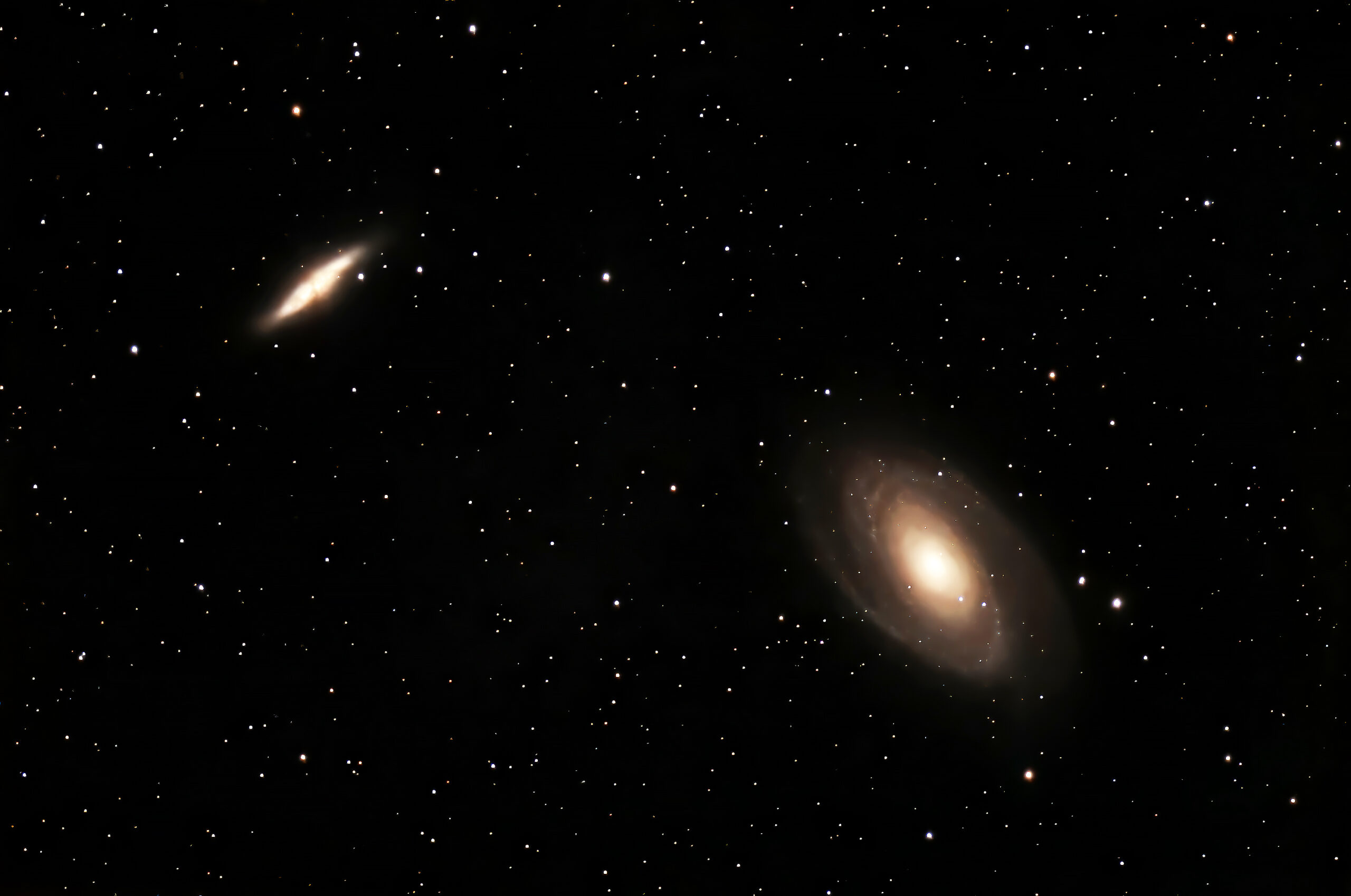
Messier 81 (lower right) & 82 (M82) Celestron Origin image 60 min 360 exposure (c) DE Wolf 2024

Messier 81 (M81) and Messier 82 (M82) are located in the northern sky in the Big Bear or Ursa Major. They are named the “Bode’s Galaxy” and the “Cigar Galaxy,” respectively, They were cataloged by French astronomer Charles Messier in 1774 as part of his mission to identify and catalog celestial objects that could be mistaken for comets. Messier 81 is a spiral galaxy, while Messier 82 is a peculiar galaxy, often classified as a starburst galaxy due to its unusual structure and intense star formation.

These two galaxies are part of what are referred to as the M81 group, a collection of gravitationally connected and interacting galaxies. This pair dominates the group visually but it also contains several smaller galaxies, such as NGC 3077, NGC 2976, and NGC 2366.

Galaxies generally come in groups. The members of our Milky Way’s group, referred to as the “Local Group,” are extensive and include: the Milky Way itself, the Andromeda galaxy (M31), the Triangulum Galaxy (M33). Additionally, there are so-called dwarf galaxies: Large Magellanic Cloud, (LMC), Small Magellanic Cloud (SMC), Sagittarius Dwarf Elliptical Galaxy, Ursa Minor Dwarf Galaxy, Draco Dwarf Galaxy, Carina Dwarf Galaxy, Leo I and Leo II. Our Local Group also contains a variety of other smaller dwarf galaxies that are gravitationally bound to the larger galaxies. These include: Fornax Dwarf Galaxy, Phoenix Dwarf GalaxyAndromeda II, Andromeda III, and the WLM Galaxy (Wolf-Lundmark-Melotte). The extensive list illustrates the extent of gravitational clustering in the universe and by connection the incredible distances over which gravity extends and shapes the structure of the universe.

Messier 81, or Bode’s Galaxy, is one of the brightest galaxies in the Messier catalog and stands out due to its well-defined spiral structure. It is located approximately 12 million light-years from Earth and is part of the M81 group, which consists of a collection of galaxies in close proximity to one another. With a diameter of around 90,000 light-years, M81 is a relatively large galaxy, comparable in size to our Milky Way.

One of the most striking features of M81 is its spiral arms, which are richly populated with stars, gas, and dust. These arms are the sites of ongoing star formation, and the galaxy is thought to be relatively stable, with a low rate of active starburst activity. The central region of M81 contains a bright, active supermassive black hole that likely plays a role in regulating the galaxy’s dynamics. Its steady state contrasts sharply with the more energetic activity seen in its neighboring galaxy, M82.

Messier 82, known as the Cigar Galaxy due to its elongated, cigar-like shape. M82 is a peculiar galaxy, often classified as a starburst galaxy. This means it is experiencing an exceptionally high rate of star formation, far higher than typical galaxies like our Milky Way. The intense starburst activity in M82 is thought to be a result of interactions with nearby galaxies, particularly Messier 81.

Unlike the relatively calm Messier 81, M82 is a turbulent galaxy, with massive amounts of gas and dust fueling the rapid birth of new stars. The central region of M82 hosts a vigorous outflow of gas and energy, creating a dramatic galactic wind. This outflow is thought to be the result of the starburst activity and may eventually expel a significant portion of the galaxy’s gas, limiting future star formation.

The two galaxies continue to interact and there is some evidence that this gravitational interaction with M81 is responsible for the starburst activity of M82. They are believe to exchange material and may at some point merge with one another.

Never setting in northern skies, they are a favorite of amateur astronomers. The image of Figure 1 is a 360 frame 1 hour exposure taken with my Celestron Origin. I framed it so as to bring both galaxies into the image to suggest their gravitational pairing and interaction.