From the Observarcar – the Veil Nebula, sequin of the stars

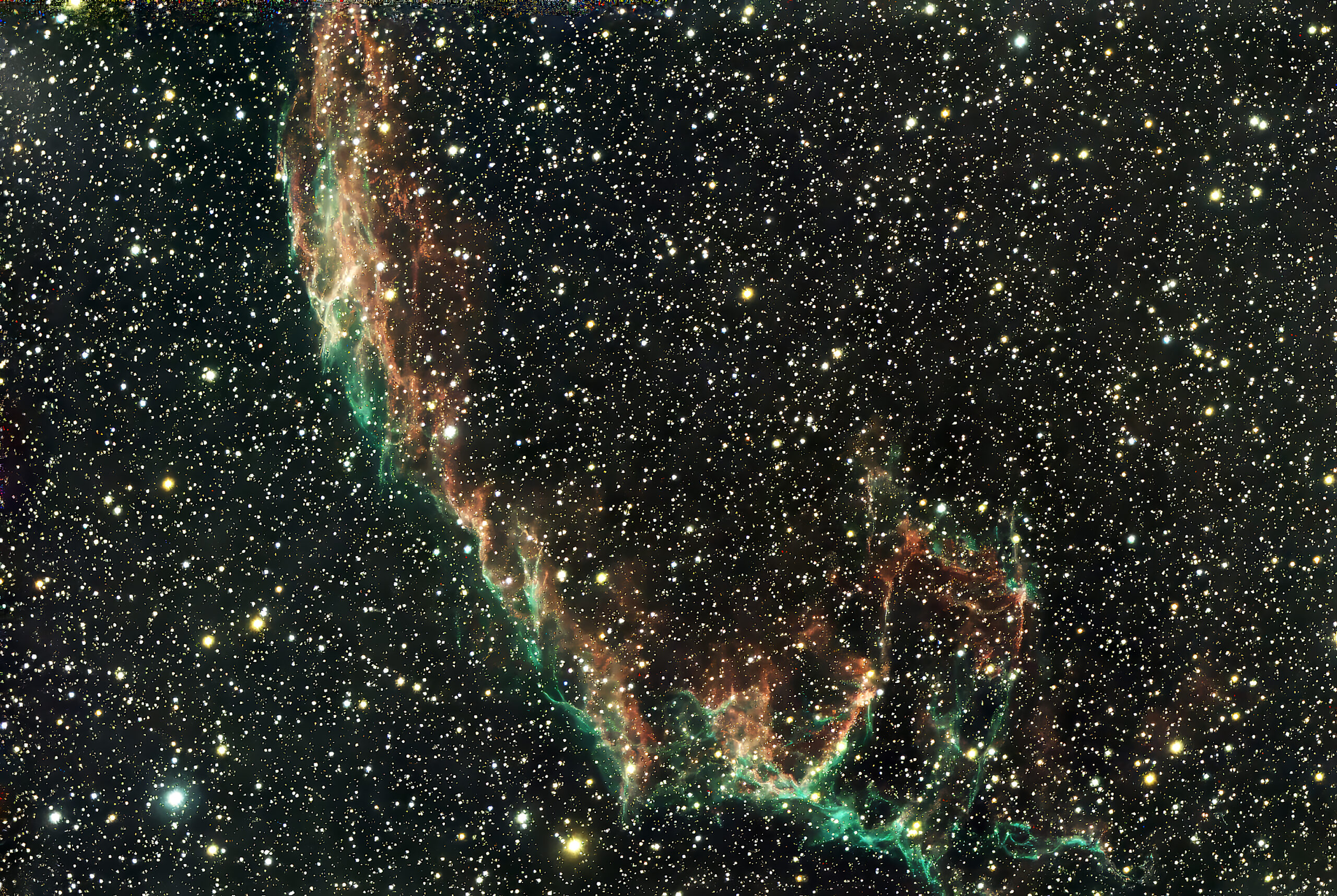
Figure 1 – Eastern Veil Nebula imaged with the Celestron Origin (c) DE Wolf 2025

Nebulae are quite literally the sequins of the universe, great iridescent waves of light. High in the constellation Cygnus, riding the bright summer Milky Way, lies one of the most dramatic spectacles in the night sky: the Veil Nebula. In contrast to the compact planetary nebulae, the Veil is vast — so large that it takes up nearly three degrees of sky, six times the width of the full Moon. What we’re looking at is the ghost of a massive star that exploded some 10,000–20,000 years ago, leaving behind a sprawling supernova remnant about 2,400 light-years away.

Because it’s so extensive, astronomers and stargazers usually talk about its parts separately:

  • The Eastern Veil (NGC 6992/6995): A bright, filamentary curtain of glowing gas, rippling like windblown fabric.
  • The Western Veil (NGC 6960, sometimes called the Witch’s Broom): A sweeping arc of light that seems to snag on the bright star 52 Cygni.
  • Pickering’s Triangle: A more subtle, web-like tangle of wisps between the eastern and western arcs.

The entire Veil Nebula complex was discovered by William Herschel on September 5, 1784 using his 18.7-inch reflector telescope. Herschel recorded it as multiple nebulous patches in Cygnus, not realizing at the time that they were connected filaments of a single giant supernova remnant. Later observers and catalogers (Dreyer for the NGC/IC catalogs, and Pickering in the late 19th century with photographic plates) helped clarify the structure and added the additional designations.

The Veil Nebula shines because the shockwaves from the ancient supernova continue to plow through the interstellar medium, heating and exciting the gas, which glows in vivid emission lines. Through astrophotography, hydrogen and oxygen reveal themselves in deep reds and electric blues, but even visually, under dark skies with an OIII filter, the Veil’s filaments can be traced like smoke hanging in the cosmos.

For amateurs, the sheer size of the Veil means it’s best enjoyed with wide-field telescopes, large binoculars, or short focal length eyepieces. Few objects so perfectly combine science and spectacle: a monument to stellar death, transformed into one of the night sky’s most delicate works .

The Celestron Origin is wide-field by only about a degree of arc. So we must enjoy the Veil as parts. Figure 1 shows the Eastern Veil and Figure 2 the Western Veil. Both were taken with ~ 60 min total eposure and the Celestron Nebula Filter. I find it very hard to make out the light with my Nexstar 8SE, except on the best of nights. Cats, of course, have keener night vision and Dinah imagines herself playing with the iridescent wisps.
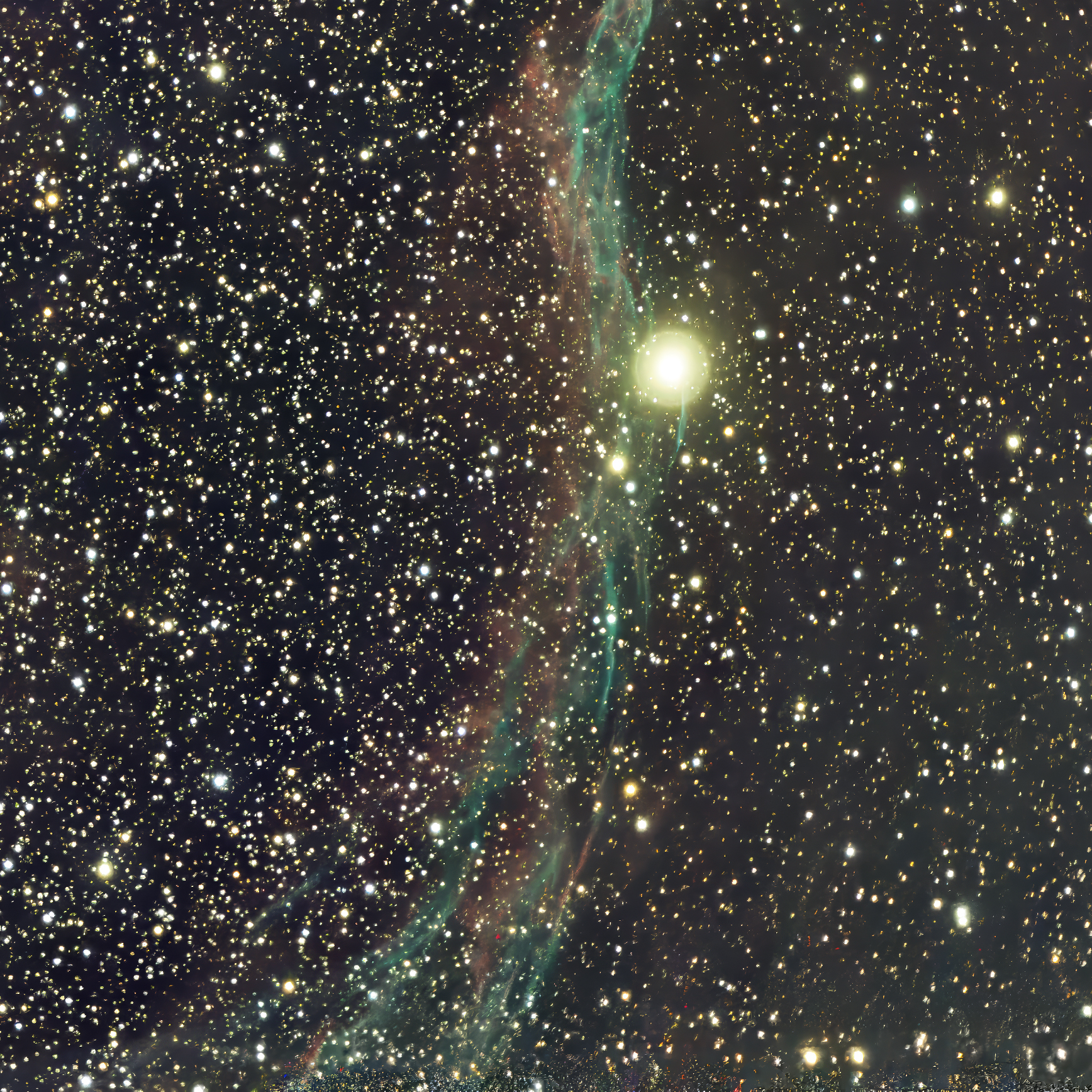
Figure 2 – Western Veil Nebula imaged with Celestron Origin (c) DE Wolf 2025
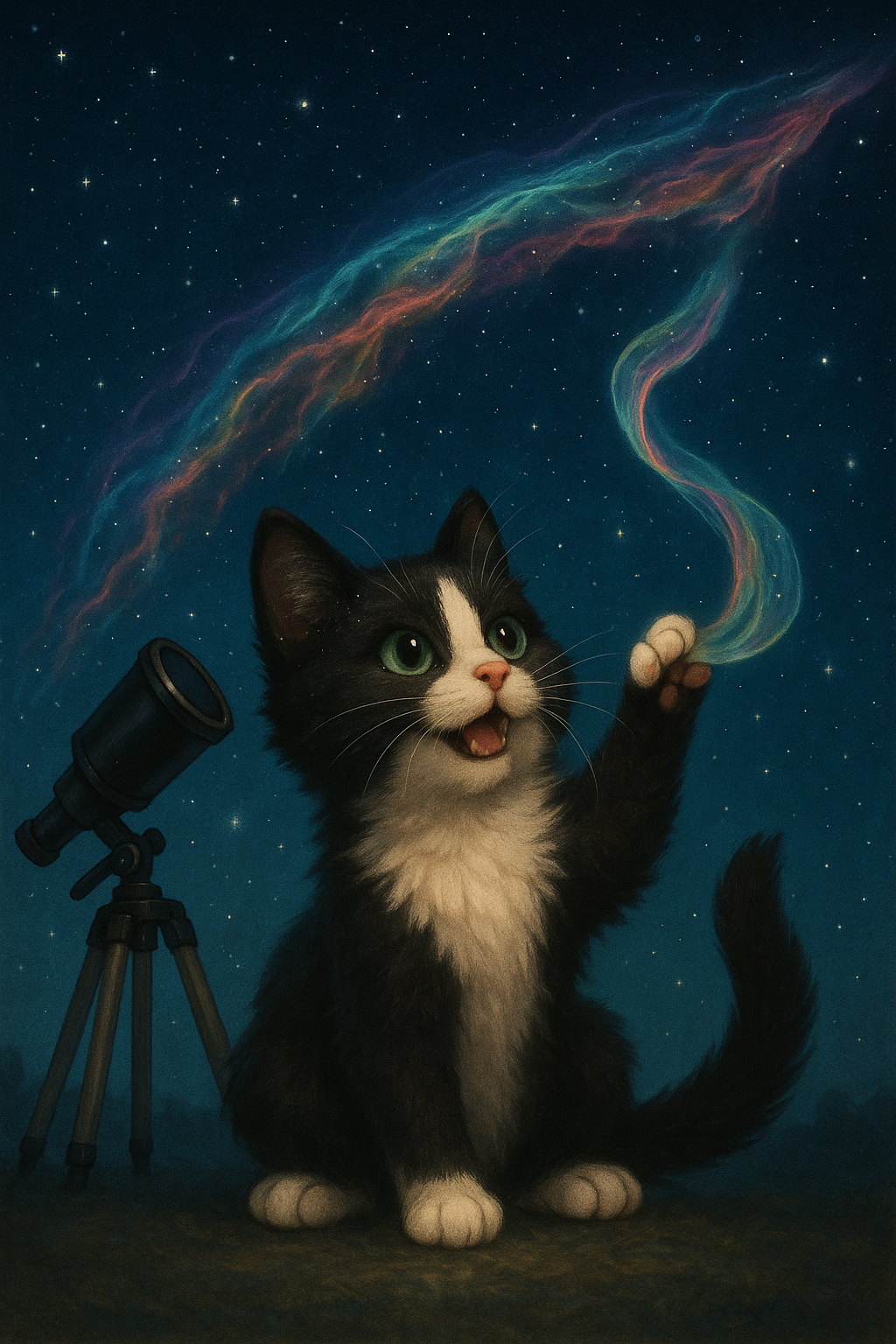
Figure 3 – Dinah dances with the iridescent Veil (c) DE Wolf 2025

From the Observacar – Messier 16, the Eagle Nebula

Figure 1 – Messier 16, the Eagle Nebula (c) DE Wolf 2025

Figure 1 is a one hour exposure, Celestron Origin image of Messier 16, the Eagle Nebula. A lot of times I find myself studying such images and wondering, where the name comes from. Here if you look closely you can see the silhouette of the eagle, or perhaps, it is of a Romulan Warbird flying into the nebula’s center.

The name is generally credited to Sir John Herschel in the 1830s–1840s. Herschel’s detailed notes described the cluster NGC 6611 and its surrounding nebulosity, and he compared its outline to that of a bird in flight. Later popular star atlases and guides picked up the comparison, cementing “Eagle Nebula” in the public imagination.

M16 Floats about 7,000 light-years away in the constellation Serpens. Vast clouds of gas and dust are collapsing under gravity to form new stars, while the radiation and winds from newborn giants sculpt the surrounding material into intricate shapes.

M16 spans roughly 70 by 55 light-years, with its heart dominated by towering columns of gas made famous by the Hubble Space Telescope’s 1995 image, the “Pillars of Creation.” These dark, finger-like structures are dense enough to resist erosion by intense ultraviolet light, acting as stellar incubators. Inside them, young protostars gather mass from their surroundings until they ignite nuclear fusion, marking their official birth as stars.

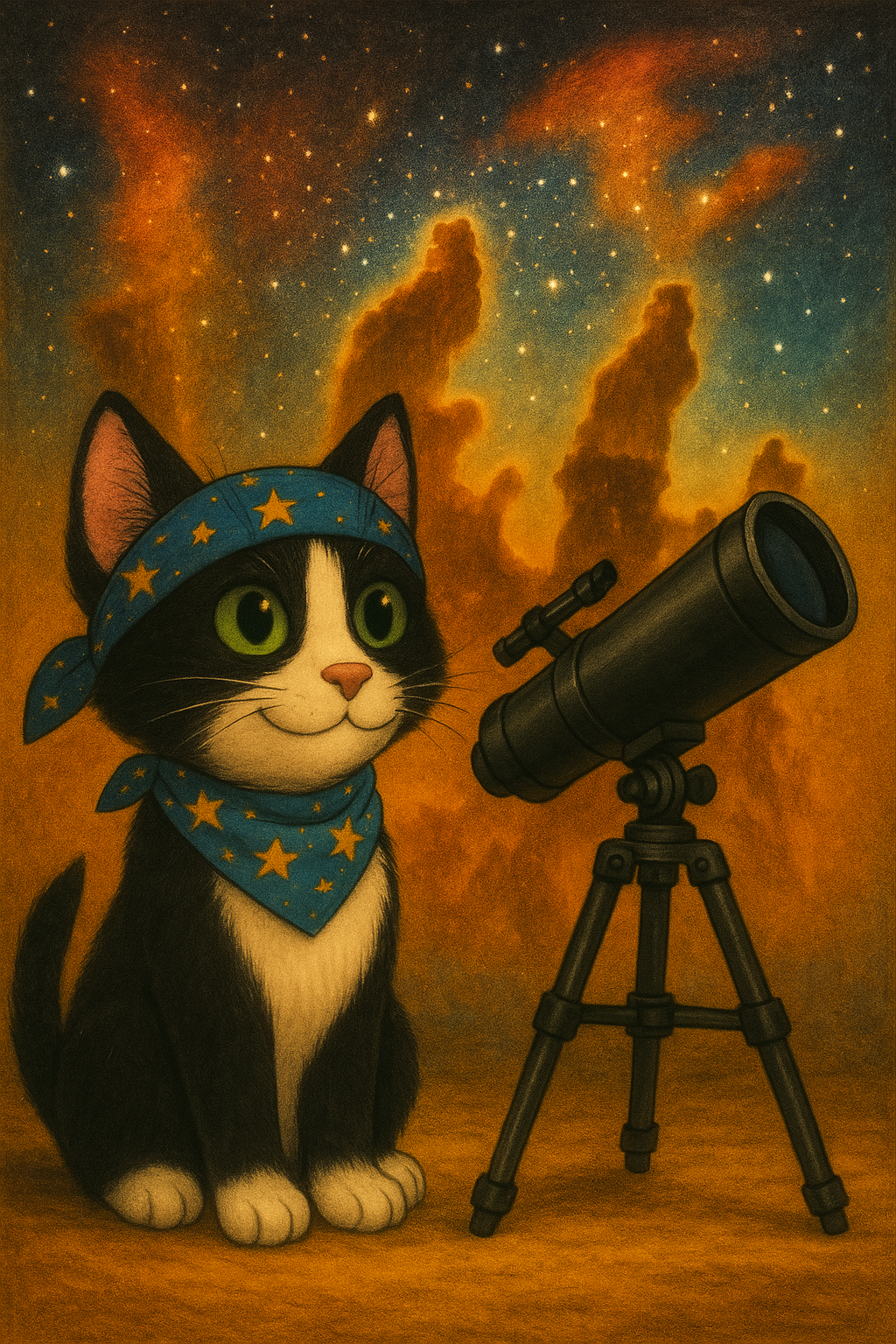
Being a youngster, Dinah was inspired by the NASA Hubble images to become involved in the amateur astronomy hobby. In Figure 2 she is shown beside her CAT (Cadioptric telescope) with the Pillars of Creation behind her.

Figure 2 – Dinah with the Pillars of Creation (c) DE Wolf 2025

From the Observacar – Day of the Trifid Nebula

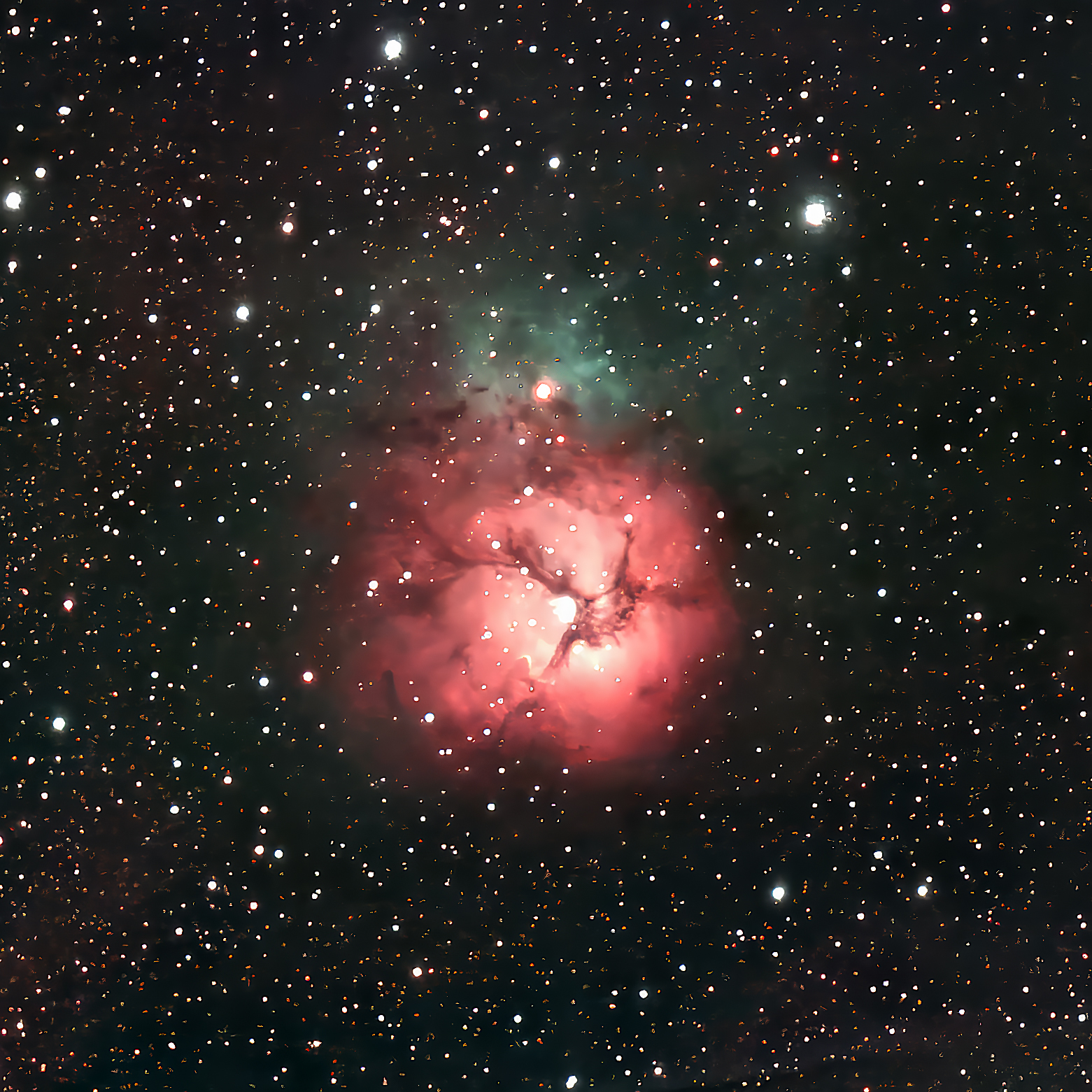
Figure 1 – The Trifid Nebula, Messier 20 (c) DE Wolf 2025

Those of us of a certain age vividly remember the 1962 sci-fi horror Day of the Triffids (with two Fs and way too many angry plants) or any of the subsequent remakes. These were plants ready to possess our minds and souls and to murder us, an allegory of the communist menace. Indeed, the Triffids were originally cultivated in the Soviet Union. So the name always rings a bell of memory, and there is a one-F wonder: the Trifid Nebula, also known as Messier 20, which has drama of its own.

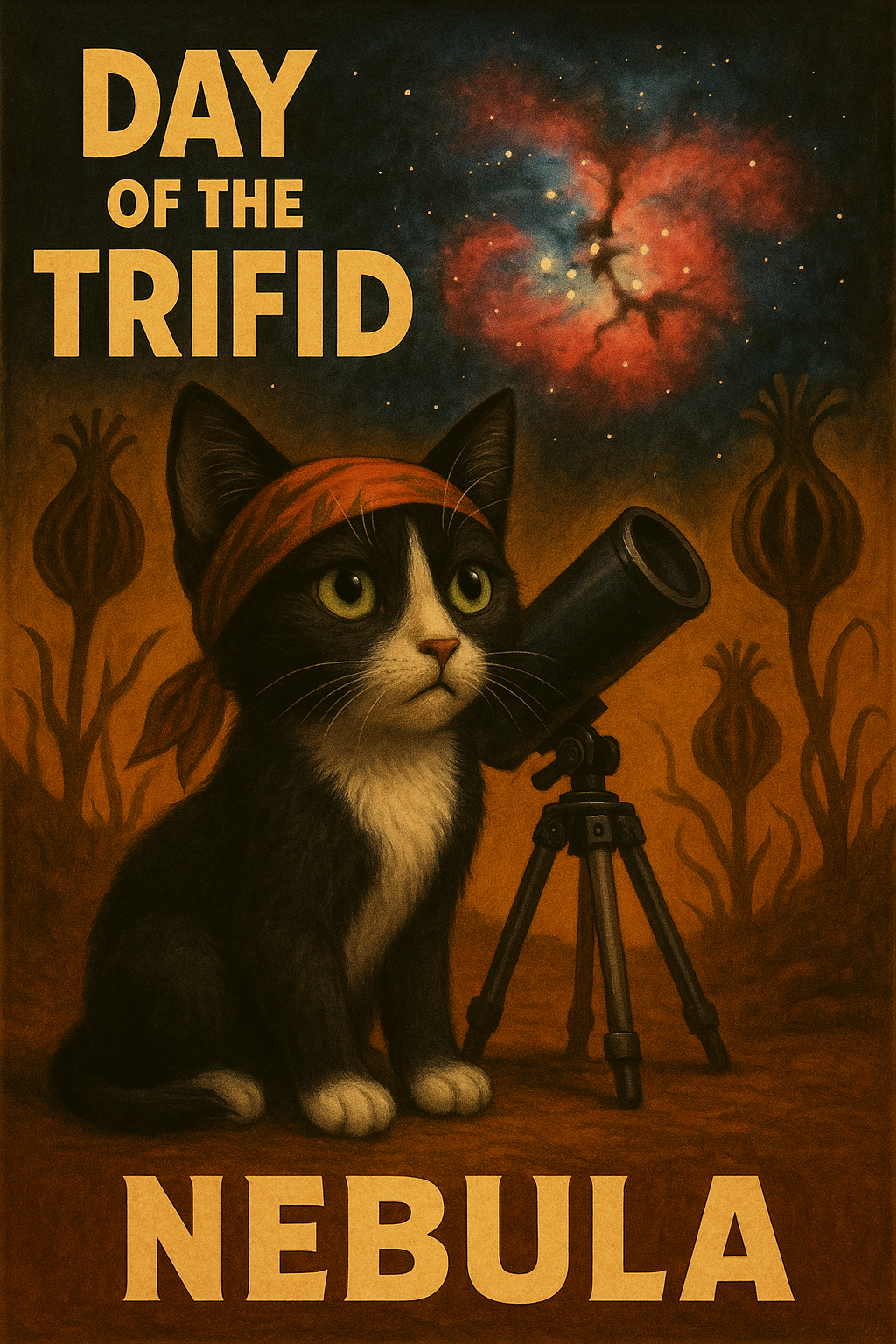
Dinah ever the rationalist still posses a certain trepidation. She knows that it lies somewhere deep in the constellation Sagittarius, Dinah has set her sights on a strange celestial flower—a three-lobed nebula split by dark dust lanes, glowing in brilliant blues, pinks, and purples. She checked her star charts twice, narrowed her green eyes, and confirmed: One F. Definitely safe.

The Trifid Nebula is a rare treat. The Messier 20 is one of the most photogenic and scientifically fascinating nebulae in our galaxy. It lies roughly 5,000 light-years from Earth, near the rich star fields of the Milky Way’s galactic center. Discovered by Charles Messier in 1764, it is easily visible with small telescopes and provided you can see Sagittarius clearly (Difficult in light polluted suburban areas) it is a rewarding target for astrophotographers. I was really anxious this summer to try it out with the Celestron Origin and was rewarded with the image of Figure 1.

The name Trifid comes from the nebula’s most distinctive visual feature — three dark dust lanes that divide its bright pink core into three distinct lobes. These dark lanes are composed of dense interstellar dust that blocks light from behind, creating a sharp contrast with the surrounding emission nebula. M20 actually contains three different types of nebula in one object:

  • a Dark Nebula – The network of obscuring dust lanes that slice the nebula into thirds and give it its name. This tripartite combination makes the Trifid Nebula a rare example of three major nebula types coexisting in a single region of space.
  • an Emission Nebula – Dominated by ionized hydrogen gas (H II region), it glows a characteristic pink/red due to hydrogen-alpha emission caused by ultraviolet light from hot, young stars.
  • a Reflection Nebula – Surrounding the emission zone, a region of fine dust reflects starlight, appearing blue in images.

At the heart of the Trifid lies a small open star cluster, Collinder 360, containing massive O-type and B-type stars that are only a few million years old. These stars are responsible for the nebula’s bright ionization and are still surrounded by dense clouds of gas and dust — the raw material for future stars.

Dinah remains a bit nervous, but full of wonder. She is imagining world’s filled with strange and dangerous plants.

Figure 2 – Dinah on the Day of the Trifid Nebula (c) DE Wolf 2025

From the Observacar – Summer Time

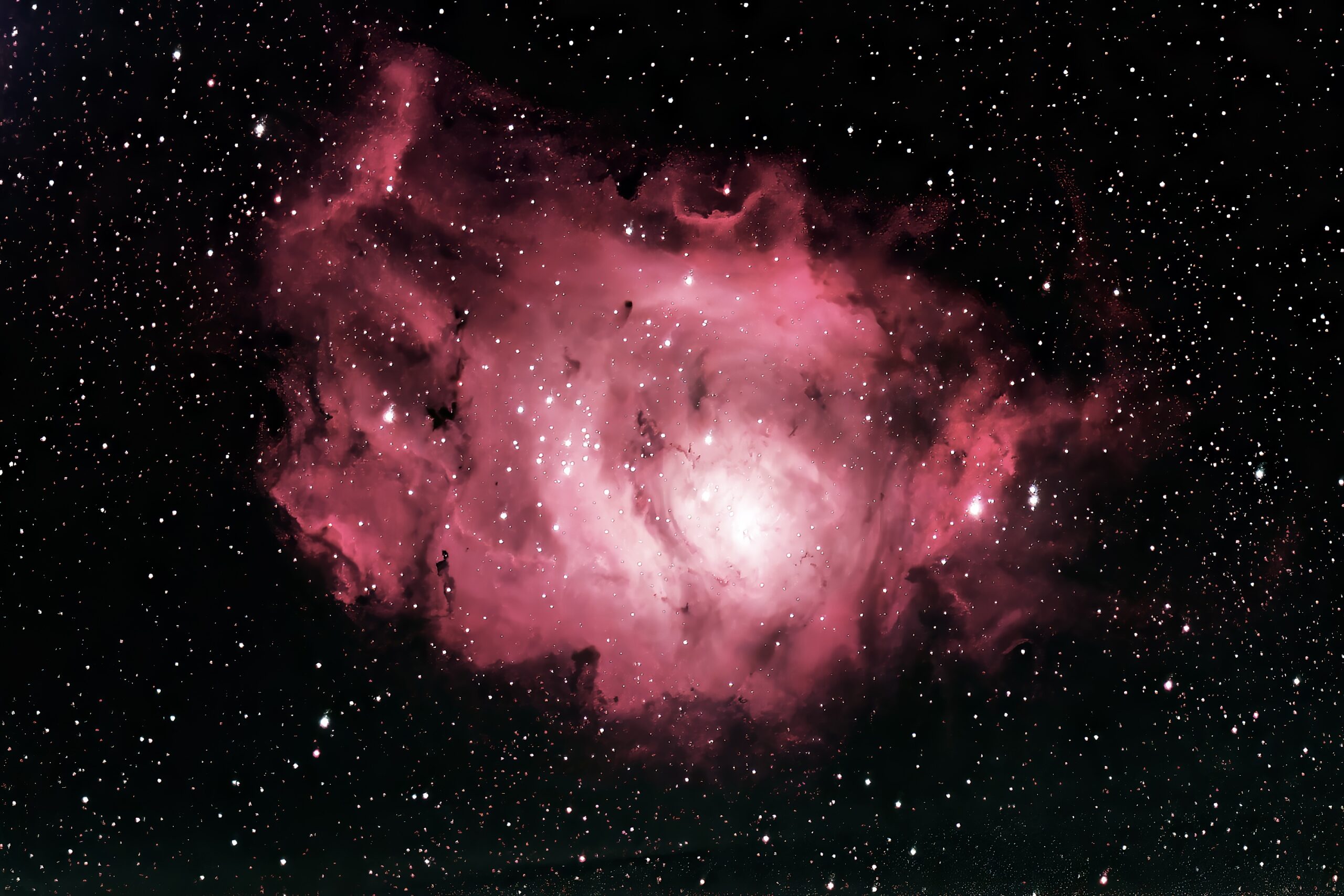
Figure 1 – Messier 8, the Lagoon Nebula (c) DEWolf 2025

My strongest associations with summer astronomy are the southern sky constellations and their great fields of Milky Way stars: Scorpius and Sagittarius. As soon as I got here this summer, I immediately turned my telescope on Messier 8, the Lagoon Nebula and Messier 20, the Triffid Nebula. With my nebula filter installed in the Origin, I was ready and I was not disappointed. Both of these are so beautiful and so stunning. Also since they were last year’s triumphs with the Seestar 50 s, they were ripe for direct comparison this year.

High in the crowded core of the Milky Way, nestled in the constellation Sagittarius, lies a glowing, turbulent expanse of gas and dust known as M8, or the Lagoon Nebula. First cataloged by Guillaume Le Gentil in 1747 and later included as the 8th entry in Charles Messier’s famous catalog, the Lagoon Nebula is a favorite of amateur astronomers—and a true galactic showstopper.

People often as ” can you see it with the naked eye?” At about 4,100 light-years away, the Lagoon Nebula is one of the few star-forming nebulae visible to the naked eye under dark skies. From a dark site in summer, especially near the zenith in southern latitudes, it appears as a faint smudge with binoculars or a small telescope. But through a camera or larger scope, it explodes into a deep pink and violet glow, laced with dark lanes of dust. For summer imagers the question is how much magenta is too much? Capture the reality but don’t over do it.

The Lagoon is what astronomers call an H II region—a cloud of ionized hydrogen gas lit by the high-energy ultraviolet radiation from young, massive stars. At the heart of the nebula lies the open star cluster NGC 6530, which helps light up the surrounding gas. Ongoing star formation makes the Lagoon a stellar nursery, and dense clumps of gas, like the famous “Hourglass Nebula” region within M8, give astronomers a peek into how stars like our Sun are born.

Spanning over 110 light-years across, the Lagoon stretches across three full moons in the sky. It’s roughly 3 to 4 times larger than the more famous Orion Nebula, though its greater distance makes it a bit less dramatic to the eye—unless you’re imaging.

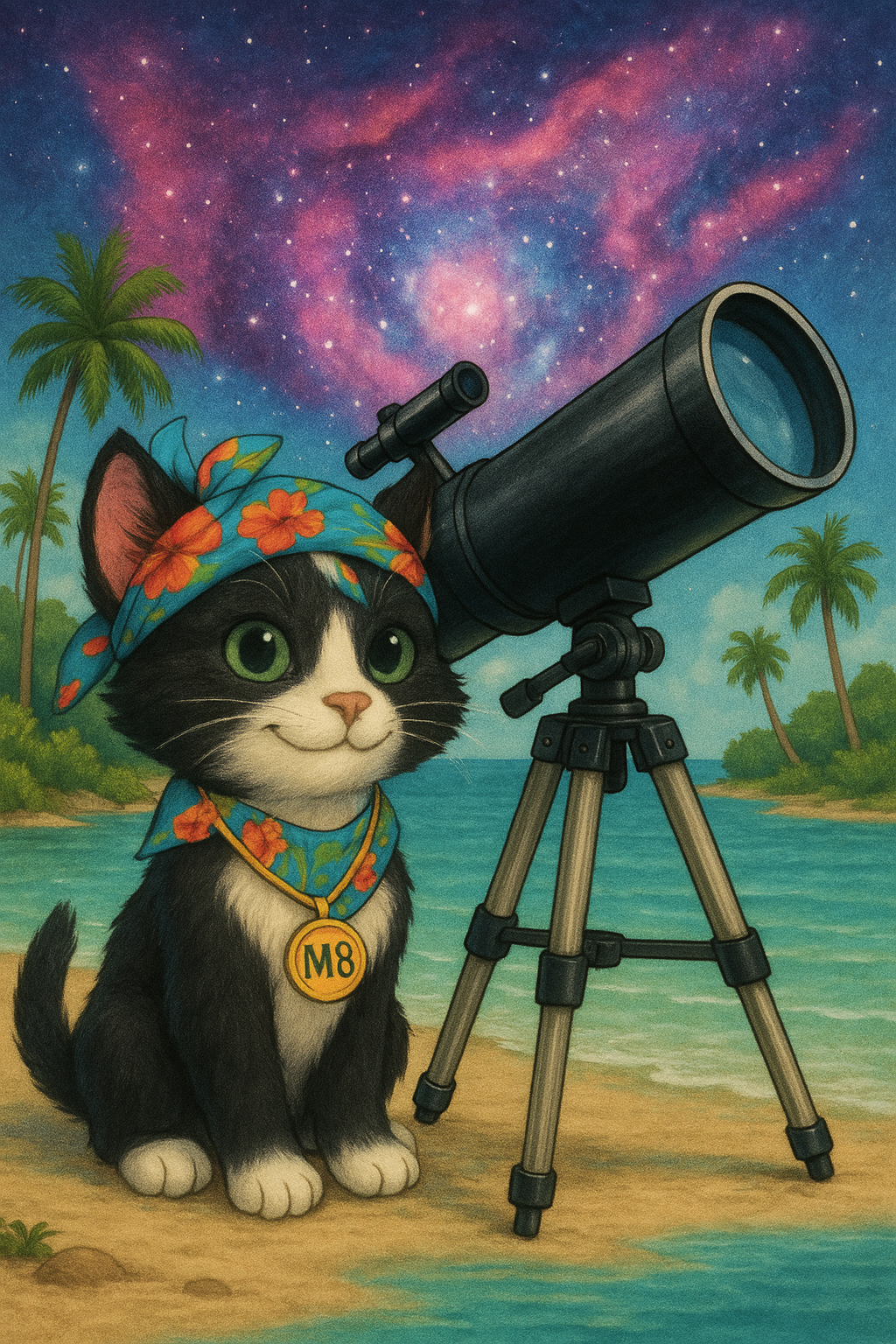
Figure 2 – Dinah goes tropical for the Lagoon Nebula, Messier 8. (c) DEWolf 2025

From the Observacar NGC 7635, the Bubble Nebula

Figure 1 – NGC 7635, The Bubble Nebula

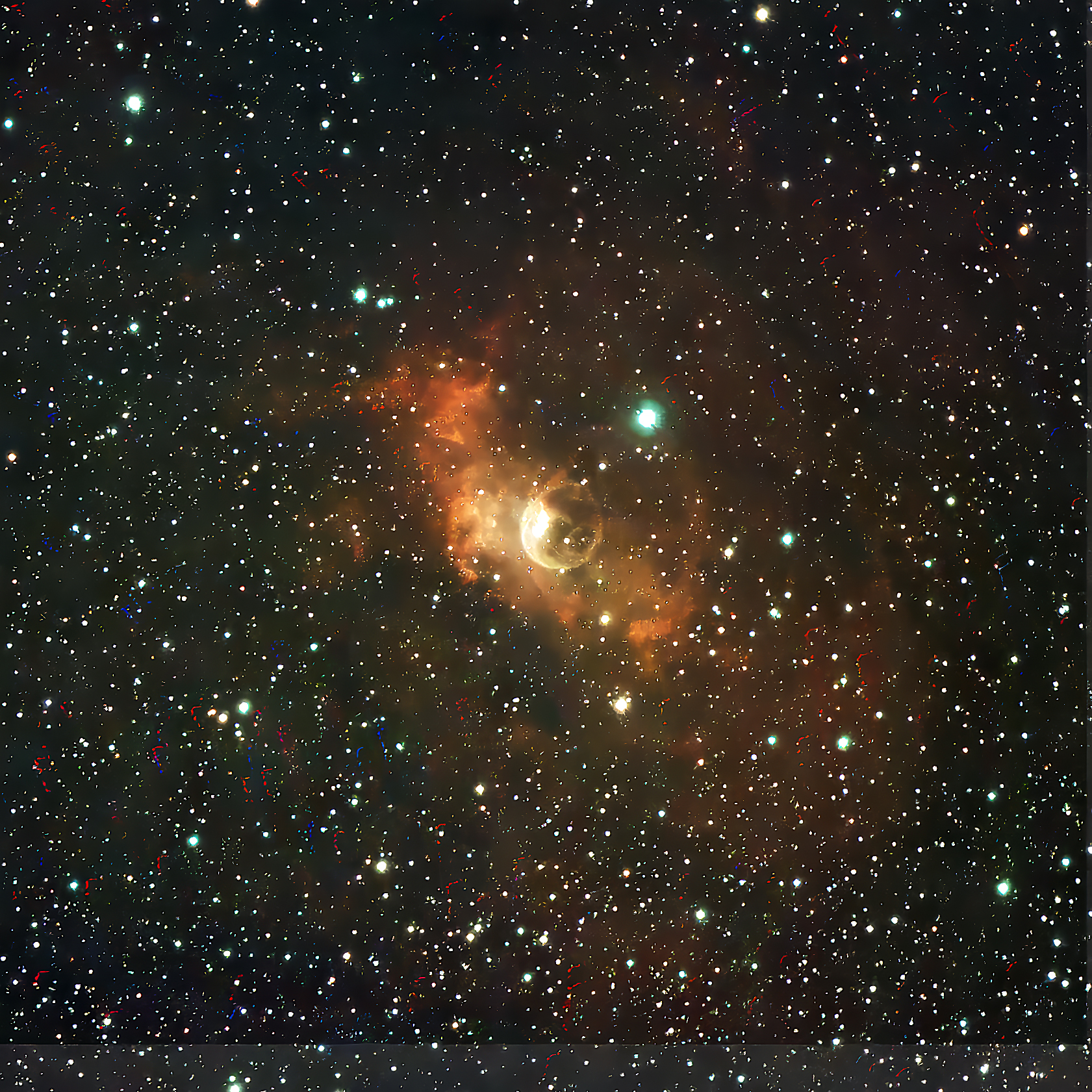
The astronomy gods have been smiling on me with some gorgeous Bortle 4.1 skies. Yay! And I have been busily taking advantage of them. Today I would like to feature Figure 1 of the Bubble Nebula, NGC 7835, always a favorite and always gorgeous as long as you give it a sufficient exposure. This image was taken with my Celestron Origin using the Nebula Filter and 360 10 sec exposures; so one hour total.

In the vast tapestry of the cosmos, few objects are as visually striking—or as poetically named—as the Bubble Nebula, NGC 7635. It is 7,100 light-years away in the constellation of Cassiopeia, and appears like a fragile soap bubble drifting in space.

The Bubble Nebula is, in fact, a massive shell of gas sculpted by the fierce stellar wind from a hot, young, and extremely energetic O-type star. This central star, more than 40 times the mass of our Sun, blasts out radiation and high-speed particles that plow into the surrounding interstellar medium. The result? A glowing, spherical shock front about 7 light-years across—roughly 1.5 times the distance between our Sun and the nearest star. The glowing shell is visible because it is energized by the ultraviolet light from the central star, causing the surrounding hydrogen gas to emit a pinkish-red hue—especially prominent in narrowband filters often used in astrophotography.

Though discovered in 1787 by William Herschel, the Bubble Nebula has only come into popular astronomical fame in the age of high-resolution telescopes and stunning Hubble images. Still, I always like to think about William and Caroline Herschel staring and wondering with their giant telescope.

The bubble itself is both intriguing and magical. As Hamlet famously said it “must give us pause.” It is one of my favorite deep sky objects and I was anxious to see what Origin would do with it under these less light polluted skies, and I am also studying what improvement using the Nebula Filter adds.

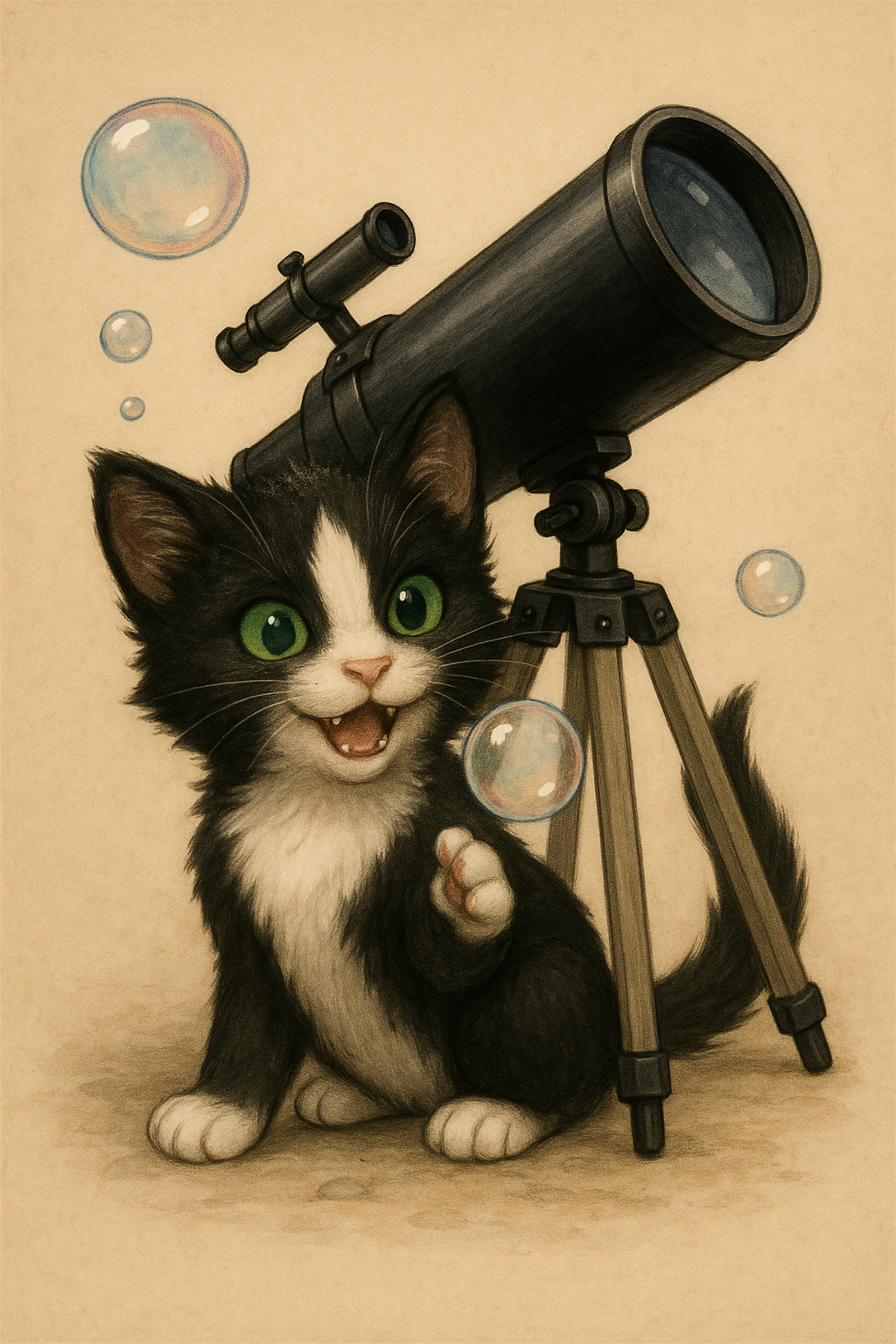
Needless-to-say, Dinah was simply thrilled by the experience.

Dinah is delighted by the Bubble Nebula

From the Observacar – Mission Messier Accomplished!

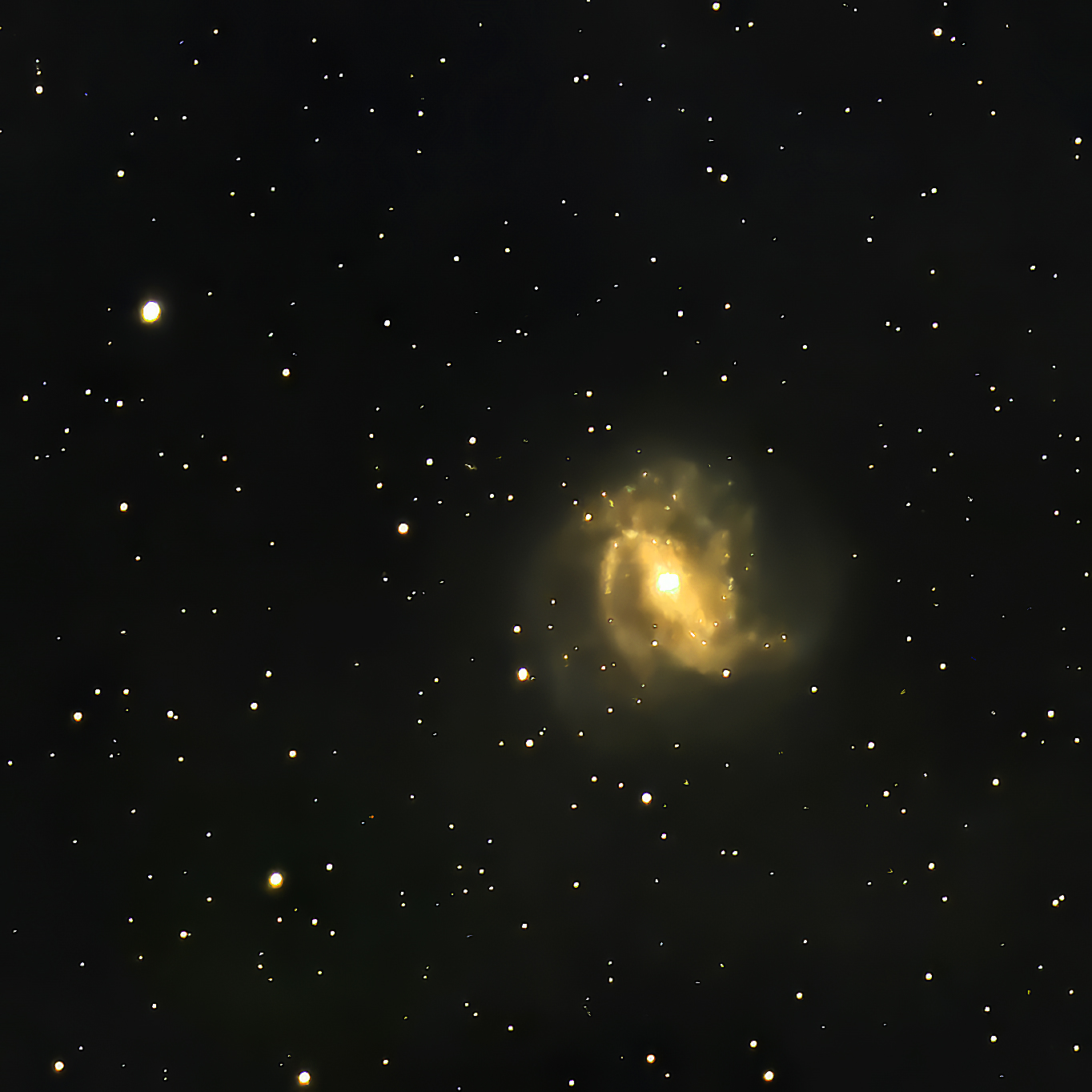
Figure 1 – Messier 83, the Southern Pinwheel Galaxy

My summer observing session is at last arrived. TC and I are happily ensconced in Rockport. On July Fourth I accomplished two long-term observing goals. First, I got about two minutes of observing the planet Mercury, even managed to photograph it with My Celestron Origin, although not much worth showing here as the Origin was not able to track against a star field background. But then I finally completed my Messier list with Messier 68 and Messier 83 – and to think that there are people who do the Messier Marathon and observe all of these deep sky objects in a single night.

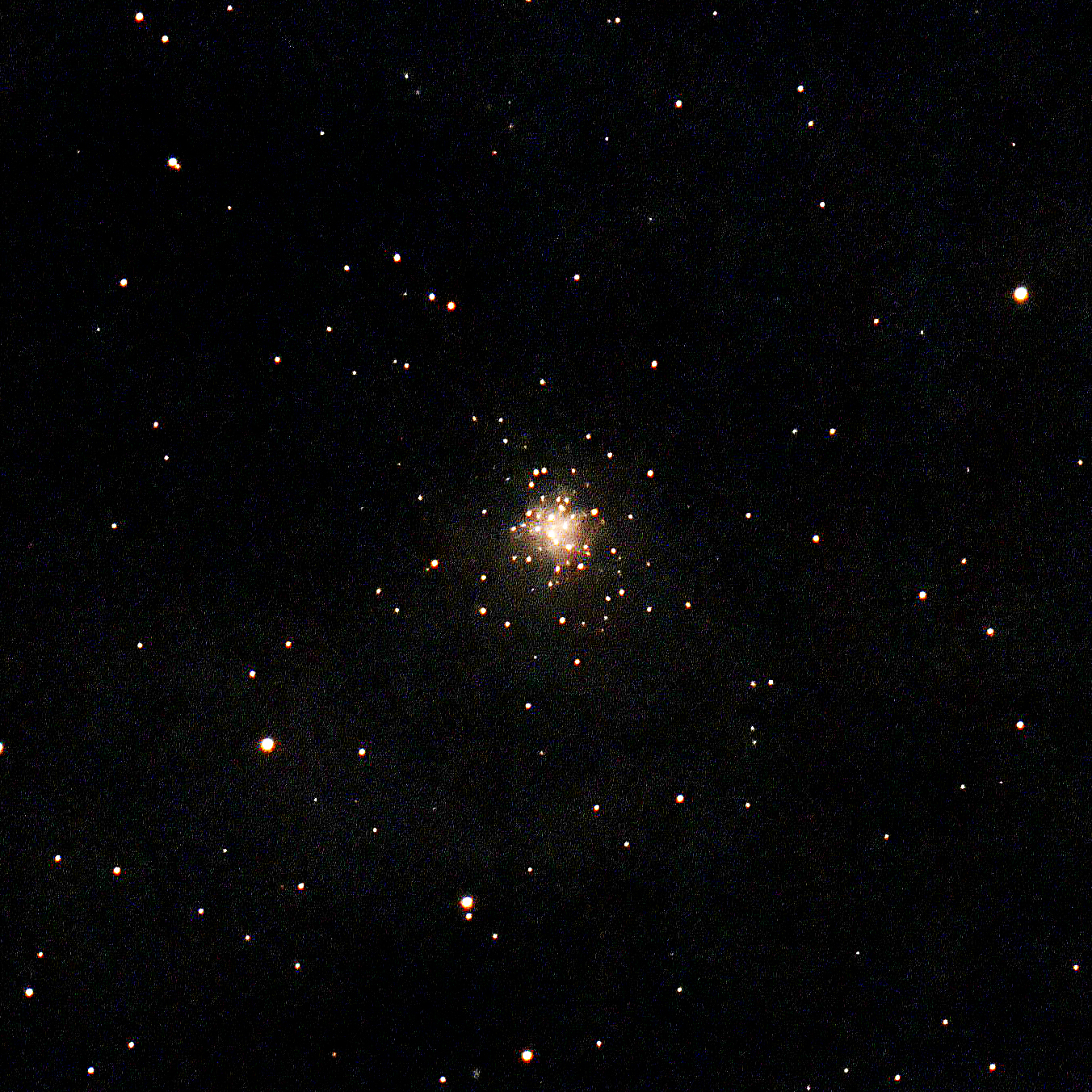
Figure 2 – Messier 68

I’ve been waiting all year to complete this, what with poor skies and the fact that these last objects tend to be low in the sky, often photographing close to the tree line in Sudbury.  As a reminder, in the 18th century, French astronomer Charles Messier had one goal: to discover comets. But while scanning the skies, he kept bumping into fuzzy, cloud-like objects that looked nothing like comets. To save himself (and others) the frustration, he started cataloging these distractions. Ironically, this “anti-comet” list would become one of the most famous catalogs in astronomy. Published in 1774 and expanded several times, the Messier Catalogue lists 110 deep-sky objects, including star clusters, nebulae, and galaxies.

M68 is a globular cluster tucked away in the southern constellation Hydra, about 33,000 light-years from Earth. Composed of hundreds of thousands of ancient stars, this densely packed sphere is estimated to be over 11 billion years old, making it one of the older members of the Messier catalog. With a visual magnitude of about 7.8, it’s a bit of a challenge to spot without a telescope, but in dark skies, it reveals a beautiful, grainy glow through amateur instruments. M68 is notable for its slightly elliptical shape and for being unusually metal-poor, offering insights into the early chemical evolution of our galaxy.

Messier 83, the Southern Pinwheel Galaxy, is one of the most stunning and well-studied spiral galaxies in the sky. Located in the constellation Hydra, about 15 million light-years away, M83 shines brightly at magnitude 7.5 and is easily visible in binoculars from southern latitudes. Dubbed the “Southern Pinwheel”, this galaxy resembles a classic grand design spiral, with elegant arms filled with young, hot stars and glowing hydrogen regions. M83 is also one of the most prolific supernova factories, with at least six observed in the last century. Its beauty, brightness, and astrophysical richness make it a favorite among both amateur and professional astronomers.

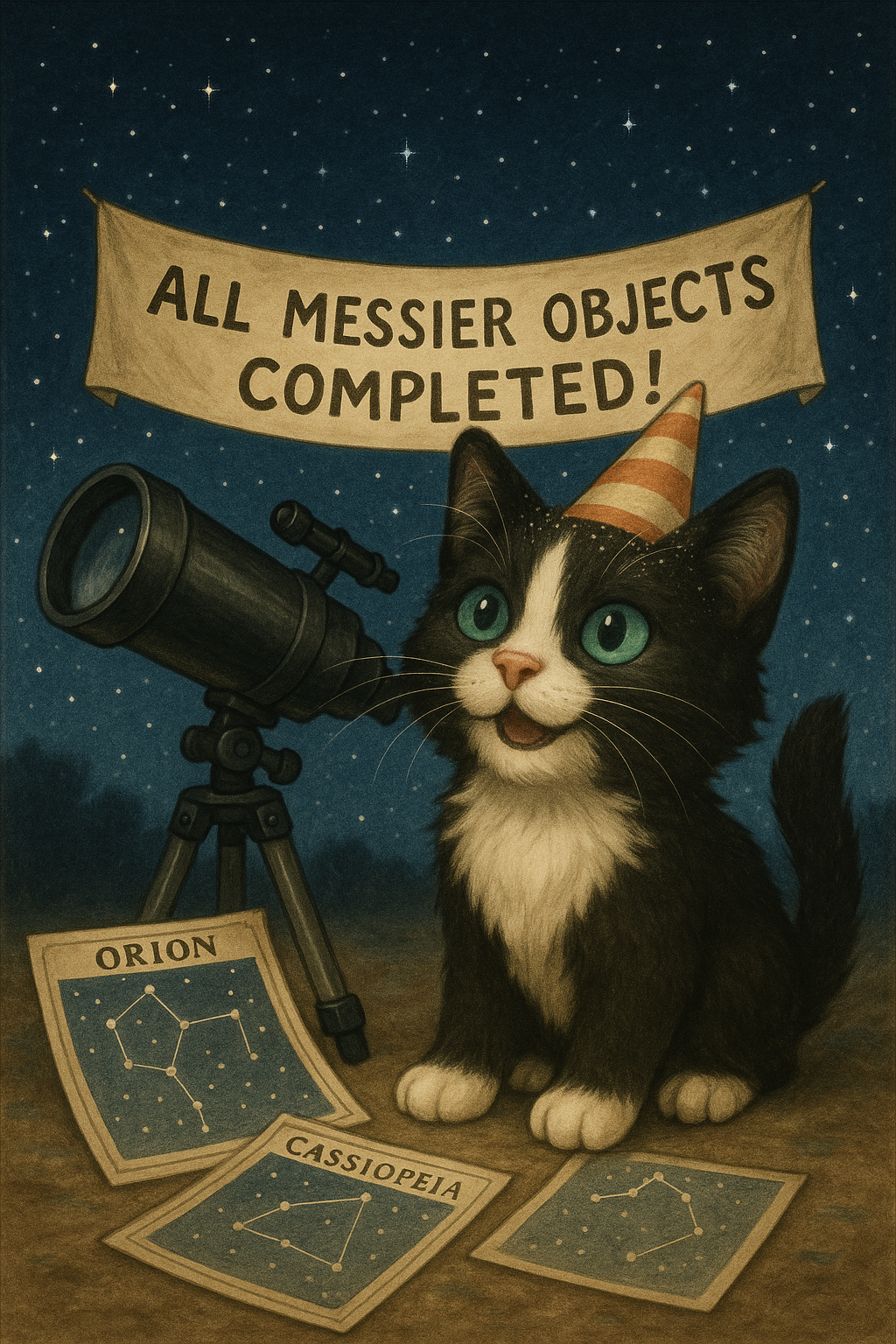
Neither of these astrophotographs is a “best in show,” but I am quite pleased to be celebrating the completion of this three year goal. Now on the Clear Skies and more! Dinah, of course, is excited as well!

Figure 3 – Dinah celebrates, Mission Messier Accomplished!

From the Observacar – and now Canadian wildfire smoke

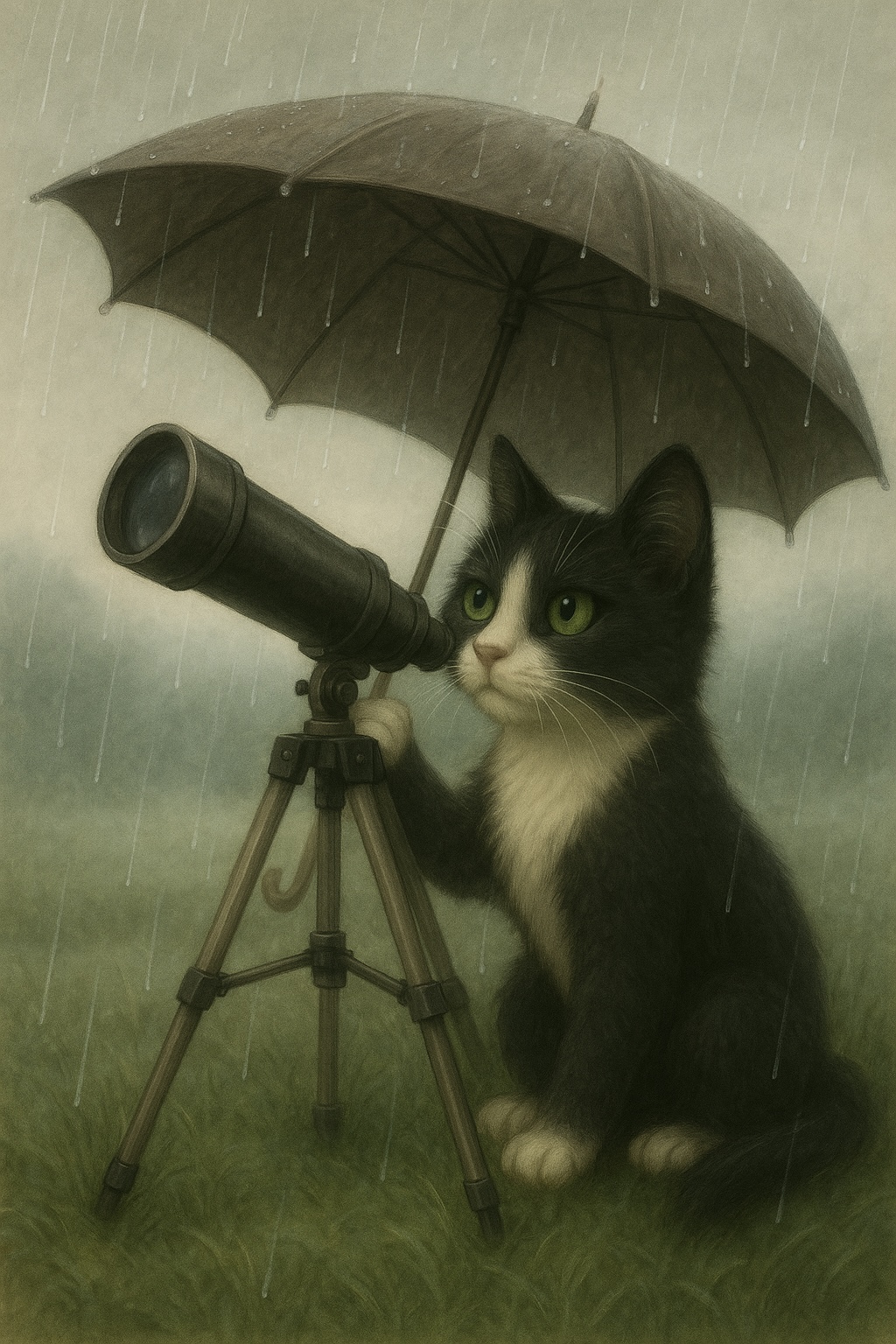
Figure 1 – Dinah looking for clear skies (c) DEWolf 2025

I keep notes on what I do with my telescopes! For the last two months I have been trying to collimate my Nexstar 8 SE. Collimating a Schmidt Cassegrain telescope is not easy, but also not overwhelmingly difficult. On May 7th I did a proper laser alignment and have been waiting for clear skies to finalize it with a star collimation, and waiting, and waiting … I’ve had rain and more rain and when it wasn’t raining dense clouds. Dinah is forlorn.

My prophet-apps finally predicted four clear sky nights in a row this week. The first was last night and what did I get – Canadian wild fire smoke!!! Can’t we get rid of it with a tariff or something?

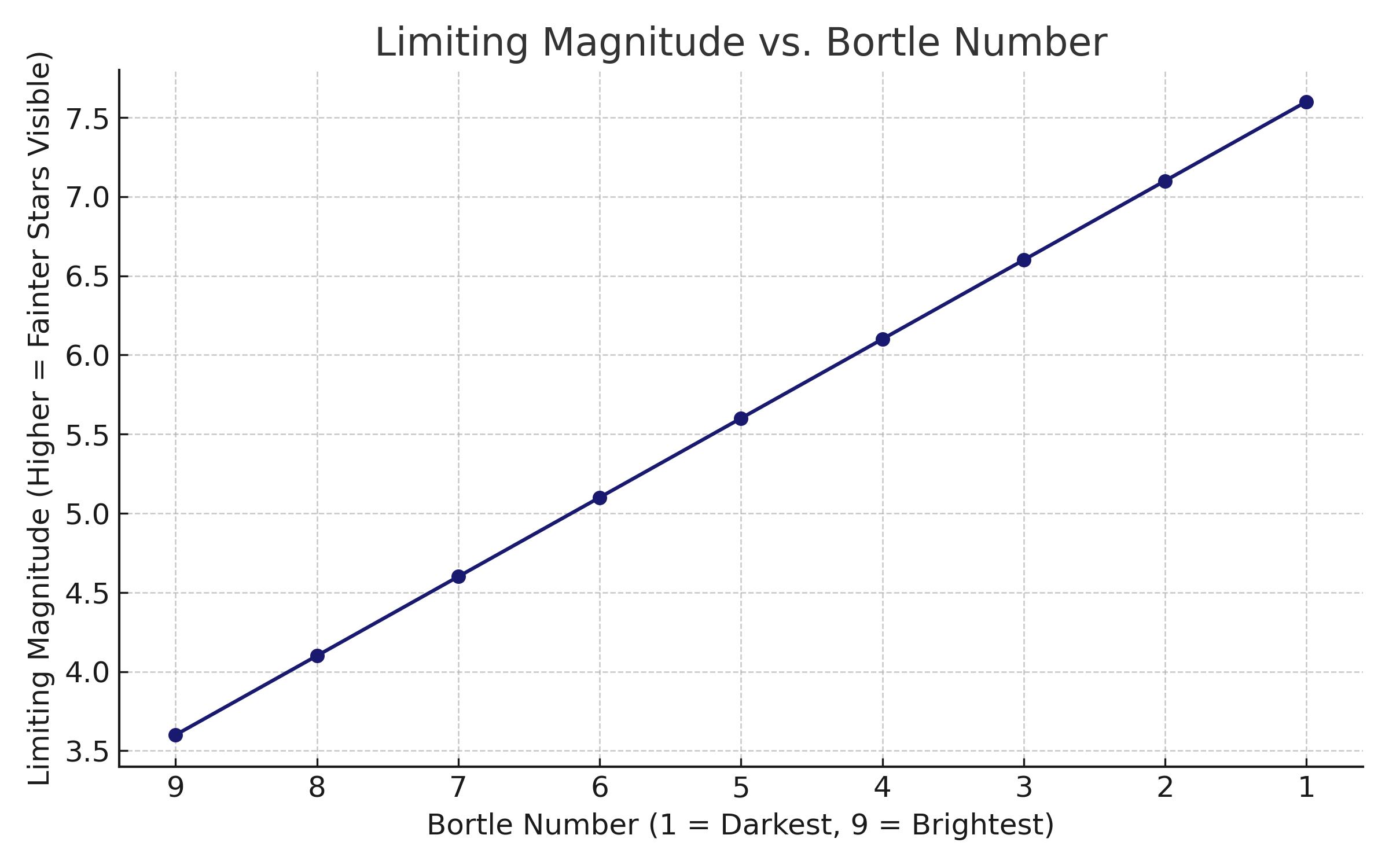
I’ve had nothing to do but think about this. The big issue is what your minimum or limiting magnitude is, the dimmest star you can see. The first point is the aforementioned Bortle number. Bortle, as we discussed, is a measure of light pollution. I am working under Bortle 5.7 skies and I asked Chat GPT to give me a plot (Figure 2) of limiting magnitude vs Bortle number.

Figure 2 – Limiting Magnitude vs. Bortle Number

So on a perfectly transparent night, my limiting magnitude should be about 5.2.

Now the other factor to consider is the transparency. This is usually about 0.3 to 0.5 for my skies meaning there is a reduction of limiting magnitude by about 0.3 to 0.5. So last night it should have been and was predicted to be about 4.8, which seems about right to me. However, the faintest star I could see was Spica or Alpha Virginis at magnitude 1.0. Yikes!

Dinah, who comes from literature herself, paraphrases Alexander Pope from his Essay on Cats, “Hope springs eternal in the feline breast, cat never is but always to be blessed.”

From the Observacar – Acronyms and Catalogues of fuzzies

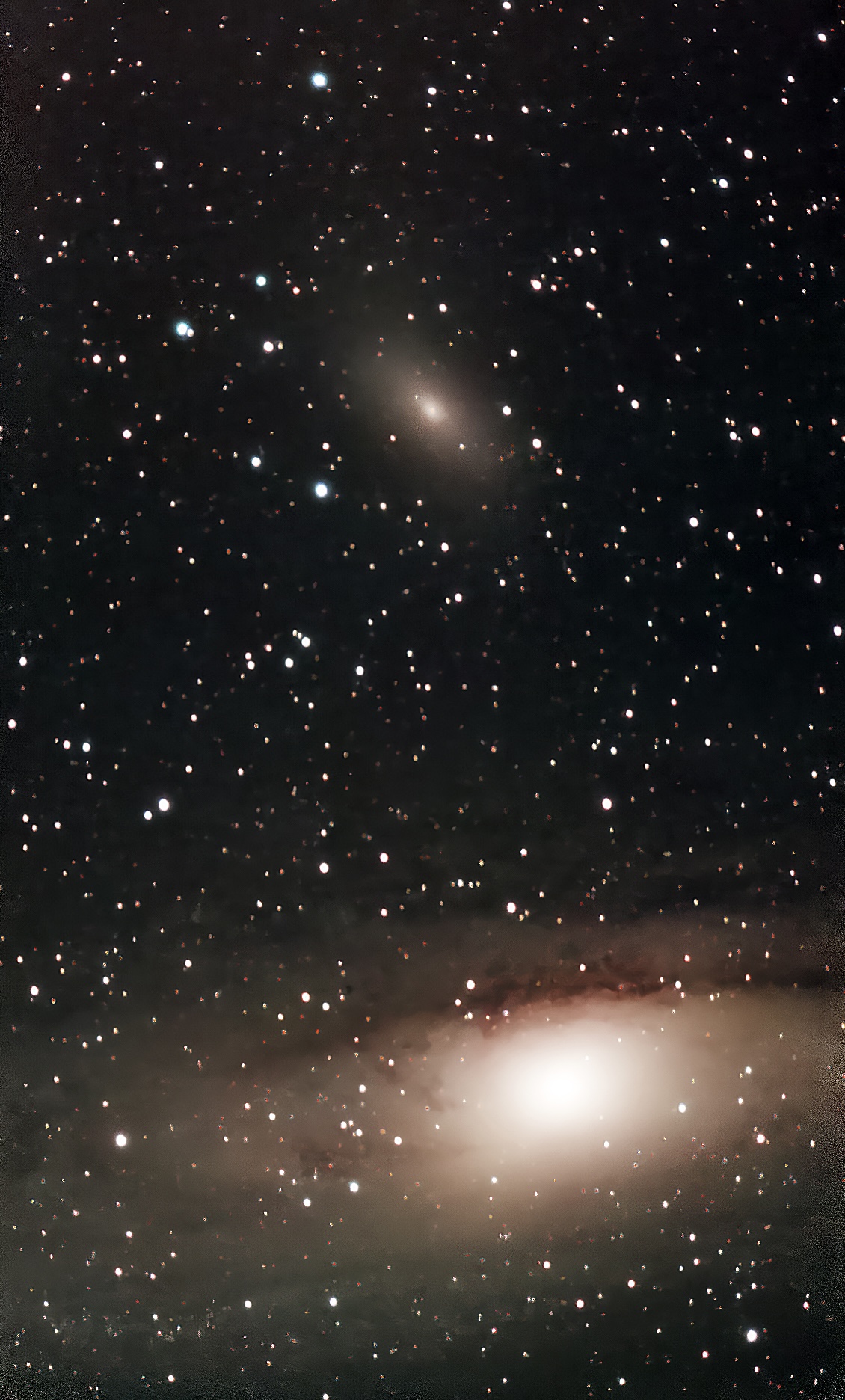
Figure 1 – The Andromeda Galaxy, Messier 31 and her companion galaxy Messier 33 22 min Image taken with SeeStar 50s and shows the difficult in encompassing such a large object without tiling. (c) DE Wolf 2024

The classic approach to amateur astronomy was to get a decent telescope and examine the various wonders of the celestial spheres. The operative word was “slowly.” Disappointingly, except for the moon and the planets, these wonders were all little, medium and big fuzzies! This has been changing with the revolution in smart telescopes, where you can integrate the image from these fuzzies with time to reveal not only structure but color.

It is not surprising however, thst eighteenth and nineteenth century astronomers mistook many of the deep-sky objects, galaxies, and nebulae, for comets. As a result, there was increasing need for catalogues of these deep-sky fuzzies. These catalogues each have an identifying acronym, seemingly designed (?) to confuse the neophyte.

The most famous early compilation of deep sky objects is the Messier Catalogue, the M numbers, named after French astronomer, Charles Messier. Ultimately, Messier created a list of over 100 such objects, published in 1774.

Messier’s catalogue included objects like:

  • M1 (The Crab Nebula) – the remnant of a supernova explosion.
  • M31 (The Andromeda Galaxy) – a massive spiral galaxy and our closest galactic neighbor.
  • M42 (The Orion Nebula) – a stellar nursery.

As telescopes improved, the limits of Messier’s list quickly became apparent, and in the late 19th century, John Louis Emil Dreyer, a Danish-Irish astronomer, compiled the New General Catalogue (NGC) of over 7,800 objects, which was published in 1888 and became the new standard for deep sky observation.

After publishing the New General Catalogue (NGC) in 1888, John Louis Emil Dreyer continued to compile observations from both professional astronomers and improved telescopes. The result was two supplementary volumes known as the Index Catalogue (IC):

Together, the NGC and IC form one of the largest and most enduring astronomical cataloguing efforts, standing the test of time through continued validation and cross-referencing in modern sky survey.

In 1995, renowned British astronomer and popularizer, Sir Patrick Moore, introduced the Caldwell Catalogue, a supplement to the Messier list designed to help amateur astronomers. Unlike Messier’s list, the Caldwell Catalogue intentionally included both Southern Hemisphere objects (e.g., the Omega Centauri globular cluster). and brighter, visually stunning objects that Messier missed. The Caldwell Catalogue contains 109 entries, each labeled C1 to C109, chosen for their observational value through small to mid-size telescopes.

There are several other catalogues that you might come across. These include:

  • Sharpless Catalogue – A list of H II regions (emission nebulae).
  • Herschel 400 – A list based on observations by William and Caroline Herschel, chosen for more advanced amateurs.
  • Abell Catalogue – A collection of galaxy clusters used in extragalactic astronomy.

Needless-to-say, we are now progressively in an age of digital star surveys such as the Sloan Digital Sky Survey (SDSS) and missions like Gaia. We can expect the Vera Ellen Observatory to increase our catalogue of the skies exponentially. This is, after all, the era of big data. Today’s astronomers can access online open databases like SIMBAD, VizieR, and tools like Aladin Sky Atlas.

Figure 2 – Dinah plans a night of observing using the Astronomeow.

From the Observacar – Dinah and the Cat’s Paw Nebula NGC 6344

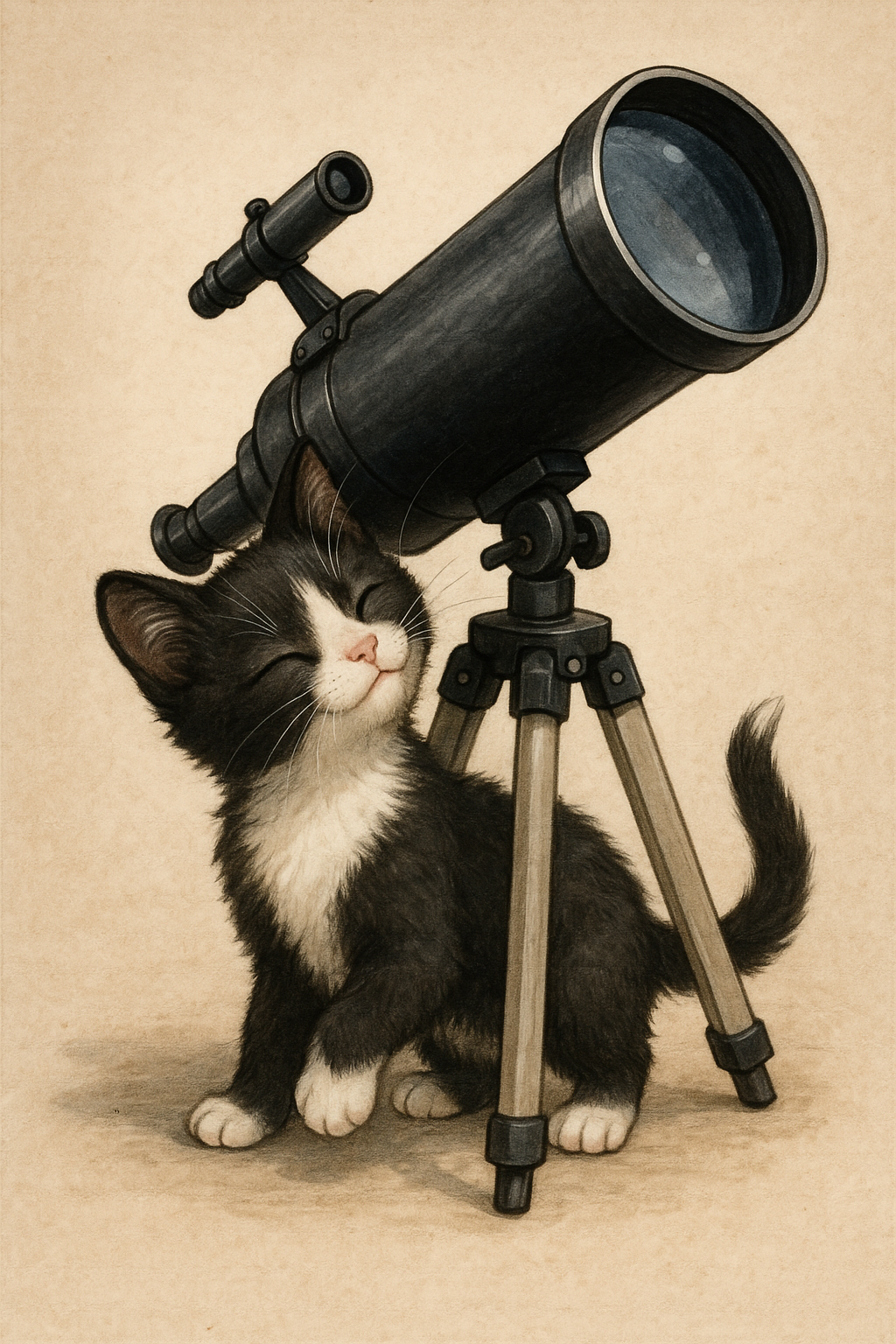
Figure 1 – Dinah the Astrocat

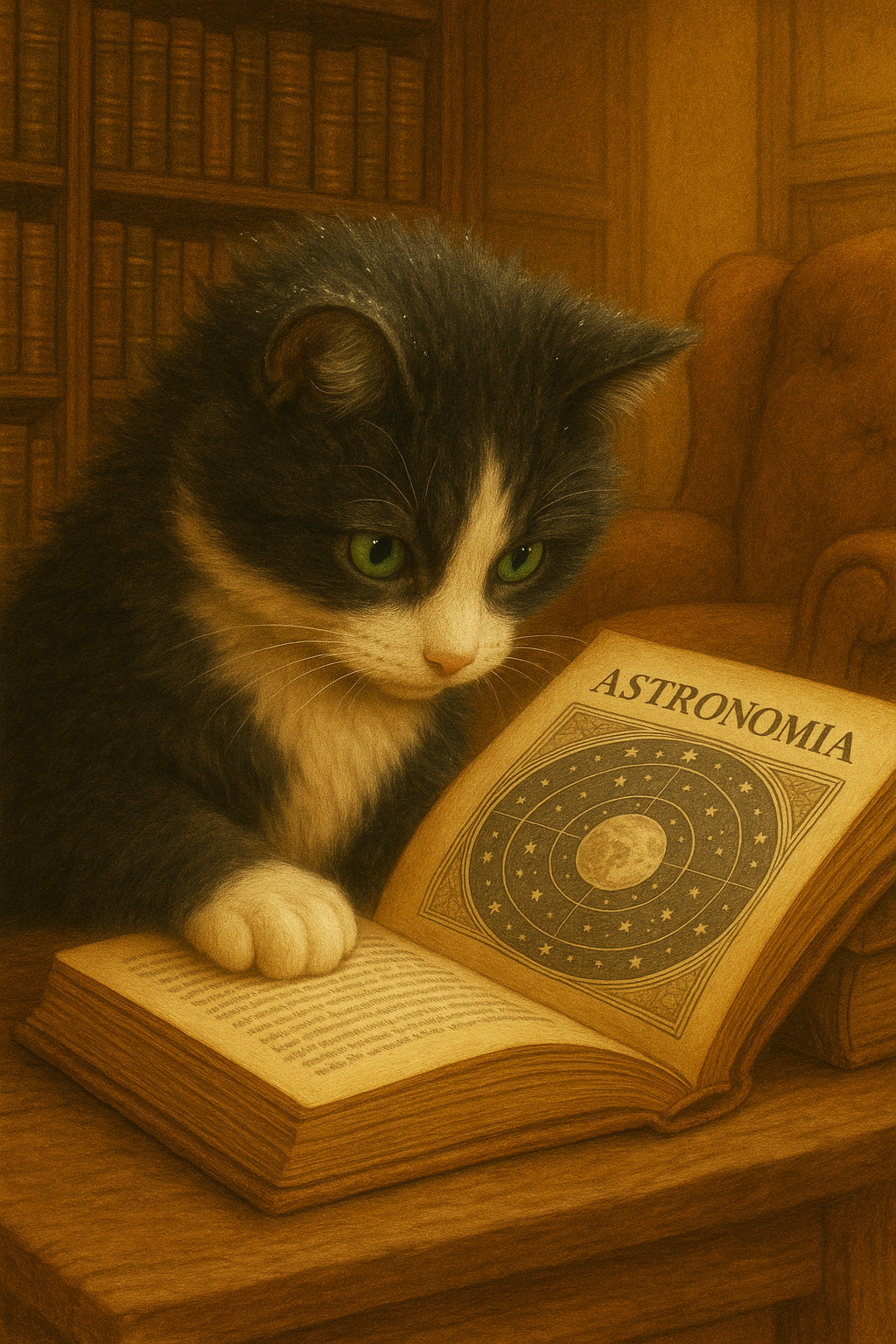
Artificial Intelligence is a kind of dominant feature in the Hati and Skoll “From the Observacar” blog. In a recent blog, I introduced the astro-loving kitten Dinah. Dinah was, of course, Alice in Wonderland’s cat, perhaps not a real cat, but then neither was Alice real. She is such a delightful feline spirit that I asked Chat GPT for a drawing of Dinah as a kind of mascot for the blog, and here she is making her debut in Figure 1. More importantly I asked her (ChatGPT) how to preserve Dinah’s essence for future images. This is certainly the stuff that StarTrek is made of. So, apparently I have a rather unpopular opinion concerning M’Benga keeping his daughter in the transporter, until he can find a cure for her. Every single Trek fan that I’ve talked to that’s seen SNW COMPLETELY disagrees with me, saying it’s unethical to let him keep her in the transporter so her illness doesn’t get worse. But I should point out that ChatGPT and her kin have made our own a strange new world, and I think that we had better tame it, since we are never going to control it. Dinah, at least, is completely tameable!

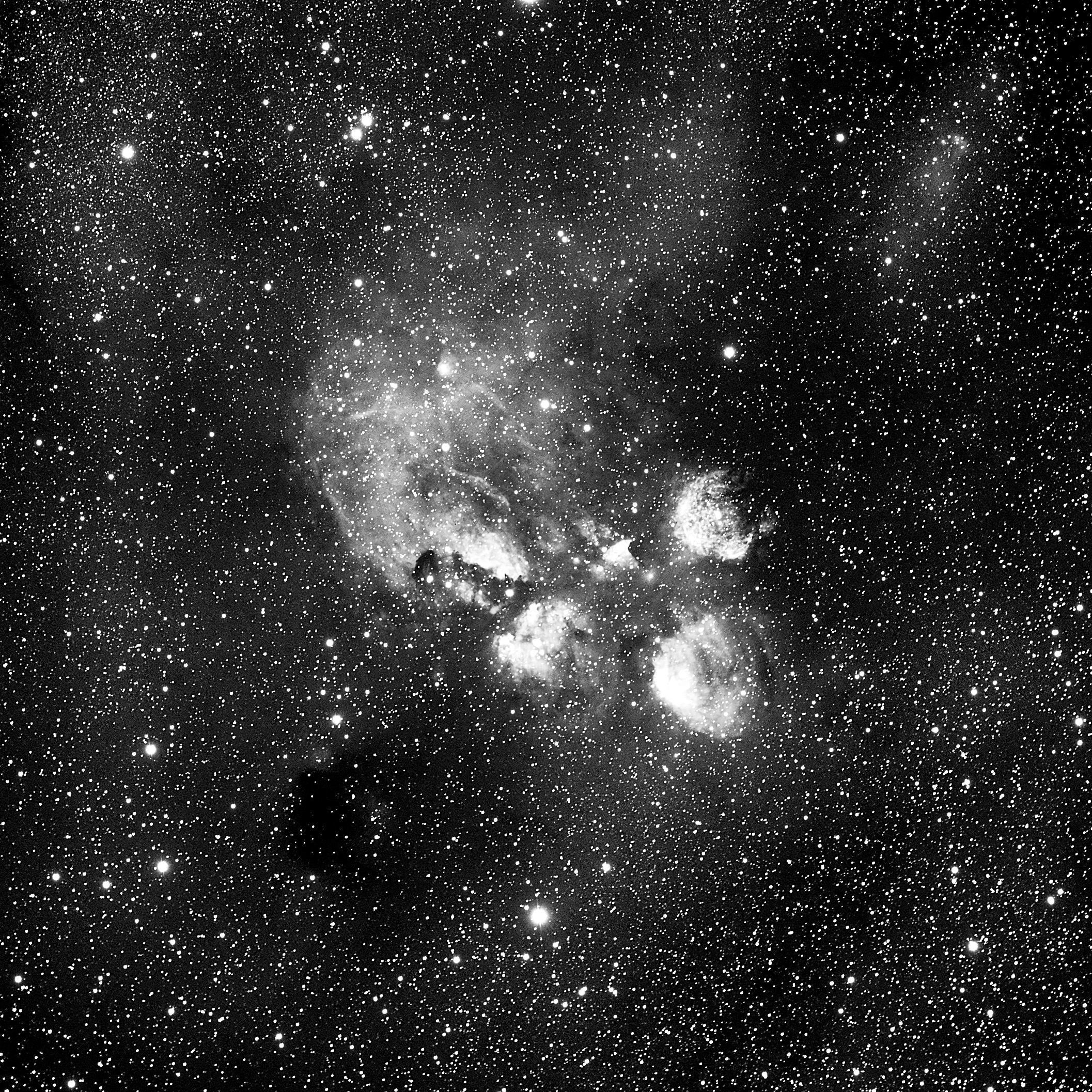
Dinah loves all things astronomical, both historical and fictional, but especially equipment! For her debut, she has asked me to repost my astrophotograph of the Cat’s Paw Nebula (NGC 6334). It is from my black and white period, 2021 to be specific.

Figure 2 – NGC 6334, the Cat’s Paw Nebula. (c) DE Wolf 2021.

This image was taken with one of the Skygems Southern Skies remote telescopes, the Hakos Veloce 200 RH remote telescope in the Namibian desert.  It is a stack of six 600 sec exposures. NGC 6334 is truly the anvil of the gods. It is a stellar nursery. Stars are literally being formed before your eyes. Well, in general, the time scale is a bit slow. It lies in the constellation Scorpius and was discovered by astronomer John Herschel in 1837. Herschel observed it from the Cape of Good Hope in South Africa. So pretty close!

NGC 6334 is located about 5,500 light-years away from Earth. The Cat’s Paw Nebula spans roughly 50 light-years across. It’s classified as an emission nebula, meaning it’s composed of clouds of ionized gas that emit light of various colors. The vivid red glow that dominates most images of NGC 6334 comes from hydrogen gas excited by the intense ultraviolet radiation from newborn stars within. Here we see none of this, since the image is in the glorious black and white of my youth.

Astronomers believe the nebula contains tens of thousands of young stars in various stages of development, many of them deeply embedded in the thick interstellar dust and thus invisible in optical wavelengths. That’s where infrared telescopes like those on board the Spitzer Space Telescope or the European Southern Observatory’s VISTA telescope come into play—revealing the hidden stellar nurseries within.

What makes NGC 6334 particularly fascinating is its star-forming activity. The nebula is estimated to have birthed stars as massive as 10 times the mass of the Sun—some only a few million years old, which is considered very young in cosmic terms.

Regions like the Cat’s Paw give astronomers a closer look at the mechanisms behind stellar evolution. By studying this nebula, scientists can better understand how massive stars form, how they influence their environments, and how stellar winds and radiation sculpt the surrounding gas into new star-forming knots and filaments. The “toes” of the nebula—bright, bubble-like lobes—are actually sites of intense star formation, glowing brightly due to the heat and energy of the new stars within.

Although it’s most widely known as the Cat’s Paw Nebula, NGC 6334 is sometimes referred to as the Bear Claw Nebula, depending on how its lobes are interpreted in images. No friends of Dinah’s are allowed to think this! She believes such misnomers represent the work of an ailurophobic cabal!

Dinah would also like me to add that the Cat’s Paw Nebula is only one of many celestial objects whose names honor cats. These include the Cat’s Eye Nebula (NGC 6543), Leo, Leo Minor, Lynx, the Cheshire Cat Galaxies (yes, I know more Alice), and the now vanished Felis.

Readers of “From the Observacar” are left to ponder whether there is any relationship between the Owl Planetary Nebula (of our previous blog) and the Cat’s Eye Planetary Nebula and this:

The Owl and the Pussy Cat went to sea
In a beautiful pea-green boat,
They took some honey, and plenty of money
Wrapped up in a five-pound note.
The Owl looked up to the stars above,
And sang to a small guitar,
“O lovely Pussy, O Pussy, my love,
What a beautiful Pussy you are,
You are,
You are!
What a beautiful Pussy you are!” 

Pussy said to the Owl, “You elegant fowl!
How charmingly sweet you sing!
O let us be married! too long we have tarried:
But what shall we do for a ring?”
They sailed away, for a year and a day,
To the land where the Bong-tree grows
And there in a wood a Piggy-wig stood
With a ring at the end of his nose,
His nose,
His nose,
With a ring at the end of his nose. 

“Dear Pig, are you willing to sell for one shilling
Your ring?” Said the Piggy, “I will.”
So they took it away, and were married next day
By the Turkey who lives on the hill.
They dined on mince, and slices of quince,
Which they ate with a runcible spoon;
And hand in hand, on the edge of the sand,
They danced by the light of the moon,
The moon,
The moon,
They danced by the light of the moon.

The Owl and the Pussy Cat
Edward Lear