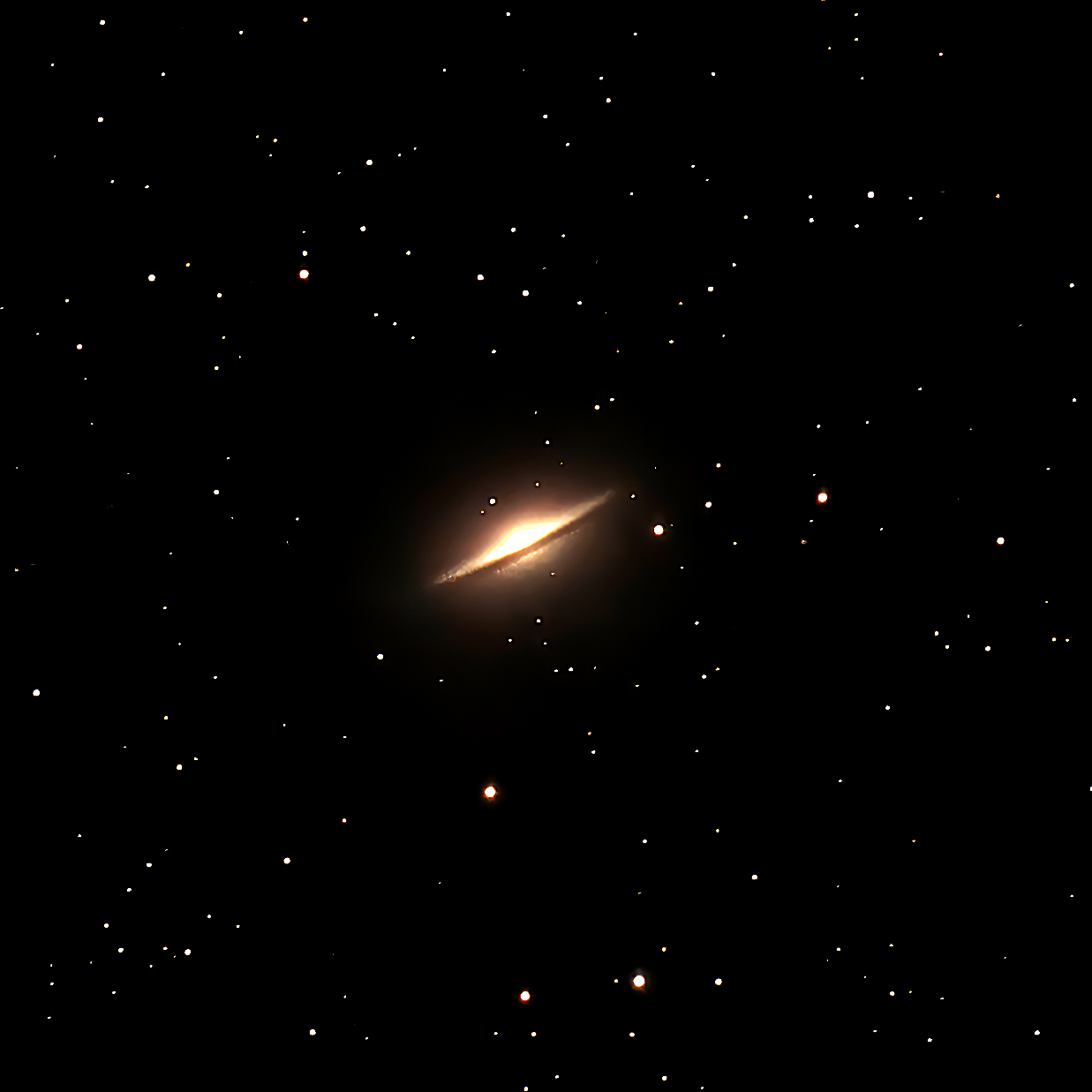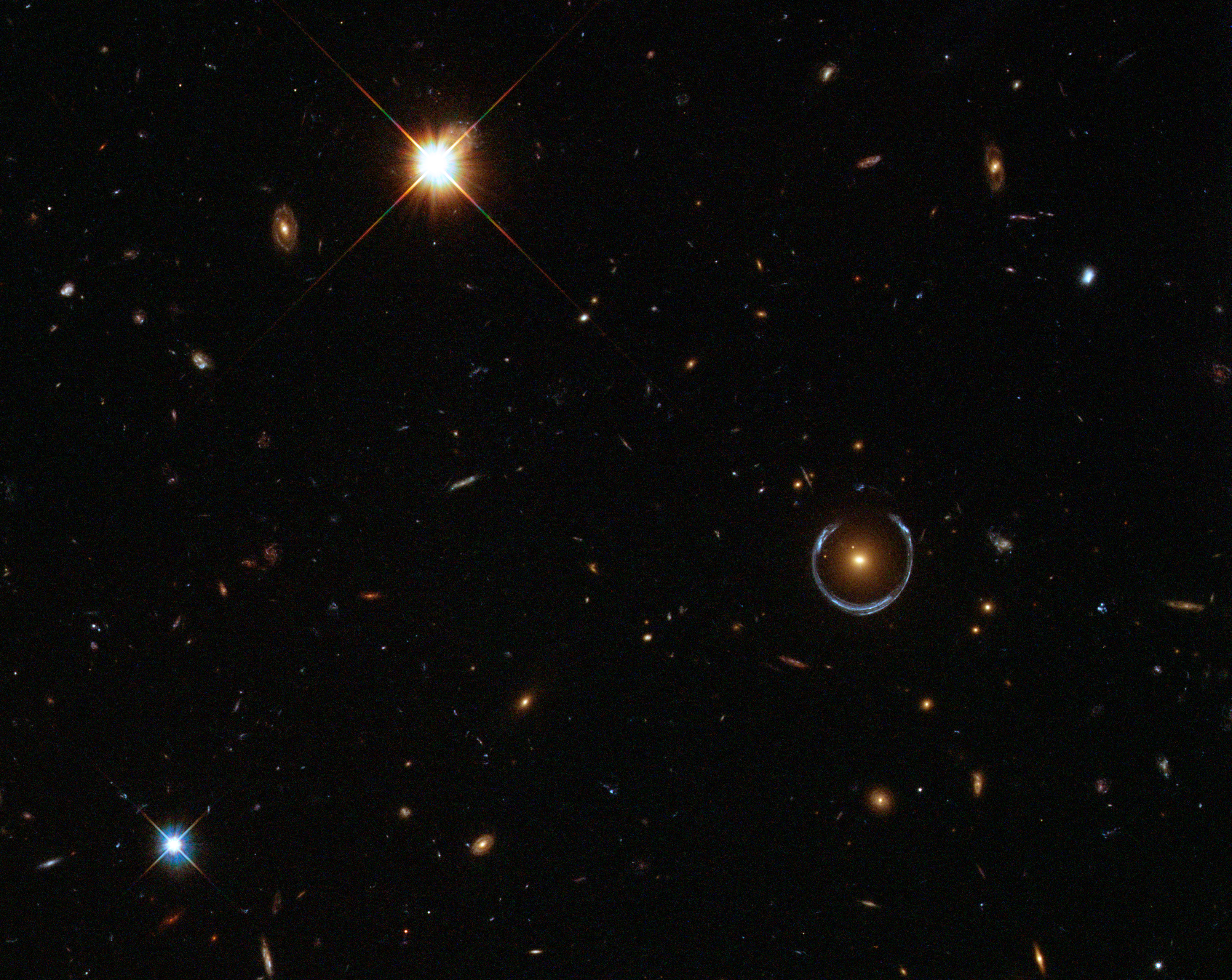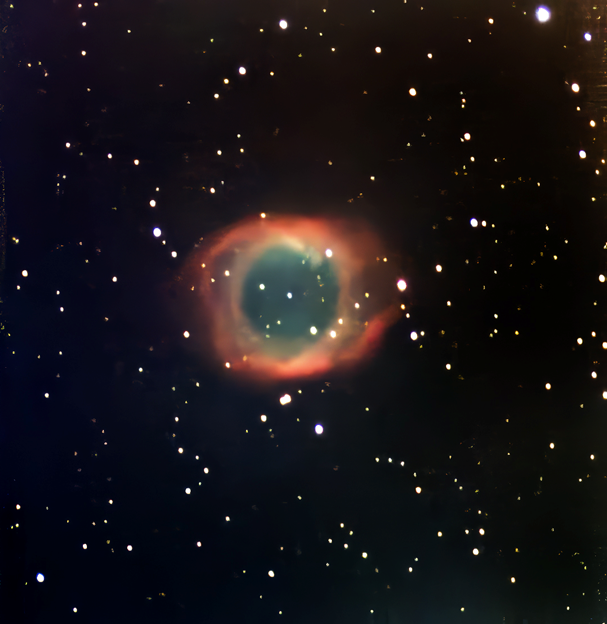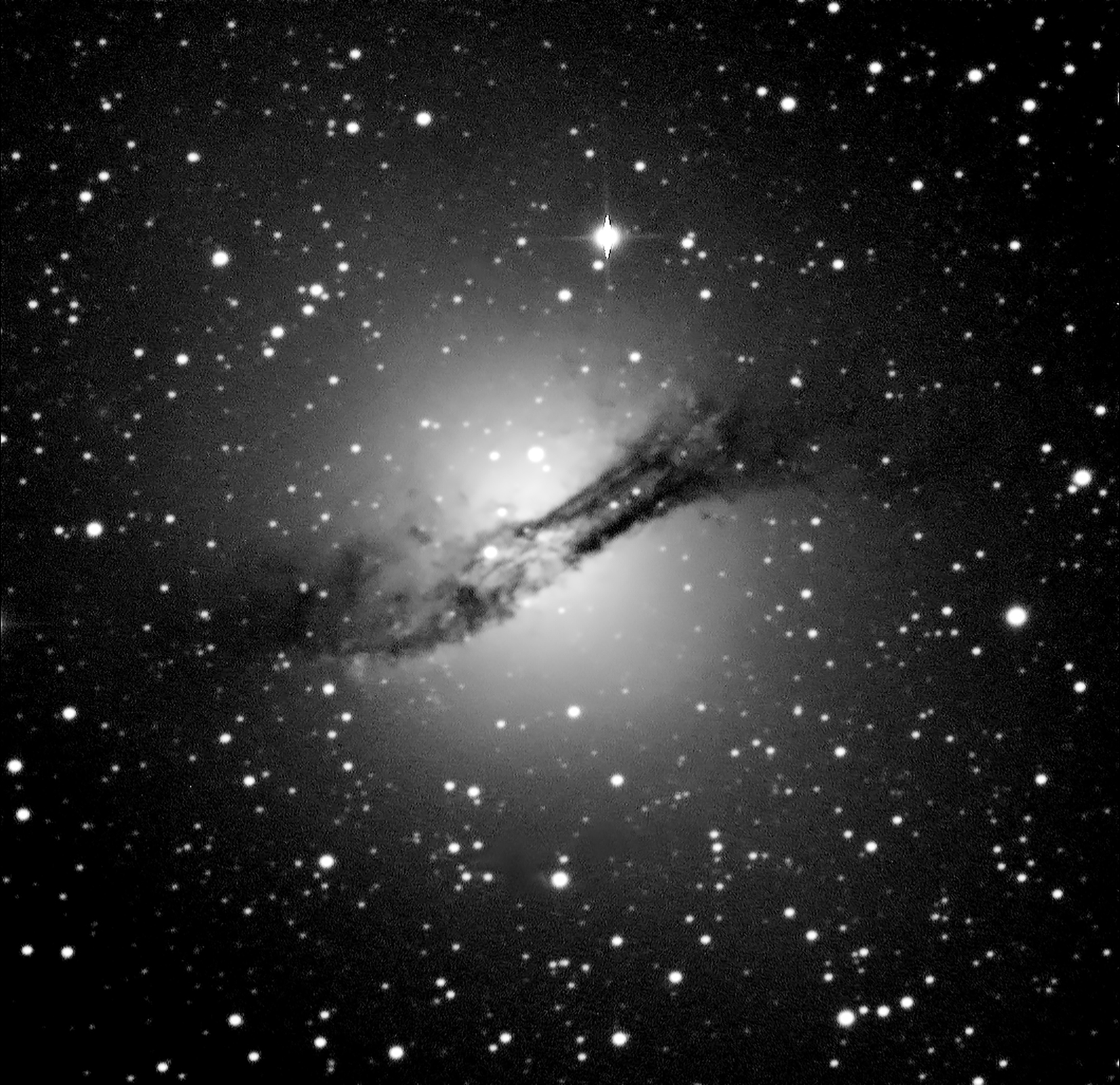

Messier 97 the Owl’s Head Nebula, Celestron Origen ~ 20 min exposure (c) DE Wolf 2025
Among the most hauntingly beautiful of the night sky’s cosmic clouds is the Owl Nebula, officially known as Messier 97 (M97). It is located about 2,030 light-years away in the constellation Ursa Major. This celestial wonder offers a glimpse into the future of stars like our Sun—and looks remarkably like a ghostly pair of eyes staring back at us.
Discovered by Pierre Méchain in 1781 and cataloged by Charles Messier shortly after, M97 earned its nickname thanks to its peculiar appearance. Through a telescope, especially in photographs with long exposures, the nebula reveals two dark, circular patches that resemble the eyes of an owl. These “eyes” are actually regions of lower gas density in the otherwise round shell of glowing gas. It’s a poetic name for an object that looks like a silent sentinel perched in space. In contrast, the Owl’s Head Cluster (NGC 497) stares back at us with a pair of bright stellar eyes.
The Owl Nebula is a planetary nebula, which—despite the name—has nothing to do with planets. The term was coined in the 18th century when such objects appeared planet-like through early telescopes. In reality, planetary nebulae are the remnants of dying stars.
The story of M97 began when a Sun-like star exhausted its nuclear fuel. As it ran out of hydrogen and helium to burn, it expanded into a red giant, shedding its outer layers into space. The hot, exposed core left behind emits ultraviolet radiation, lighting up the surrounding gas and creating the colorful glow we see today.
At the heart of the Owl Nebula lies this dying star’s white dwarf core—a dense, Earth-sized stellar remnant that will slowly cool over billions of years. This white dwarf core emits huge amounts of X-ray and Cosmic energy radiation. This radiation excites the gaseous cloud that surrounds the core, causing colorful fluorescence, much like the aurora borealis. M97 typically exhibits a blueish color with patches of red. Long-exposure images, such as the twenty minutes here, bring out shades of blue-green and red, caused by ionized oxygen and hydrogen.
While not the brightest nebula in the sky, M97 is one of the more complex. It has an almost spherical shape with subtle variations in brightness and gas density. Astronomers believe it is between 6,000 and 8,000 years old, and its structure has helped researchers better understand the late stages of stellar evolution.
The Owl Nebula is more than a striking image—it’s a window into the lifecycle of stars and a reminder that even in death, stars can leave behind beauty and mystery. It’s a cosmic memento mori, gazing back at us from across the galaxy, reminding us that everything—even stars—must eventually change.
The Bat that flits at close of Eve
Has left the Brain that won’t believe.
The Owl that calls upon the Night
Speaks the Unbeliever’s fright.
William Blake
Auguries of Innocence